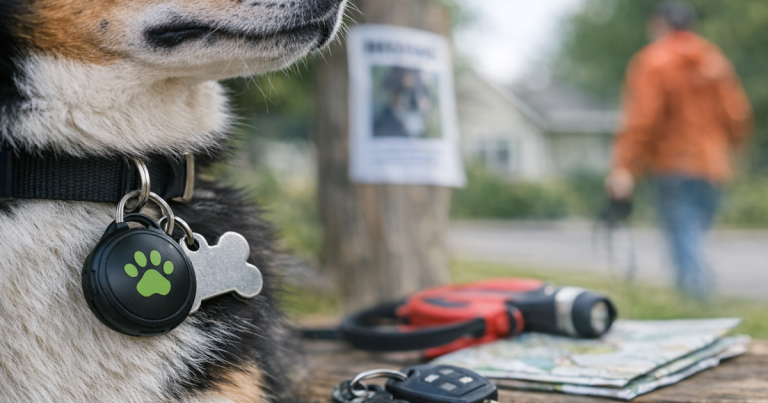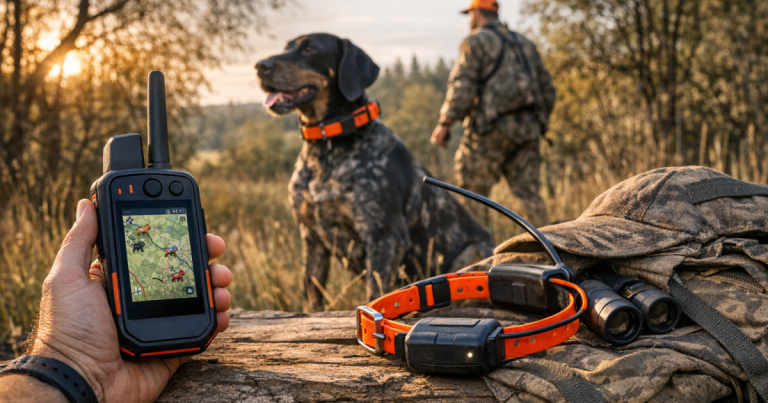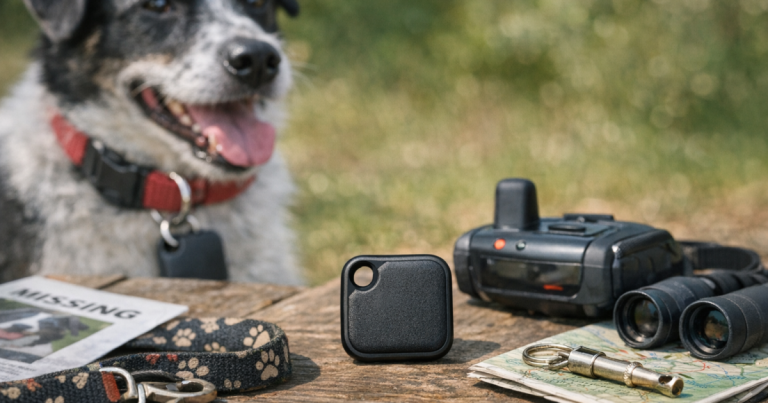
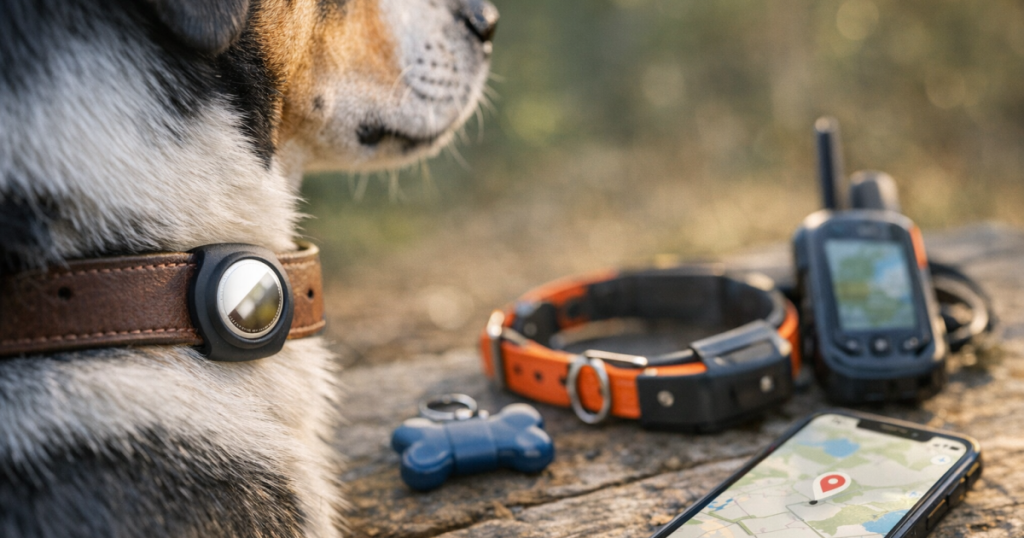
A dog slips through a gate, disappears behind a parked car, and suddenly every second feels too loud. This AirTag (2nd generation) review looks at Apple’s current Bluetooth and Ultra Wideband item tracker through a dog-safety lens: helpful backup, convenient iPhone accessory, but not a replacement for a purpose-built GPS dog tracker when real-time recovery matters.
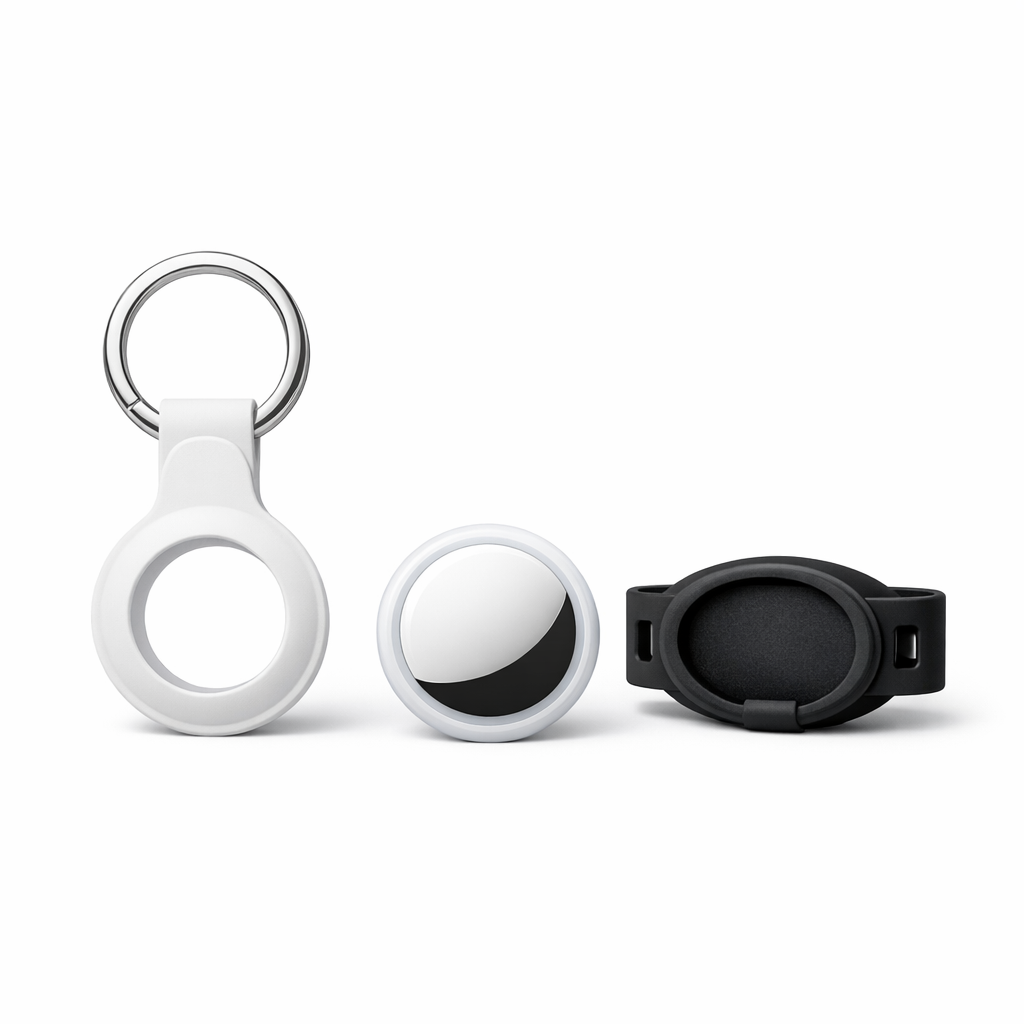
AirTag (2nd generation)
Overall, AirTag (2nd generation) earns a It is a strong option for readers who want the benefits discussed above, while still being worth comparing against the alternatives before buying
Product overview
The AirTag (2nd generation) is Apple’s current item tracker for the US market. It is a small Bluetooth and Ultra Wideband tracker designed for locating items through Apple’s Find My app ecosystem, not a pet tracker designed specifically for dogs.
The short version
For an iPhone household, Apple’s latest AirTag can make sense as a secondary layer of identification on a dog’s collar, especially around familiar places, travel bags, crates, or everyday gear. The important boundary is simple: it is not built to track a moving dog the way a dedicated GPS collar is intended to. Apple specifically does not position AirTag as a pet-tracking product, and attaching it to pets may not be safe or effective.
That distinction matters most for escape-prone dogs. A fence jumper, door dasher, newly adopted rescue, or rural roaming dog needs a recovery plan that does not depend on luck, proximity, or nearby compatible devices. AirTag can still play a role, but it belongs in the backup-ID layer, not as the heart of the plan.
Product Details
The Apple AirTag (2nd generation) is compact enough to fit many accessory holders, but small size does not remove the need for secure attachment and safe collar fit. The tracker measures 1.26 inches in diameter, 0.31 inch high, and weighs 0.42 ounce.
- Product type: Bluetooth and Ultra Wideband item tracker.
- Compatibility: Requires an iPhone with iOS 26.0 or later, or an iPad model with iPadOS 26.0 or later. It is not compatible with Android devices.
- Connectivity: Bluetooth for proximity finding, an Apple-designed second-generation Ultra Wideband chip, expanded Precision Finding connectivity, and NFC tap for Lost Mode.
- Battery: Uses a user-replaceable CR2032 coin cell battery.
- Sensor: Includes an accelerometer.
- Water and dust resistance: Rated IP67 under IEC standard 60529, meaning resistance at a maximum depth of about 3.3 feet for up to 30 minutes. Apple also notes that resistance can decrease with normal wear, so it should not be treated as waterproof.
- Operating temperature: Rated for −4° to 140° F.
- Materials: The enclosure uses 85% recycled plastic. Apple also lists 100% recycled gold plating in all Apple-designed printed circuit boards, 100% recycled tin solder in all Apple-designed printed circuit boards, and 100% recycled rare earth elements in all magnets.
If you plan to place any item tracker on a dog collar, the holder matters. A loose key-ring-style attachment can become a snag point or fall off during play, so a purpose-made mount is the safer direction; our secure AirTag collar mount review explains what to look for in that part of the setup.
Pros, trade-offs and limitations
What works well
- Very small and light: At 0.42 ounce, the AirTag is physically easy to carry on gear or in an accessory holder, though collar comfort still depends on the mount and the dog.
- Strong fit for Apple households: iPhone and iPad users already in the Find My app ecosystem get the clearest compatibility path.
- Proximity tools are useful in the right scenario: Bluetooth, Ultra Wideband, Precision Finding connectivity, and NFC tap for Lost Mode make sense for locating misplaced items or close-range recovery situations.
- User-replaceable battery: The CR2032 coin cell format avoids sending the device away for battery service.
- Some resistance to everyday exposure: IP67 splash, water, and dust resistance is helpful for a device that may be exposed to rain, wet grass, or a damp travel crate.
Where the trade-offs show up
- It is not a GPS dog tracker: AirTag is an item tracker, and Apple does not design it for pet tracking.
- Android households should skip it: It requires Apple devices with the Find My app and is not compatible with Android devices.
- Collar use needs extra care: Attaching it to pets may not be safe or effective, especially if the holder is poorly fitted, bulky, chewable, or able to detach.
- Water resistance has limits: IP67 is not the same as waterproof, and resistance can decrease as the device wears.
- The speaker has practical limits: Apple notes that the built-in speaker may not be loud enough in noisy environments, which matters near traffic, wind, barking dogs, or crowded public spaces.
Performance and buying implications
For dog owners, the biggest performance question is not whether the AirTag is clever technology. It is. The question is whether its type of tracking matches the way lost dogs actually behave.
A frightened dog does not move like a suitcase in an airport or a backpack left under a café table. Lost dogs may bolt, hide, circle back, cross roads, or settle in quiet cover. In those moments, a Bluetooth and Ultra Wideband item tracker is best understood as an assistive clue, not a primary recovery system.
The compatibility story is decisive. If everyone in the household uses iPhone or iPad devices that meet Apple’s system requirements, AirTag fits neatly into daily routines. If the person most likely to search for the dog uses Android, the product is the wrong fit from the start. That is not a small inconvenience; it affects who can participate in the search using the tracker.
Precision Finding connectivity and Bluetooth proximity finding are most useful when the dog, collar, or attached gear is within a workable nearby search context. Think of a dog hiding under a deck, a collar dropped in the yard, or a travel crate misplaced during a road trip. Those are scenarios where close-range finding features can be genuinely reassuring.
For wider recovery, treat it as backup. A dedicated GPS dog tracker is built around a different job: following a dog across a larger area. AirTag’s role is more like a modern ID layer for Apple users, especially when paired with engraved tags, a properly fitted collar, updated microchip information, and a search plan the whole household understands.
Comfort also deserves more attention than many tech reviews give it. The AirTag itself is small, but the total collar setup includes the mount, collar width, dog size, neck shape, coat type, and chewing behavior. A toy breed may notice bulk more than a large retriever. A rough-and-tumble dog may stress the holder more than a quiet senior. Before relying on any collar-mounted tracker, make sure the collar sits securely without rubbing, twisting, or dangling.
Who it’s best for / who should skip it
Best for
- iPhone households that want a backup ID layer: It suits owners who already use Apple devices and want another way to identify or locate a collar, crate, leash, or travel bag.
- Dogs with low escape risk: For dogs who are typically leashed, supervised, and contained, AirTag can be one extra layer in a broader safety routine.
- Travel routines: It can be useful on dog gear that gets moved between cars, hotels, sitters, and family homes.
- Close-range search scenarios: Around the house, yard, campsite, or parked vehicle, proximity-focused features are easier to imagine helping.
Skip it for
- Android users: AirTag is not compatible with Android devices.
- Fence jumpers and door dashers: Dogs that actively escape need a more recovery-focused setup than an item tracker can provide. Our guide to choosing a tracker for a fence-jumping dog explains how to match device type to escape behavior: choose a GPS collar for a fence-jumping dog.
- High-noise search environments: If you expect to rely on the speaker near roads, events, or loud outdoor spaces, Apple’s own speaker limitation is worth taking seriously.
- Dogs that chew or destroy collar accessories: A small tracker only helps if it remains securely attached and out of reach.
- Owners who want pet-specific tracking: AirTag is not designed as a pet tracker, so it should not be bought as though it were one.
Alternatives
The most realistic alternative is not another item tag with a similar shape. It is a different layer of the lost-dog plan.
- For active escape risk: Choose a dedicated GPS dog tracker or smart tracking collar suited to your dog’s size, environment, and recovery needs. This is the better direction for fence jumpers, rural dogs, frequent hikers, and dogs with a history of bolting.
- For backup identification: Pair a secure collar-mounted item tracker with a visible ID tag and a collar that fits correctly. The AirTag can be part of that backup layer for Apple users, but it should not be the only thing standing between your dog and a lost-pet scare.
Things readers ask
Is the AirTag (2nd generation) a GPS tracker for dogs?
No. It is a Bluetooth and Ultra Wideband item tracker. For dog recovery, it is better treated as a backup ID and proximity-finding tool, not a true GPS dog tracker.
Can Android users use it?
No. AirTag requires an Apple device with the Find My app and is not compatible with Android devices.
Is it waterproof enough for a dog collar?
It is IP67 rated for splash, water, and dust resistance, but it is not waterproof. Resistance can also decrease with normal wear.
Will the sound help me find my dog?
Only in some situations. Apple notes that the built-in speaker may not be loud enough in noisy environments.
Is it safe to attach to a pet?
Apple states that AirTag is not designed for pet tracking and that attaching it to pets may not be safe or effective. Any collar setup needs a secure holder and careful fit.
Verdict + score
The Apple AirTag (2nd generation) is a polished, compact item tracker that can be useful for iPhone owners who want a backup layer on dog gear or a collar-mounted identifier in low-risk situations. Its strengths are convenience, small size, Apple-device integration, replaceable battery design, and practical proximity features. Its weaknesses are just as important: it is not compatible with Android, not waterproof, not designed for pet tracking, and not reliable enough to stand in for a dedicated GPS recovery tool. For this site’s lost-dog safety audience, I’d score it 6.9 out of 10.
Final thoughts
Overall, AirTag (2nd generation) earns a score of 6.9/10. It is a strong option for readers who want the benefits discussed above, while still being worth comparing against the alternatives before buying.
AirTag (2nd generation)
Overall, AirTag (2nd generation) earns a It is a strong option for readers who want the benefits discussed above, while still being worth comparing against the alternatives before buying
You might also like: How to Secure a Backyard Fence Against Dog Escapes.