A quiet yard can turn stressful fast: one loose board, one low spot under the gate, and your dog is suddenly on the wrong side of the fence. The goal is not to build a fortress, but to secure backyard fence weak points in the same way your dog tests them: low, high, narrow, and often when nobody is watching.
Most backyard escapes come from a handful of repeatable failure points: gates that do not latch cleanly, gaps at the bottom, climbable objects near the fence, damaged panels, and dogs that have learned a successful route once and keep returning to it.
Major fence installation, post replacement, and any gate changes tied to pool barriers or property-boundary requirements should be carried out by a qualified fencing professional to comply with local codes, HOA rules, and safety requirements.
The short version
Walk the entire fence line at your dog’s eye level, then fix escape routes in this order: gates first, ground gaps second, weak panels third, climb points fourth, and visibility or boredom triggers last. A strong fence is only one layer; tags, supervision, training, and a recovery plan still matter because no barrier is foolproof.
- Check every gate latch, hinge, and latch-side gap before working on long fence sections.
- Block digging routes with buried wire, pavers, gravel, or an approved fence skirt.
- Move furniture, firewood, planters, and trash cans that create a launch pad.
- Patch broken pickets, warped boards, loose chain link, and storm-damaged panels promptly.
- Use a properly fitted collar with ID and consider a tracker for dogs with a known escape pattern.
Step 1: Watch how your dog actually uses the yard
Before you start fastening hardware or adding barriers, spend a few calm minutes observing your dog outside. Escape routes are often behavior-specific. A terrier may work the same soft corner every afternoon. A young shepherd may patrol the back fence and launch when a squirrel appears. A small dog may squeeze through a gap that looks harmless from adult standing height.
Do two walks: one alone and one with your dog in the yard. When you walk alone, look for physical defects. When your dog is present, watch where attention spikes. Nose-to-ground sniffing at the fence base, repeated pawing, staring through slats, and sudden sprinting along one boundary all point to areas that need priority.
If your dog is already jumping or clearing barriers, pair fence work with a realistic tracking and recall plan. Our guide on choosing a GPS collar for a fence-jumping dog explains how to think about backup tracking without treating any device as a guaranteed safety net.
Step 2: Fix gates before anything else
Gates fail more often than solid fence panels because they move, sag, slam, and get used by people who may not be thinking about the dog. Start with the main gate, side gate, and any service gate used by landscapers, utility workers, kids, or visitors.
Run this gate check
- Close the gate slowly and confirm the latch catches without needing to lift or shove the gate.
- Push the bottom corner from the inside to see whether a small dog could force it outward.
- Measure the gap under the gate; even a few inches can matter for toy breeds, puppies, and determined diggers.
- Look at the latch-side gap from your dog’s height, not yours.
- Check whether wind, frost heave, or wet soil has shifted the gate out of alignment.
A self-closing hinge and a secure latch can reduce human-error escapes, but they still need regular testing. If children use the yard, make the latch simple enough that it closes every time but secure enough that it cannot be bumped open by a jumping dog.
For dogs that bolt toward openings, create a small routine around gates: dog indoors before yard equipment comes through, gate closed before leash comes off, and no off-leash time when contractors or delivery workers are moving in and out.
Step 3: Block digging routes at the base
Digging escapes usually begin where the ground is already easy: bare soil, mulch beds, damp corners, or spots under gates where rain has washed the grade away. Your fix should remove the reward and make the route physically unworkable.
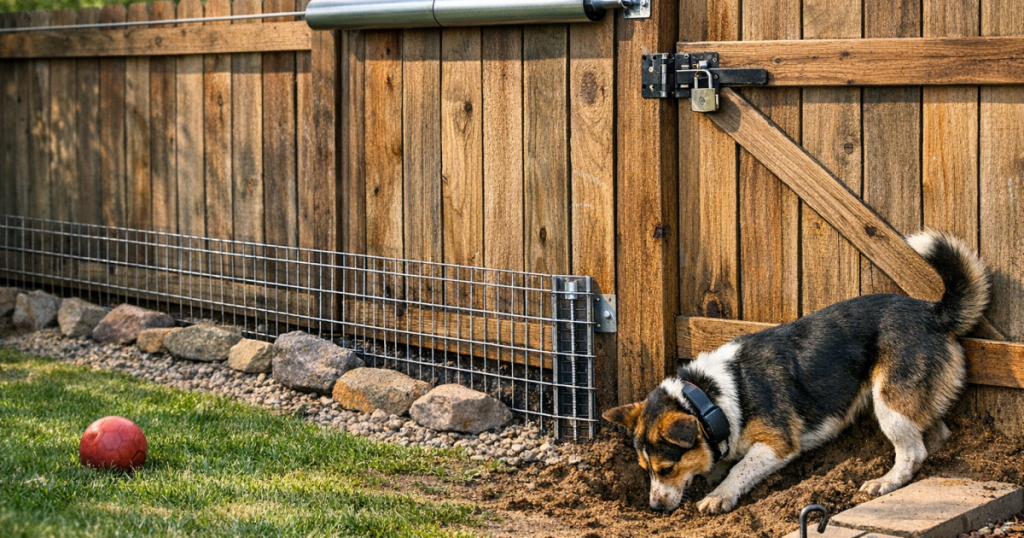
Common options include burying welded wire along the fence line, attaching an inward-facing fence skirt, setting pavers at the base, or adding a trench of coarse gravel where digging has become a habit. For many yards, a combination works best: a physical underground barrier at the known dig zone plus a surface treatment that makes the spot less satisfying.
Avoid sharp edges, loose cut wire, or temporary scraps that can catch paws. Any barrier you add should be stable, flush, and checked after storms. If your dog has already created a tunnel, fill and compact the soil rather than simply kicking loose dirt back into the hole.
Where diggers usually start
- Under gates, especially when the gate sits above a sloped driveway or path.
- Fence corners where two panels meet and soil is softer.
- Behind shrubs, sheds, or play equipment where digging goes unnoticed.
- Along shared fences where another dog, wildlife, or foot traffic creates excitement.
Step 4: Remove launch pads and climb aids
Some dogs do not need a damaged fence to escape. They need a boost. Patio chairs, stacked firewood, storage bins, raised garden beds, retaining walls, and even snow piles can turn a reasonable fence into an easy climb.
Walk the yard as if your dog is looking for elevation. Anything within a few feet of the fence deserves a second look. Move furniture toward the house, keep trash cans away from the fence line, and avoid storing ladders, boards, or yard tools along the boundary.
Chain-link fences can be especially climbable for athletic dogs because paws can find purchase. Solid privacy fencing may reduce footholds, but it can create another issue: a dog may listen, smell, or launch at things it cannot see. If your dog reacts to pedestrians, dogs, or wildlife beyond the fence, reducing visual triggers or adding an inner setback zone may help.
Step 5: Patch squeeze gaps and weak panels
Dogs are very good at finding openings that people overlook. Small breeds can slip through wide picket spacing, under warped boards, or through loose chain link. Larger dogs may shoulder a weak panel until staples, nails, or ties give way.
Check the fence after heavy wind, freeze-thaw cycles, and yard work. In many US backyards, seasonal ground movement can change a gap that was safe in spring into a problem later. Pay special attention to places where the fence meets the house, garage, shed, or a neighbor’s fence.
Patch with materials that match the force your dog applies. A temporary board leaned against a gap may stop a curious puppy for an afternoon, but it is not a dependable repair for a dog that has already escaped. Secure loose pickets, tighten chain-link ties, replace broken boards, and close transitions where two fence types meet.
Step 6: Make the yard less rewarding to escape from
Hardware matters, but motivation matters too. Many dogs escape because the other side is more interesting: squirrels, dogs walking by, school traffic, trash day, lawn crews, or a favorite person leaving through the front door.
Change the routine around high-risk moments. Bring the dog inside during mowing, package deliveries, fireworks, and nearby construction. Supervise outdoor time after a move, adoption, storm, or schedule change. Dogs that have never escaped before may test boundaries when stressed, under-exercised, or newly interested in something outside the yard.
Enrichment also helps. Short training sessions, scent games, safe chew time, and supervised play can reduce fence-fixation. This does not replace repair work, but it lowers the pressure on the barrier.
Step 7: Add backup identification without trusting it too much
A secure fence lowers risk; it does not erase it. Dogs can slip out through an open service gate, squeeze past a guest, or bolt when a storm hits. Every yard routine should include backup identification.
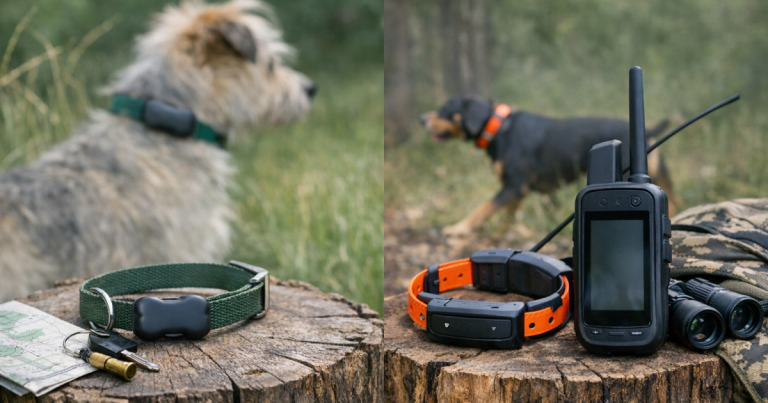
At minimum, use visible ID tags and keep microchip details current. If your dog wears a GPS tracker or smart collar, check fit often, especially after grooming, weight changes, or coat changes. A tracker that twists, rubs, or sits too loosely can become uncomfortable or unreliable in the exact moment you need it. The collar fit checklist in How to Fit a GPS Dog Collar Safely is a useful companion to any backyard escape-prevention plan.
Remember the difference between prevention and recovery. A tracker may help you search faster, depending on coverage, battery status, attachment security, and the environment. It should sit behind the fence, the latch, the tag, the microchip, and your daily routines in the safety stack.
A simple weekend fence audit
If the yard feels overwhelming, break the project into a focused weekend inspection instead of trying to solve every issue at once.
Friday evening: mark the obvious risks
- Walk the inside perimeter with a flashlight.
- Put a small marker near gaps, soft soil, loose boards, and gate problems.
- Note what your dog stares at, paws at, or revisits.
Saturday: handle the highest-risk exits
- Repair or adjust gates first.
- Block known digging spots.
- Move climbable objects at least several feet away from the fence.
- Close gaps around sheds, house walls, and corners.
Sunday: test routines
- Practice bringing the dog inside before opening gates for yard work.
- Check that every family member knows which gate must stay locked.
- Confirm ID tags, microchip records, and tracker fit if your dog uses one.
- Take photos of your dog from the front and side in case you ever need a lost-dog flyer.
If your dog gets out anyway
Do not treat an escape as proof that you failed. It means one part of the system gave way, and now the priority is calm, fast action. Start close to home, avoid chasing a scared dog into traffic, and record where and when the dog was last seen.
For a clear first-response sequence, keep a copy of the lost dog recovery plan for the first 72 hours bookmarked before you need it. The best time to build a recovery plan is when your dog is safe in the house, not when the gate is swinging open.
Questions people ask
How high should a backyard fence be for a dog?
It depends on the dog’s size, athleticism, motivation, and what is near the fence. A calm small dog may be contained by a lower fence, while an athletic jumper may need a taller barrier, fewer launch points, and closer supervision.
What is the best way to stop a dog from digging under a fence?
Use a physical barrier at the base, such as buried welded wire, an inward fence skirt, pavers, or compacted gravel. Then reduce the trigger by supervising that area and blocking access to the exact spot your dog has practiced digging.
Can a GPS tracker replace fence repairs?
No. A tracker is a recovery aid, not a containment system. Coverage, battery status, attachment, and fit all affect usefulness, so the fence and gate routine still need to be strong.
Should I block my dog’s view through the fence?
Sometimes. If your dog reacts to passing dogs, wildlife, bikes, or pedestrians, reducing sightlines can lower excitement. For some dogs, though, sound and smell still trigger fence-running, so pair visual blocking with training and supervision.
How often should I inspect the fence?
Do a quick gate and gap check weekly, then a fuller perimeter inspection after storms, heavy wind, landscaping work, or any escape attempt. Dogs often return to the same weak point once it has worked.
In brief
The safest backyard is built in layers: a sound fence, reliable gates, blocked dig zones, no launch pads, visible ID, and a calm recovery plan. Start with the spots your dog can already reach or has already tested. Then make fence checks part of normal yard care, not something you only do after a scare.