The dog who slips through a gate rarely gives you a calm, tidy search window. A FitBark GPS 2nd Gen review has to start there: this is a collar-attached GPS and health monitoring device meant to give owners more context when a dog is out of sight, not a magic guarantee that every escape ends neatly. The quick verdict is that it is a sensible everyday option for owners who want lightweight tracking plus health monitoring, as long as they are comfortable with the required app, subscription model, and the known limits of location updates in harder environments.
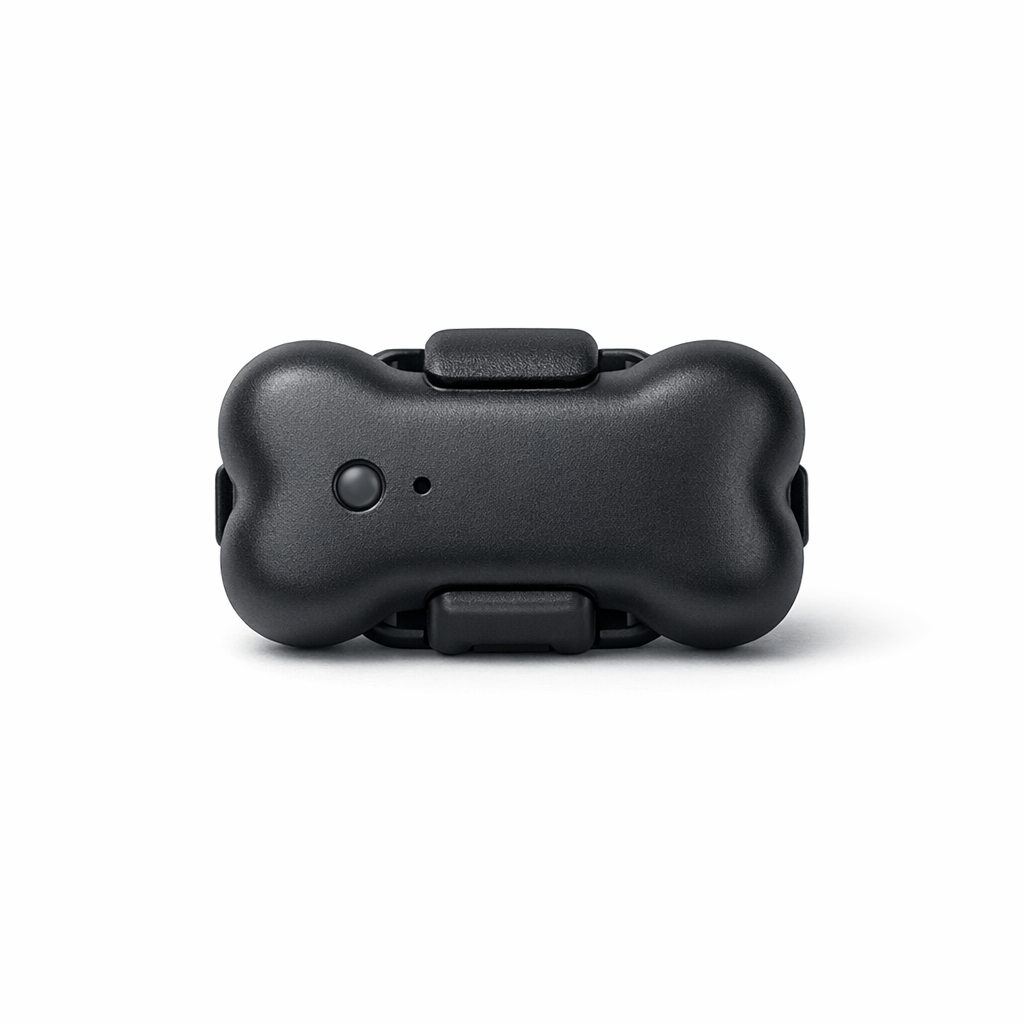
FitBark GPS 2nd Generation
Best for owners who want lightweight daily location support and health context while accepting subscription and update limitations
Location and health data are safety aids, not substitutes for secure gear, current ID, recall work, or veterinary care. The FitBark GPS 2nd Generation can support a recovery plan, but it should sit inside that plan rather than carry the whole job alone.
Product Details
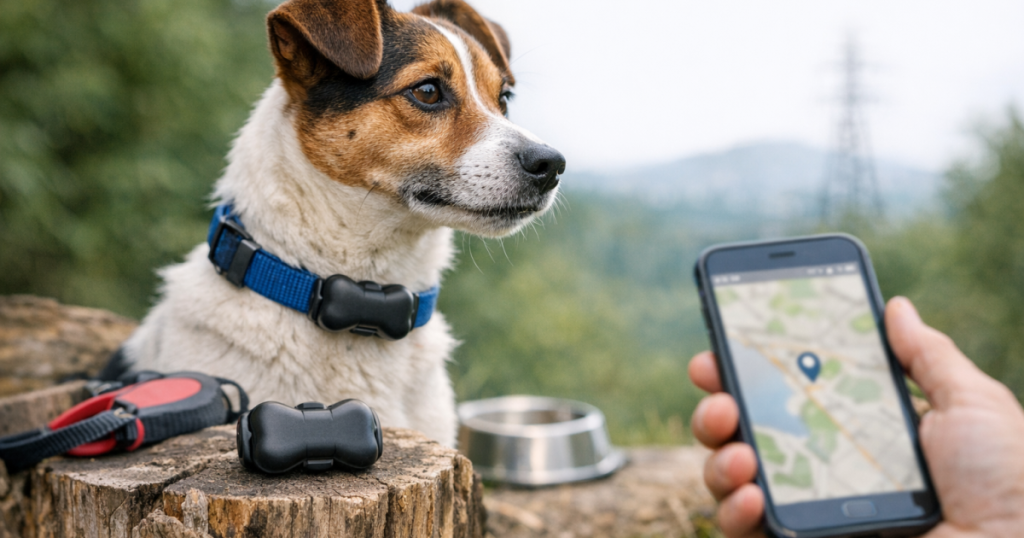
The FitBark GPS 2nd Gen is a GPS and health monitoring device for pets that attaches to a pet’s collar. It works with the FitBark mobile app, so the device and app should be thought of as one practical system for daily use.
- Product name: FitBark GPS 2nd Generation
- Product type: collar-attached GPS and health monitoring device for pets
- Approximate weight: about 0.6 ounces
- Dimensions: 1.86 x 1.18 x 0.61 inches
- Battery life claim: 3-5 weeks
- Water resistance rating: IP67
- Device compatibility: iOS and Android devices with Bluetooth 4.0 and up
- Subscription: required for GPS tracking
What the small size means on an actual collar
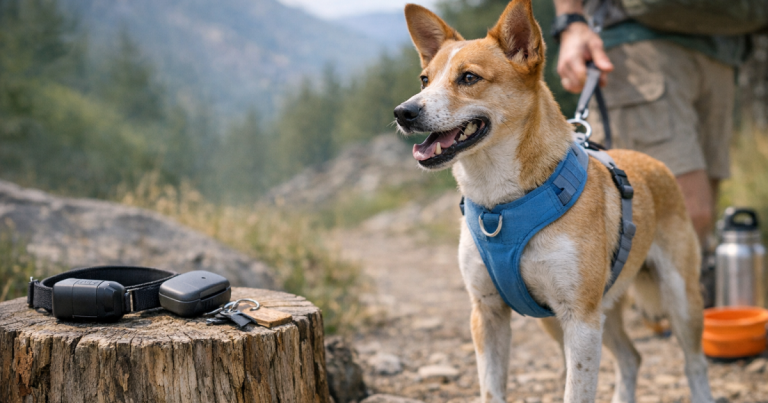
The most obvious practical advantage is size. At about 0.6 ounces and 1.86 x 1.18 x 0.61 inches, the FitBark GPS 2nd Generation is built around a small collar-mounted form factor. For many owners, that matters more than it sounds on paper. A tracker that feels bulky, snags easily, or makes a collar rotate can quietly become a device that gets left off before a walk, campsite break, or quick backyard trip.
The compact build is especially relevant for owners who want a tracker to stay on during ordinary routines: potty breaks, neighborhood walks, visits to family, and days when a door-dashing dog is moving between the house and yard. A device this small is not the same as saying it will fit every collar, every coat type, or every dog perfectly, but the weight and dimensions point toward a design that is easier to live with than many larger field-style systems.
Fit still matters. A thick-coated dog can hide a collar under fur, and a loose collar can let a tracker sit in a less stable position. If your dog has a dense ruff, double coat, or heavy neck feathering, start with collar placement rather than the app screen. Our guide to fitting a GPS collar on a thick-coated dog is a useful next step before you judge any tracker by its first outing.
Battery life is the strongest everyday convenience point
FitBark lists battery life at 3-5 weeks. That is a strong convenience claim for an everyday pet tracker because charging friction is one of the easiest ways for a safety device to fail in real life. Owners do not usually lose tracking because they dislike the idea of GPS; they lose tracking because the tracker is sitting on the counter during the one afternoon the dog finds a gap in the routine.
The right way to read the 3-5 week claim is as a planning advantage, not a promise that every owner will see the same pattern. Battery life in GPS trackers can be affected by how the device is used and by the conditions it is working in. Still, a multi-week claim is helpful for families who want tracking to become part of the collar setup instead of another item that needs constant attention.
For an escape-prone dog, the practical habit is simple: tie charging to a routine you already keep. Some owners charge safety gear during grooming, bath day, or a weekly gear check. The key is not perfection; it is making sure the tracker is ready during the ordinary, boring moments when escapes usually happen.
The subscription is not a side detail
The FitBark GPS 2nd Generation requires a subscription for GPS tracking. That does not make it unusual in the pet GPS category, but it does make the buying decision different from buying a passive ID tag or a simple collar accessory. You are not just choosing a piece of hardware; you are choosing an ongoing tracking setup that depends on the subscription being active for the GPS features.
For some owners, that trade-off is acceptable because the device combines GPS tracking and health monitoring in one collar-attached unit. For others, the recurring commitment is the stopping point. If you mainly want backup identification, a sturdy engraved tag and a secure collar may feel more appropriate. If your dog has a history of bolting through open doors, jumping fences, or disappearing into wooded edges, GPS support can be worth considering, but it still needs to match your budget and your willingness to maintain the service.
This is also where FitBark’s role is clearest. It is not a replacement for a martingale setup, secure harness, leash discipline, updated microchip details, or a printed lost-dog plan. It is a visibility layer. The subscription matters because that layer is only useful when the GPS tracking side is actually available to you.
Where the tracking limits matter most
The documented limitations are important: syncing can be slow, and GPS location updates can be less frequent in dense urban areas or heavily forested regions. Those are not tiny footnotes for dog owners. They describe the exact kinds of places where searches often become stressful: apartment blocks, downtown streets, parks with heavy tree cover, rural trails, and wooded property lines.
A slower sync does not make a tracker useless, but it changes how you should use it. If the app is not updating as quickly as you expect, the safest response is to combine the location history or last known area with ordinary recovery tactics: search quietly, avoid chasing a frightened dog, notify nearby people, and use familiar scent and sound cues when appropriate. A tracker can narrow the search area, but it does not remove the need for calm field judgment.
Before trusting any GPS tracker during a real scare, it is worth running a controlled home test. A simple backyard accuracy check for your dog GPS tracker can show how the device behaves around your house, fence line, tree cover, and usual walking route. That kind of low-stress test gives you better expectations before emotion takes over.
Health monitoring adds context, not diagnosis
FitBark positions this device as both a GPS tracker and health monitoring device. That combination makes sense for owners who want one small collar-attached unit to support daily awareness rather than separate gadgets for location and wellness context.
The useful distinction is this: health monitoring can help you notice patterns, while veterinary diagnosis and treatment decisions belong with a veterinarian. For a devoted owner, pattern awareness can still be valuable. It can make the tracker feel less like emergency-only gear and more like something that earns its place on the collar every day.
That daily-use angle is one of the product’s better arguments. A lost-dog tool that only gets used on vacations or hikes is easy to forget. A device that also supports ongoing health awareness may be more likely to stay charged, attached, and included in the normal routine. That does not make it foolproof, but it can make it more habit-friendly.
Best-fit scenarios for this tracker
The FitBark GPS 2nd Generation makes the most sense for owners who want a compact, collar-attached device that combines GPS tracking and health monitoring, and who accept that GPS tracking requires a subscription. It is a better fit for daily prevention-minded routines than for owners who expect a tracker to behave like a perfect live search tool in every environment.
- Good match: owners who want a small tracker for everyday walks, yard time, travel routines, and general recovery backup.
- Good match: families who are comfortable using the FitBark mobile app on iOS or Android devices with Bluetooth 4.0 and up.
- Good match: owners who see value in health monitoring alongside location support.
- Less convincing match: owners who do not want a subscription for GPS tracking.
- Less convincing match: owners whose highest-risk searches are mostly in dense urban corridors or heavily forested regions where update frequency can be less favorable.
The IP67 water resistance rating also helps its everyday case. Dogs do not plan their escapes around dry sidewalks. Wet grass, splashes, mud, and weather are all part of normal life. IP67 is a meaningful specification for a collar-worn electronic device, though it should still be treated as water resistance rather than permission to ignore care and maintenance.
Key questions answered
Is the FitBark GPS 2nd Generation a standalone tracker?
Yes, it is a standalone collar-attached GPS and health monitoring device for its primary function, but it requires the FitBark mobile app as part of the system. In practical terms, the device on the collar and the app on your phone work together.
Does it avoid monthly or ongoing costs?
No. A subscription is required for GPS tracking. That ongoing requirement is one of the main reasons some owners will choose it confidently and others will decide against it.
Is it enough for an escape-prone dog?
It can be a useful part of an escape-prevention and recovery plan, but it is not enough by itself. Secure collar fit, backup ID, safe leash handling, and a calm recovery routine still matter. This is tracking support, not a guarantee.
Verdict
Score: 8/10
The FitBark GPS 2nd Generation is a good, practical choice for owners who want lightweight GPS tracking and health monitoring in one collar-attached device. Its small size, IP67 rating, broad phone compatibility, and 3-5 week battery life claim make it easy to see why it belongs in everyday lost-dog prevention routines. The subscription requirement, slow syncing potential, and less frequent GPS updates in dense urban or heavily forested areas keep it from being a standout for every situation. For the right owner, it is reassuring daily safety gear with clear boundaries rather than a do-everything recovery solution. Score: 8.0/10.
FitBark GPS 2nd Generation
Best for owners who want lightweight daily location support and health context while accepting subscription and update limitations
You might also like: Best Martingale Training Collars for Dogs Who Slip Out.