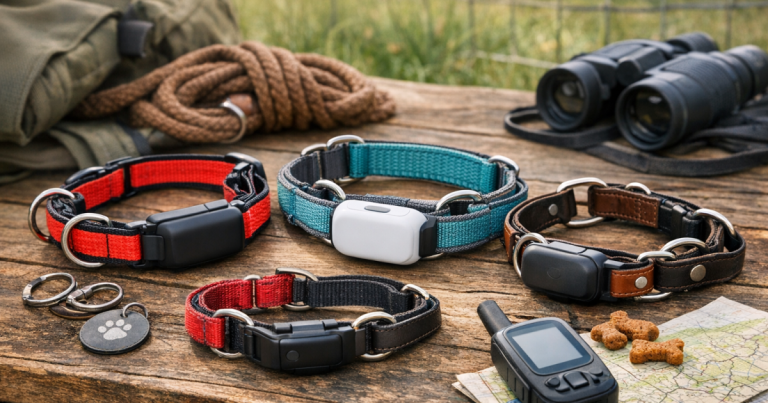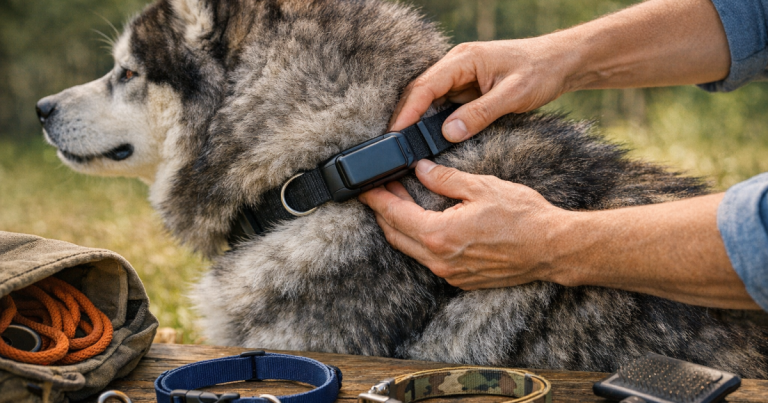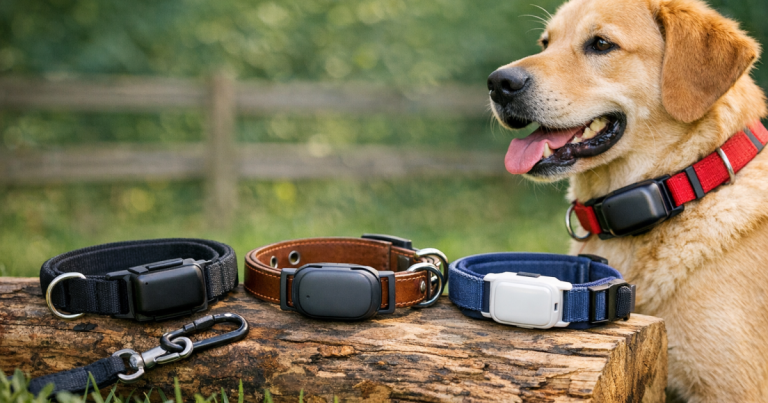
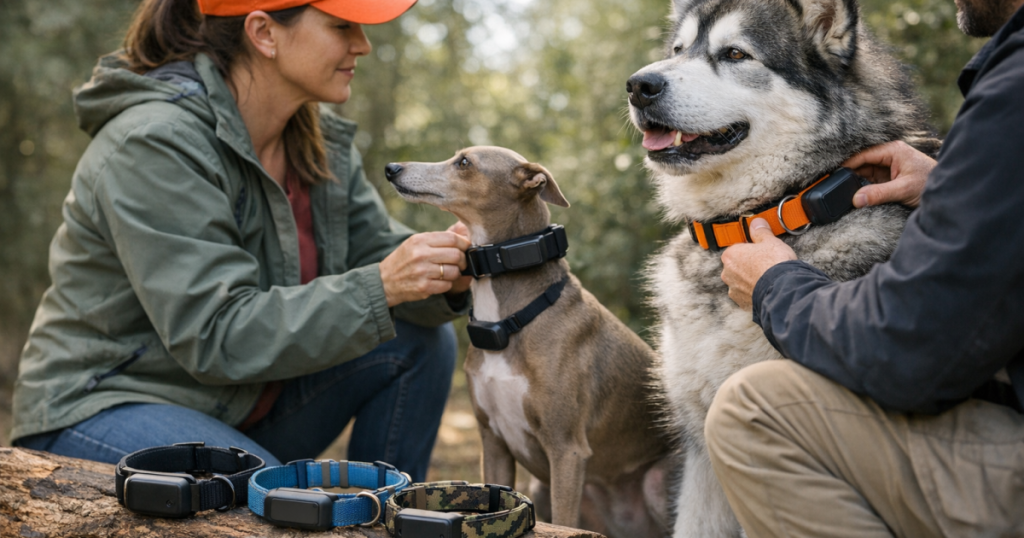
A narrow-necked Whippet, a thick-coated Aussie, and a stocky Frenchie can all make a tracker fit strangely. The best GPS dog collars 2026 are not simply the most feature-packed; for hard-to-fit dogs, the safer choice is the device that sits flat, stays secure during normal movement, and does not turn daily wear into a rubbing, twisting, or chewing problem.
For lost-dog prevention, fit is not cosmetic. A tracker that rotates under the throat, hangs too low, or makes the collar bulky may be the first thing a determined dog slips, scratches, or catches on a fence board. Start with the dog’s shape and behavior, then choose the tracking setup.
In brief
For hard-to-fit dogs in 2026, the strongest GPS collar choices are the ones that match the dog’s neck shape, coat, size, activity level, and escape pattern. A smart collar such as the Fi Series 3 Smart Collar can make sense when the dog tolerates a dedicated collar. An add-on tracker such as the FitBark GPS 2nd Gen may be easier for dogs that already have a well-fitting collar. Field-focused options such as the Garmin Alpha LTE are more relevant when rural coverage, hiking, or working-dog routines matter.
No GPS collar is foolproof. Cellular coverage, satellite visibility, battery management, device position, and collar security all affect recovery usefulness. The right choice is the one you can fit correctly, charge consistently, and keep on your dog without creating a new escape or comfort problem.
Step 1: identify why your dog is hard to fit
Before looking at devices, name the fit problem. “Hard to fit” can mean several different things, and each one points toward a different collar setup.
- Long, narrow neck: Sighthounds and similar builds can back out of loose collars, especially when startled.
- Short neck or compact body: Small, stocky dogs may find bulky devices awkward because there is less collar real estate.
- Thick or double coat: Fur can hide looseness. A collar that seems snug on top may shift once the coat compresses.
- Sensitive skin: Dogs prone to rubbing need careful checks around the buckle, tracker mount, and contact points.
- Escape behavior: Fence jumpers, door dashers, and dogs that roll or paw at collars need a more secure overall system.
Measure the neck where the collar actually sits, not where you wish it would sit. Check again after a walk, after the dog shakes, and after the coat has flattened under the collar. A fit that is perfect in the kitchen can behave differently at a trailhead.
The 2026 shortlist for awkward fits
Fi Series 3 Smart Collar: best for dogs that can wear a dedicated smart collar
The Fi Series 3 Smart Collar is a fit-first option when you want the tracker built into a collar format rather than added onto a separate everyday collar. That can reduce the pieced-together feel that some dogs dislike. It is most appealing for owners who want one main collar setup for daily wear and recovery planning.
The fit question is whether your dog’s neck shape works with a dedicated collar system. For narrow-necked escape artists, you still need to check whether the collar stays positioned during pulling, reversing, rolling, and sudden stops. For very small dogs, confirm sizing and weight details before treating any smart collar as a comfortable all-day choice.
FitBark GPS 2nd Gen: best for dogs with an existing collar that already fits well
The FitBark GPS 2nd Gen Pet Location + Health Tracker is useful when the collar itself is not the problem. If your dog already wears a collar that sits correctly and does not rub, an add-on tracker can preserve that fit instead of forcing a full collar change.
This approach can work well for mixed builds: the dog with a narrow head but a secure martingale-style walking routine, the thick-coated dog whose owner has already found the right strap width, or the small dog that dislikes switching collars. The trade-off is attachment discipline. You need to confirm the device is secure, centered where intended, and not creating a pressure point.
Garmin Alpha LTE: best for rural, trail, and field routines where fit is part of a larger safety plan
Garmin Alpha LTE is better viewed through a scenario lens than a fashion-collar lens. It is an LTE dog tracking device aimed at owners who care about location visibility beyond ordinary neighborhood walks. For dogs that hike, hunt, train in open spaces, or spend time in rural areas, the more important question is whether the whole wearing setup is stable enough for fast movement and brushy conditions.
For hard-to-fit dogs, check how the device sits when the dog lowers its head, runs uphill, turns sharply, and squeezes through vegetation. A collar that looks fine standing still may twist under real field movement. Rural tracking also depends on network and environmental conditions, so pair device choice with realistic coverage expectations.
Fi Ultra: best to consider for remote-area owners who can support the fit
Fi Ultra is worth considering for owners who specifically want a GPS tracker with cellular and satellite connectivity in more remote settings. The fit rule stays the same: added capability does not help if the device is uncomfortable or insecure on your particular dog.
This is most relevant for road trips, cabins, desert outings, mountain weekends, or properties where a dog may move beyond the easy reach of neighborhood searching. Before trusting it, confirm how the collar or device format works with your dog’s size, coat, and activity level. Remote-area features should complement, not replace, ID tags, recall work, fencing checks, and a written recovery plan.
Step 2: run a fit test before you rely on the tracker
Do not make the first real test the day your dog slips through a gate. Use a short, repeatable routine at home.
- Start indoors for 10 minutes: Watch for scratching, freezing, head shaking, or repeated attempts to paw the device.
- Check the two-finger fit: The collar should not be loose enough to slide over the head, but it should not dig into the neck.
- Look under the coat: On thick-coated dogs, part the fur and check the skin after movement.
- Test natural movement: Ask for sit, down, shake, gentle play, and a short supervised yard walk.
- Simulate the escape moment: Safely recreate leash tension, turning away, backing up, and a door opening cue.
- Recheck after 30 minutes: Rotation after wear matters more than how neatly the collar looked at first.
For backup identification, keep a visible ID layer on the dog even when GPS is active. A personalized tag such as the GoTags Bone Dog Tag in Stainless Steel can help a neighbor act quickly before anyone opens an app or scans a chip. At night, visibility gear such as the Nite Ize NiteHowl Rechargeable LED Safety Necklace may make a loose dog easier to spot near driveways, campgrounds, and dark sidewalks.
Step 3: match the collar setup to the escape pattern
A hard-to-fit collar problem usually becomes urgent because of behavior. Match the hardware to the most likely failure point.
- Door dashers: Prioritize a comfortable all-day tracker setup, because the escape may happen during ordinary home routines.
- Fence jumpers: Check whether the tracker catches on the collar edge, buckle, tags, or fence material during climbing and landing.
- Dogs that back out of collars: Consider whether a tracking collar should be paired with a better walking harness rather than used as the only restraint.
- Small dogs: Watch for chin contact, device swing, and reluctance to lower the head to sniff or drink.
- Thick-coated dogs: Recheck fit after grooming, seasonal coat changes, and swimming or rain.
- Hiking dogs: Test the tracker with the dog’s normal harness, leash, pack, and travel crate before the trip.
The small habit that pays off is a weekly collar reset. Remove the collar, inspect the skin, clean dirt from the strap or mount, confirm the device is secure, and make sure charging has not become “something we meant to do.” Lost-dog recovery is rarely about one perfect gadget; it is usually a chain of small preparations that hold together under stress.
Common fit mistakes to avoid
- Choosing by neck size alone: Neck circumference matters, but so do head shape, coat thickness, and how the dog moves.
- Using the GPS collar as the leash attachment by default: Some dogs need a separate harness for walking so the tracking collar can stay positioned and comfortable.
- Ignoring rotation: If the tracker spends the walk under the throat or behind the ear, the fit is not stable enough yet.
- Skipping the adjustment period: Sensitive dogs may need short supervised sessions before all-day wear.
- Assuming more technology means better recovery: Network dependence, battery status, and owner response time still matter.
Main lessons
For hard-to-fit dogs, the best GPS dog collar is the one that disappears into the dog’s routine without disappearing from the dog. Fi Series 3 makes sense when a dedicated smart collar fits securely. FitBark GPS 2nd Gen is useful when you already trust the collar and want to add tracking. Garmin Alpha LTE and Fi Ultra deserve attention for more demanding outdoor scenarios, but only after you confirm the wearing setup is comfortable and stable.
Fit the dog first, then the tracker. If the collar stays put through normal movement, avoids rubbing, supports backup ID, and fits the way your dog actually escapes, you have a stronger recovery setup than any feature list can promise on its own.