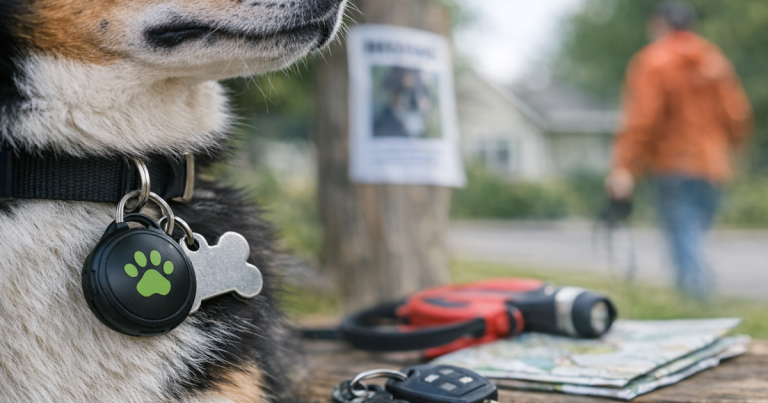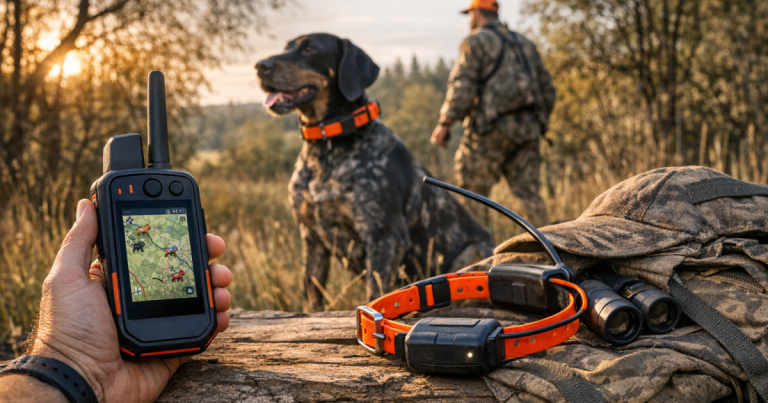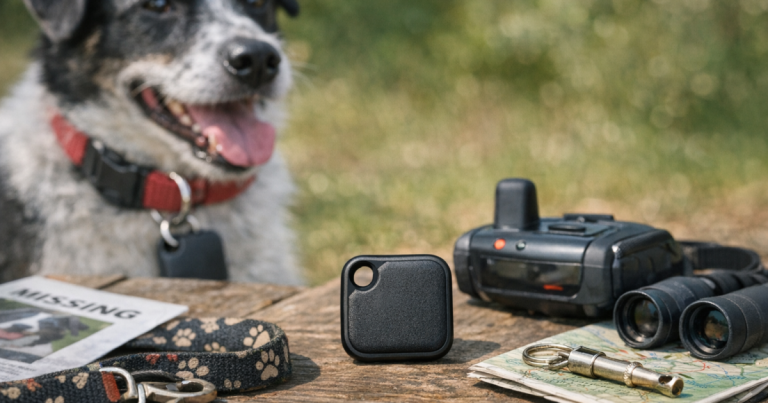
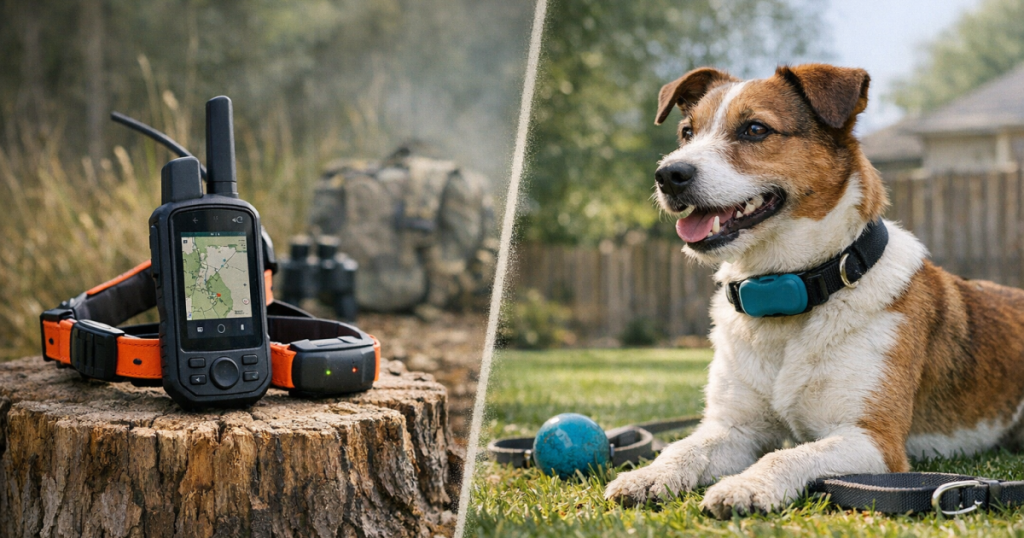
A hunting dog pushing through cover and a terrier slipping out of a side gate create two very different recovery problems, which is why Garmin Alpha 200i vs FitBark GPS is not a simple bigger-is-better choice. Garmin is a handheld-led VHF tracking system built around compatible dog collars. FitBark GPS 2nd Gen is a lightweight pet collar attachment built for real-time location tracking, safe-place escape alerts, and everyday wear.
Quick Buying Links
Garmin Alpha 200i
field handlers who need VHF tracking control and already plan on compatible Garmin dog collars
FitBark GPS
Better for everyday escape alerts, lightweight collar wear, and app-based tracking where LTE coverage supports the routine
The calmer way to compare them is to start with the moment you are actually trying to prevent: a dog ranging ahead in the field, a fence escape in a neighborhood, a road-trip door dash, or a pet who needs a small tracker that can stay on the collar all day.
The big picture
On one side, Garmin Alpha 200i is a 9.9 oz handheld device, listed by Garmin as the Alpha 200i Handheld Only. The handheld tracks compatible Garmin dog collars using VHF dog tracking, and Garmin states a dog tracking range of up to 9 miles with compatible collars. Its inReach satellite communication supports messaging and SOS with an active satellite subscription, but the handheld-only SKU does not include the dog-worn collar needed for dog location tracking.
On the other side, FitBark GPS 2nd Gen is the dog-worn tracker itself. It uses onboard GPS, mobile phone GPS, Wi-Fi APIs, cell-tower data, Bluetooth, and an embedded LTE Cat M1 cellular SIM. FitBark lists multi-network LTE coverage using Verizon, AT&T, and T-Mobile network availability, and its built-in SIM and service plan require an in-app subscription.
That means the useful split is not premium versus basic. It is field system versus everyday pet tracker. Garmin belongs in the conversation for hunting, sporting-dog handling, and field tracking where a handheld and compatible collars make sense. FitBark belongs in the conversation for daily escape awareness, app-based location tracking, and pets from 5 lb wearing a collar attachment around normal routines.
Where Garmin Alpha 200i vs FitBark GPS actually separates
The largest difference is the tracking model. Garmin Alpha 200i is a control-and-display handheld. It can track up to 20 assets, in any combination of compatible dog devices and handhelds, and it has a 3.5-inch sunlight-readable capacitive touchscreen. FitBark GPS 2nd Gen is a collar attachment focused on a single pet’s location, activity, sleep, health monitoring, safe-place escape alerts, and location history.
- Tracking approach: Garmin uses VHF dog tracking with compatible Garmin collars. FitBark combines GPS, LTE-M cellular, Wi-Fi, Bluetooth, and cell-tower location methods.
- Fastest stated updates: Garmin states a 2.5-second update rate with compatible collars. FitBark states 2-3 seconds in live tracking.
- Coverage logic: Garmin states up to 9 miles of dog tracking range with compatible collars. FitBark relies on multi-network LTE cellular coverage rather than a fixed VHF range.
- Dog-worn hardware: Garmin’s handheld-only package requires a compatible Garmin dog collar. FitBark GPS 2nd Gen is the collar attachment tracker.
- Training controls: Garmin lists 18 stimulation levels plus tone and vibration when paired with a compatible training-enabled collar. FitBark focuses on tracking, activity, sleep, and health monitoring without Garmin-style e-collar training controls.
For a deeper page focused only on Garmin’s handheld system, the site’s Garmin Alpha 200i profile is the cleaner next stop. If your comparison starts with daily collar wear and cellular tracking, the FitBark GPS 2nd Gen profile keeps the FitBark details in one place.
Battery life: all-day field sessions versus different everyday modes
Garmin states the Alpha 200i handheld battery lasts up to 20 hours, or up to 15 hours with inReach technology enabled. That is a straightforward handheld figure for a field-oriented device. It is especially relevant when the person holding the device is actively working dogs, watching positions, and managing the session.
FitBark’s battery story changes by mode. Manufacturer-stated figures are up to 6 months on Bluetooth, up to 2 months on Wi-Fi, up to 4 weeks with Wi-Fi and cellular, up to 10 days in lost-pet cellular mode, and up to 6 hours in live tracking. The practical takeaway is simple: FitBark can stretch much longer in calmer, lower-refresh routines, but live tracking is the battery-heavy mode.
That difference changes how owners should think during a scare. A dog that bolts from a yard may justify the higher refresh of live tracking, because the priority is narrowing the search while the trail is fresh. A dog who is safely at home or moving within known routines does not need the same constant update behavior all day.
Fit, format, and the dog wearing it
FitBark GPS 2nd Gen weighs 0.56 oz and is listed for pets from 5 lb. FitBark also states compatibility with flat collars not wider than 1.5 inches. That makes the physical format central to its appeal: it is designed to ride on the dog’s collar as part of ordinary life.
Garmin Alpha 200i is not the dog-worn piece. The handheld weighs 9.9 oz with the standard antenna and battery, and a compatible Garmin dog collar is required for dog location tracking. This is why the Garmin decision is less about clipping a tiny backup tag onto a house pet and more about committing to Garmin’s field tracking ecosystem.
For skittish dogs, escape artists, and dogs who back out of collars, the tracker is only one part of the plan. A well-fitted harness, secure leash connection, and current ID still do work no app or handheld can replace. Before a long drive, it also helps to keep a compact recovery kit ready; the site’s guide to packing a lost-dog emergency kit for road trips pairs naturally with either tracker choice.
Subscriptions are not the same kind of dependency
Both products involve subscriptions, but not in the same way. FitBark GPS 2nd Gen requires an in-app subscription for the built-in SIM card and service plan. That subscription is part of how its cellular tracking setup works.
Garmin Alpha 200i’s dog tracking method is VHF tracking with compatible collars. Its inReach satellite features, including satellite communication for messaging and SOS, require an active satellite subscription. In other words, the Garmin subscription dependency is tied to satellite communication features, while FitBark’s subscription dependency is tied to its built-in cellular service plan.
This is a common place for owners to compare the wrong thing. The question is not simply “subscription or no subscription.” The better question is whether your recovery plan depends on cellular service and app alerts, or on a handheld VHF system with compatible dog collars and optional satellite communication features.
Best fit by real-world scenario
Choose Garmin Alpha 200i when the dog is working beyond ordinary neighborhood range
Garmin is the stronger fit for hunting, sporting-dog tracking, and field work where a handler wants a dedicated handheld, compatible Garmin collars, up to 20 tracked assets, and manufacturer-stated dog tracking range up to 9 miles. It also has training controls when paired with a compatible training-enabled collar, including 18 stimulation levels plus tone and vibration.
The important ownership detail is the hardware path. The handheld-only SKU does not track a dog by itself. For dog location tracking, the dog needs a compatible Garmin collar. Once that is clear, the Garmin setup makes sense for the owner who is managing dogs in the field rather than simply wanting a small everyday escape-alert device.
Choose FitBark GPS 2nd Gen for daily escape alerts and lightweight collar wear
FitBark is the cleaner match for neighborhood escapes, safe-place alerts, and owners who want the tracker physically on the dog every day. Its 0.56 oz weight, pet guidance from 5 lb, and flat-collar compatibility up to 1.5 inches make the format easier to understand for ordinary pet routines.
The trade-off is that FitBark’s tracking depends on its cellular service plan and the location methods listed by FitBark. Live tracking also draws the battery down far faster than lower-refresh modes, with FitBark stating up to 6 hours in live tracking compared with longer Bluetooth, Wi-Fi, Wi-Fi/cellular, and lost-pet cellular modes.
Mistakes that lead to the wrong choice
- Buying Garmin as though it were a collar tag: Alpha 200i is a handheld. Dog tracking requires a compatible Garmin dog collar.
- Treating FitBark like a field-dog VHF system: FitBark is an LTE-M pet GPS tracker and activity monitor collar attachment, not a Garmin-style handheld hunting system.
- Ignoring live-tracking battery drain: FitBark’s longest stated battery figures apply to lower-power modes, while live tracking is stated at up to 6 hours.
- Comparing subscriptions too broadly: FitBark requires an in-app subscription for the built-in SIM and service plan. Garmin’s inReach satellite features require an active satellite subscription.
- Focusing only on update speed: The fastest stated update rates are close, but the recovery workflow is very different: handheld VHF field tracking versus app-based cellular pet tracking.
Key questions answered
Can Garmin Alpha 200i track a dog straight out of the handheld-only box?
No. The Garmin Alpha 200i Handheld Only SKU does not include a dog-worn tracker. Garmin states that compatible dog collars are required for dog location tracking.
Does FitBark GPS 2nd Gen require a subscription?
Yes. FitBark states that an in-app subscription is required for the built-in SIM card and service plan.
Which one is better away from dependable cell service?
For hunting, field work, or areas without dependable cellular coverage, Garmin’s VHF tracking ecosystem is the more relevant option from the verified comparison facts. The dog still needs a compatible Garmin collar, and inReach satellite features require an active satellite subscription.
The practical recommendation
Pick Garmin Alpha 200i when your problem is field visibility over distance: hunting dogs, sporting dogs, multiple compatible collars, and a handler who wants a dedicated handheld rather than a phone-centered pet tracker. Its strongest case comes from VHF dog tracking with compatible collars, up to 20 tracked assets, up to 9 miles of stated dog tracking range, and a handheld battery claim of up to 20 hours.
Pick FitBark GPS 2nd Gen when your problem is everyday escape awareness: a dog slipping through a gate, leaving a safe place, or needing a lightweight tracker that can stay on a flat collar. Its strongest case comes from its dog-worn collar attachment format, 0.56 oz weight, pet guidance from 5 lb, real-time GPS location tracking, virtual fences, safe-place escape alerts, and multi-network LTE positioning as presented by FitBark.
The cleanest decision is not which device sounds more powerful. It is which recovery routine you can repeat calmly when adrenaline hits: a Garmin handheld-and-collar field setup for dogs working beyond everyday pet situations, or a FitBark collar attachment for daily GPS/cellular tracking and escape alerts around normal life.
Quick Buying Links
Garmin Alpha 200i
field handlers who need VHF tracking control and already plan on compatible Garmin dog collars
FitBark GPS
Better for everyday escape alerts, lightweight collar wear, and app-based tracking where LTE coverage supports the routine