A good long line sits in that useful middle ground between tight control and earned freedom. This Ruffwear Rogue Long Line review focuses on a simple question: does this 20 ft leash make sense for recall practice, loose-leash walks, and fieldwork when your dog is not ready for true off-leash freedom?
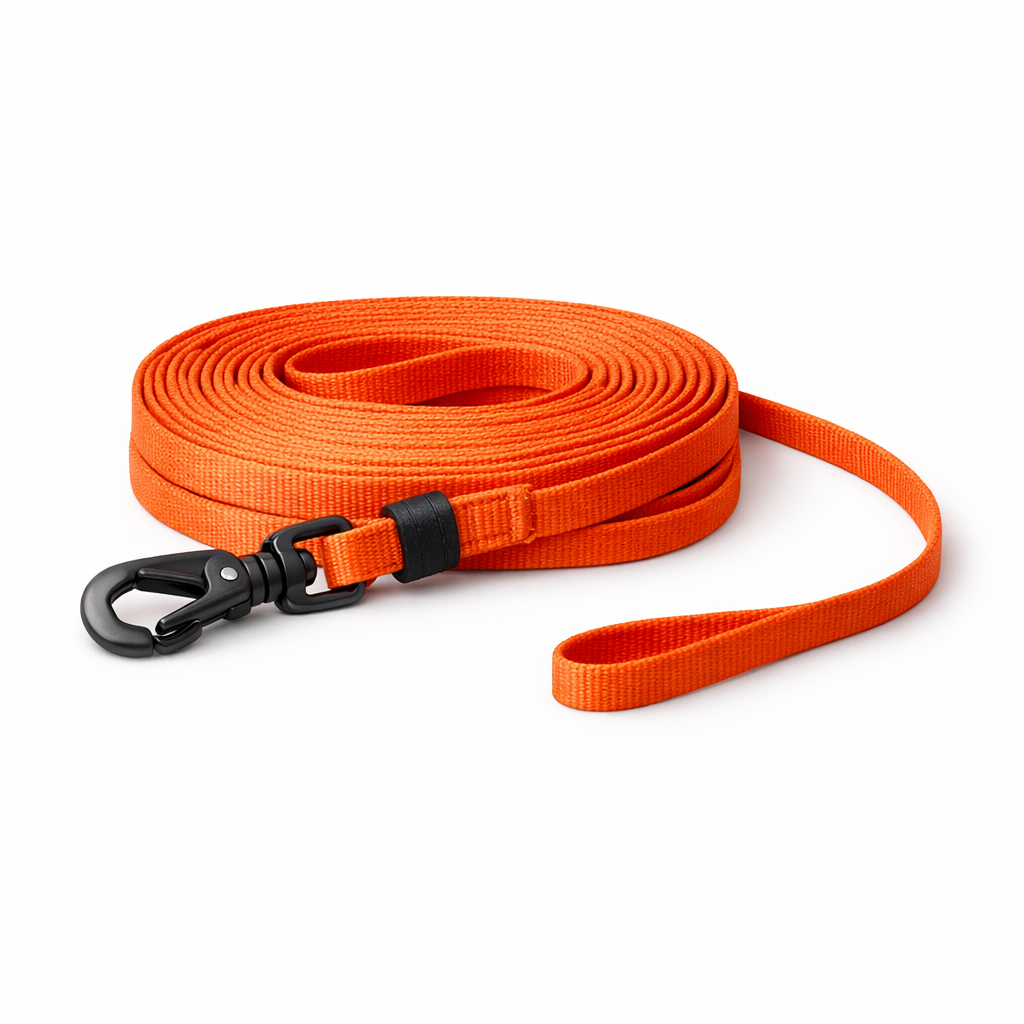
Ruffwear Rogue Long Line
A thoughtful long line for supervised recall work where snag resistance matters more than a hand loop
The quick verdict: the Ruffwear Rogue Long Line is a purposeful training leash with a snag-conscious handleless design and a lockable carabiner, best used under supervision by owners who already understand that a leash is only one layer of a lost-dog prevention plan.
Product overview
The Ruffwear Rogue Long Line is a long-line dog training leash designed for recall training, loose leash walks, and fieldwork. It is not a GPS tracker, containment system, or tie-out cable. That distinction matters for dog owners who are trying to reduce lost-pet scares: this is a tool for guided practice and controlled distance, not a recovery device once a dog is gone.
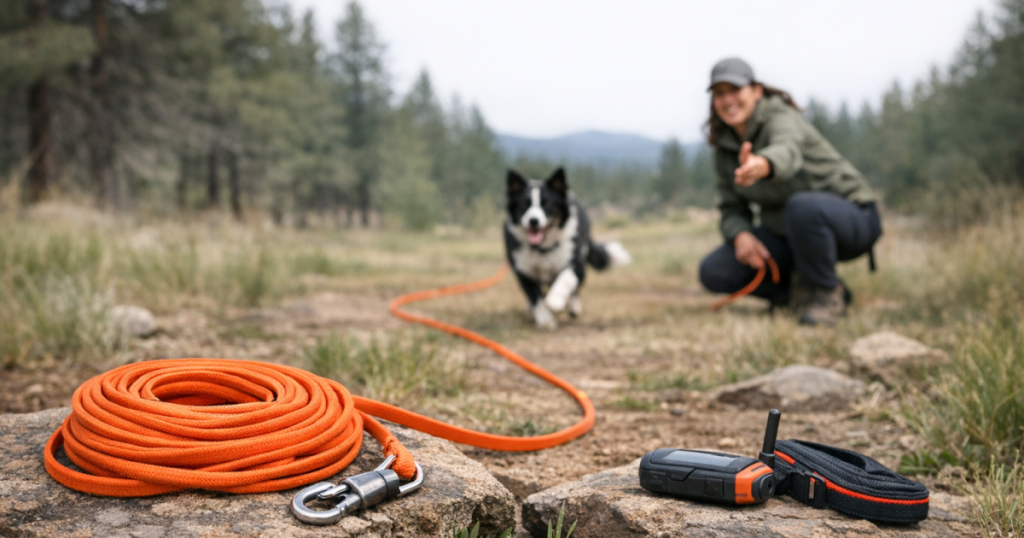
Its most defining choice is the handleless design. Many long lines have loops that can catch on brush, porch steps, chair legs, trail debris, or a dog’s own feet during movement. Ruffwear’s handleless approach is meant to prevent snagging or tangling, which makes sense for supervised training sessions where the line trails behind or moves through open space.
The leash also uses a screwgate lockable carabiner rather than a basic leash clip. For owners working around distractions, gates, trailheads, or open fields, the lockable connection is one of the more relevant details. It does not make a dog escape-proof, but it does give the attachment point a more deliberate feel than a quick clip-and-go leash.
For a dog who bolts through doors, chases deer, or forgets every cue at the sight of another dog, a 20 ft line can create room to rehearse recall without handing over full freedom. For a dog who chews leashes, gets tangled easily, or needs to be left secured while people set up camp, this is the wrong tool.
Product Details
- Product type: Long-line dog training leash.
- Length: 20 ft.
- Width: 3/4 in.
- Webbing: Tubelok™ webbing.
- Webbing composition: 100% polyester, 16% recycled.
- Connection: Screwgate lockable carabiner.
- Design: Handleless design to prevent snagging or tangling.
- Intended use: Recall training, loose leash walks, and fieldwork.
- Color options: Blaze Orange and Basalt Gray.
- Care: Hand wash with mild detergent and air dry.
- Made in: Vietnam.
- US availability: Available in the United States through Ruffwear’s website and authorized retailers.
Pros, trade-offs and limitations
What works well
- Useful working length: At 20 ft, it gives a dog meaningful space to move while keeping the handler connected during recall drills or open-area walks.
- Handleless design reduces one common long-line headache: Fewer loops mean fewer obvious snag points when the line is moving across grass, dirt, or open trail edges.
- Lockable carabiner adds intentionality: A screwgate attachment is a reassuring feature when you do not want a simple clip to be the weak part of your routine.
- Clear training purpose: Ruffwear positions it for recall training, loose leash walks, and fieldwork, which keeps expectations realistic.
- Blaze Orange option: A high-visibility color can be easier to spot on the ground than muted gear during outdoor sessions.
Where the trade-offs show up
- No handle means a different handling style: Owners used to grabbing a loop need to adjust how they gather, shorten, or manage the line.
- Not for leash chewers: It is not suitable for dogs that chew on leashes and is not designed to withstand chewing damage.
- Not a tie-out: It should not be used to secure a dog unattended.
- Supervision still matters: A long line can help with training structure, but it does not replace recall work, ID, visibility gear, or tracking where those tools fit the risk.
Performance and buying implications
The Rogue Long Line’s performance story starts with design rather than technology. There is no app, battery, subscription, or location network to evaluate because this is a physical training leash. Its usefulness depends on whether the 20 ft length, handleless build, and lockable carabiner match the way you actually train and walk your dog.
For recall practice, 20 ft is enough to create real distance without turning a training session into a full off-leash gamble. That matters for dogs who listen in the yard but unravel in open spaces. A long line lets you reward check-ins, interrupt poor choices, and build a habit before trusting freedom. If recall is the weak link in your escape-prevention plan, pair this kind of leash work with a structured emergency recall routine rather than relying on equipment alone.
The handleless design is the most distinctive buying point. On traditional long lines, the handle can be reassuring in the hand but annoying on the ground. It can catch, twist, drag debris, or create an awkward snag during movement. Ruffwear’s design favors cleaner movement over a built-in grab loop. That is a smart trade for fieldwork and open-area practice, but less ideal for owners who want a leash they can quickly hold like a normal six-foot lead.
The screwgate lockable carabiner also changes the rhythm of use. It asks for one extra intentional step when attaching the leash. For handlers who work near parking lots, trailheads, open gates, or exciting wildlife smells, that deliberate connection can be welcome. It is still only one attachment point, so collar or harness fit remains important. A secure leash attached to a slipping collar is not a complete safety system.
Maintenance is straightforward: hand wash with mild detergent and air dry. That suits a leash likely to drag through grass, mud, dust, and training fields. The care routine is not complicated, but it does require owners to treat it like outdoor gear rather than leaving it wet and dirty in the back of the car after every session.
Who it’s best for / who should skip it
Best for
- Dogs practicing recall before off-leash walks: The 20 ft length gives room to rehearse distance, movement, and return cues under supervision.
- Owners working in fields, parks, or open training areas: The handleless design is most useful where snagging and tangling are realistic annoyances.
- Handlers who want a lockable leash connection: The screwgate carabiner suits people who prefer a more deliberate attachment than a standard clip.
- Trail-minded dog owners: The design fits dogs who need guided freedom on hikes, field walks, and training outings.
Skip it if
- Your dog chews leashes: This leash is not designed to withstand chewing damage.
- You need an unattended tie-out: The Rogue Long Line is not intended for tie-out purposes.
- You want a normal hand-loop leash: The handleless design is the point, but it will not suit every handling preference.
- You are trying to solve tracking or recovery: A long line can reduce risk during training, but it does not locate a missing dog.
Alternatives
If the main problem is a dog who backs out of gear, door-dashes, or panics during transitions, a long line can be part of the plan but not the whole plan. A two-leash setup for escape-prone dogs can give you more redundancy during high-risk moments like car unloading, vet visits, hotel check-ins, and busy trailhead arrivals.
If the main problem is recovery after a dog is already out of reach, look beyond leash gear and build a layered system: secure ID, a collar or harness that fits correctly, trained recall, visibility for low light, and a tracking option that fits your environment. Rural properties, hiking routes, and suburban neighborhoods create different risks, so the leash should support the behavior plan rather than stand in for it.
Helpful questions
Is the Ruffwear Rogue Long Line a good leash for off-leash training?
It is designed for recall training, which makes it useful before off-leash freedom. It still requires supervision and does not make an unreliable recall safe by itself.
Can the Ruffwear Rogue Long Line be used as a tie-out?
No. It is not intended for tie-out purposes and should not be used to secure a dog unattended.
Is it suitable for dogs that chew through leashes?
No. Ruffwear states that it is not suitable for dogs that chew on leashes and is not designed to withstand chewing damage.
Why does the leash not have a handle?
The handleless design is intended to prevent snagging or tangling. That is helpful for trailing-line work, but it changes how you gather and manage the leash.
Verdict + score
The Ruffwear Rogue Long Line is a well-focused training leash for supervised recall work, loose leash walks, and fieldwork. Its 20 ft length, handleless design, and screwgate lockable carabiner all point toward a specific use case: giving a dog more room while reducing common long-line snags. The main caveats are clear. It is not for chewers, it is not a tie-out, and it is not a lost-dog recovery tool. For owners who understand those boundaries and want a cleaner long-line setup, it is a strong, practical choice. Score: 8.2 out of 10.
Final thoughts
Overall, Ruffwear Rogue Long Line earns a score of 8.2/10. It is a strong option for readers who want the benefits discussed above, while still being worth comparing against the alternatives before buying.
Ruffwear Rogue Long Line
A thoughtful long line for supervised recall work where snag resistance matters more than a hand loop
You might also like: How to Use Reflective Gear on Low-Light Dog Walks.