The walk that feels easy at 6 p.m. can feel completely different once headlights, wet pavement, and porch shadows take over. Using reflective gear for dogs is not about making your pup look busy; it is about helping drivers, cyclists, and other walkers notice a moving dog before they are too close. A small visibility routine also buys you calmer seconds if a leash slips, a gate pops open, or your dog startles at a trash truck.
The best setup is simple: visible from several angles, comfortable enough for daily use, and paired with good leash handling. Think of it as one layer in a lost-dog prevention plan, not a magic shield.
The short version
- Use more than one visible point: collar, harness, leash, and something on the handler.
- Place reflective or lighted gear where it can be seen from the front, side, and back.
- Check fit before every walk, especially on fluffy coats, narrow heads, and dogs who pull backward.
- Do not rely on visibility gear alone near traffic, trailheads, parking lots, or open doors.
- Keep backup ID and recovery tools in place in case your dog gets loose despite your routine.
Build visibility in layers, not one bright spot
A single reflective collar can disappear when your dog turns sideways, lowers their head to sniff, or walks behind your legs. A layered setup gives other people more chances to register that a dog is there.
Start with the neck, but check the fit
A reflective collar is useful because it sits high and moves with your dog’s head. That movement catches attention, but only if the collar stays in place. Before a low-light walk, slide two fingers under the collar, then gently check whether it can pass over the ears. Dogs with narrow heads, thick seasonal coats, or a habit of backing up need extra attention. If your dog has ever wriggled out, review how to stop a dog collar from slipping off before treating the collar as a dependable anchor point.
Add a visible chest or body layer
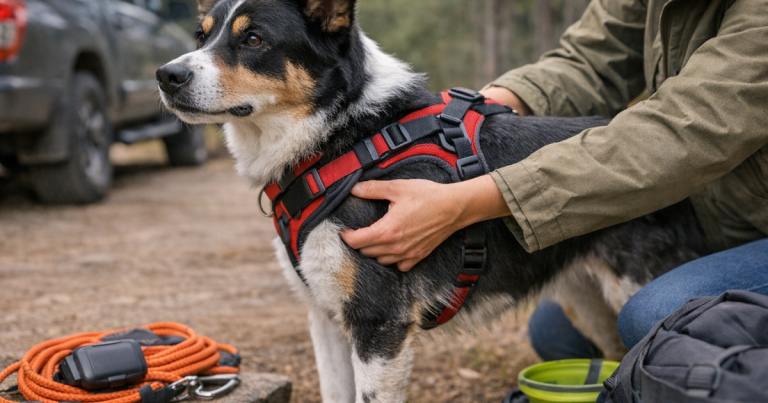
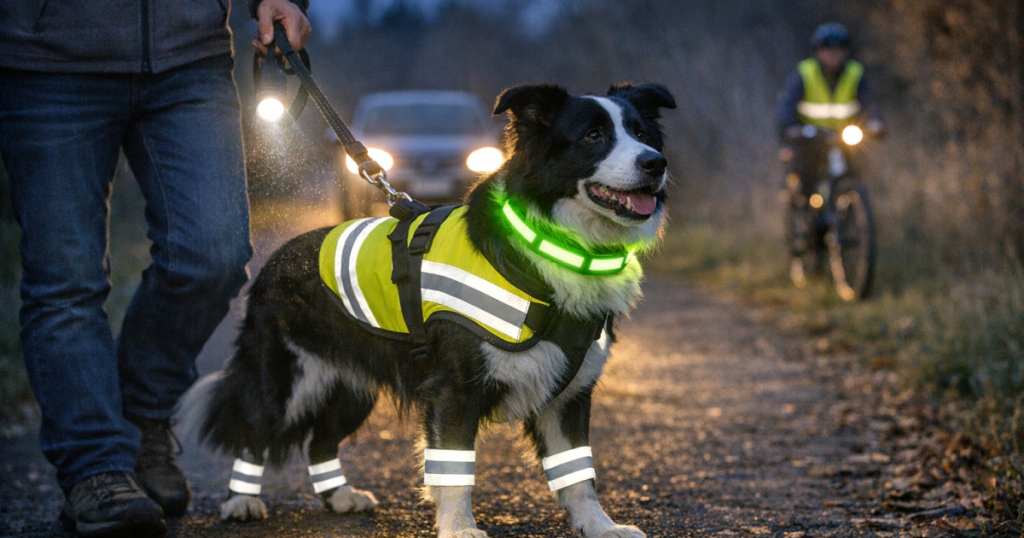
A harness or reflective vest makes the dog easier to spot from the side, which matters at crosswalks, driveways, and parking lots. For dark-coated dogs, a body layer often makes a bigger difference than a small collar strip because it creates a larger visible shape. A reflective harness such as the Ruffwear Hi & Light Harness is one recognizable example of the type of gear many owners look at for daily walks, though fit matters more than brand name.
Make the leash part of the signal
A reflective leash helps drivers and cyclists see the space between you and your dog. That is important when your dog is walking several feet ahead, crossing behind you, or pausing at the curb while you are still on the sidewalk. A visible leash also helps other pedestrians understand that the bright moving shape ahead is attached to a person, not a loose animal.
Do not forget the human end
If you wear dark clothing, your dog may be visible while you are not. Add a reflective vest, armband, clip-on light, or bright outer layer for yourself. The goal is for drivers and cyclists to read the full picture quickly: person, leash, dog, direction of movement.
Match your setup to the walk you are actually taking
Low-light walking is not one situation. A quiet suburban loop at dawn has different risks than a hotel parking lot after a long drive. Choose the visibility layers that match the moment.
- Neighborhood sidewalks: Use a reflective collar or harness plus a visible leash. Pause before driveways, where backing cars may not see a small dog close to the ground.
- Rainy evening walks: Wet pavement can scatter headlights and make dark dogs harder to pick out. A lighted accessory can help define your dog’s position, while reflective material still helps when headlights hit it.
- Parking lots and travel stops: Keep your dog clipped in before the vehicle door opens, then add visibility gear once you are safely outside the traffic lane. For longer drives, a separate car-door escape prevention routine is just as important as reflective equipment.
- Trail edges and rural roads: Use brighter body visibility and keep your dog close. Reflective material depends on light hitting it, so it can be less noticeable around curves, brush, or unlit shoulders.
- Small dogs and low riders: Gear can be hidden by grass, parked cars, snowbanks, or your own legs. Add visibility higher on the body when possible, and avoid letting the leash stretch far ahead near driveways.
Put gear on in the same order every time
A repeatable routine prevents the rushed moments that cause lost-dog scares. This matters most when you are leaving through a busy front door, stepping out of an apartment building, or walking a dog who gets excited by the word “outside.”
- Clip ID on first. A readable ID tag is still one of the fastest ways for a neighbor to help if your dog gets loose nearby.
- Fit the collar and harness before opening the door. Adjust straps indoors, not on the porch while your dog is bouncing.
- Attach the leash before turning on lights. Some dogs get excited by blinking or glowing accessories. Secure the leash first so excitement does not become a doorway sprint.
- Turn on lighted gear and check placement. A lighted collar or necklace, such as the Nite Ize NiteHowl Rechargeable LED Safety Necklace, should be visible rather than buried under long fur or a coat.
- Ask for a pause at the threshold. A calm sit, wait, or hand target can lower the chance of bolting. If your dog explodes through the doorway before walks or visitors, build a safer door-darting routine before relying on gear alone.
Do a 60-second visibility check outside
The real test happens outside, not in your hallway. Before heading down the block, stand near your driveway, sidewalk, or building entrance and look at your dog from several angles.
- Front view: Can someone approaching from ahead see your dog’s chest or collar area?
- Side view: Is there visible material on the body, leash, or harness when your dog turns sideways?
- Rear view: Can someone behind you see both the dog and the leash line?
- Movement check: Does the gear shift, twist, flap, or slide when your dog trots, sniffs, or shakes?
- Comfort check: Is anything rubbing behind the front legs, pressing into the throat, or catching on fur?
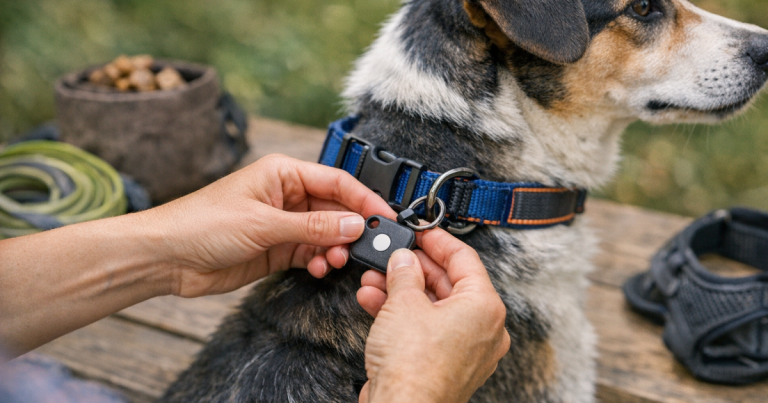
- Recovery check: Is the ID readable, and is any tracker or tag attached securely without being hidden or blocked by the visibility layer?
This quick check is especially useful after washing a harness, switching collars, adding a winter coat, or changing leash length. Small changes can alter what other people can see.
Use lights carefully, not chaotically
Light-up collars, clip-on lights, and LED accessories can be helpful, but more flashing is not always better. A bright or rapidly blinking light may distract some dogs, annoy nearby pedestrians, or make it harder for you to read your dog’s body language. Choose a setup that makes your dog visible without turning the walk into a moving glare.
Place lights where they do not interfere with leash clips, ID tags, or tracker attachments. On long-haired dogs, check whether fur covers the glow. On tiny dogs, avoid bulky accessories that bump the chest or swing under the chin. On strong pullers, do not attach the leash to a decorative lighted accessory unless it is designed to handle leash pressure; use a proper collar or harness attachment instead.
Know what visibility gear cannot solve
Reflective material needs a light source. It can help when headlights, bike lights, or streetlights hit it, but it will not make your dog equally visible in every shadowed spot. Fog, heavy rain, curves in the road, shrub cover, parked cars, and dark trail sections can still hide a dog from view.
Visibility also does not replace leash control, recall training, containment, or recovery planning. If a dog slips loose, a reflective harness may make them easier to notice for a short time, but it does not tell you where they went. GPS trackers, Bluetooth tags, and ID tags each have their own limits too, including network dependence, range, battery status, and whether someone nearby can read or scan the information. The safest plan uses several imperfect tools together.
Keep the routine easy enough for tired nights
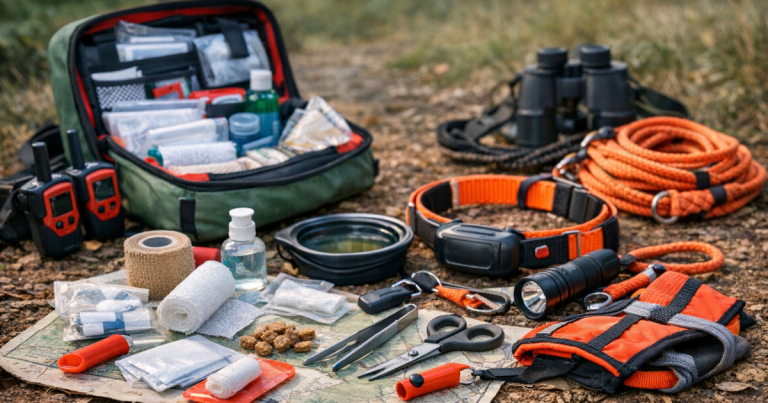
The best low-light setup is the one you will actually use on a cold Tuesday night when your dog needs a quick potty break. Store the leash, reflective layer, lighted accessory, waste bags, and backup tag in one predictable place. Recharge or replace batteries on a schedule if your gear uses them, and keep a spare basic reflective leash or collar where you can grab it during power outages or travel days.
After each walk, glance over the gear before putting it away. Look for frayed stitching, cracked buckles, weak clips, dirty reflective panels, or tags that have become hard to read. Dirt and road salt can dull reflective surfaces, so wipe gear down when it starts looking grimy. If a piece no longer stays secure, retire it from dog-walking duty rather than hoping it will hold for one more walk.
FAQ
Is reflective gear enough for walking a dog at night?
No. It helps other people see your dog, but it does not replace a secure leash, fitted collar or harness, ID tag, recall practice, and careful route choices.
Should my dog wear both reflective and light-up gear?
Often, yes. Reflective material works when light hits it, while a lighted accessory can make your dog easier to locate in darker gaps. Use both if they fit comfortably and do not interfere with leash attachments.
Where should I put reflective gear on a long-haired dog?
Use larger visible areas, such as a harness, vest, or leash, rather than relying only on a collar that fur may cover. Check the dog from the side after the gear is on.
Can reflective gear help if my dog gets loose?
It can make your dog easier for nearby people to spot, especially near roads or sidewalks. It is not a tracking tool, so keep ID and recovery planning in place too.
How often should I replace reflective dog gear?
Replace it when reflective areas are dull, clips weaken, stitching frays, or the fit changes. A secure, visible fit matters more than keeping old gear in rotation.
What stands out
Low-light dog walks are safest when visibility becomes a habit, not a last-minute add-on. Layer the signal across your dog’s collar or harness, leash, and your own clothing; check the fit before the door opens; and remember that reflective gear is one part of a broader escape-prevention and recovery plan. The goal is simple: make your dog easier to notice early, while keeping control and identification strong if the unexpected happens.