A gate left ajar can turn a normal afternoon into a frantic lost-dog search. Teaching your dog to wait at open gates gives you a safety pause before paws cross the threshold, whether you are leaving the backyard, unloading at a trailhead, or visiting friends with an unfenced driveway.
The goal is not to scare your dog away from gates. It is to make the open gate a cue to stop, check in, and move only when released.
The short version
- Start with your dog on leash in a quiet area, well back from the gate.
- Reward stillness before you touch the latch, then reward again as the gate opens only an inch or two.
- Use a clear release word, such as “okay” or “free,” so your dog learns that waiting ends only on your cue.
- Build difficulty slowly with wider openings, longer pauses, and mild distractions.
- Keep backups in place: secure ID, a fitted collar or harness, recall practice, and a tracker routine if your dog is an escape risk.
What your dog is actually learning
Gate training is threshold training. Your dog learns that an opening in a barrier is not an automatic invitation to bolt through it. That matters because many escapes happen during small human moments: carrying groceries, taking out trash, talking to a neighbor, moving lawn equipment, or letting one dog through while another is still loose.
This behavior works best when it is simple. You are not asking for a long obedience routine at the gate. You are teaching three pieces: pause, look or stay oriented toward you, and move forward only after a release cue. Those pieces can reduce risk even if your dog is excited, but they still need management. A trained pause is a safety layer, not a guarantee.
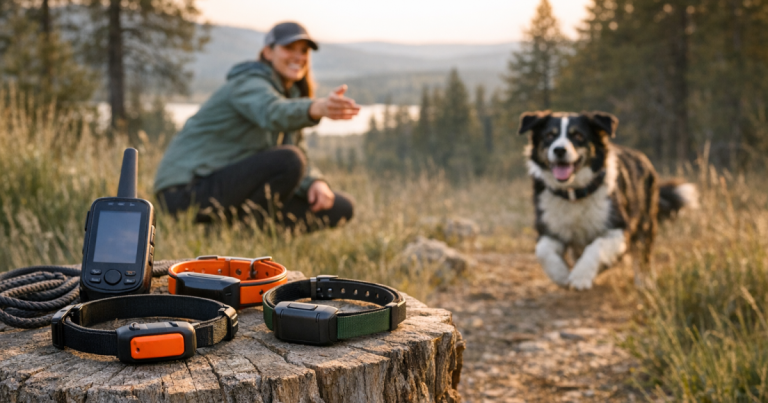
If your dog wears a GPS tracker, pair training with practical setup. For dogs that roam, dig, or rush exits, it is worth taking time to set reliable safe zones on a dog tracker so alerts match the places where your dog could actually leave your property. A tracker can help after an escape, but the gate habit is what helps prevent the escape in the first place.
Step 1: Set up an easy rehearsal
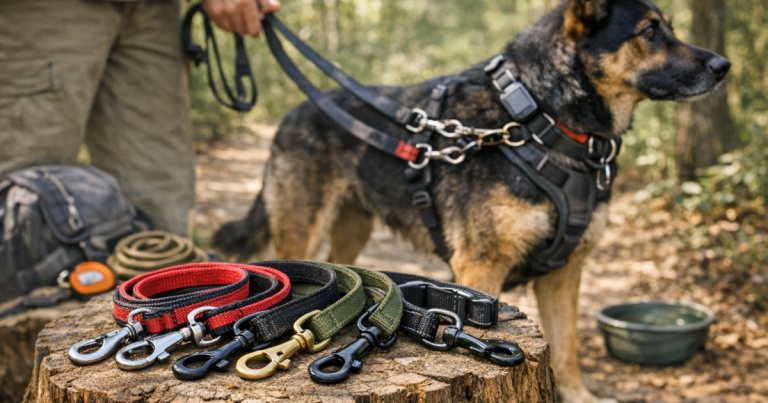
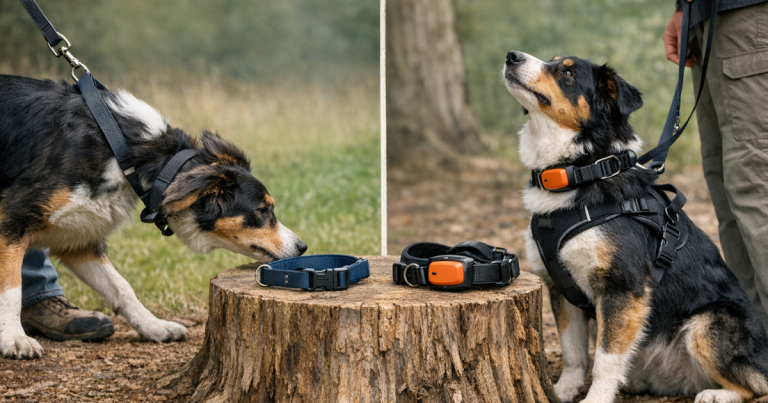
Pick a time when your dog is not already overexcited. A quiet backyard gate is usually better than a busy dog park entrance or a driveway with people walking past. Start with your dog on a regular leash. For dogs with a history of lunging or slipping gear, use a well-fitted harness or properly adjusted collar and keep the leash short enough that you can prevent a dash without yanking.
Stand several feet away from the gate. Ask for a simple behavior your dog already knows, such as “sit” or “stand.” If your dog cannot focus there, move farther back. The first win is not opening the gate; it is finding the distance where your dog can think.
Use rewards your dog cares about
For many dogs, small food rewards work well because you can pay quickly and repeat often. Some dogs care more about praise, a toy, or the chance to move forward. Use whatever keeps your dog engaged without making them frantic. Keep rewards near your body so your dog learns to check back with you rather than stare at the opening.
Choose one release word
Pick a release cue before you start. “Okay,” “free,” “let’s go,” or “through” can all work, but use one word consistently. Avoid using your dog’s name as the release, because names are often said in many other contexts. The release cue should mean, “Now you may move.”
Step 2: Reward before the gate moves
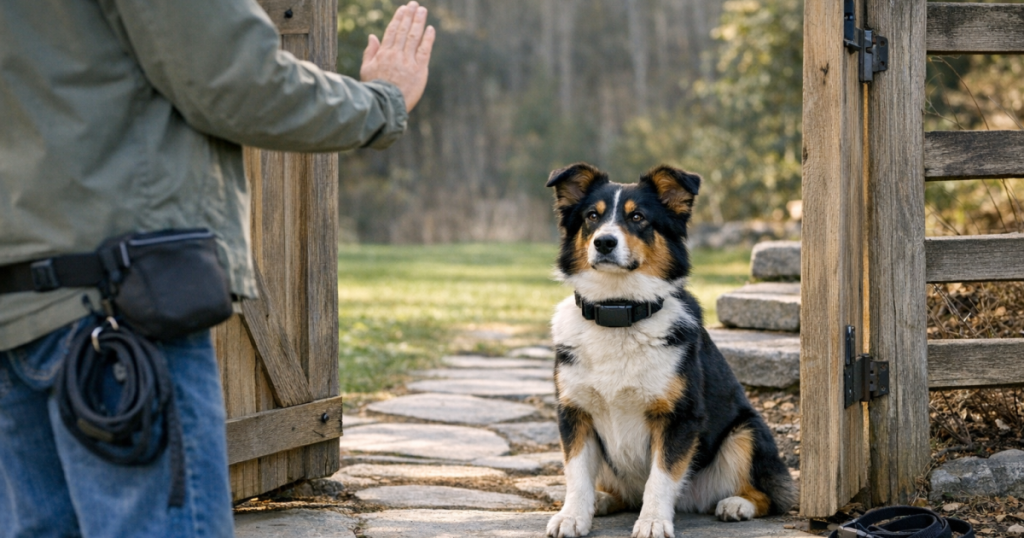
Walk toward the gate and stop before you touch the latch. If your dog stays with you and does not surge forward, mark the moment with “yes” or a clicker, then reward. Repeat until your dog starts to expect that stopping near the gate pays.
Next, put your hand on the latch without opening it. If your dog holds position, reward. If your dog jumps, pulls, barks, or crowds the gate, calmly move back a few steps and reset. Do not scold the mistake; make the setup easier so your dog can succeed.
This stage may feel slow, but it is where the habit forms. Many dogs have learned that a hand on a latch predicts adventure. You are changing that prediction: a hand on the latch now means pause and look to the human.
Step 3: Open the gate in inches
Crack the gate open just an inch or two. Reward immediately if your dog stays behind the imaginary line. Close the gate and repeat. Keep the first sessions boring and short. Five good repetitions are more valuable than twenty messy ones.
Gradually open the gate wider, but only if your dog remains calm at the previous level. If a six-inch opening causes a lunge, go back to two inches. If a half-open gate is too exciting, practice with the gate barely moving. Progress is not measured by how wide the gate opens in one session; it is measured by how reliably your dog pauses when the picture changes.
Keep your body out of the trap of blocking the gate forever. At first, you can stand between your dog and the opening for safety. Over time, shift slightly to the side so the cue comes from your words and the routine, not just from your body acting like a fence.
Step 4: Add the release as its own reward
Once your dog can pause while the gate opens, say your release word and move through together. Keep the leash on. The first few times, step through only a couple of feet, praise, and return. Your dog should learn that waiting does not cancel the fun; it makes the fun available safely.
Do not release your dog every time. Sometimes open the gate, reward the pause, close the gate, and walk away. This prevents your dog from assuming that every open gate ends with forward movement. That difference matters during real life, when you may need to open a gate for a delivery, a child, a neighbor, or another pet.
Step 5: Practice with real-life distractions
After your dog understands the basic pattern, proof it gently. Add one distraction at a time. Ask a family member to walk in the yard. Place a toy on the other side of the gate. Practice at different times of day. Work near the driveway when no cars are moving. If your dog succeeds, reward generously. If your dog struggles, reduce the distraction or increase distance.
Think about the scenes that usually create risk for your dog. A social dog may rush when they see a neighbor. A scent-driven dog may push through if wildlife crossed the yard. A young dog may be fine in the morning but wild when kids come home from school. Train for the version of the gate your dog actually sees, not just the quiet version.
Low-light practice is useful too, because many gate mistakes happen before sunrise, after dinner, or during evening potty breaks. Use lights, reflective gear, and a leash so you can see your dog clearly and prevent a surprise dash.
Step 6: Build in recovery habits, not just obedience
Even well-trained dogs can make impulsive choices. A dropped leash, a visiting dog, fireworks, a loose latch, or a squirrel can overwhelm a behavior that looked solid yesterday. That is why gate manners should sit inside a broader lost-dog prevention routine.
Teach a separate emergency recall for moments when your dog has already moved away from you. Gate training says, “Do not cross yet.” Recall says, “Come back now.” If you have not built that skill, start with a clean, high-value cue and short sessions using the steps in teaching an emergency recall before off-leash walks.
Also check the physical setup. Make sure latches close fully, guests know the rule, and children are not expected to manage an excited dog at a gate alone. If your dog slips collars, backs out of harnesses, or pushes through people’s legs, solve that equipment and handling issue before you rely on training at a threshold.
Common mistakes that slow the training down
- Opening the gate too wide too soon: If your dog lunges, the gap is too tempting. Make the movement smaller.
- Repeating the cue over and over: Say the cue once, then help your dog succeed by resetting the setup.
- Using the release word casually: If “okay” is said all day in conversation, choose a different release cue.
- Practicing only when you are leaving: Mix in sessions where the gate opens and closes without an outing.
- Dropping the leash too early: A leash is not a failure. It is a safety line while the habit becomes dependable.
How to handle setbacks
If your dog bolts through during practice, stay calm and shorten the next repetition. Do not turn the gate into a battle. Increase distance, lower the excitement, and reward the smallest correct choice. If your dog has a strong escape history, practice behind a secondary barrier, such as an inside door, exercise pen, or another closed gate, so one mistake does not become a neighborhood search.
For dogs that panic outdoors, chase wildlife, or guard the gate, consider working with a qualified positive-reinforcement trainer. Those cases are not just about manners; they may involve fear, arousal, or behavior patterns that need a structured plan.
Use the same rule at other thresholds
Once your dog understands the gate routine, apply the same pattern to front doors, garage doors, car doors, RV doors, and trailhead parking areas. The picture changes, but the rule stays familiar: pause, check in, release.
Car doors deserve special attention because a dog can jump into an unfamiliar road, rest stop, or parking lot before you have a leash fully in hand. If you travel with your dog, pair threshold training with the routines in preventing car-door escapes on dog road trips. The more consistent your threshold habits are, the less your dog has to guess in a new place.
Common questions
How long does it take to teach this?
Some dogs understand the basic gate pause in a few short sessions. Reliability around distractions usually takes longer. Plan on many brief practices across different days rather than one long lesson.
Should my dog sit, or is standing still enough?
Either can work. A sit gives some dogs a clear job, but standing still is fine if your dog is calm, behind the line, and waiting for the release cue.
Can I trust my dog to wait at open gates off leash?
Only after many successful repetitions with distractions, and only in places where a mistake would not put your dog in immediate danger. Keep using barriers and leashes when the risk is high.
What if my dog is too excited to take treats?
Move farther from the gate and lower the difficulty. If your dog still cannot focus, practice basic attention games away from the gate first, then return when they are calmer.
Does a GPS tracker replace this training?
No. A tracker may help you respond after an escape, but it does not stop your dog from entering traffic, chasing wildlife, or disappearing from sight. Training and recovery tools work best together.
Main points
Gate safety is built through small, repeatable moments: approach, pause, open slightly, reward, release, and reset. Keep the leash on while your dog learns, increase difficulty slowly, and practice in the situations where your dog is most likely to make a mistake.
The best result is not a dog who seems frozen at every exit. It is a dog who notices an opening, checks back with you, and waits for permission before moving into the next space. That pause can be the difference between a routine outing and a lost-dog scare.