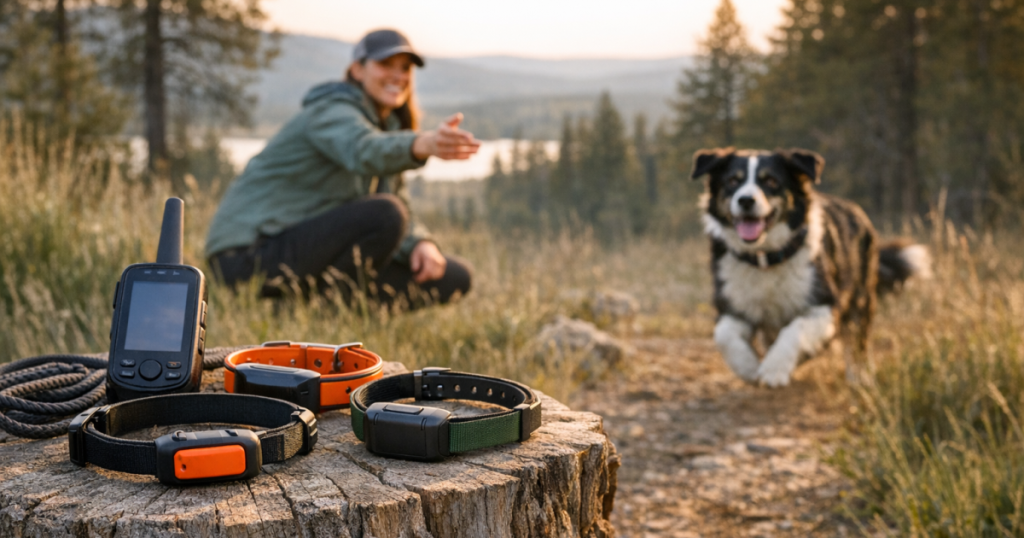
Practicing off-leash recall is easier when you can see where your dog is and keep the training routine consistent. The best GPS training collars are not magic brakes for a sprinting dog; they are tools that combine location awareness with structured recall work, clear boundaries, and a backup plan for the day your dog ignores the first cue.
Remote-collar conditioning, correction settings, and training around traffic, livestock, wildlife, or fearful behavior should be handled with a qualified professional dog trainer or veterinary behavior professional so the plan complies with local leash laws, animal-welfare rules, and safety requirements.
Main points before you choose one
- A GPS-and-training collar should support recall practice, not replace it. Your voice cue, long-line work, rewards, and timing still do the teaching.
- For dogs that slip collars, the safer setup starts with fit and restraint. A training collar should not be the only thing between your dog and a parking lot.
- Handheld systems tend to suit rural fields, hunting land, and places where phone service is unreliable. App-based systems can be convenient where your phone and coverage are dependable.
- No tracker is foolproof. Battery status, signal conditions, terrain, collar fit, and owner response all affect how useful the location data is during a real scare.
Start with the training setup, not the gadget
Before you add any electronic collar, your dog should understand the recall cue on a regular collar or harness, then on a long line, then around gradually harder distractions. If your dog bolts after deer, panics at trucks, or backs out of collars, jumping straight to off-leash work adds risk instead of control.
A good training progression looks like this: begin in a fenced yard, move to a quiet field with a long line, practice around one mild distraction at a time, then test the GPS and collar response at realistic distances. Keep sessions short enough that your dog still wants to come back; exhausted dogs make sloppy choices, just like tired humans do.
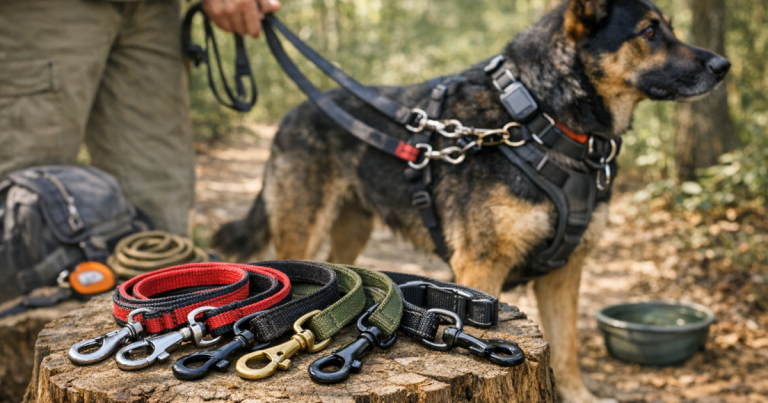
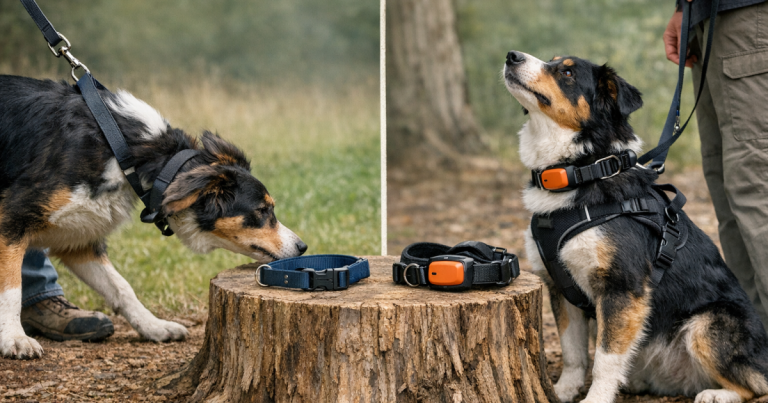
If slipping out is part of your dog’s history, read the site’s guide to safer training collars for dogs who slip collars before deciding on a remote system. Fit and pressure distribution matter as much as electronics.
Three systems that make sense for recall practice
Garmin Alpha 200i with a compatible tracking and training dog device
The Garmin Alpha 200i is a strong fit for handlers who train in open fields, hunting country, ranch properties, or other places where a dedicated handheld is preferable to relying on a phone. Paired with an appropriate Garmin dog device that supports both tracking and training functions, it is built around field handling rather than casual neighborhood walks.
The reason it earns a place here is workflow: a handheld screen can be easier to manage when you are watching terrain, wind, gates, livestock, and a fast-moving dog at the same time. The trade-off is that this type of system is more involved than a simple pet tracker. You need to learn the buttons, collar pairing, map view, and stimulation settings before your dog is ever unclipped.
Dogtra PATHFINDER2 for phone-based map training
The Dogtra PATHFINDER2 is a better fit for owners who like using a smartphone map as part of training and want GPS location information alongside remote-collar functions. It can suit large parks, private land, and field sessions where the handler is comfortable managing a phone during drills.
The important caution is practical: a phone-based setup adds another item to protect, charge, and handle. If your recall sessions involve rain, gloves, thick brush, or a dog who changes direction quickly, practice operating the system while your dog is still on a long line. A collar can have useful capability and still be the wrong match for your hands, habits, or terrain.
SportDOG Brand TEK Series 2.0 GPS Tracking + E-Collar System for a dedicated training package
The SportDOG Brand TEK Series 2.0 GPS Tracking + E-Collar System is another field-oriented option for owners who want tracking and e-collar functions in one training package. It is most relevant for dogs practicing recall away from sidewalks and fenced dog parks, where the handler needs to know direction of travel and respond before the dog disappears over a rise or into tree cover.
As with any e-collar system, the best use is not pressing buttons when you are already scared. The calmer method is to condition the collar cue at low distraction, pair it with a known recall command, and reserve higher-pressure moments for a plan you have already rehearsed with professional guidance.
When a regular GPS tracker is the better choice
Among GPS training collars, the training function is the dividing line. Many everyday dog GPS trackers are designed to show location, not deliver training cues. That can be exactly right for a pet who walks on leash, rides in the car, or occasionally slips through a gate, but it is not the same tool as a field training system.
If your dog is not ready for off-leash work, a standard GPS tracker on a secure collar or harness may be a calmer first step. You can monitor escape risk, practice recall on a long line, and build habits without adding remote stimulation. For many family dogs, that staged approach is more useful than buying the most complex collar on day one.
Fit checks before the first unclipped session
- Check that the collar sits high enough to stay stable but not so tight that it rubs or restricts normal movement.
- Watch your dog trot, sniff, turn, and shake. A unit that twists under the throat may give poor contact and uncomfortable pressure.
- For small dogs, confirm the device is not too bulky for normal neck posture. For deep-coated dogs, check that contact and fit are consistent without over-tightening.
- Add physical ID tags on a separate backup collar when practical. Electronics help you search, but a readable phone number helps a stranger help fast.
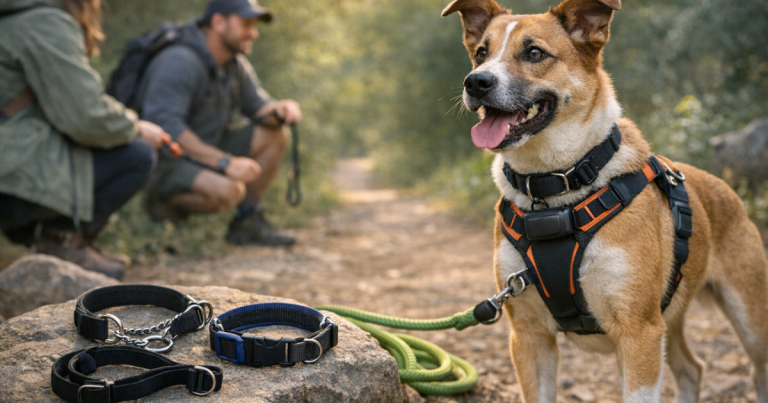
- Use a harness or long line during early practice, especially with dogs who back out of collars. The guide to backup leash attachments for dogs that back out of collars shows how to add redundancy without making walks clumsy.
How to practice off-leash recall with a GPS collar
1. Rehearse the system without pressure
Turn everything on at home, pair the devices, confirm the map display, and make sure you know which button does what. Then practice in a fenced area with your dog wearing the collar but not depending on it. The first goal is handler fluency.
2. Move to a long line
Use a 20- to 50-foot long line in a quiet field. Call once, reward generously, and avoid repeating the cue until it becomes background noise. If your dog ignores you, use the line to prevent rehearsing the wrong choice.
3. Add the collar cue only after the recall cue means something
The collar cue should be paired with a behavior your dog already understands. Used well, it becomes a prompt inside a training system. Used randomly, it can confuse a dog or make the environment feel unsafe.
4. Verify location accuracy after gear changes
Changing from one collar strap to another can alter device position and comfort. After any collar swap, run a short test walk and check whether the location trail looks reasonable. The site’s walkthrough on calibrating a dog GPS tracker after switching collars is a useful habit before higher-stakes outings.
Practical takeaway
For off-leash recall practice, choose the system that matches your real training environment. A Garmin handheld setup is the natural fit for serious field work, Dogtra PATHFINDER2 suits owners comfortable with phone-based maps, and SportDOG TEK Series 2.0 fits handlers who want a dedicated tracking-and-training package. Whichever route you take, the collar is only one layer. The safer plan is repeatable recall training, secure fit, backup restraint, visible ID, and a rehearsed response for the moment your dog decides the horizon looks more interesting than you.
If your normal outing includes patchy service, tall grass, and a dog who ranges 200 yards ahead, prioritize fast location checks and simple controls over extra app features. If your dog mostly practices in a quiet park or on private property near home, ease of charging, fit, and your ability to read the map quickly may matter more than maximum range. The best choice is the one you can operate calmly with gloves on, wind blowing, or a second dog pulling at the leash.
Set a clear “do not unclip” rule before each session. Skip off-leash work if the battery is low, the collar has shifted, your dog is unusually excited, wildlife is active, or you are close to roads, horses, livestock, playgrounds, or posted leash-only areas. In those moments, a long line still lets you practice the same recall pattern without turning a training session into a recovery mission.
A helpful habit is to end each outing with one easy win: call your dog from a short distance, reward well, clip the leash on, and walk a few steps together before heading home. That keeps the leash from becoming a signal that the fun is over, which can make the next recall cleaner.