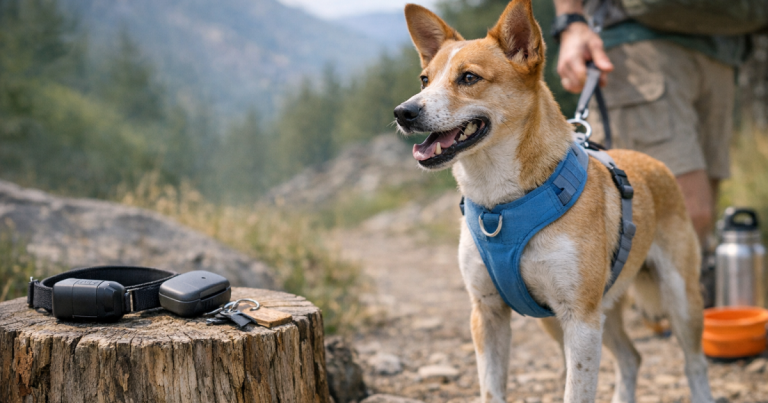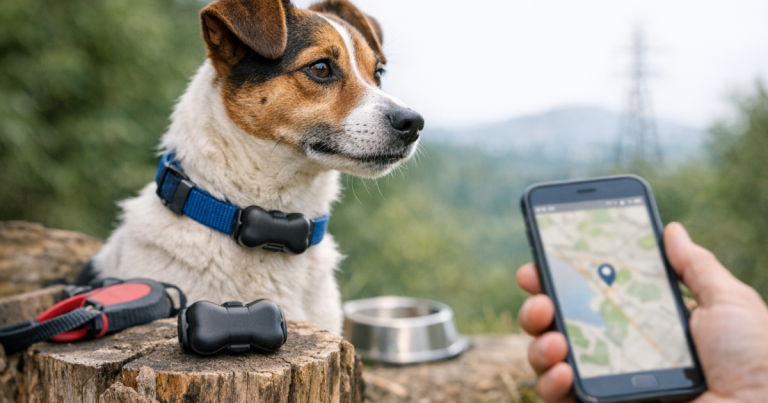
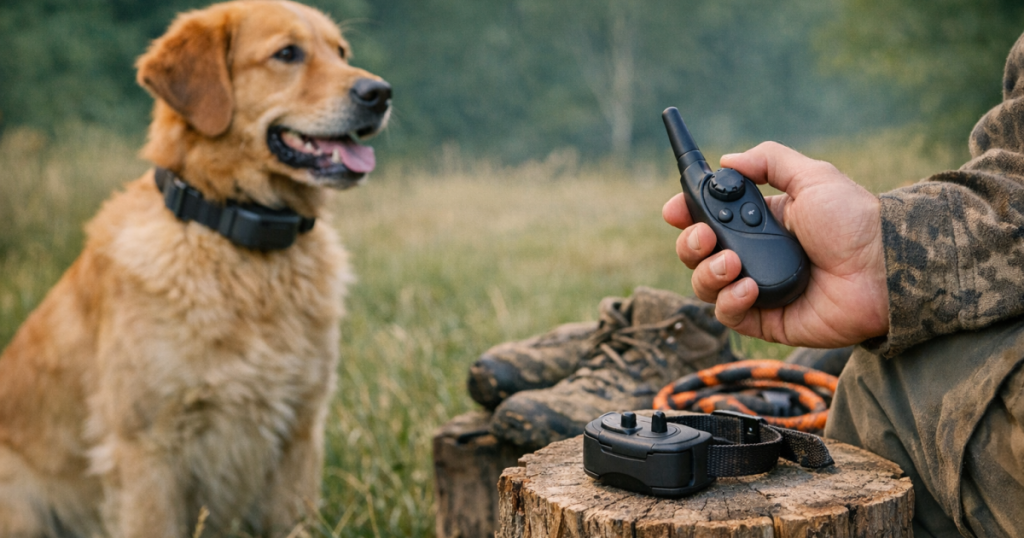
A dog who works close but gets excited by birds, deer, water, or trail traffic can turn a calm outing into a tense few seconds. This SportDOG Brand FieldTrainer 425X Remote Trainer review looks at whether this compact electronic training collar makes sense for that kind of real-world control work, and where its limits matter for safety-minded dog owners.
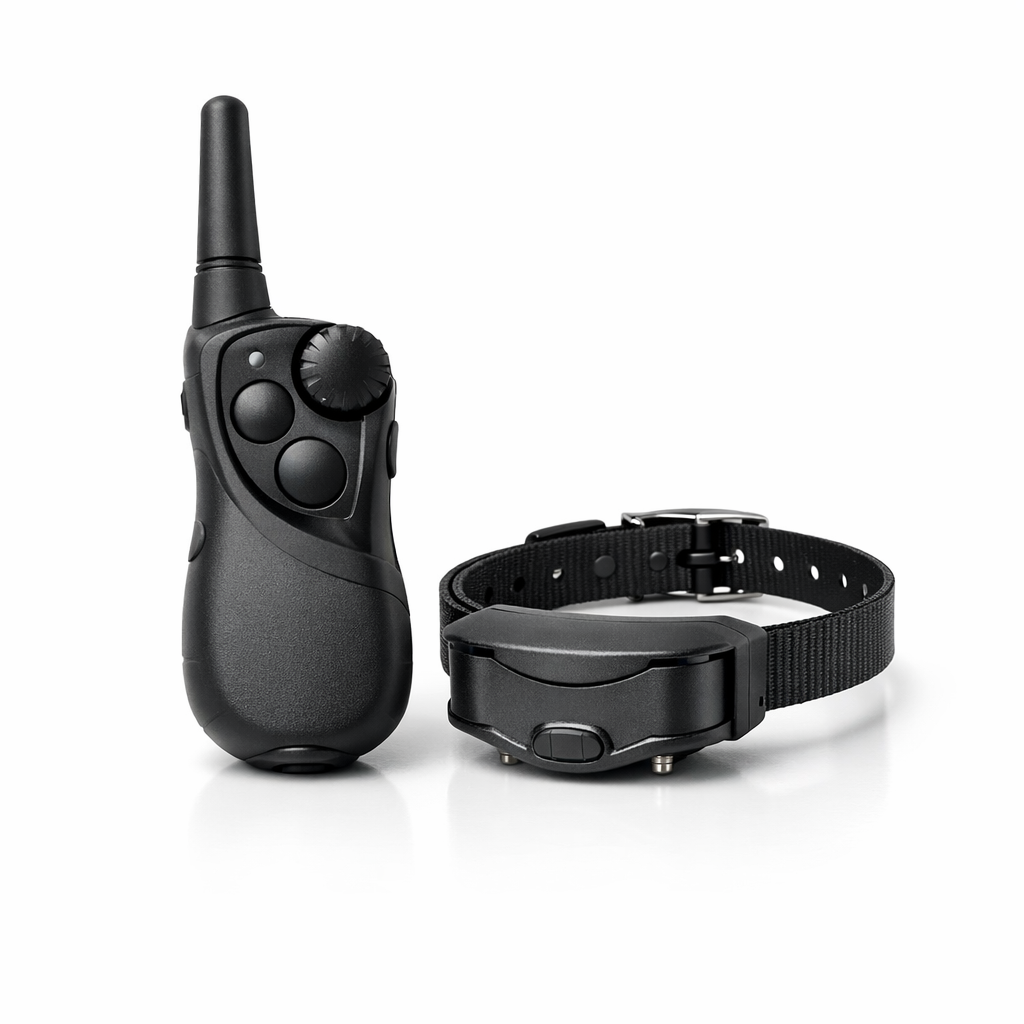
SportDOG Brand FieldTrainer 425X Remote Trainer
A sensible field-training choice for close-working dogs when recall training matters more than live location recovery
Electronic-collar training decisions involving static stimulation should be planned with a qualified professional dog trainer or veterinary behavior professional to support humane handling and compliance with local animal welfare requirements.
The quick editorial read: the SportDOG Brand FieldTrainer 425X Remote Trainer is a serious, focused training tool for close-working dogs in fields, yards, and hunting scenarios. It is not a GPS tracker, it will not show your dog’s location, and it should not be treated as a substitute for a leash, a fenced routine, visible ID, or a recovery plan.
Product Details
- Product type: compact electronic training collar for in-the-field training or hunting with close-working dogs.
- Training range: 500 yards.
- Static stimulation levels: 21 levels.
- Waterproof rating: waterproof to 25 feet.
- Battery life per charge: 50 to 70 hours.
- Charging time: 2 hours.
- Dog size fit: for dogs 8 pounds and up.
- Neck size range: 5 to 22 inches.
- Multi-dog training: Add-A-Dog collars are required for multi-dog training; the setup is limited to 3 dogs.
- Known limitation: the plastic belt clip may be prone to breakage over time.
Where the 500-yard range actually fits
The 500-yard range is the headline number that shapes the entire buying decision. In practical terms, this is not a huge open-country tracking system; it is a close-working remote trainer. That makes it more relevant for dogs who quarter within sight, work around a property, train in a field, or hunt close enough that the handler is still actively directing the session.
For a dog who tends to drift just beyond verbal recall but is not running miles away, 500 yards gives the handler room to work. It can be enough for structured recall reinforcement, field obedience, and controlled hunting setups where the dog is expected to remain within a defined working bubble. That matters because many lost-dog scares start before a dog is truly gone: the moment they ignore a cue at the edge of a field, hesitate near a trailhead, or lock onto a scent while the owner still has a chance to interrupt the pattern.
That said, range is not recovery. A 500-yard remote trainer does not map your dog, ping a location, or tell you which direction they ran. If your main fear is losing a dog in rural cover, on a road trip, or during off-leash hiking, this product should sit beside a true tracking plan rather than replace one. Owners comparing field control with location recovery may find it useful to read our Garmin Alpha 200i GPS Dog Tracker review, because that kind of tool is aimed at a different job: finding and monitoring a dog’s position, not just delivering a training cue.
The 21 static stimulation levels are the main training-control advantage
The most meaningful training feature here is not just that the collar offers static stimulation; it is that the SportDOG Brand FieldTrainer 425X Remote Trainer provides 21 static stimulation levels. More levels give a handler finer adjustment than a coarse low-medium-high setup, which matters when dogs vary so much in sensitivity, coat, focus, arousal, and training history.
For a calm, biddable dog, fine adjustment can help avoid jumping straight to a level that is stronger than the situation calls for. For a highly driven sporting dog, the extra granularity can help the handler work within a narrower training window rather than making big intensity jumps. The practical benefit is control: a better chance of matching the collar’s setting to the dog and the lesson instead of making the device feel blunt.
That precision does not make the collar self-correcting or inherently humane. The collar still depends on timing, training structure, and the handler’s judgment. Used as a panic button after a dog is already bolting, any remote trainer can become inconsistent or confusing. Used within a plan built around known cues, controlled distance, and calm repetitions, the adjustable range of levels is much more meaningful.
This is also where owner expectations matter. A remote trainer cannot install recall by itself. It can only support training that already has a clear behavior attached to the cue. If your dog bolts at parking lots, trailheads, campground gates, or truck doors, the first layer is still management: leash handling, distance from triggers, and routine. For that piece, our guide to keeping your dog from bolting at busy trailheads pairs better with this review than any promise that a collar alone can solve the problem.
Battery and charging suit planned sessions, not forgotten gear bags
The stated 50 to 70 hours of battery life per charge is one of the more reassuring parts of the SportDOG Brand FieldTrainer 425X Remote Trainer. For owners who train deliberately rather than leaving gear powered on indefinitely, that is enough capacity to support repeated sessions between charges. The 2-hour charging time also keeps downtime relatively contained when the collar becomes part of a regular training routine.
The practical buying implication is simple: this product rewards routine. If you charge dog gear the night before a field day, keep it with your training bag, and build short sessions into a predictable schedule, the battery specification is unlikely to be the first weak point. If your gear lives in a truck box for long stretches and only gets noticed when the dog is already loaded, the best battery claim in the world will not help if the unit was not charged.
That is not a criticism unique to this collar; it is a reminder that electronic training gear belongs in the same pre-trip checklist as leashes, tags, water, and visibility gear. The more risk-prone the outing, the more you want redundancy. A charged remote trainer can help with trained control, but a dog with no ID backup or tracking plan is still vulnerable if they get out of range or out of sight.
Waterproofing makes sense for field dogs
SportDOG rates the SportDOG Brand FieldTrainer 425X Remote Trainer as waterproof to 25 feet. For the kind of dog this product is built around, that matters. Close-working hunting dogs, field-training dogs, and outdoorsy companions are rarely working in clean, dry, predictable conditions. Wet grass, rain, mud, pond edges, and accidental water exposure are part of the environment.
The responsible way to read the waterproof rating is as durability support, not permission to ignore care. Waterproofing to 25 feet gives the product a stronger fit for wet field use than a collar meant only for dry backyard sessions. It also makes sense for dogs who splash through water while working close to their handler. After wet use, the owner still has to treat the collar as training equipment that needs to be kept clean, charged, and ready for the next outing.
For dogs who regularly swim, crash through cover, or train in changing weather, this rating helps the SportDOG Brand FieldTrainer 425X Remote Trainer feel aligned with its field-training role. It does not, however, change the broader lost-dog math: a waterproof trainer can keep working around water, but it still does not provide location data if a dog disappears over a ridge, through brush, or across a property line.
Fit range is broad, with a real lower-size cutoff
The collar is listed for dogs 8 pounds and up, with a neck size range of 5 to 22 inches. That is a broad span on paper, covering many small, medium, and large dogs, but the lower limit is important. Dogs under 8 pounds are outside the stated fit range, and very small dogs can be harder to fit comfortably with electronic training equipment in general.
The 5- to 22-inch neck range also puts fit at the center of the decision. A remote trainer needs to sit consistently during movement, field work, and changes in body posture. A collar that shifts, rides loosely, or feels bulky on a small dog can undermine training before the handler ever presses a button. On the other end, a large-necked dog near the upper end of the range needs enough adjustment room for a secure, comfortable fit without crowding other everyday collars or ID tags.
Coat can complicate the picture too. Thick-coated sporting dogs are common candidates for field gear, and owners should think about collar position, comfort, and whether the dog is already wearing other equipment. The useful question is not simply whether the neck measurement falls inside the range. It is whether the collar fits the dog’s body, movement, coat, and training routine without becoming the one piece of gear everyone dreads putting on.
Multi-dog training is possible, but not unlimited
The SportDOG Brand FieldTrainer 425X Remote Trainer is standalone for its primary one-dog training function. If you are training one dog, you are not buying a component that needs a separate base system to perform its core role. For multi-dog training, though, Add-A-Dog collars are the required companion pieces, and the setup is limited to 3 dogs.
That limit is perfectly reasonable for many households: one dog learning recall, two bird dogs working close, or a small group that trains in controlled rotations. It is less compelling for handlers managing larger strings or complex hunting setups where each dog needs separate, reliable control without constant mental bookkeeping. In that case, the 3-dog ceiling becomes a workflow limit rather than a technical footnote.
This is also where a buyer should separate “can support more than one dog” from “ideal for every multi-dog situation.” Adding dogs increases the handler’s decision load. You need to know which dog is being cued, what each dog understands, and whether the session is still clear enough to be fair. A compact remote trainer can be helpful, but multiple dogs magnify every training mistake.
The belt clip limitation is small until it annoys you
The plastic belt clip is a practical weak spot to take seriously because it affects how the trainer lives during real sessions. A belt clip is not exciting, but it is part of field workflow: handlers bend, load dogs, handle long lines, open gates, carry birds, manage gear, and move through cover. If the clip breaks over time, the remote component becomes easier to misplace, drop, or bury in a pocket at the moment you want quick access.
This does not make the SportDOG Brand FieldTrainer 425X Remote Trainer a poor product by itself. It does make the collar less set-and-forget than the strongest parts of its specification might suggest. The range, waterproofing, battery life, and stimulation levels all point toward practical field use. The belt clip limitation reminds you that durability is not only about electronics or water exposure; sometimes the small carry parts decide whether a tool feels smooth in daily use.
For owners who train occasionally in a yard, this may be a minor inconvenience. For frequent field handlers, it is a more meaningful workflow consideration. A remote trainer that is hard to carry consistently is less useful than one that is always where your hand expects it to be.
What it should and should not be trusted to do
The SportDOG Brand FieldTrainer 425X Remote Trainer makes the most sense for owners who already understand the difference between training control and recovery reliability. Its strengths are direct: 500 yards of stated training range, 21 static stimulation levels, waterproofing to 25 feet, 50 to 70 hours of battery life per charge, and a 2-hour recharge time. Those facts point toward a capable close-field trainer for the right dog and handler.
Its limitations are just as important. It is not suitable for dogs under 8 pounds. It is limited to 3 dogs in a multi-dog setup with Add-A-Dog collars. The plastic belt clip may be prone to breakage over time. And most importantly for this site’s readers, it does not locate a missing dog. If your dog is a fence-jumper, door-dasher, campground escape artist, or rural wanderer, this collar can only be one layer in a broader safety routine.
That layered approach is where the product becomes easier to evaluate fairly. Use a remote trainer for trained cues and field obedience. Use physical management for predictable danger points. Use tags, visibility, and GPS tracking for recovery planning. No single device should carry the entire emotional weight of “my dog will never get lost.”
Verdict
The SportDOG Brand FieldTrainer 425X Remote Trainer is a good, focused choice for close-working dogs when the owner wants a compact electronic training collar with meaningful range, fine stimulation adjustment, wet-weather durability, and solid battery specifications. It loses ground for very small dogs, larger multi-dog workflows, the belt clip concern, and any owner expecting it to function as a lost-dog recovery tool. For the right training routine, it earns an 8.1 out of 10.
SportDOG Brand FieldTrainer 425X Remote Trainer
A sensible field-training choice for close-working dogs when recall training matters more than live location recovery
You might also like: How to Fit a GPS Collar on a Thick-Coated Dog.