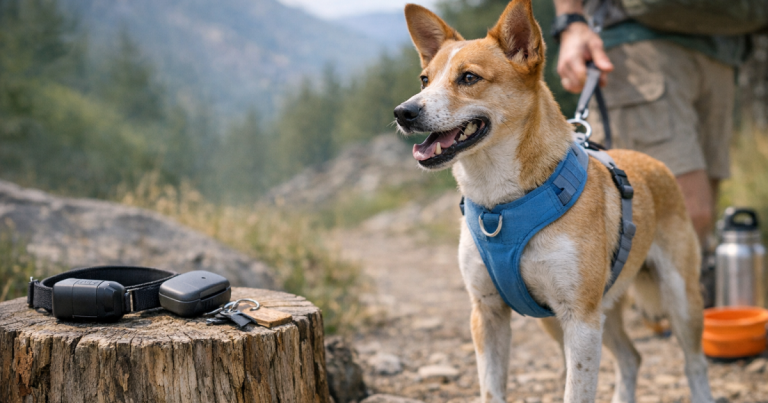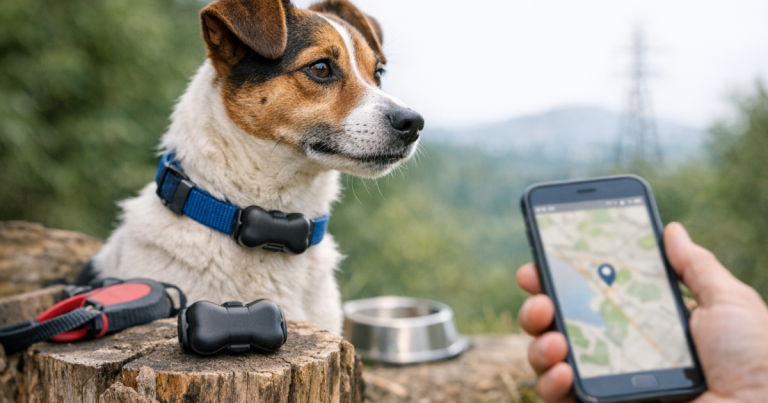
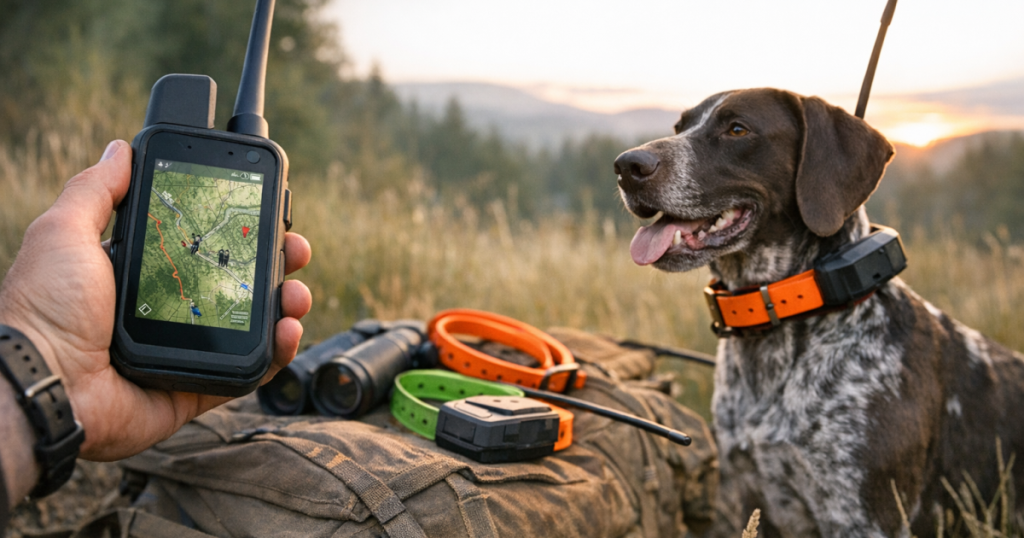
A dog disappearing over a ridge, ducking into thick cover, or ranging ahead on a large property creates a different kind of anxiety than a neighborhood door dash. This Garmin Alpha 200i GPS Dog Tracker review starts with that difference: this is not a casual tag for checking whether your dog is near the couch. It is a serious Garmin dog GPS tracker for owners who need field mapping, fast location updates, multi-dog management, and remote communication tools in one system.
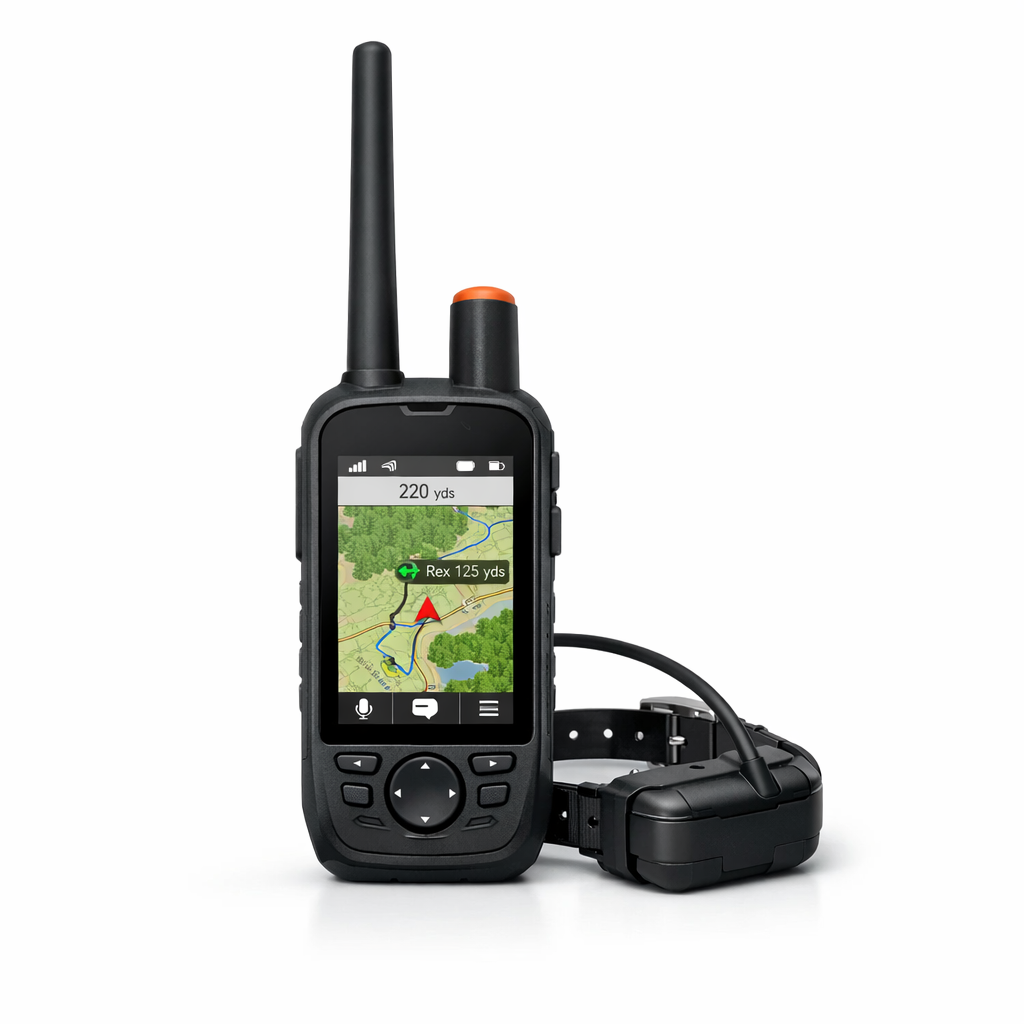
Garmin Alpha 200i
Overall, Garmin Alpha 200i earns a It stands out as a strong option for the readers and use cases discussed above
Quick verdict: the Garmin Alpha 200i GPS Dog Tracker is worth considering for hunters, sporting-dog handlers, rural dog owners, and experienced GPS users who will actually use its mapping and inReach features. It is much harder to justify for casual pet owners who mainly want a simple lost-dog backup around town.
Product Details
- Product: Garmin Alpha 200i GPS Dog Tracker
- Product type: Dog GPS tracker
- Display: 3.5-inch sunlight-readable capacitive touchscreen
- Satellite support: Multi-GNSS support
- Mapping: Preloaded Garmin TopoActive mapping and BirdsEye Satellite Imagery
- inReach technology: Two-way messaging and interactive SOS alerts via the Iridium satellite network
- Dog tracking: Tracks up to 20 active dogs with location updates every 2.5 seconds
- Battery life claim: Up to 20 hours, or up to 15 hours with inReach technology enabled
The real reason to consider it: tracking that matches field decisions
The strongest case for the Garmin Alpha 200i GPS Dog Tracker is not that it has GPS in the name. Plenty of dog trackers do. The meaningful difference is the way its dog-tracking feature is framed for active field use: it can track up to 20 active dogs, with location updates every 2.5 seconds.
That update rate matters when your decision is immediate. A dog moving through brush, crossing a property line, or separating from a group creates a fast-changing situation. Slower, convenience-oriented tracking can still help in many lost-pet scenarios, but a frequent update cadence is more useful when you need to understand direction and movement while the dog is still in motion.
The 20-dog ceiling also tells you a lot about the intended buyer. This is a tracker built with sporting-dog and multi-dog field routines in mind, not just a single suburban pet who slips through the front door twice a year. If your dog’s risk pattern is mainly bolting at the trailhead, a GPS system can be part of the plan, but the first layer is still handling, leash control, and environment management. For that scenario, our guide to keeping your dog from bolting at busy trailheads is the more practical starting point.
Mapping is where the Alpha 200i feels purpose-built
The Garmin Alpha 200i GPS Dog Tracker includes preloaded Garmin TopoActive mapping and BirdsEye Satellite Imagery. For field owners, that is not a decorative feature. It changes how you read the dog’s location against the land around you.
A simple dot on a screen can tell you where a dog is. Mapping helps you interpret what that location means. Is the dog moving toward a drainage, road edge, creek bed, ridge, or property boundary? Are you looking at an easy walk-in recovery route or a route that pushes you toward rough ground? Those are the kinds of questions where mapping support becomes more than convenience.
The 3.5-inch sunlight-readable capacitive touchscreen supports that same field-first design. A readable screen matters when you are not standing in perfect indoor light. The size is large enough to make map interaction more workable than a tiny status display, while still belonging to a device meant to be carried into the field.
That said, touchscreen mapping also adds complexity. This is not the kind of tracker you hand to a first-time dog sitter with a one-sentence explanation. It rewards owners who are willing to learn the workflow before they need it under pressure. The product is strongest when the user is comfortable with GPS navigation and satellite communication devices, not when it is treated as a plug-and-forget backup.
inReach is valuable, but it changes the ownership equation
The Garmin Alpha 200i GPS Dog Tracker includes inReach technology for two-way messaging and interactive SOS alerts via the Iridium satellite network. For remote dog owners, that is a meaningful safety feature because it extends the product beyond dog location alone. In a backcountry or rural setting, the human side of recovery can be just as important as the dog’s position.
The practical implication is straightforward: if your dog ranges in places where normal communication can be unreliable, inReach support gives the device a broader safety role. It can support two-way messaging and interactive SOS alerts when the inReach feature is active and properly supported by its subscription model.
The trade-off is equally important. Satellite communication features require an active inReach subscription. Additional charges can also apply for inReach tracking points depending on the subscription plan. That means the Garmin Alpha 200i GPS Dog Tracker should not be judged like a one-time gear purchase only. Its most distinctive communication capability depends on an ongoing service relationship.
For some owners, that is easy to justify. If you hunt, travel into remote areas, or run dogs where distance and terrain create real recovery challenges, the subscription requirement is part of the safety system. If your dog mainly walks city blocks and fenced parks, paying for satellite communication features can feel like buying more tool than your routine demands.
Battery life supports long outings, with realistic limits
Garmin’s battery claim for the Garmin Alpha 200i GPS Dog Tracker is up to 20 hours, or up to 15 hours with inReach technology enabled. On paper, that fits a long day outside. In practice, it also tells you to plan differently depending on whether you are using the tracker primarily for dog location, navigation, communication, or all three.
The drop from up to 20 hours to up to 15 hours with inReach enabled is not a flaw so much as a reminder that satellite communication has a cost. If you are relying on inReach features during a remote outing, you should think of battery life as part of the route plan, not as an afterthought. Heavy use, environmental conditions, and the way the device is operated can affect runtime, so the safest habit is to start serious outings fully charged and avoid assuming the maximum claim will match every day in the field.
This is also where GPS trackers need to be kept in perspective. A tracker improves your information; it does not guarantee recovery. Before giving any dog more freedom, test the tracker in controlled conditions, learn how its location behavior looks in your normal terrain, and rehearse what you would do if the dog started moving away from you. Our step-by-step guide to testing your dog tracker’s accuracy before off-leash time is a good companion routine for any tracking system.
The limitations are not minor for casual owners
The Garmin Alpha 200i GPS Dog Tracker has a clear audience, and the limitations reinforce that. It is not suitable for tracking more than 20 active dogs at the same time. For most owners, that ceiling is more than enough, but handlers managing very large groups should treat it as a hard boundary.
Compatibility is also limited to Garmin devices and services. That can be a positive if you already use Garmin equipment and want a cohesive system, but it is less appealing if you prefer a more open, phone-first tracker setup. The device can also require software updates for optimal performance, which adds another maintenance habit to the ownership routine.
The water limitation matters, too. The Garmin Alpha 200i GPS Dog Tracker is not waterproof and should not be submerged. That does not make it unusable outdoors, but it does mean water exposure deserves respect. If your dog work regularly involves deep water, heavy rain, flooded fields, or wet boat routines, that limitation should weigh heavily in the decision.
It is also not intended for use in extreme temperatures. For a product aimed at outdoor and field use, that may sound restrictive, but it is a practical reminder that electronics have environmental boundaries. Owners working in very hot, very cold, or unusually harsh conditions should build routines around those limits rather than assuming the tracker can tolerate every setting.
Where it fits in a lost-dog prevention plan
The Garmin Alpha 200i GPS Dog Tracker makes the most sense as a high-information tool inside a broader safety routine. Its role is to help you understand where active dogs are, how they are moving, and what the surrounding terrain looks like. That is different from preventing the escape in the first place.
For a fence jumper, door dasher, or anxious dog, the first layer is still physical security and behavior management. For a sporting dog or rural dog, the first layer may be training, line-of-sight habits, terrain awareness, and knowing when not to release the dog at all. The Alpha 200i strengthens the information layer, but it should not be the only layer.
That distinction is important because the Garmin Alpha 200i GPS Dog Tracker is powerful enough to tempt owners into overconfidence. A fast update rate, mapping, and satellite communication features can all support better decisions, but they do not remove the realities of terrain, weather, battery use, device compatibility, water exposure, or dog behavior.
The buying decision: serious capability, serious commitment
The Garmin Alpha 200i GPS Dog Tracker is easiest to recommend to owners who already know they need a field-grade tracking workflow. If you manage active dogs in rural spaces, hunt with sporting dogs, or spend time beyond easy cell-phone convenience, its combination of multi-GNSS support, detailed mapping, frequent dog-location updates, and inReach communication is compelling.
It is much less compelling for owners who want a simple everyday pet tracker. The specialized feature set, higher price point, Garmin ecosystem dependence, subscription requirement for inReach features, and learning curve all make it a more demanding choice than a basic lost-pet device. That is not a criticism of the product; it is a sign that Garmin built it for a more specific job.
A sensible buyer should choose it because the use case is demanding, not because it sounds more advanced. If your dog’s safety routine depends on reading terrain, tracking multiple active dogs, and maintaining communication options in remote places, the Garmin Alpha 200i GPS Dog Tracker belongs on the shortlist. If your main need is a lighter everyday tracker for neighborhood escape scares, it is probably more system than you need.
Verdict
The Garmin Alpha 200i GPS Dog Tracker earns 8.6 out of 10. It is a very strong, purpose-built option for serious field tracking, multi-dog management, mapping-led decisions, and remote communication through inReach. The score is held back by its specialized nature, subscription-dependent satellite features, Garmin ecosystem limits, non-waterproof design, environmental restrictions, and the fact that casual pet owners can easily buy more complexity than their routine requires.
Final thoughts
Overall, Garmin Alpha 200i earns a score of 8.6/10. It stands out as a strong option for the readers and use cases discussed above.
Garmin Alpha 200i
Overall, Garmin Alpha 200i earns a It stands out as a strong option for the readers and use cases discussed above
You might also like: Ruffwear Front Range Harness vs Kurgo Tru-Fit Smart Harness: Which Fits Your Dog’s Safety Routine?.