A dog who can reverse out of a collar changes the whole training setup. The best long lines for dogs in this situation are not just longer leashes; they are controlled-distance tools used with secure attachment points, calm handling, and a backup plan for identification and recovery.
No long line makes a collar escape-proof. If your dog has already slipped a flat collar, the safer training setup is usually a well-fitted harness for the line, a correctly fitted martingale collar as backup identification support, and a slow recall plan that does not invite your dog to hit the end of the line at full speed.
The direct answer
For dogs who slip collars, the best long line is one you can manage smoothly without wrapping it around your hand, dragging your dog off balance, or relying on a loose collar as the only connection. Choose the product by training location and dog behavior, not by length alone.
- Ruffwear Rogue Long Line: a strong fit for owners who want a purpose-built long line from an outdoor dog-gear brand, especially for trail-style recall practice where handling and storage need to stay tidy.
- Leashboss Long Trainer: a sensible option for structured recall drills in parks, fields, and large yards when you want a straightforward training line rather than a retractable leash.
- Mendota Check Cord: a field-training style choice for handlers who prefer a check-cord format and are working in open spaces with fewer snag points.
- Hi Kiss Dog Obedience Recall Training Agility Lead: a widely used recall-training lead for owners starting basic distance work in controlled spaces.
The best training collar for a dog that slips out is usually a properly fitted martingale collar used for supervised leash work, not a correction tool meant to solve escape behavior by force. The collar should tighten only enough to reduce backing out, while the long line should normally attach to a secure harness when you are adding distance.
Step 1: Fix the attachment setup before you add distance
If a dog has learned to back out of a collar, clipping a 20-foot or 30-foot line to the same collar only gives the problem more runway. Start with the gear connection.
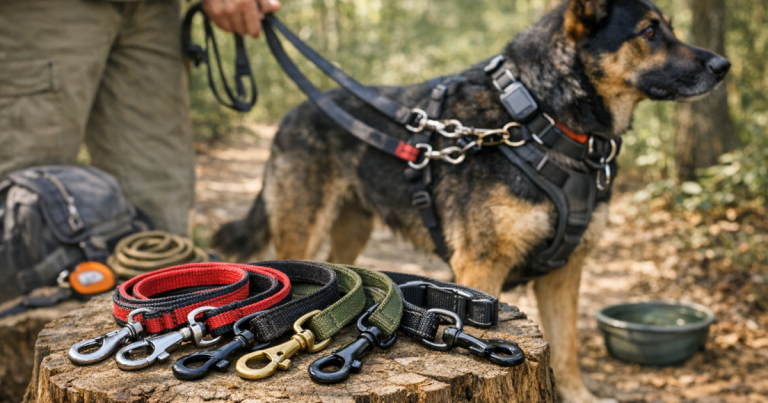
- Attach the long line to a secure, well-fitted harness for recall practice.
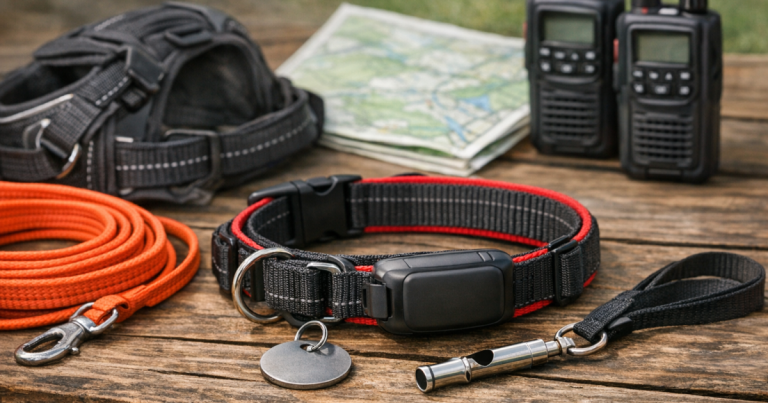
- Keep ID tags on a collar even if the line is clipped to the harness.
- Use a martingale collar only when it fits correctly and the dog is supervised.
- Avoid clipping a long line to a loose flat collar on a dog with a known backing-out habit.
If you are still dialing in collar fit, read how to fit a martingale collar for escape-prone dogs before using one as part of your training setup. A martingale that sits badly is just a fancy way to keep worrying.
Step 2: Match the line to the training place
For a fenced yard or quiet driveway
A simple long trainer is usually enough. The goal is not to test your dog’s top speed. It is to practice coming when called, moving with you, and checking in before the dog is excited enough to ignore you. Keep the first sessions short and boring in the best possible way.
For open parks and field edges
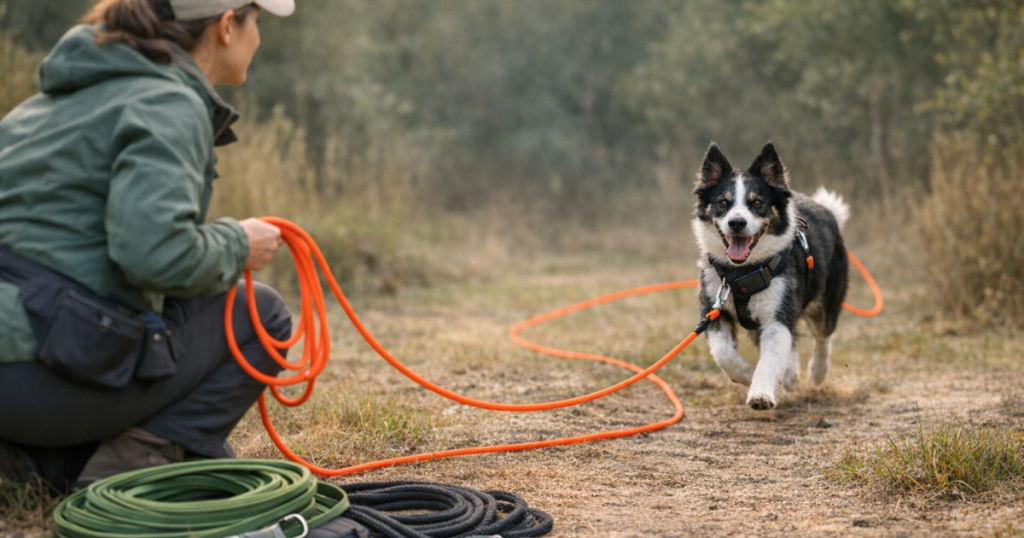
Choose a line you can see, gather, and control without knots. Long lines can snag on picnic tables, brush, roots, and other dogs’ legs. In open areas, give your dog distance gradually instead of dropping the whole line at once.
For trailheads, campgrounds, and roadside stops
Prioritize handling. A line that is awkward in a parking lot may be fine in a meadow, but the escape risk is usually highest when doors open, leashes change hands, or everyone is distracted. Keep the dog close until you are away from traffic, then let out more line only when the environment is calmer.
Step 3: Choose the product by dog behavior
Best all-around outdoor choice: Ruffwear Rogue Long Line
The Ruffwear Rogue Long Line is the one to consider when your training often overlaps with hikes, trail practice, and travel days. It fits the owner who wants one line for controlled distance work rather than a pile of almost-right leashes. It is not a magic tether for a panicked dog; it still needs a secure harness, two hands when needed, and sensible distance management.
Best straightforward training lead: Leashboss Long Trainer
The Leashboss Long Trainer makes sense for owners who want a dedicated recall line without turning training into a gear project. Use it in low-distraction spaces first. If your dog bolts hard at squirrels, runners, or open gates, shorten the working distance and reward check-ins before asking for more freedom.
Best field-style option: Mendota Check Cord
The Mendota Check Cord is a practical pick for open-space training where a check-cord style feels familiar and easy to manage. It is best suited to handlers who can keep the line moving and avoid tangles. It is less appealing in cluttered neighborhood settings where the cord can catch on too many things.
Best basic recall starter: Hi Kiss Dog Obedience Recall Training Agility Lead
The Hi Kiss Dog Obedience Recall Training Agility Lead is a common starting point for owners practicing recall, stays, and controlled distance in ordinary spaces. Treat it as a training aid, not an escape-prevention system. If your dog is newly adopted, highly startled, or already known to flee, your gear plan should be more conservative.
Step 4: Run the first-session safety check
Before you give your dog extra room, do one short dry run. Clip the line to the harness, let out only a small amount, and watch what happens when your dog turns, sniffs, pulls sideways, or tries to reverse. You are looking for twisting, rubbing, dragging, and any sign that the line changes your dog’s movement.
- Keep the line out from under your dog’s legs as much as possible.
- Do not wrap the line around your hand, wrist, or fingers.
- Practice gentle line gathering before the dog is excited.
- Use gloves if the line material is hard to grip comfortably.
- Stop before the dog is tired, frantic, or over-aroused.
For a fuller handling routine, use the steps in how to use a long line safely for recall practice. The mechanics matter most when nothing dramatic is happening yet.
Step 5: Add a lost-dog backup plan
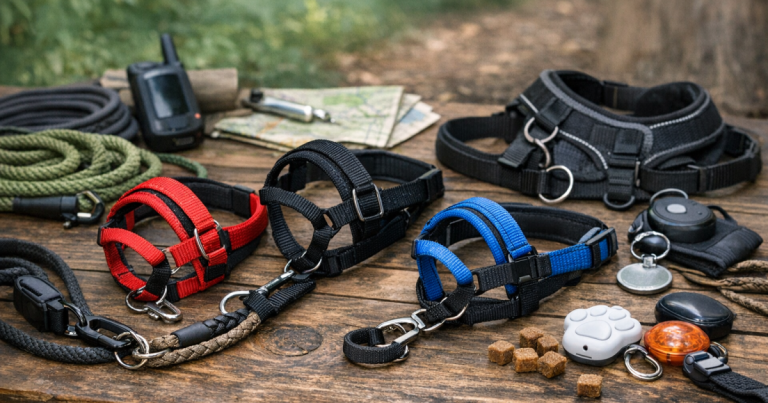
A long line is training gear. It is not a recovery plan by itself. Collar-slipping dogs should have visible ID, a secure attachment setup, and, when the dog’s escape risk is high, a tracking plan that fits the places you actually go. A GPS tracker can help with recovery, but it still depends on coverage, battery management, fit, and whether the device stays attached during real movement.
Build the plan around the moment things usually go wrong: a car door opens, the line slips through your fingers, your dog spooks at a truck, or a helper accidentally unclamps the wrong clip. Before each session, decide who is holding the dog, who is managing doors or gates, and what everyone should do if the dog gets loose. The first rule is usually to avoid chasing. Many worried dogs run harder when people run after them, so a calmer response may be to crouch sideways, use a familiar happy cue, scatter treats, or move toward a safe enclosed area.
- Keep a current photo of your dog on your phone, including one that shows markings clearly.
- Check that the ID tag phone number is readable and connected to a phone someone will answer.
- Make sure microchip registration details are current, not just implanted.
- Carry higher-value food than you use at home, especially in new places.
- Note the nearest road, parking lot, trail name, or landmark before you start training.
If you use a tracker, treat it as one layer, not the only layer. A tracker attached to a collar may not help if the collar is the item your dog slips, while a tracker on a harness may be safer during long-line work but less useful if the harness is removed after training. Battery life also matters more than features on days when you are traveling, camping, or spending hours away from a charger. Make charging the device part of the same routine as packing treats and checking the long line for knots.
For nervous dogs, rehearse recovery skills when nothing is wrong. Practice your emergency recall at short distances, reward your dog for moving toward you after a mild startle, and occasionally clip and unclip gear indoors so the sound does not predict freedom or panic. The goal is not to assume an escape will happen; it is to make sure one mistake does not become a long, chaotic search.
For newly adopted or high-flight-risk dogs, start with the essentials in training gear for newly adopted flight-risk dogs. That kind of setup is less glamorous than buying another leash, but it is usually where the real stress reduction begins.
Main points
- Do not attach a long line to a loose collar on a dog who already slips collars.
- Use a secure harness as the main connection for distance training.
- A properly fitted martingale collar can help with supervised leash security, but it is not a substitute for training or recovery planning.
- Choose the line by setting: yard, park, field, trailhead, or travel stop.
- Keep early sessions short, calm, and easy enough that your dog can succeed.
The right long line gives a collar-slipping dog more room to learn without giving up control. Pair it with careful fit, realistic distance, and backup ID, and recall practice starts to feel less like a gamble and more like a plan.