The first few weeks with a newly adopted dog can feel sweet one minute and heart-stopping the next. A loose gate, a startled backward pull, or a badly fitted collar can turn a normal walk into a search. For most families, escape-prone dog collars are only one part of the setup; the safer plan is layered gear, slower training, and recovery backups.
Behavior assessment for panic-driven escape attempts and the use of aversive training tools should be handled by a qualified veterinarian, certified trainer, or veterinary behavior professional, following local animal welfare rules and safety standards.
What to know first
For dogs that slip out, the best training collars are not correction-first collars. The most practical first choice is usually a well-fitted martingale or buckle martingale collar, used for supervised leash walks and paired with a properly fitted harness, ID tag, long line practice, and a realistic recovery plan.
A newly adopted flight-risk dog is not being dramatic or stubborn. Many are overwhelmed by unfamiliar sounds, new routes, new people, and a home they do not yet understand as safe. Gear should reduce the chance of a mistake while you build trust. It should not depend on pain, surprise, or a single attachment point that can fail at exactly the wrong moment.
Step 1: Start with a collar that limits backward slipping
A standard flat collar can work for many settled dogs, but it is often a weak point for dogs with narrow heads, thick necks, fluffy coats, or a habit of backing up when scared. A martingale-style collar tightens within a limited range when tension is applied, which can make it harder for a dog to reverse out of the collar during a startle.
The key word is limited. The collar should not keep tightening without control, and it should not be left on unsupervised if it could catch on furniture, crate hardware, brush, or another dog’s mouth. For a dog who has already slipped a collar, read through how to fit a martingale collar for escape-prone dogs before trusting it outside.
Buckle martingales can be especially convenient for daily walks because they open and close without sliding over the dog’s head. That matters when a nervous new dog dislikes handling around the face or ears. Convenience still does not replace fit: check the collar when your dog is standing, sitting, turning, sniffing, and gently backing up.
Step 2: Add a harness as a second layer, not a replacement for judgment
A harness can spread leash pressure away from the neck and give you another secure connection point, but it has to fit the dog in front of you. Some deep-chested dogs can wriggle backward out of loose harnesses. Some small dogs are uncomfortable in bulky designs. Thick coats can also hide slack until the dog twists.
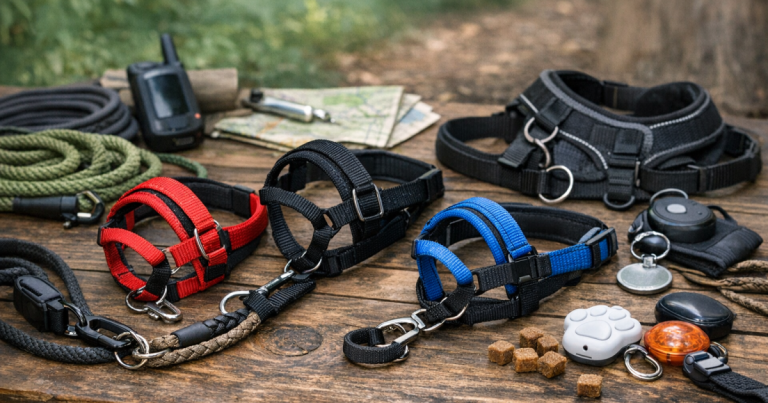
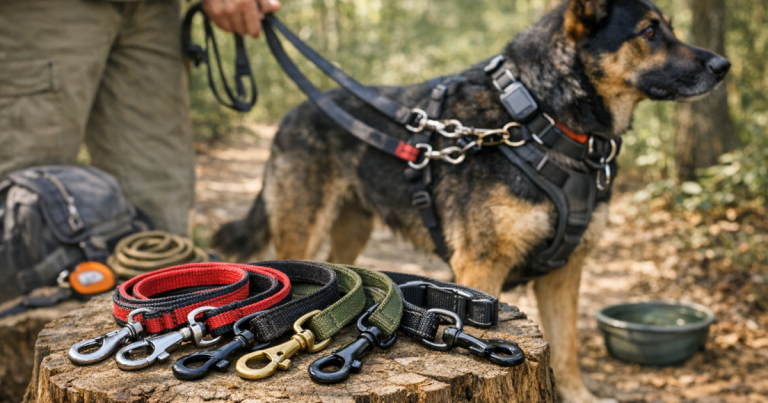
For newly adopted flight-risk dogs, a two-point setup is often the calmest starting routine: one leash connection to the harness and one backup connection to the collar, or a leash plus safety strap depending on the gear. The goal is not to wrestle the dog into submission. It is to prevent a single slipped strap from becoming a lost-dog incident.
A lightweight reflective harness such as the Ruffwear Hi & Light Harness is one recognizable example to compare against your dog’s body shape and comfort needs. The brand name matters less than the result: no rubbing behind the elbows, no loose chest loop, no gaping neck opening, and no interference with normal walking.
Step 3: Use a long line to practice freedom without giving up control
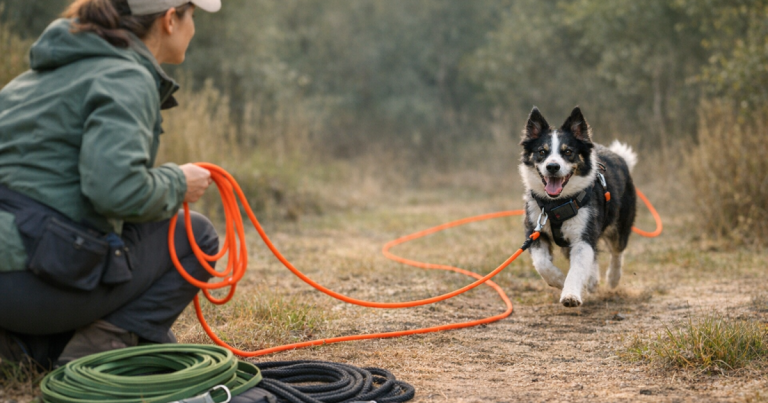
A long line is one of the most useful training tools for a new dog who wants to bolt, freeze, or chase. It lets the dog sniff, turn, and make choices while you still have a physical connection. That makes it better for recall practice than jumping straight from a short leash to an off-leash field.
Start in boring places before you try exciting ones. A quiet fenced yard, empty ball field, or open patch away from roads is a better first classroom than a busy trailhead. Keep the line organized so it does not wrap around ankles, trees, picnic tables, or another dog. For line handling, spacing, and recall setup, use this guide to use a long line safely for recall practice.
The Ruffwear Rogue Long Line is a familiar training-leash example, but any long line should be judged by control, comfort in your hands, visibility, and whether the clip is appropriate for your dog’s size and strength. Avoid attaching a long line to a neck collar for a dog that may hit the end of the line at speed; a secure harness is usually the safer attachment point.
Step 4: Treat ID and visibility as training gear
Identification is not separate from training for a flight-risk dog. It is part of the safety system. A dog who bolts during the first month may not come when called, may not recognize the front door as home, and may run from helpers. Clear ID gives neighbors, shelter staff, and good Samaritans a faster way to connect the dog back to you.
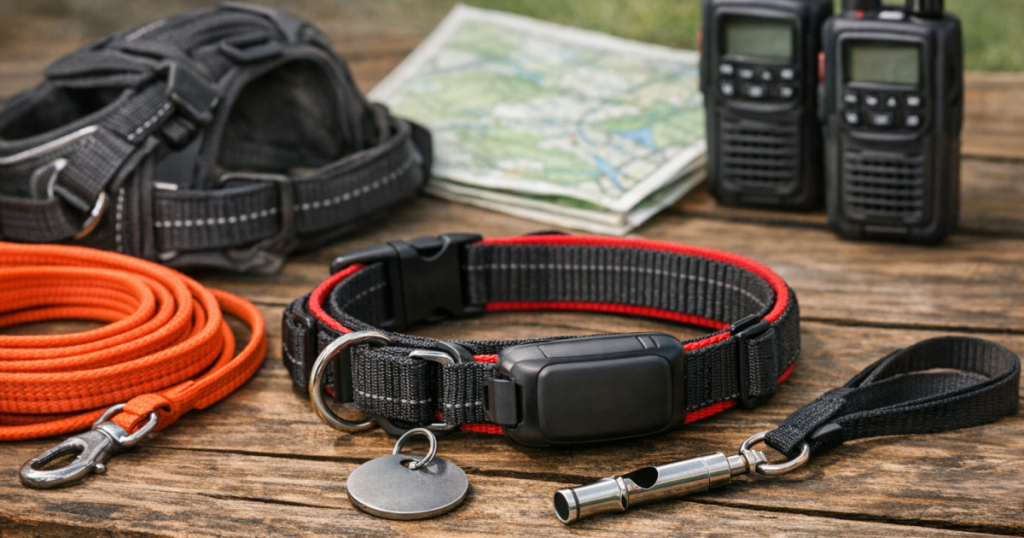
A simple engraved tag such as the GoTags Bone Dog Tag in Stainless Steel can ride on the collar even when a GPS tracker is charging or unavailable. Keep the information easy to read and current. If you are worried about noise from dangling tags, use a tag silencer or collar-mounted ID style, but do not skip visible identification entirely.
Low-light visibility also matters. A dusk potty break is one of the classic moments when a nervous new dog darts through a gate or slips behind shrubs. A lighted accessory such as the Nite Ize NiteHowl Rechargeable LED Safety Necklace can make a dog easier to spot nearby, while reflective gear helps drivers and neighbors notice movement sooner.
Step 5: Add tracking, but do not mistake it for a recall
A GPS dog tracker can be a valuable recovery tool when the device has power, is attached securely, and can report location under the conditions you are in. It should not be treated as permission to loosen the training plan. Cellular coverage, terrain, battery status, device placement, and collar fit can all affect how useful a tracker is during a real escape.
Bluetooth tags are different. They can be useful as a nearby backup, especially in neighborhoods with many compatible phones, but they are not the same as live GPS tracking. For a newly adopted flight-risk dog, the stronger setup is layered: secure collar, fitted harness, ID tag, long line practice, visibility, and a tracker that matches your real walking, travel, or yard risks.
Gear that usually makes the situation worse
Some equipment looks like control but adds risk when a dog is newly adopted and frightened. Be especially cautious with:
- Retractable leashes near doors, parking lots, sidewalks, or trailheads, where sudden distance can become dangerous fast.
- Loose flat collars on narrow-headed dogs, thick-coated dogs, or dogs that panic and back up.
- Correction-heavy collars used to stop fear behavior without a behavior plan.
- Unsupervised martingale or slip-style collars that could catch on objects.
- Off-leash practice before the dog has a reliable recall in low-distraction settings.
Newly adopted dogs often improve quickly when the world becomes predictable. The goal is to prevent the one bad moment that happens before that confidence arrives.
Fit checks before every walk
Make these checks part of the same routine as grabbing keys and poop bags. They take less than a minute once you build the habit.
- Check that the collar cannot pass over the dog’s ears when gentle backward tension is applied.
- Confirm that the martingale loop closes only to the intended point and does not keep tightening.
- Look under the harness straps for twisted webbing, loose buckles, or fur trapped in a way that changes the fit.
- Attach the leash to a load-bearing ring, not to a small ID-tag ring.
- Use a backup connector if your dog has a known history of slipping gear.
- Check that ID tags are readable and tracker or lighted gear has enough charge for the outing.
- Pause at thresholds: doors, gates, car doors, elevators, and trailhead parking areas deserve extra control.
Things readers ask
What are the best training collars for dogs that slip out?
The best escape-prone dog collars are usually well-fitted martingale or buckle martingale collars, not shock or correction-first collars. They help reduce backward slip-outs during supervised leash walking, but they work best when paired with a secure harness, positive recall training, and visible ID.
Should a newly adopted dog wear a harness or a martingale?
Many flight-risk dogs do best with both during the early settling-in period. The martingale helps prevent collar escapes, while the harness gives you a second secure connection and reduces pressure on the neck. Once the dog is calmer and more predictable, you can simplify the setup if it remains safe.
Can a GPS tracker replace leash training?
No. A GPS tracker is a recovery aid, not a training cue or physical restraint. It can help you search more intelligently if your dog gets loose, but it cannot stop a bolt through an open door, fix poor collar fit, or guarantee a signal in every location.
Practical takeaway
For a newly adopted flight-risk dog, the best gear setup is deliberately boring: a secure limited-slip collar, a well-fitted harness, a long line for controlled practice, clear ID, visibility gear, and a tracker plan that acknowledges real-world limits. The exciting part comes later, when your dog starts choosing to check in, turn back, and trust the routine.
If your dog has already escaped through a gate or yard opening, keep your next steps calm and systematic. Start with this recovery-focused guide on how to track a dog after a backyard gate escape, then tighten the gear and training routine before the next outdoor session.