A GPS tracker only helps if it stays on the dog. For GPS dog collars for escape-prone dogs, the collar decision is not cosmetic; it is about keeping the tracking device secure without making everyday wear harsh, bulky, or risky. A well-fitted martingale can be the right support layer for dogs that back out of flat collars, but it still needs careful sizing and a backup plan.
The short answer: choose a martingale collar with enough stable webbing for the tracker mount, a limited-cinch design that cannot over-tighten, and hardware that does not sit directly under the GPS device. For leash walks, many escape-prone dogs are safer with a harness plus a tracker collar, rather than asking one collar to do every job.
Step 1: Decide whether a martingale collar is the right tracker base
A martingale collar has two loops: the main neck loop and a smaller control loop. When a dog pulls backward, the smaller loop tightens the main loop to reduce the chance of the collar slipping over the head. That makes it useful for narrow-headed breeds, nervous dogs, and dogs that have learned the theatrical art of reversing out of ordinary collars.
For tracker use, the goal is not to restrain the dog by the GPS device. The goal is to keep the device riding in a predictable position on a collar that is less likely to slide off. That matters most when a dog panics at a hotel door, wriggles near a trailhead, or bolts through a gate before anyone has clipped the leash.
A martingale is not a substitute for recall work, fencing, ID tags, or a recovery plan. It is one layer. If your dog is a serious bolter, pair the collar with a secure body setup and review escape-specific harness options in this guide to escape-resistant dog harnesses for hiking and road trips.
Step 2: Match the martingale style to the GPS tracker format
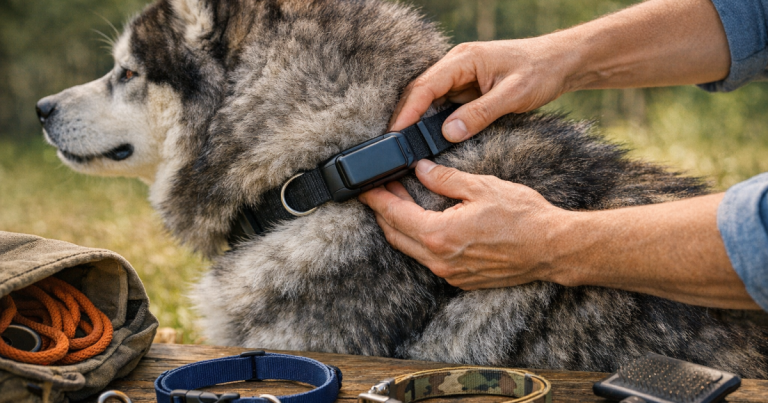
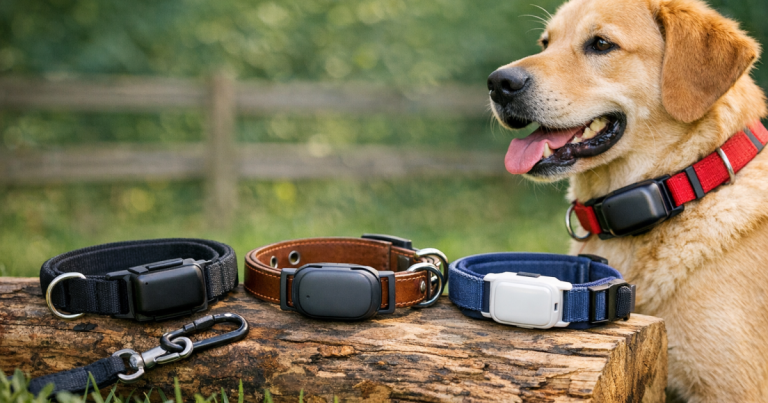
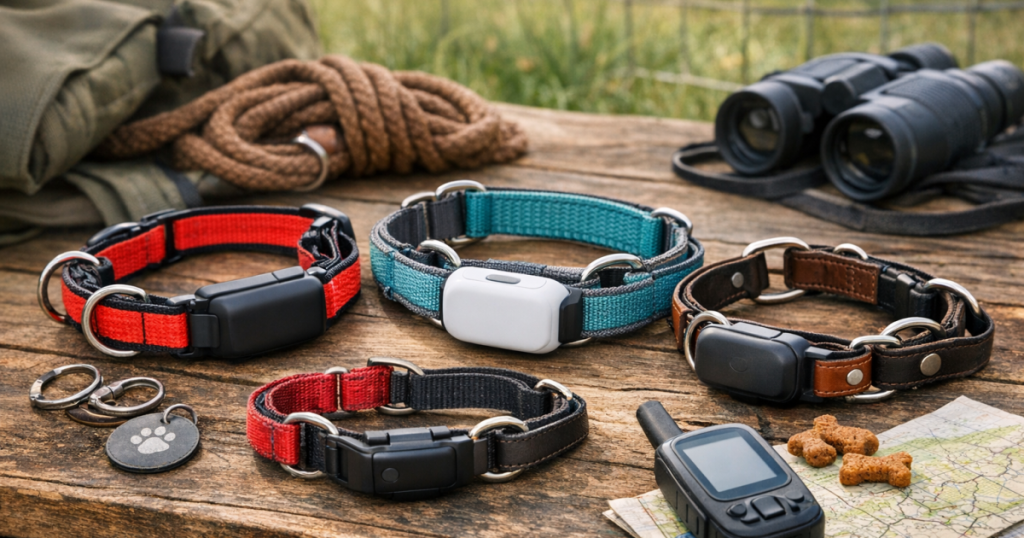
Not every GPS tracker sits on a collar the same way. Some trackers are built into a collar system, while others mount onto an existing collar. Before buying a martingale, look at how the tracker attaches and where the bulk will land on your dog’s neck.
- Add-on GPS devices: These usually need a stable, flat section of collar. A simple webbing martingale is often easier to mount to than a chain-loop style, because the fabric gives the holder a more predictable surface.
- Integrated smart collars: If the tracker is part of its own collar system, do not assume you can convert it into a martingale. Review the device’s intended collar setup first. For example, the Fi Ultra is better evaluated as a complete tracking collar rather than as a loose device to hang from any martingale.
- Field and rural tracking devices: Hunting-style or remote-area trackers may use more rugged collar formats. If you are considering a device such as the Garmin Alpha LTE, check the collar format and mount approach before assuming a standard martingale is the right carrier.
The practical test is simple: when the collar is fitted and the dog turns, lowers the head, shakes off rain, or pulls backward, the tracker should not swing into the throat, jam against the cinch loop, or drag the collar around like a lopsided necklace.
Step 3: Shortlist martingale collars that give the tracker a stable home
The best martingale collar for a tracker is usually not the fanciest one. It is the one that fits cleanly, leaves enough uninterrupted collar space for the mount, and does not add unnecessary weight around the neck. These real collars are useful reference points when you are choosing a setup.
PetSafe Martingale Collar: simple webbing for everyday tracker wear
The PetSafe Martingale Collar is a straightforward nylon martingale and a sensible starting point for many dogs that slip ordinary collars. Its appeal for tracker use is its simplicity: flat webbing, a limited-cinch structure, and no decorative hardware competing for space with the GPS mount.
It is the kind of collar to consider when your dog already tolerates collar wear well and you need a cleaner base for an add-on tracker. The main fit check is width and mount stability. If your GPS holder needs a wider strap than the collar provides, do not improvise with a loose attachment.
Max and Neo Stainless Steel Chain Martingale Collar: sturdy feel, but check device placement
The Max and Neo Stainless Steel Chain Martingale Collar uses a chain control loop, which some owners prefer for its defined martingale action. For GPS tracker use, the important question is not the chain itself; it is whether the device can sit on the fabric portion without interfering with the tightening loop.
This style can work well when the tracker mount stays on the main collar band and the chain loop remains clear. It is less ideal if the tracker holder creeps toward the moving section, because movement and hardware contact can make the whole setup less predictable.
Blueberry Pet Essentials Classic Solid Color Martingale Collar: clean fabric profile for small and medium dogs
The Blueberry Pet Essentials Classic Solid Color Martingale Collar is another fabric martingale worth looking at when you want a low-clutter collar for a tracker mount. A plain collar can be an advantage here. Less ornamentation means fewer places for a holder to sit awkwardly or catch.
For smaller dogs, pay close attention to total bulk. A compact GPS device on a narrow martingale may still feel large on the neck, even if the collar technically fits. Comfort is part of reliability; a dog that dislikes the setup is more likely to paw, scratch, roll, or try to remove it.
Country Brook Petz Martingale Collar: useful when you need more sizing choice
The Country Brook Petz Martingale Collar is a practical option to compare when your main issue is getting the collar dimensions right. Escape-prone dogs often fall between neat size assumptions: deep chest, slim neck, narrow head, thick coat, or a seasonal haircut that changes everything.
Do not choose a larger collar just to give the tracker more room. The collar must fit the dog first. The GPS device comes second, because a beautifully mounted tracker on a collar that can slide off is just a very traceable object in the grass.
Step 4: Fit the collar before attaching the tracker
Fit is where martingales either do their job quietly or become a problem. Start with the collar high enough on the neck that it cannot simply slide over the ears, then adjust the main loop so it sits comfortably when relaxed. When the control loop is pulled tight, the collar should become snug, not choking, and the hardware should not close so far that the two adjustment points meet.
- Check relaxed comfort: You should be able to fit fingers under the collar without forcing them. Thick-coated dogs need checks at skin level, not just over the coat.
- Check the escape direction: Gently guide the collar forward toward the ears while the dog is calm. If it can pass over the head easily, it is not ready for tracker duty.
- Check the tightened limit: Pull the control loop as it would tighten on a leash. The collar should stop at a safe snug point.
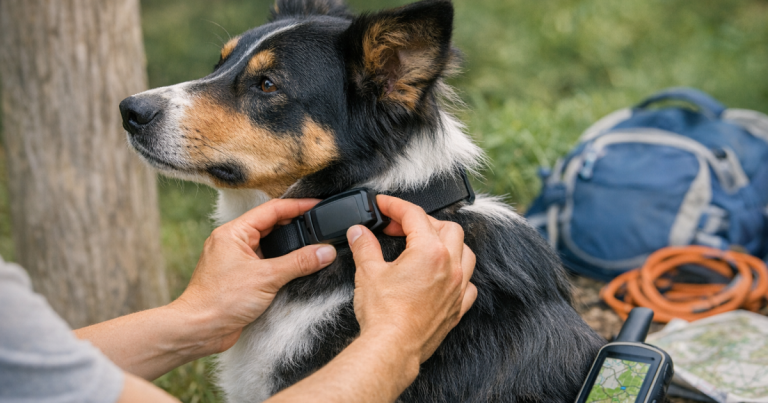
- Check tracker clearance: Attach the GPS mount and rotate the collar by hand. The device should not cover the control loop, press into the throat, or sit where leash pressure will drive it into the neck.
- Check after movement: Let the dog walk, sniff, shake, and lie down. Recheck the device position before trusting the setup away from home.
A martingale should not be left on during crate time, rough play, or unsupervised situations where the loop could snag. That is not tracker paranoia; it is ordinary collar safety.
Step 5: Build the collar into a lost-dog prevention routine
The collar holds the device, but the routine makes it useful. Before a road trip, campsite stay, or hike, charge the tracker, confirm the app is working if the device uses one, and check that the collar still fits after bathing, grooming, or coat changes. Dogs do not respect your setup checklist. They prefer to test it at inconvenient times.
Use the martingale tracker collar as the identification and recovery layer, then use a harness or other appropriate walking gear for leash control when the situation is high-risk. This is especially important at rest areas, rental cabins, vet parking lots, trailheads, and front doors with guests coming in and out.
For GPS dog collars for escape-prone dogs, reliability comes from layers: a tracker that fits the environment, a collar that stays on, visible ID, a secure leash setup, and a family plan for who searches where if the dog gets loose.
Common questions
Can a martingale collar stop my dog from escaping?
No collar can promise that. A properly fitted martingale can reduce collar slip-outs, especially for dogs with narrow heads or a habit of backing up. It does not prevent digging, jumping, door dashing, leash chewing, or panic running.
Should the leash attach to the same collar that holds the GPS tracker?
Sometimes, but not always. If your dog is a known escape artist, a secure harness is often the better leash attachment point, while the martingale carries ID and the tracker. This reduces stress on the device and keeps collar fit focused on retention.
Where should the GPS device sit on a martingale?
Place it on the stable main collar band, not on the moving control loop. It should sit where it does not press into the throat, block the martingale action, or pull the collar sideways during normal movement.
The big picture
A martingale collar can be a smart foundation for a GPS tracker when the dog’s main escape move is slipping backward out of a flat collar. Start with fit, then check tracker placement, then test the whole setup during ordinary movement before trusting it in a busy or unfamiliar place.
The safest setup is rarely one magic collar. It is a calm stack of small decisions: a collar that stays on, a tracker suited to your coverage needs, a harness for risky transitions, and habits that do not depend on luck. That is how you turn a gadget into a recovery plan.