At a highway rest area or busy trailhead, a nervous dog can reverse out of a loose harness before you have time to shorten the leash. The best dog harnesses for escape-prone dogs are not magic restraints; they are well-fitted designs that make the backward slip much harder while giving you better control during transitions.
The safest setup is layered: a secure harness, visible ID, a calm leash routine, and a recovery plan if something still goes wrong. No harness is truly escape-proof for every dog, body shape, or panic response.
The short answer
For hiking and road trips, the most reliable escape-resistant harness style is usually a three-strap or extended-body harness. The extra strap sits farther back on the dog’s rib cage, which helps stop the classic “plant the feet, pull backward, and slip out” move that defeats many standard Y-front harnesses.
For most trail and travel situations, start your shortlist with the Ruffwear Flagline Harness, Ruffwear Web Master Harness, and Ruffwear Switchbak Harness. For vehicle restraint during road trips, the Sleepypod Clickit Sport belongs in a separate conversation because it is built around car travel rather than trail maneuvering.
Step 1: Match the harness to the escape behavior
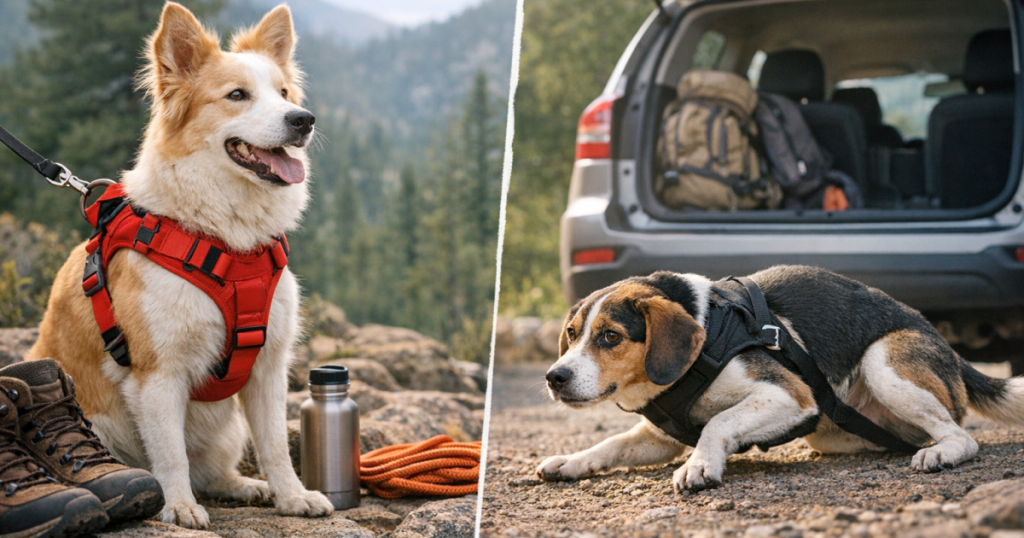
Escape-prone does not always mean the same thing. A shy rescue may freeze and back away from a stranger. A young sporting dog may lunge forward, spin, and tangle the leash. A small dog may flatten suddenly when a truck air brake hisses nearby. The harness that helps most depends on that pattern.
- Backing out: Prioritize an extended harness with a rear belly strap and a snug chest fit.
- Twisting or rolling: Look for stable side coverage and avoid loose straps that can slide around the torso.
- Hard pulling: Use training support as well as equipment. A stronger harness does not teach leash manners by itself.
- Rest-stop panic: Keep the leash attached before the vehicle door opens, and avoid unclipping in open parking areas.
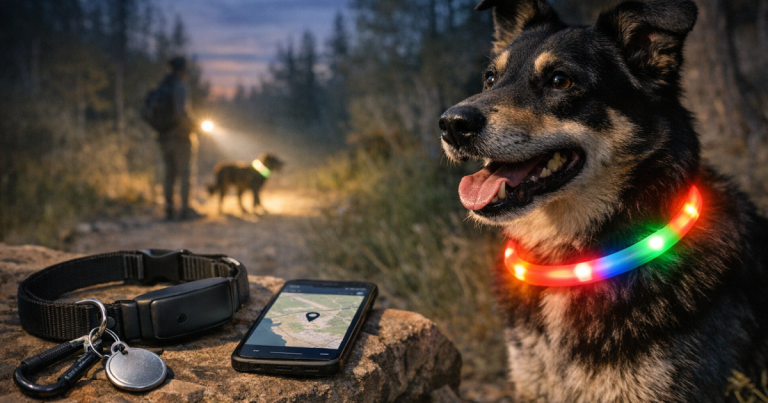
If your dog has already slipped gear during travel, rehearse your routine before the next trip. A tracker can help with recovery, but it cannot replace prevention. Before staying somewhere new, use a quiet moment to test your dog tracker at a hotel or campsite so you understand alerts, coverage limits, and response time before stress is involved.
Step 2: Check the shape before judging the brand
Escape resistance starts with geometry. A standard harness that sits only around the neck and chest may be comfortable for everyday walks, but it can leave room for a determined dog to reverse out. A longer harness distributes contact over more of the body and gives the handler more time to react.
Look for these practical traits:
- A rear strap behind the deepest part of the chest: This is the feature that most directly helps with backward escapes.
- Multiple adjustment points: Dogs with deep chests, narrow waists, or long coats need more than a “close enough” fit.
- A leash point that stays centered: If the harness twists under mild tension, it may twist worse on a trail.
- Comfort at the armpits: Security is not helpful if rubbing makes your dog avoid movement.
- Useful visibility: Reflective details or a visible color help during dusk walks, campground breaks, and roadside loading.
Harnesses that make sense for trail and travel use
Ruffwear Flagline Harness: for lean dogs and active hiking days
The Ruffwear Flagline Harness is a strong first look for dogs who are narrow through the waist or skilled at reversing out of shorter harnesses. Its extended body shape and rear strap are the reason it shows up so often in escape-prevention conversations. It also suits hiking because it gives more body coverage than a minimal walking harness without turning the dog into a gear mule.
The trade-off is fit sensitivity. On a fluffy dog or a dog between sizes, take time to adjust after the coat settles. A rear strap that is too loose gives away the very advantage you bought it for; one that is too tight can interfere with comfortable movement.
Ruffwear Web Master Harness: for support, scrambling, and cautious handling
The Ruffwear Web Master Harness is a more structured option for dogs who need secure handling on uneven ground, stairs, boat ramps, or rocky approaches. It is often chosen for its secure body-hugging design and top handle, which can help a handler steady a dog briefly in awkward places.
This is not a license to lift a dog casually or drag them over obstacles. Think of the handle as a controlled-assist feature for brief, careful moments. For hot-weather hikes or dogs that dislike bulk, check comfort early and often.
Ruffwear Switchbak Harness: for hikes where small storage helps
The Ruffwear Switchbak Harness adds trail utility to the secure-harness idea. Its built-in storage can be useful for light essentials, but balance matters: uneven loading can change how a harness sits, and any shifting can reduce the confidence you feel in the fit.
Choose this style when you want an escape-resistant trail harness with modest carrying capacity, not when your main priority is the lightest possible setup. Keep loads conservative and remove nonessential items for short roadside breaks.
Sleepypod Clickit Sport: for vehicle restraint, not off-leash freedom
The Sleepypod Clickit Sport is better viewed as a road-trip safety harness than a hiking harness. It is designed around car restraint, so it may be useful for families who want a dedicated vehicle setup instead of relying on a trail harness in the back seat.
The key distinction is purpose. A car harness should be evaluated for vehicle use, fit, and restraint setup; a hiking harness should be evaluated for movement, escape resistance, leash handling, and trail comfort. Some dogs do better with separate harnesses for driving and walking.
Step 3: Fit it like your dog is already planning the escape
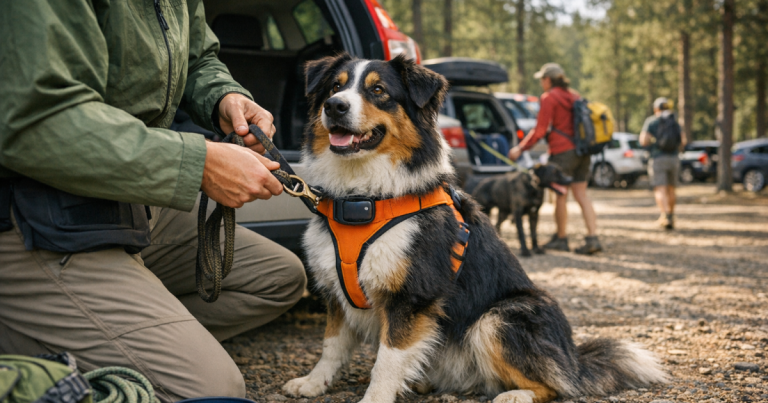
Do the first fitting indoors when your dog is calm. Adjust the neck, chest, and belly areas evenly, then let the dog move around for a few minutes. Many harnesses settle after a short walk, especially over thick coats.
- Slide two fingers under the straps as a starting point, then watch movement rather than relying only on the finger test.
- Check that buckles do not sit directly behind the front legs where they can rub.
- Attach the leash and apply gentle backward tension while your dog stands on a non-slip surface.
- If the harness slides toward the head, stop and readjust before using it outside.
- Repeat the check after the first mile of hiking or after a long car nap.
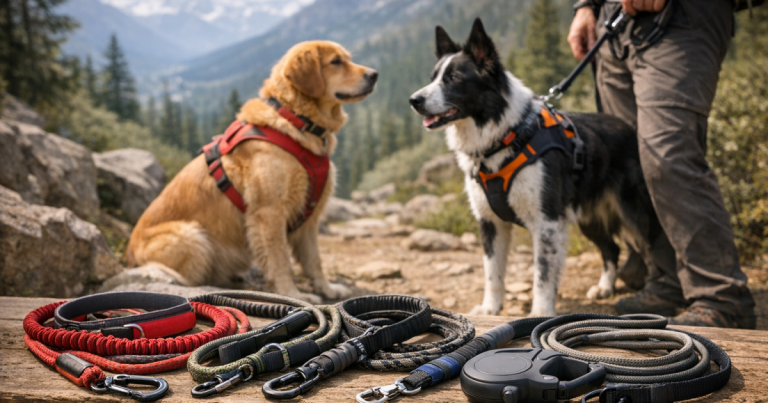
For recall work, do not use an escape-resistant harness as an excuse to rush. A long line gives you room to practice while preserving control. The same principles in using a reflective harness and long line for safer recall practice apply on vacation too: visibility, distance management, and predictable handling matter.
Step 4: Build a road-trip routine around the harness
The riskiest moments are often boring ones: fueling up, unloading bags, opening a motel room door, or letting the dog stretch beside the shoulder. Treat every transition as a mini-protocol.
- Clip the leash before any vehicle door or crate door opens.
- Use a short leash in parking lots, ferry lines, gas stations, and campground check-in areas.
- Keep an ID tag on the dog even when a tracker is attached elsewhere.
- For known escape artists, consider a backup connection from harness to collar for brief high-risk transitions.
- Do not switch to unfamiliar gear for the first time on travel day.
Hiking adds another layer: fatigue changes behavior. A dog who walks politely for the first hour may surge after wildlife or panic at a stream crossing later. Plan water, breaks, first aid, and turnaround points before the trail becomes a negotiation. A simple trail preparedness checklist for dog searches is worth reading even when you expect an easy day.
Quick answers
Is any dog harness truly escape-proof?
No. “Escape-proof” is marketing shorthand, not a guarantee. A better phrase is escape-resistant: the harness design and fit reduce common escape routes, but panic, poor adjustment, damaged gear, or unusual body shape can still defeat it.
Should an escape-prone dog wear both a collar and harness?
Often, yes. A collar with ID is useful backup identification, while the harness handles leash pressure. For brief high-risk moments, some owners use a safety strap between the harness and collar, but it should not restrict movement or create tangles.
What matters more: padding or strap layout?
For escape prevention, strap layout matters first. Padding can improve comfort, but it will not stop a backward slip if the harness is too short or loose around the chest and waist.
What to remember
The right harness should buy you time, control, and confidence during the moments when dogs are most likely to bolt. For many hikers and road-trippers, that means an extended, well-adjusted harness with a rear belly strap, practiced handling, visible ID, and a tracker tested before the trip.
Choose the harness for your dog’s body and escape pattern, not just the label. Then rehearse the boring parts: clipping in, opening doors, loading the car, walking past strangers, and settling at camp. Lost-dog prevention is rarely one dramatic decision. It is a stack of small, repeatable habits that work even when the squirrel makes a very compelling argument.