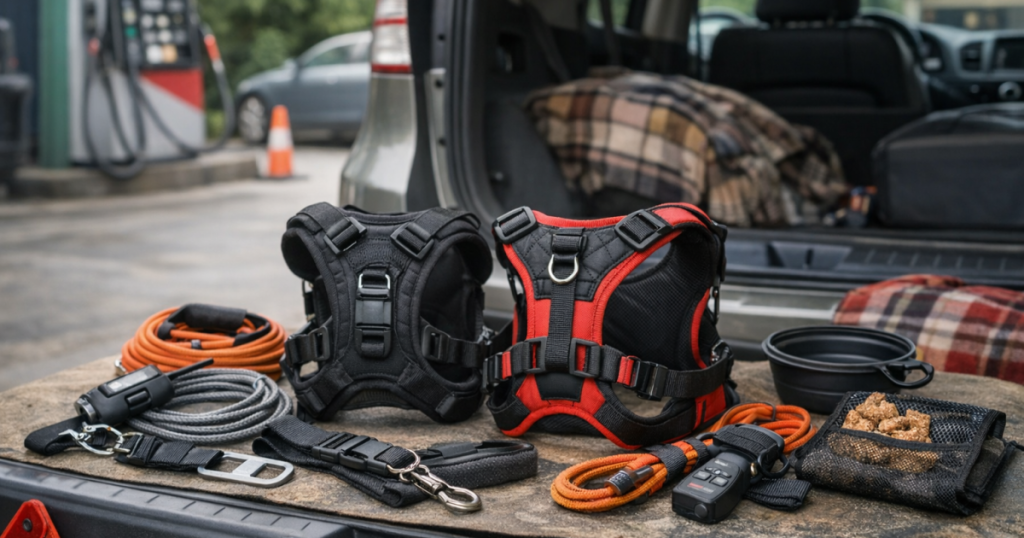
A fuel stop is one of the easiest places to lose a dog: doors open, traffic is close, and an excited passenger can twist backward before anyone has the leash clipped. The best escape-resistant dog harnesses for road trips use a stable body fit, a controlled seat-belt connection, and a leash-ready routine before the door opens.
No harness is bolt-proof. The goal is to slow the escape, reduce the dog’s ability to back out, and give you enough control to clip a leash before paws touch the ground. For a dog who panics, lunges, or reverses out of gear, the safest setup is a layered one: a well-fitted car harness, a short in-car restraint, visible ID, and a tracker or recovery plan that is already working before the trip starts.
The answer for dogs who launch when doors open
For a stop-and-bolt dog, choose a car harness with a broad chest panel, secure girth adjustment, a body shape that does not slide easily over the shoulders, and a seat-belt attachment that limits how far the dog can reach. A regular walking harness can be useful for potty breaks, but it is not automatically a safe vehicle restraint.
- Most secure routine: clip the leash while the dog is still inside the vehicle, then disconnect the seat-belt tether only after the leash is in your hand.
- Best harness shape: a structured or vest-style harness that holds position around the chest and rib cage without rubbing under the front legs.
- Biggest risk: a loose neck or shoulder opening that lets the dog reverse and slip out as soon as the door cracks open.
- Important limit: crash-protection claims vary by product and size, so verify current manufacturer documentation before relying on any safety label.
Step 1: pick a harness shape that resists the backward wiggle
Dogs who bolt at stops often do not escape by pulling forward. They plant their feet, duck their head, and move backward until the harness slides over the shoulders. That means chest coverage, girth placement, and shoulder stability matter more than a flashy handle or extra clips.
A good road-trip harness should sit snugly behind the front legs without pinching, allow normal breathing, and stay centered when the dog turns, sits, and reverses. If your dog is narrow-chested, deep-chested, or long-backed, test the fit indoors before trusting it in a parking lot. Sighthounds, adolescent dogs, and newly adopted dogs can be especially good at finding slack you did not notice.
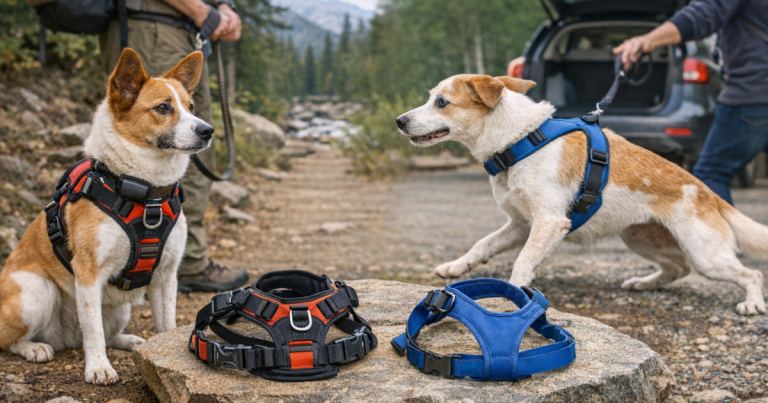
If your dog also slips gear on trails or during travel stops, compare the car setup with broader travel options in our guide to trail and travel harnesses for dogs who slip out. The same fit problems tend to show up in different places: campground check-ins, rest areas, trailheads, and hotel parking lots.
Car harnesses worth considering for stop-and-bolt dogs
These are not ranked as magic fixes. They are useful starting points because each gives owners a more secure vehicle-focused structure than a thin everyday harness. The right choice still depends on your dog’s body shape, behavior at exits, and whether you need the harness mainly for restraint, walking transitions, or both.
Sleepypod Clickit Terrain
Sleepypod Clickit Terrain is a structured travel harness that makes sense for owners who want a more substantial body panel and a car-first design. For a dog who twists when excited, the advantage is the stable feel of a harness built around vehicle use rather than a casual step-in walking shape.
It is a better match for dogs who tolerate a firmer harness and owners willing to spend time dialing in the fit. Check that the neck opening cannot ride forward and that the chest section stays centered when your dog turns toward the door.
Ruffwear Load Up Harness
Ruffwear Load Up Harness is designed as a vehicle restraint harness and has the kind of clean, travel-focused layout many road-trip owners prefer. It is worth considering when you want a harness that can stay on during driving and then transition into a controlled exit routine.
For bolters, the fit test is simple: before a trip, have the dog sit, stand, turn around, and gently back up while you hold the leash. If the harness shifts toward the head or creates obvious shoulder slack, adjust before using it in a busy stop.
EzyDog Drive Dog Car Harness
EzyDog Drive Dog Car Harness is another car-oriented option, with a broad chest area that can feel reassuring for dogs who pull hard toward an open door. It may appeal to owners who want a harness that looks and functions differently from a lightweight walking harness.
As with any car harness, confirm that your dog cannot rotate one shoulder out when reversing. A dog who has practiced slipping out may need more than harness structure; the exit routine matters just as much.
Kurgo Enhanced Strength Tru-Fit Smart Car Dog Harness
Kurgo Enhanced Strength Tru-Fit Smart Car Dog Harness is a familiar travel harness style for owners who want adjustability and a car-use design. It can be a reasonable option to evaluate for dogs with average body shapes, provided the fit is checked carefully around the chest and shoulders.
For strong escape artists, do not assume adjustability alone solves the problem. A harness with multiple adjustment points still needs to be snug enough to resist backing out without restricting movement or breathing.
Step 2: set the vehicle connection before you start driving
A good harness loses much of its value if the seat-belt connection gives the dog enough range to reach the door opening. Keep the connection short enough that your dog cannot jump into your lap, launch into the footwell, or crowd the door before you are ready.
- Connect to the harness, not the collar. A collar is for ID and leash backup, not for restraining a dog’s body in the vehicle.
- Check the angle. The tether should not twist around the legs or pull the harness sideways.
- Keep the leash staged. Lay the leash where the adult exiting the vehicle can grab it before opening the dog’s door.
- Practice in the driveway. Rehearse the sequence when nothing exciting is happening, not for the first time beside a gas pump.
If your tracker moves from a collar to a travel harness for road trips, use the same care you would with any gear change. Our guide to calibrating a dog GPS tracker after switching collars explains why fit, placement, and a pre-trip check matter before you rely on location alerts.
Step 3: use a no-surprises exit routine at every stop
The harness is only the hardware. The routine is what prevents the sudden opening that gives a bolter a chance. Use the same order every time so the dog learns that doors do not equal instant freedom.
- Park before touching any dog gear.
- Ask passengers to stay seated until the dog is secured.
- Clip the leash to the harness while the door is still mostly closed.
- Hold the leash first, then release the vehicle tether.
- Pause for a calm second before inviting the dog out.
- Keep the first few steps short and controlled, especially near traffic, carts, other dogs, or wildlife.
For families, assign one person to be the dog handler at stops. The most chaotic escapes often happen when everyone assumes someone else has the leash. A clear role beats a heroic parking-lot sprint every time.
When the harness is not enough
Some dogs need backup layers because their escape risk is driven by fear, prey drive, or overstimulation rather than bad equipment. A well-fitted car harness helps, but it should sit inside a bigger lost-dog prevention plan.
Use a flat collar with readable ID tags whenever your dog travels, even if the leash clips to the harness. If a harness fails or is removed after an accident or emergency stop, collar ID may be the fastest way for a stranger to reach you. Our guide to backing up a GPS collar with physical ID tags covers the simple details that are easy to overlook.
For very skilled backers-out, consider pairing the car harness with supervised training, calmer exit repetitions, and a secondary travel plan such as a secured crate when appropriate for your dog and vehicle. The best setup is the one you can repeat calmly at every stop, not the one that looks secure but takes three people to manage.
What stands out
The best car harness for a dog who bolts at stops is not just the strongest-looking harness on the shelf. It is the harness that fits your dog’s body, stays stable when the dog reverses, connects safely in the vehicle, and supports a predictable exit routine.
Before a long road trip, do one boring practice session at home: fit the harness, attach the vehicle restraint, clip the leash before opening the door, and walk a short loop. If that sequence feels smooth in the driveway, it is far more likely to hold together when your dog spots a squirrel, a stranger, or the world’s most exciting rest-area trash can.