A dog who slips a harness rarely does it politely. It happens at a trailhead, beside a gas pump, outside a rental cabin, or right when another dog rounds the corner. The goal with escape-resistant dog harnesses is not to make escape impossible; it is to buy you time, control, and a second chance before panic turns into distance.
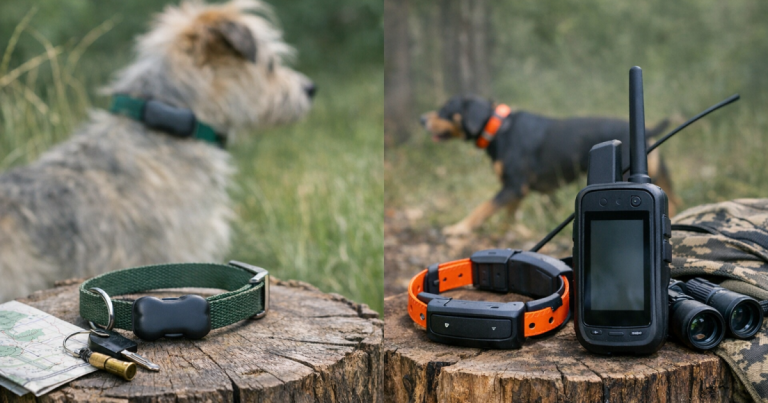
A secure harness is only one layer. For travel and hiking, pair it with ID, a backup leash connection, and a recovery plan. A GPS tracker can help after a dog is loose, but it does not replace a harness that prevents the first bad step.
The short version
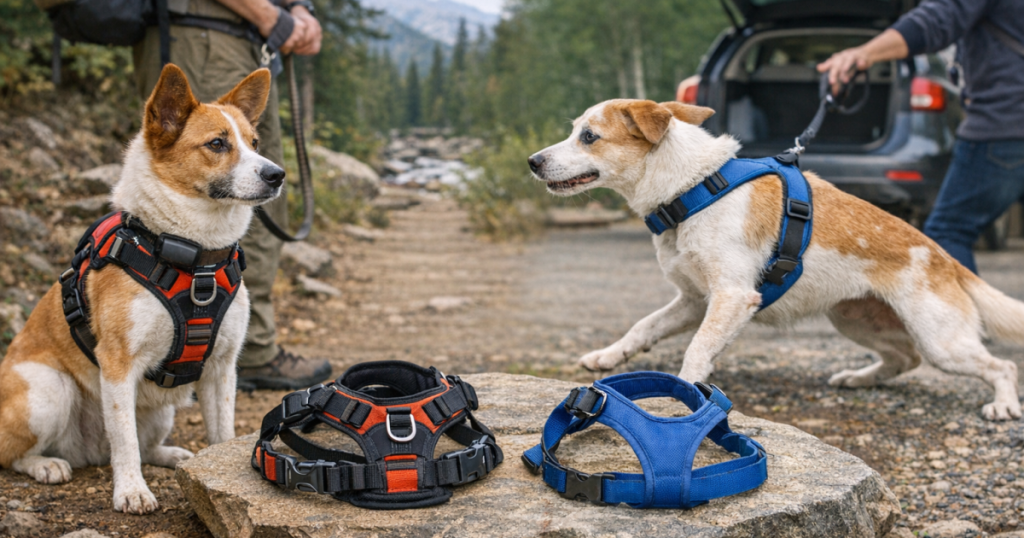
For dogs who back out, twist hard, or freeze and reverse on leash, the best trail and travel harnesses use a three-strap layout: one strap at the chest, one around the rib cage, and one farther back behind the deepest part of the ribs. That rear strap is the difference between a standard walking harness and one that gives a slippery dog less room to reverse out.
For most hiking and road-trip scenarios, start with a lightweight three-strap harness, adjust it at home, then test it under gentle backward tension before trusting it in a parking lot or on a trail. Dogs with very narrow bodies, deep chests, or sharp startle responses need more security than confident dogs who simply pull ahead.
Step 1: Match the harness to the escape pattern
Before looking at brands, watch how your dog gets out. The right answer changes depending on the move.
- Back-out artists: These dogs plant their feet, drop their head, and reverse. They need a rear belly strap and a backup leash connection.
- Spinners: These dogs roll, twist, or alligator-turn when startled. A snug body fit and a second attachment point help reduce slack.
- Front-leg steppers: These dogs get one elbow through a loose chest opening. Look for better chest adjustment and a shape that does not sag.
- Door dashers: These dogs may not slip gear often, but travel transitions are risky. Harness before opening the car door, not after.
If your dog has already slipped a harness once, treat that as useful data, not bad luck. The same movement will usually work again if the gear and routine stay the same.
Step 2: Use the harness features that actually reduce slipping
A secure trail harness is not just “more padded.” Padding can help comfort, but structure matters more. For slip-prone dogs, prioritize a rear belly strap, multiple adjustment points, a stable chest panel, and leash attachment points that do not pull the harness into a loose angle.
Handles can be useful at trail obstacles, motel entrances, and vet-office doors, but they are not a substitute for leash control. A handle is for close management; the leash is still your safety line. For dogs who panic, add a separate backup connection rather than trusting one clip to do every job. The walkthrough on backup leash attachments for dogs that back out of collars is worth reading before your next trip.
Three harnesses worth considering for trail and travel
Ruffwear Flagline Harness: the lighter default for active trips
The Ruffwear Flagline is a strong starting point for many dogs because it combines a three-strap body design with broad adjustability and a low-profile feel. It is made for movement rather than just sidewalk control, which matters when your dog is climbing into a vehicle, stepping over logs, or wearing the harness for several hours of stop-and-start travel.
The editorial preference here is simple: if your dog is moderately skittish, narrow through the waist, or prone to backing up when surprised, a lighter three-strap harness is often easier to live with than a bulky “maximum control” setup. Less fuss usually means you will actually use it every time.
Ruffwear Web Master Harness: the steadier choice for determined back-out dogs
The Ruffwear Web Master is a more substantial harness with a secure multi-strap layout and a top handle. It is commonly chosen for dogs who need extra body support or who have a history of escaping ordinary harnesses. For travel, that added structure can be useful during high-risk moments: unloading at a rest area, crossing a busy campground loop, or managing a dog who freezes at a hotel lobby door.
The trade-off is bulk. Some dogs tolerate a fuller harness well; others move more naturally in a lighter design. If your dog is heat-sensitive, coat-heavy, or easily annoyed by gear, pay close attention during short practice walks before using it on a long summer outing.
Ruffwear Switchbak Harness: useful when trail storage is part of the job
The Ruffwear Switchbak adds built-in storage to a trail-style harness format, making it more relevant for day hikes than quick neighborhood walks. The pockets can be handy for waste bags or small essentials, but keep weight modest and balanced. A harness that shifts around because it is overpacked can undermine the secure fit you bought it for.
This is the pick to consider when your dog is steady enough to carry a small load and you want one piece of gear for hiking control and light trail organization. For a highly anxious escape artist, choose security and clean fit first; pockets are nice, but they are not magic.
Step 3: Fit it like you expect your dog to test it
Do the first serious fitting indoors, with your dog calm. Adjust the neck and chest so the harness sits flat without pinching. The rear strap should sit behind the rib cage’s widest point, not far back on the soft belly. You should be able to slide fingers under the straps, but the harness should not rotate easily or gape when your dog lowers their head.
- Clip the leash and apply light backward pressure while your dog stands still.
- Watch whether the neck opening lifts toward the ears or stays behind the shoulders.
- Ask your dog to turn left and right; the harness should move with the body, not swing like luggage.
- Check armpits after a short walk for rubbing, especially on short-coated dogs.
- Recheck the fit after the first mile of hiking or the first day of travel, because straps can settle.
Do not fit it loose “for comfort.” Loose gear is often less comfortable because it shifts, rubs, and gives a scared dog leverage.
Step 4: Build a road-trip routine around the harness
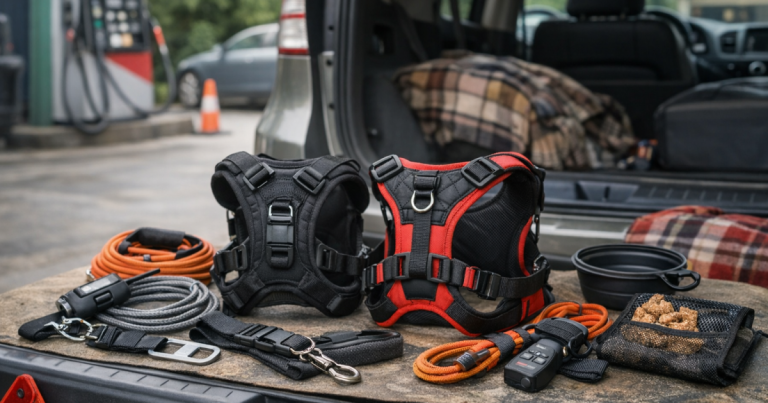
Most escapes on trips happen during transitions, not during the pretty part of the hike. Set the routine before the door opens: harness on, leash attached, backup attached, ID visible, then exit. At hotels and rentals, keep the leash on until you know where gates, stairwells, sliding doors, and parking-lot gaps are.
A separate ID collar is still worth using, even with a tracker and harness. If your dog slips out of the harness, a finder needs a simple phone number they can read without charging anything or scanning anything. Here is how to fit a backup ID collar alongside a GPS tracker without crowding your dog’s neck.
For longer drives, pack as if one awkward minute could happen: spare leash, printed photo, current ID, high-value treats, a flashlight, and a recent scent item. The checklist for packing a lost-dog emergency kit for road trips pairs well with any harness upgrade.
Straight answers
Can any harness be escape-proof?
No. A well-fitted three-strap harness can reduce the chance of a dog backing out, but no harness can guarantee containment in every panic, body shape, or handling mistake. Use gear, routine, and backup identification together.
Should the leash clip to the back or the front?
For hiking and travel safety, the back clip is often simpler and less likely to tangle on uneven ground. A front clip can help with pulling on ordinary walks, but it may twist the harness on some dogs. Test both at home before using either near traffic or at a trailhead.
Is a travel car harness the same as an escape-resistant walking harness?
Not always. A car restraint harness and a slip-resistant trail harness solve different problems. Some travel harnesses are designed around vehicle restraint, while back-out prevention depends on body coverage, adjustment, and the rear strap position.
Main lessons
For dogs who slip out, the safest trail-and-travel setup is boring in the best possible way: a secure three-strap harness, a practiced exit routine, a backup leash connection, visible ID, and a tracker used as recovery support rather than a miracle button. Pick the harness your dog can wear comfortably, fit it like it will be challenged, and rehearse the messy moments before they happen in a parking lot three states from home.