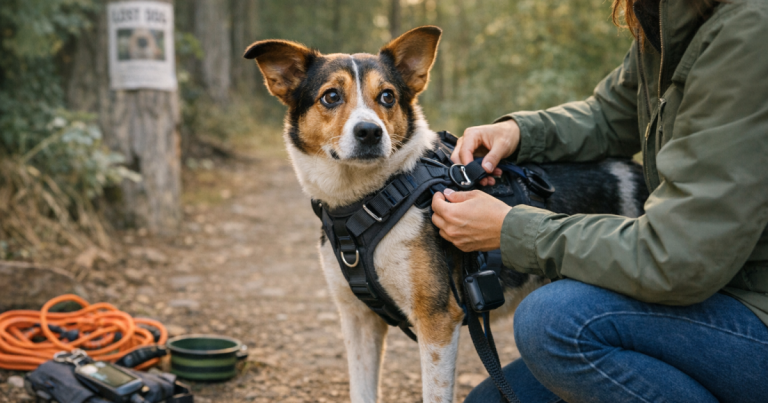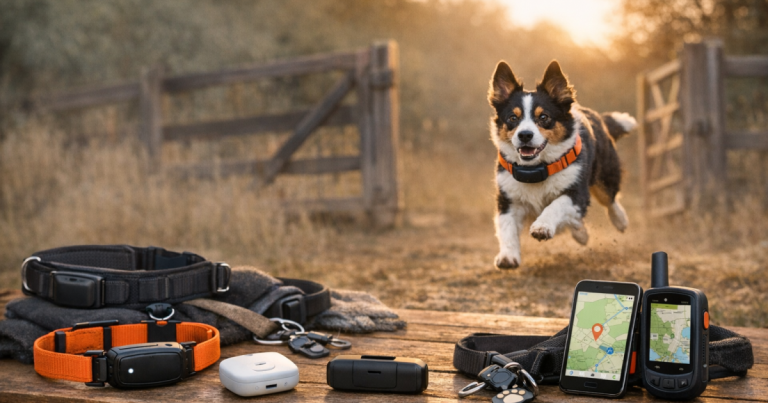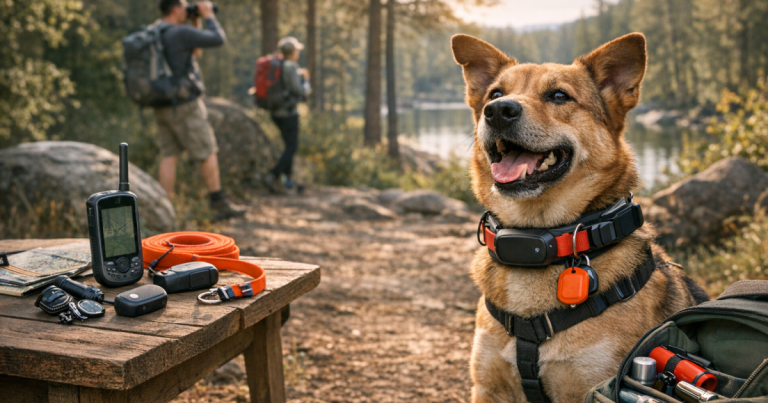
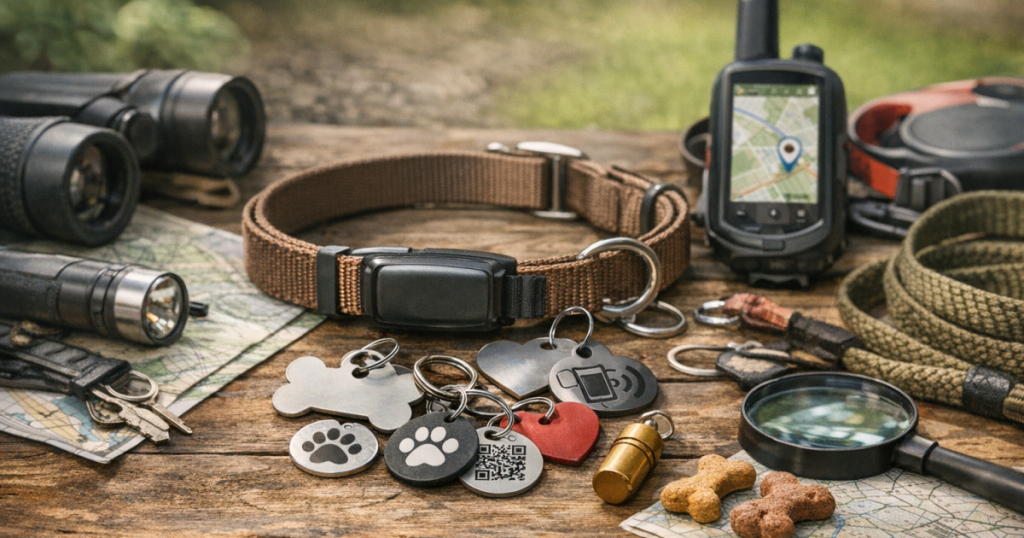
When a dog slips through a gate or backs out of a collar at a trailhead, the first person who spots them may have only seconds to help. Good dog ID tags make that moment easier: the finder can read who to call, confirm the dog is owned, and avoid turning a brief scare into a neighborhood search.
The best tag is not the flashiest one. It is the one that stays attached, stays readable, gives a stranger the right information quickly, and works alongside your microchip and tracker rather than pretending to replace them.
In brief
For faster lost-pet recovery, choose an ID tag with a clearly engraved phone number, your dog’s name or a simple identifier, and a secondary contact method if space allows. Use a durable material, attach it to hardware that matches your dog’s collar setup, and check readability after hikes, swims, daycare, boarding, and road trips.
A collar tag helps most when the finder is nearby and willing to call or text. A microchip helps when the dog reaches a vet, shelter, or animal control officer. A GPS tracker helps you search in real time. None of these tools is perfect alone, but together they close different gaps in a lost-dog plan.
What information should go on the tag?
The tag has one job: help a finder reach you quickly without making them solve a puzzle. Put your primary cell number first. If another adult can reliably answer while you are driving, hiking, or searching, add their number too. A second contact can be the difference between a missed call and a quick handoff.
Your dog’s name is useful if a calm neighbor is trying to reassure them, but it is not mandatory. If your dog is skittish, reactive, deaf, or likely to run from direct contact, consider wording that helps shape the finder’s behavior. Short phrases such as “DO NOT CHASE,” “CALL OWNER,” or “NEEDS MEDS” can be more useful than decorative copy.
A street address can help if your dog is a familiar neighborhood escape artist, but many owners prefer a city and phone number instead for privacy. For travel, hiking, and campground situations, a phone number matters more than a home address because the dog may be miles from where you live. If you rotate between homes or travel often, use contact details that stay true wherever you are.
Choose a tag style for the way your dog gets loose
Different escape patterns call for different tag choices. A quiet senior dog who wanders down the sidewalk has different needs from a young hound who dives through brush or a newly adopted dog who panics when approached.
- For door dashers: Use bold engraving with your phone number easy to see at arm’s length. Neighbors may not have time to inspect a tiny tag before the dog moves again.
- For fence jumpers: Add a backup contact and keep the wording simple. These dogs may be found several blocks away, not just next door.
- For shy or newly adopted dogs: Include a behavior cue such as “DO NOT CHASE.” Pair the tag with a recovery plan that tells helpers to report sightings instead of grabbing.
- For hiking and travel: Use a sturdy tag and check the attachment point before each trip. For more trip-specific options, compare ID tags built for hiking and road trips.
If your dog wears different collars for walks, yard time, training, or travel, do not let the ID live on only one setup. Either move it every time or keep duplicate tags on the gear your dog actually wears outside.
Material and readability matter more than decoration
A tag can look charming and still fail the real test if the lettering rubs off, the shape catches on gear, or the split ring bends open. Stainless steel, brass, aluminum, and coated tags all appear commonly in the US pet market, but the right choice depends on wear, noise tolerance, and your dog’s activity level.
For many owners, a simple engraved stainless steel option such as the GoTags Bone Dog Tag in Stainless Steel is a reasonable baseline to compare against because it is a traditional physical tag with space for personalized text. Before buying any tag, check the seller’s engraving limits, line count, attachment hardware, and size options rather than assuming every style fits every dog.
Readability is the quiet hero here. High-contrast engraving, larger lettering, and uncluttered wording help a nervous finder act quickly. If the tag has five tiny lines, a cute slogan, and a phone number squeezed at the bottom, it may be less useful during the exact moment you need it.
Flat tags, hanging tags, slide-on tags, and QR tags
Hanging tags are easy to move between collars and easy for a finder to notice. They can jingle, catch on crates, or wear against other tags, so inspect the ring regularly. Slide-on tags sit flat against the collar, which can be quieter and less snag-prone, but they must match the collar width and may be harder to notice on a fluffy dog.
Rivet-on nameplates can be secure on leather or certain flat collars, but they are less flexible if your phone number changes or you rotate gear. QR tags can hold more information through an online profile, but the finder needs a phone, a working connection, and the confidence to scan. A QR code should support a visible phone number, not replace it.
If you use a GPS tracker, keep the ID tag anyway. Trackers can depend on cellular coverage, satellite view, battery status, subscription status, app access, or physical attachment. For dogs who slip gates or bolt after wildlife, pairing visible ID with a real-time tracker can make sense; our guide to GPS trackers with fast escape alerts explains where a tracker adds value and where it still has limits.
The tag should match the collar and harness setup
A lost-dog plan can fail at the smallest piece of hardware. Check the split ring, S-hook, tag clip, and collar D-ring. Thin rings can stretch. Bulky clips can be uncomfortable on toy breeds. Heavy tags can bounce against a small dog’s chest, while tiny tags may disappear under a thick coat.
For small dogs, prioritize light weight, readable text, and a tag that does not hang so low it hits the chest constantly. For large or strong dogs, look closely at hardware strength and whether the tag rubs against training collars, martingale loops, or tracker mounts. If your dog wears a harness for walks, the ID should still be on the collar or a dedicated visible attachment point, because a harness may be removed at home, daycare, or the vet.
After changing collars, do a quick home check: shake the collar, tug the tag ring gently, make sure the phone number faces outward, and confirm nothing interferes with leash attachment. Repeat this after washing the collar or after any rough play session.
Plan for the finder’s point of view
Imagine the person who sees your dog first. They may be holding groceries, walking their own dog, or standing near traffic. They may not know whether your dog is friendly. Your tag should make their next step obvious.
Use one main message, not a paragraph. “CALL/TEXT” can be helpful because many people will text a photo before they try to leash an unfamiliar dog. If your dog is a flight risk, make the behavior instruction visible. Then make sure your voicemail is set up and your phone can receive unknown callers, because a blocked or full mailbox wastes the tag’s best advantage.
For fearful dogs, the tag is only one part of safe recovery. Well-meaning chasing can push a loose dog farther away, so share calm instructions with neighbors or search helpers. If your dog is already loose and panicked, use the approach in catching a scared lost dog without chasing them before attempting direct contact.
Helpful questions
Should I put my dog’s name on the tag?
It can help a calm finder speak gently to your dog, but it is not as important as a working phone number. If space is limited, prioritize contact details and any urgent behavior or medical note.
Is a microchip enough if my dog wears a collar?
No. A microchip is an excellent backup, but it requires a scanner and up-to-date registration. A visible tag can work before your dog reaches a shelter, clinic, or animal control officer.
Should I use a QR tag instead of engraving?
A QR tag can add useful details, but it should not be the only way to contact you. Keep a readable phone number on the tag so a finder can call or text without scanning anything.
How often should I replace an ID tag?
Replace it when the number changes, the engraving becomes hard to read, the hardware bends, or the tag no longer fits the collar setup your dog wears outside. For active dogs, inspect it monthly.
What to remember
The fastest tag is the one a stranger can read, understand, and act on immediately. Keep the phone number obvious, the message short, the hardware secure, and the backup layers current. A well-chosen tag will not prevent every scare, but it gives your dog a better chance of being recognized, reported, and returned before the search grows larger.