A runaway scare changes how you look at every latch, trailhead, and motel parking lot. If a standard cellular tracker feels too bulky, too dependent on coverage, or simply not right for your dog, alternative GPS pet trackers are worth evaluating as part of a layered recovery plan. The goal is not to find a magic beacon. It is to build a setup that still gives you useful next steps when your dog slips a collar, bolts from a yard, or disappears into a busy campground.
No tracker is foolproof. Coverage, charging habits, collar fit, attachment security, and whether a finder can contact you all affect the outcome. A smart plan combines tracking technology with visible ID, good handling routines, and a practiced response.
At a glance
- Choose by escape scenario first. A door dasher, rural roaming dog, campground wanderer, and newly adopted flight-risk dog may need different layers.
- GPS is not the same as Bluetooth. GPS-style trackers are intended to help locate a dog over distance; Bluetooth tags are better treated as close-range or network-dependent backups.
- Fit can beat features. A tracker that twists, rubs, or pulls a collar loose is not a safer choice.
- Always keep non-digital ID. A readable tag can work when a phone is dead, an app is unavailable, or a stranger finds your dog first.
Step 1: Name the escape problem you are trying to solve
Start with the moment you are most worried about, not the product shelf. A dog who jumps a backyard fence needs a different recovery routine than a dog who wanders out of a campsite at dusk. A nervous rescue who backs out of gear near traffic needs retention and handling support before gadget upgrades.
Write down the most likely scenario in one sentence: “My dog bolts through the front door,” “My dog disappears into brush on hikes,” or “My dog may get loose during hotel and gas-station stops.” That sentence becomes your filter. It helps you decide whether you need wider-area location help, a simple backup tag, a different collar setup, or better visibility.
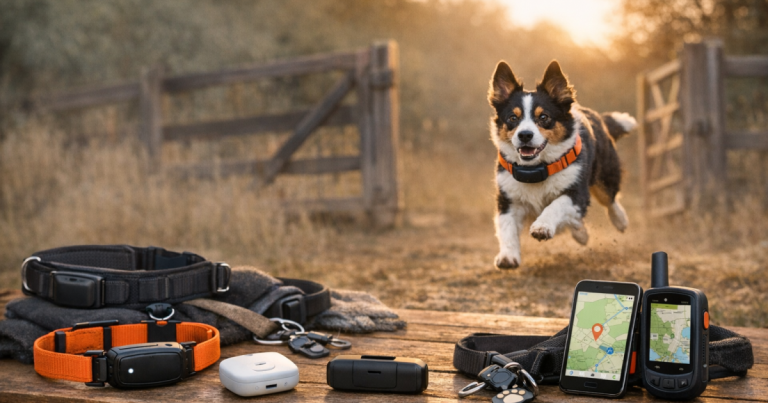
This is where alternative GPS pet trackers become useful as a category rather than a shopping buzzword. Some are true GPS-style devices. Others are smart collars, Bluetooth item trackers, or rugged outdoor systems that solve only part of the problem. The right answer is usually a stack of tools, not a single device.
Step 2: Separate the tracking role from the backup role
Think of each device as having a job. If you expect a product to do the wrong job, it can create false confidence at the exact moment you need clear decisions.
Cellular GPS trackers
Mainstream cellular GPS trackers are often the first option owners consider for everyday lost-dog prevention. They can be useful for suburban neighborhoods, road trips, and many routine outings, but they still depend on network conditions, device power, secure mounting, and current account status. Before buying, verify coverage expectations in the places your dog actually goes and check whether an ongoing subscription is required.
Smart collars with tracking
Smart collars can simplify the setup because the tracking hardware is integrated into the collar system. That convenience can be helpful for owners who dislike clip-on devices. The trade-off is fit: the collar must suit your dog’s neck shape, coat, activity level, and escape behavior. A thick-coated dog, a tiny dog, and a narrow-headed sighthound do not all tolerate the same collar style equally well.
Bluetooth and item-finder tags
Apple AirTag (2nd generation) and Tile Pro are better understood as backup finders, not full GPS dog trackers. They may help when a dog is nearby, passes close to compatible devices, or is found with the tag still attached. They are not a replacement for a dedicated dog tracker when you need active location support over distance. For a closer look at that distinction, see this GPS dog tracker or Bluetooth backup comparison.
Outdoor and hunting-oriented trackers
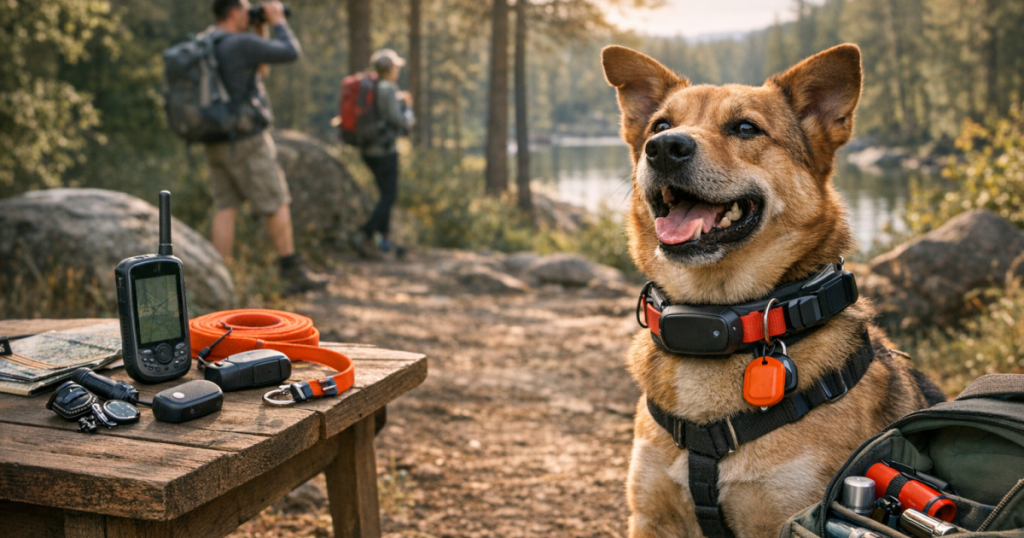
Some owners consider rugged systems such as Garmin Alpha LTE when their dogs spend time in rural areas, hunting settings, or large open properties. These products belong in a different decision lane from simple Bluetooth tags. Before choosing one, check the device format, network or system dependencies, collar attachment, and whether the workflow fits the person who will actually respond if the dog runs.
Step 3: Check fit before you trust the device
A tracker only helps if it stays with the dog. That sounds obvious until you watch a nervous dog reverse out of a loose collar or a clip-on device rotate under the chin where it snags on brush. Fit is not a minor comfort detail; it is part of the recovery chain.
For small dogs, look closely at weight, bulk, and where the device sits when the dog lowers their head. For deep-chested or narrow-headed dogs, pay attention to whether the collar style is escape-resistant enough for the dog’s behavior. For rough play, hiking, or swimming areas, attachment security and water exposure deserve more attention than app extras.
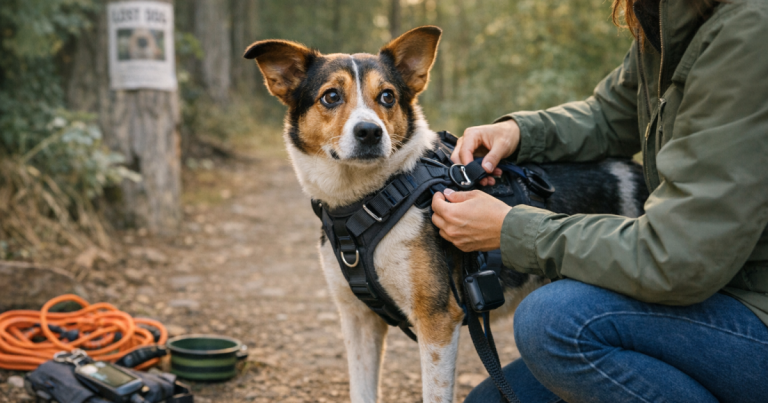
If you mount a tracker on a harness, test the position before relying on it outside. The device should not press into the chest, swing into the front legs, or sit where brush can pry it loose. Use a short walk, a sit, a turn, and a quick trot as your first inspection routine. Our guide to testing a GPS tracker on a harness walks through a more detailed check.
Step 4: Add identification that does not need power
Digital tracking helps you search. Identification helps someone else return your dog. Those are different jobs, and both are important.
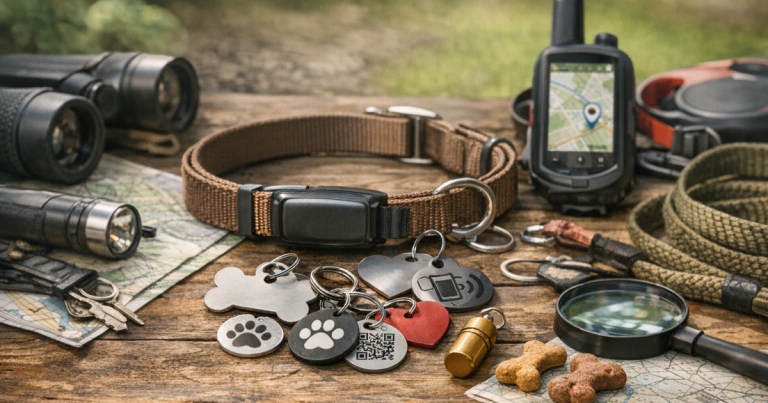
A durable ID tag with a current phone number is still one of the simplest recovery tools. It works when a finder does not know your tracker brand, does not want to download an app, or only has a few seconds to read a collar. A microchip is also important, but it requires a scanner and current registry information. A tag is immediate.
For hiking, interstate travel, and campground stays, consider whether your tag information should include a secondary contact. If you are out of cell range or driving, a trusted backup person may be easier to reach. For more detail on tag materials, readability, and travel setups, use the 2026 hiking and road-trip ID tag guide.
Step 5: Run a 48-hour setup test
Do not wait for an emergency to learn how your system behaves. After choosing a tracker or backup tag, give yourself two normal days to test the routine.
- Check attachment twice a day. Look for twisting, loosening, rubbing, or hardware that catches on another collar ring.
- Practice the alert response. Make sure the people in your household know who checks the app, who grabs the leash, and who searches the yard or street.
- Test common locations. Try your driveway, backyard, regular walking route, and a nearby park. You are looking for practical behavior, not laboratory perfection.
- Review charging habits. A great tracker left uncharged on the counter is just an expensive reminder.
- Confirm finder information. Ask whether a stranger could identify your phone number quickly from the collar or tag.
This test is also the time to notice friction. If the device is annoying to remove, uncomfortable for your dog, or confusing for another family member, the system may fail quietly over time. The best recovery plan is the one you will maintain on an ordinary Tuesday, not just the one that looked impressive on purchase day.
Common questions
Can a Bluetooth tag replace a dog GPS tracker?
Usually, no. A Bluetooth tag can be a useful backup, but it should not be treated as the same type of tool as a GPS dog tracker. It is better for nearby recovery or network-assisted finding than for actively following a loose dog over a wider area.
Should every dog wear both a tracker and an ID tag?
For many dogs, yes. A tracker helps the owner search, while an ID tag helps a finder contact the owner. Because those tools solve different problems, using both creates a stronger recovery setup.
What if my dog slips collars?
Prioritize secure fit and training gear before adding more electronics. A tracker attached to gear your dog can escape from may disappear with the collar while your dog keeps running. For flight-risk dogs, collar choice, harness fit, leash handling, and controlled practice should be part of the plan.
A calmer way to choose
The best alternative is the one that fits your dog’s real risk pattern. For a city door dasher, a cellular tracker plus clear ID may be the most practical combination. For a hiking dog, visibility, secure harness placement, and offline contact information become more important. For rural properties, coverage limits and response workflow deserve careful thought before you trust any device.
Choose the tool, test the setup, and keep the backup simple enough for another person to use under stress. Lost-dog recovery is rarely graceful, but a practiced, layered plan can make those first minutes more focused and far less frantic.