A backyard latch can fail in a quiet second, and the next few minutes feel louder than the whole day. After a lost dog gate escape, the goal is not to send everyone running at once; it is to create a calm search pattern, assign jobs, and keep one person reachable if a sighting comes in.
Most neighborhood searches go wrong when too many people chase, shout, or scatter without reporting what they saw. A nervous dog may circle close to home, hide in a familiar yard, or move along alleys, tree lines, drainage areas, sidewalks, or the quiet side of a street.
The first moves: control the scene before widening the search
Before neighbors fan out, lock down the escape point. Close the gate, secure other pets indoors, and put one adult or reliable helper at the house with a leash, treats, a phone, and the dog’s recent photo. If your dog returns while everyone is two blocks away, someone needs to be there to receive them calmly.
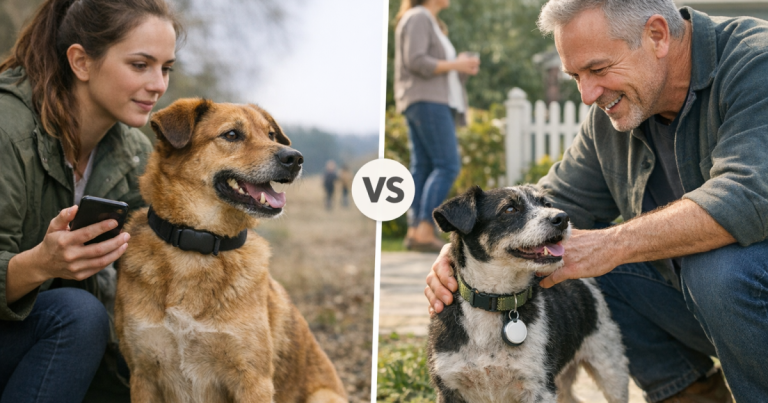
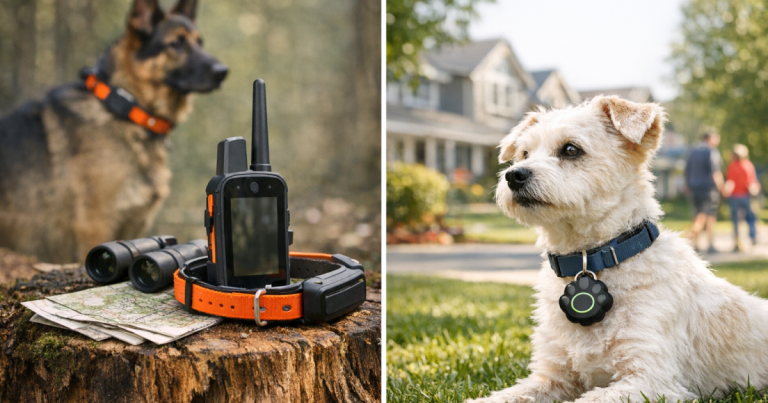
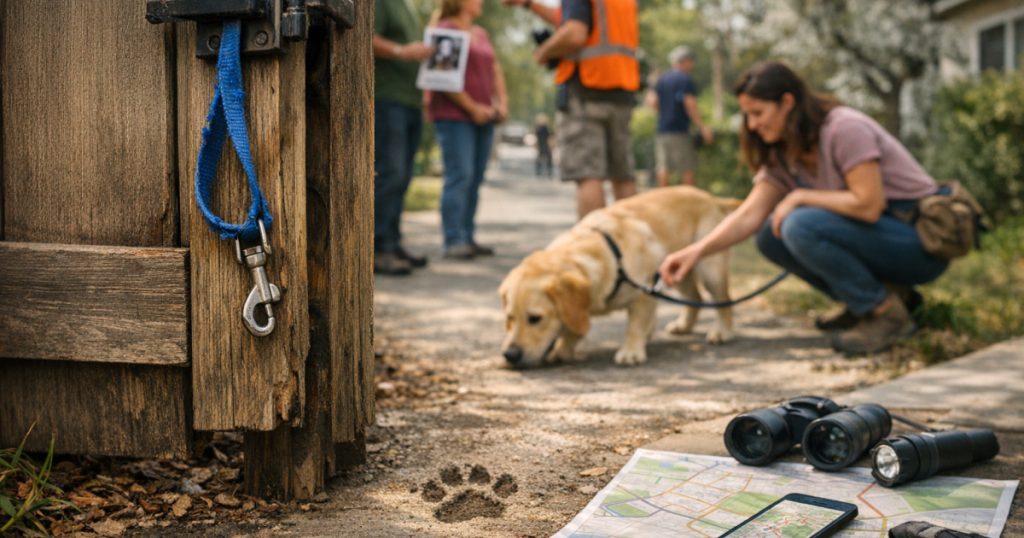
If your dog is wearing a GPS tracker, check the last known location and direction of travel, but do not treat the app as a perfect map. Cellular coverage, battery status, buildings, weather, and device position can all affect updates. Use tracker information as one clue alongside sightings, paw prints in soft ground, barking reports, and neighbor cameras.
For a step-by-step solo response before the neighborhood search grows, keep this guide to tracking a dog after a backyard gate escape handy. It pairs well with the organized search plan below when you have helpers available.
Assign roles so the search stays calm
A good neighborhood search needs fewer leaders, not more volume. Pick one coordinator, then give everyone else one simple job. The coordinator should stay reachable by phone or group text, record sightings, and redirect searchers as new information comes in.
- Home base person: Stays at the house, watches the gate area, keeps a leash ready, and avoids leaving the yard unattended.
- Sighting logger: Writes down the time, exact street or landmark, direction of travel, and the dog’s behavior at every report.
- Quiet walkers: Move slowly through nearby streets, alleys, and sidewalks without calling constantly or running toward the dog.
- Driver: Checks larger roads, trailheads, school lots, parks, and parking areas without blocking traffic or creating a scene.
- Digital helper: Posts to neighborhood groups, lost-pet pages, and microchip registry contacts using one clear message and one recent photo.
One dry but useful rule: the loudest person should probably not be the one approaching the dog. Panicked enthusiasm can turn a possible recovery into a longer chase.
Build a search map from the gate outward
Start with the escape point, not the farthest place you fear your dog might have reached. Many dogs do not run in a straight line. They may loop, pause, sniff, double back, or tuck themselves behind sheds, porches, parked cars, dumpsters, brush, or patio furniture.
Divide the area into simple rings. The first ring is the immediate area: your yard, both neighboring yards if permission is available, the alley, the front sidewalk, driveways, and the nearest corners. The second ring is the next few blocks, including quieter side streets, cul-de-sacs, greenbelts, creek edges, and familiar walking routes. The third ring includes busier roads, parks, school fields, trail access points, and shopping centers.
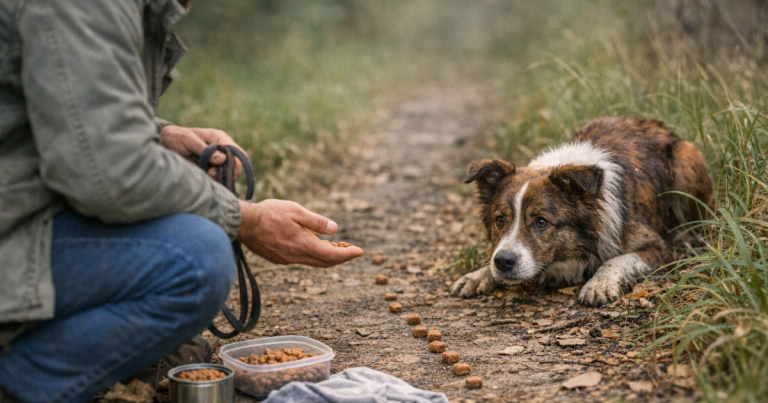
Ask searchers to move with a purpose, not a sprint. A nervous dog may watch from cover and come out only when the noise drops. If someone spots the dog, they should stop, turn their body slightly sideways, avoid direct staring, crouch only if safe, and report the location before trying anything. Tossing small treats away from the person can be safer than stepping toward a frightened dog.
What to tell neighbors when you knock or text
Neighbors are more helpful when the request is short and specific. Send or say: “Our dog slipped out through the backyard gate. Please check under decks, behind sheds, open garages, side yards, and security camera clips from the last 30 minutes. If you see the dog, please do not chase. Call or text us with the exact location and direction of travel.”
Include the dog’s name, size, color, collar or harness description, and whether they are shy, friendly, or likely to bolt. Avoid flooding the message with every detail you can think of. People remember a clear photo and one instruction better than a paragraph of panic.
If a neighbor reports a sighting, thank them and ask three follow-up questions: where exactly, which way was the dog moving, and did the dog look scared, curious, injured, or relaxed? Behavior tells you how to approach the next step. A relaxed dog near a familiar porch may respond to a quiet owner. A scared dog on a busy road needs containment and observation more than pursuit.
Use posters and online alerts without creating confusion
Early online posts should point all updates back to one phone number. Too many comment threads can bury useful information. Use the same recent photo everywhere, ideally one that shows the dog’s full body, markings, and collar or harness.
For printed flyers, place them at decision points: street corners, mailbox clusters where allowed, trail entrances, dog parks, local bulletin boards, and intersections near the escape route. Large text beats decorative design. Include “Do Not Chase” if your dog is fearful or newly adopted.
Call local animal shelters, animal control, nearby veterinary clinics, and your microchip registry as soon as the initial neighborhood sweep is underway. Give them the same concise description. If your dog has an ID tag, make sure someone keeps the listed phone line open and charged.
Plan for different dog behaviors
If your dog is social and food-motivated
Ask one familiar person to approach slowly with high-value food and a leash hidden low or behind the body. Too many people crowding around can flip a friendly dog into flight mode. Keep the voice normal and warm, not desperate.
If your dog is shy, newly adopted, or a flight risk
Do not send strangers directly toward the dog. Have searchers report sightings and hold their distance. A familiar person can sit or kneel sideways, avoid eye contact, and let the dog choose to approach. For dogs with a history of slipping gear, prevention starts long before the gate opens; this setup guide for newly adopted flight-risk dogs is worth reviewing once the immediate search is over.
If your dog is moving near traffic
Do not run into the road or pressure the dog across lanes. Station people safely on sidewalks or parking lots to observe direction and update the coordinator. If the dog enters a highway, railroad area, construction site, or other dangerous space, contact the appropriate local authority rather than sending neighbors into harm’s way.
Keep the information clean as sightings come in
A search can fall apart when old sightings are treated like current ones. The sighting logger should mark every report with a time. “Seen near Maple at 4:20 p.m. heading east” is useful. “Somebody saw a dog somewhere by the park” is noise until clarified.
Update the search map every 10 to 15 minutes during the active phase. If the dog is repeatedly spotted in one area, reduce movement and noise there. Place familiar scent items, water, and a calm watcher near a safe return point when practical, but do not leave food in a way that creates conflict with wildlife or neighborhood pets.
If your dog has a tracker, keep checking it, but also listen to neighbors. A tracker can point you toward a zone; people can tell you whether your dog is hiding, trotting, limping, or avoiding approach. In a real lost dog gate escape, the strongest plan usually combines technology, quiet observation, and disciplined communication.
After your dog is home
Once the dog is secured, resist the urge to start troubleshooting while everyone is still shaky. Check your dog for injuries, offer water, and give them a quiet place to decompress. Then update every post, neighbor thread, shelter, and helper with “found” so people stop searching and do not keep sharing old alerts.
Within the next day, walk the escape route and rebuild the prevention plan. Look for the actual failure: an unlatched gate, a latch the dog nudged open, a gap near the hinge side, a visitor leaving the yard unsecured, or a collar that slipped during the grab attempt. If gate nudging was part of the escape, review how to stop a dog from nudging open a yard gate before the habit gets another chance.
Fast answers
Should everyone call the dog’s name while searching?
Usually, no. One familiar person can call gently in a known area, but a group shouting from different directions can make a scared dog run farther. Quiet searching and fast sighting reports are usually more productive.
How far should the first search cover?
Start close: your yard, neighboring yards with permission, alleys, driveways, and the first few blocks. Expand outward based on confirmed sightings, the dog’s fitness, traffic, terrain, and whether your dog is confident, fearful, or likely to hide.
Should neighbors chase if they see the dog?
No. Ask them to stop, keep the dog in sight if safe, note the exact location and direction of travel, and contact the coordinator. Chasing often turns a recoverable sighting into another escape.
Bring the search back to one calm plan
A neighborhood search works best when it feels almost boring: one coordinator, clear roles, quiet movement, accurate sightings, and a safe home base. That calm structure is hard to summon when your dog is missing, which is exactly why it helps. The plan gives everyone something useful to do without turning fear into chaos.
Once your dog is home, use the scare as information. Strengthen the gate, review ID and tracker backups, and decide who does what if it ever happens again. Prepared dog owners are not expecting the worst every day; they are making sure one bad latch does not get the final word.