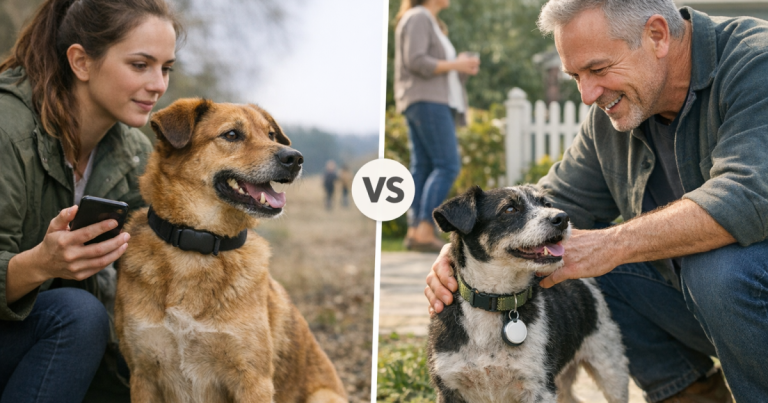
When a dog slips through a backyard gate, the first few minutes feel louder than they look: an open latch, an empty patch of grass, and too many directions to choose from. Start with calm, repeatable steps that help you recover your dog now and prevent backyard fence escapes once everyone is home.
Electrical work on powered gates, buried wire systems, or other energized fence components should be carried out by a qualified professional to meet local code, utility-marking, and safety requirements.
What to know first
The safest way to track a dog after a backyard gate escape is to work from the last confirmed location outward: secure the gate, assign one person to stay home, check tracking data if your dog is wearing a device, then search likely routes quietly instead of chasing. Most backyard escapes begin with familiar behavior, so start with places your dog already knows: the front yard, driveway, neighbor’s porch, trash cans, walking route, dog park direction, school pickup path, or the spot where they usually see squirrels.
Keep one phone line open, use a clear recent photo, and avoid sending a crowd running after the dog. A frightened or excited dog may keep moving if people shout, sprint, or call repeatedly from different directions.
Step 1: Freeze the scene, then secure the exit
Before everyone scatters, take 30 seconds to stop a second problem. Close the gate, block the gap, bring other pets inside, and note exactly how the dog got out. If the gate is still swinging, a second dog may follow, or your loose dog may circle back and bolt again.
- Confirm the time you last saw your dog in the yard.
- Check whether the collar, ID tag, harness, or tracker is still at home or on the dog.
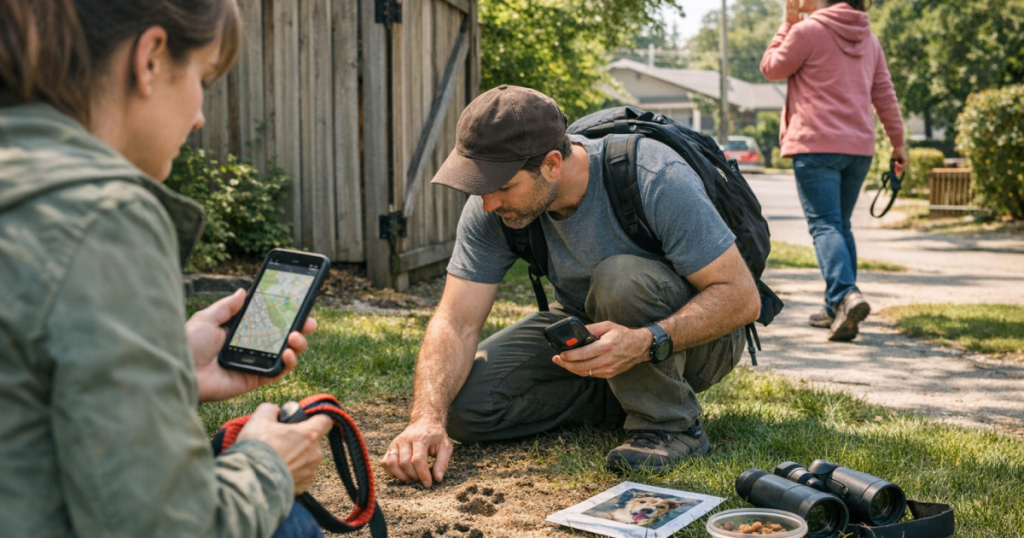
- Look for fresh clues: paw prints, fur on the latch area, disturbed mulch, a nosed-open gate, or a gap under the fence.
- Have one calm person stay near the house with food, water, a leash, and the door open if it is safe.
If you keep a recovery bin, grab it now rather than improvising under stress. A current photo, spare leash, slip lead, flashlight, treats, printed contact sheet, and portable charger can save time; this lost dog recovery kit checklist is useful for building that setup before the next scare.
Step 2: Check tracker data without trusting it blindly
If your dog is wearing a GPS collar or tracker, open the app and look for the most recent location, the time stamp, and whether the position is moving. The time stamp matters as much as the map pin: an old location can send you to the wrong block while your dog is already somewhere else.
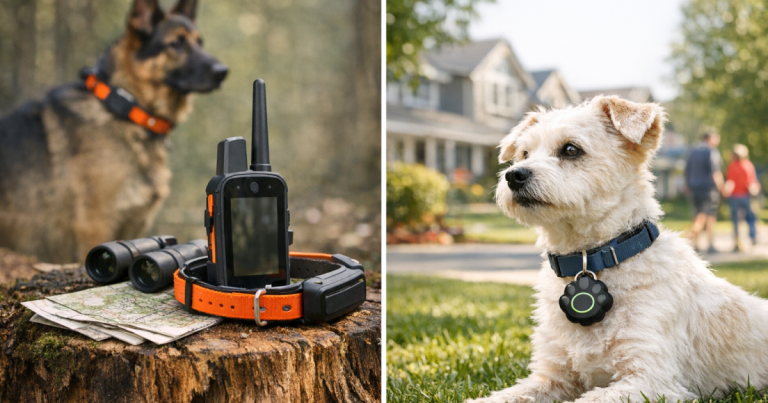
Cellular GPS trackers depend on network coverage, battery level, device fit, and whether the collar stayed on during the escape. Bluetooth tags can help when the dog is nearby or when another compatible device passes close enough, but they are not the same as live GPS tracking. Treat any tracker as a lead, not a guarantee.
- If the location is live and moving, send one person by car or on foot to the next safe intercept point rather than directly chasing from behind.
- If the location is stale, search outward from the last known point and keep refreshing only at safe intervals.
- If the tracker shows the dog near traffic, call for help from a calm person positioned ahead of the dog’s path.
- If the collar appears offline, switch immediately to visual search, neighbor alerts, and shelter reporting.
For owners deciding what kind of backup belongs on an escape-prone dog, the difference between GPS, Bluetooth, and other recovery tools is covered in this guide to backup tracking options.
Step 3: Search the routes your dog would actually choose
A newly escaped dog does not move like a person following a map. Many dogs follow scent, habit, noise, food, shade, or the route they already associate with walks. A social dog may head toward people. A nervous dog may tuck behind sheds, under decks, near parked cars, or along fence lines.
Start close, then widen
- Walk the fence perimeter and front yard first, even if it feels too obvious.
- Check both sides of nearby streets, especially driveways, porches, garages, and shrub lines.
- Send someone along your regular walking loop with a leash and food.
- Ask neighbors to check yards, open sheds, under decks, and side gates without cornering the dog.
- Call local animal control, nearby shelters, and veterinary clinics with a clear description and photo.
Use a normal, warm voice. Call once, pause, listen, and avoid sounding panicked. If your dog spots you but does not come, turn sideways, crouch, toss food gently, and let the dog approach. Running directly at a loose dog can turn a recovery into a game or a fear response.
Step 4: Organize people before the search gets messy
Well-meaning help can become confusing fast. Give each person a specific job and a boundary. One person stays home. One monitors the tracker or phone. One checks shelters and online neighborhood posts. One or two search nearby streets. More searchers are not always better if they create noise, block escape routes, or chase the dog toward traffic.
- Share one photo that shows your dog’s full body, coloring, and collar if visible.
- Use one phone number for sightings.
- Ask people to report direction of travel, time seen, and behavior.
- Tell helpers not to grab, chase, or shout unless the dog is in immediate danger.
- Update neighbors when the dog is found so stale sightings do not keep circulating.
If your dog is skittish, treat every sighting as information rather than a command to rush in. The goal is to predict the next safe place your dog may pause.
Step 5: Set a quiet home lure
Many dogs return near the original exit point, especially once the excitement fades. Keep the gate secured, but make the home area recognizable and calm. Place familiar bedding or an unwashed shirt near a safe entry point where you can supervise it. Keep food controlled so it does not attract wildlife or other pets.
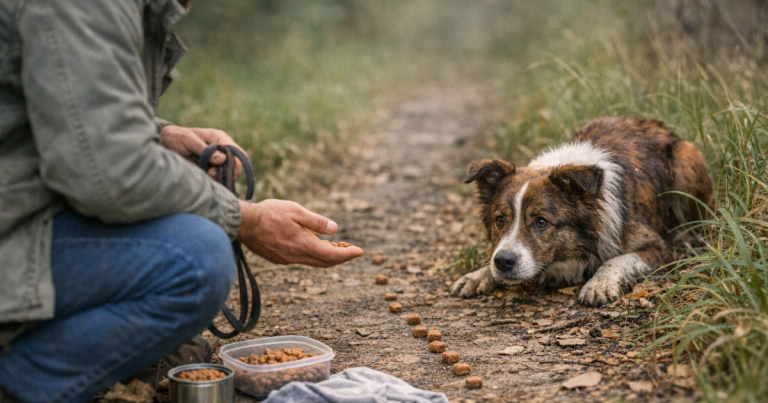
If your dog comes back but will not step inside, do not slam doors, shout, or crowd the path. Sit low, avoid direct eye contact, speak softly, and use high-value food. Once the dog is close enough, clip the leash calmly before celebrating. The party can wait ten seconds; the leash cannot.
After recovery: check the dog and rebuild the barrier
Once your dog is safe, do a nose-to-tail check for limping, bleeding, burrs, heat stress, or unusual behavior. Call your veterinarian if your dog was hit, fought, ingested something questionable, overheated, or seems painful or disoriented.
Then fix the escape route before the next yard break. To prevent backyard fence escapes, focus on the cause rather than the symptom: a loose latch, a gate that swings inward poorly, a gap at ground level, a climbable object near the fence, storm damage, digging behavior, or unsupervised time during high-arousal moments.
- Add a self-closing hinge or secondary latch where appropriate.
- Move chairs, stacked firewood, trash bins, and play equipment away from the fence line.
- Block digging spots with safe physical barriers and supervision.
- Repair warped boards, bent chain-link edges, and loose posts before using the yard unsupervised.
- Walk the fence weekly and after storms, landscaping work, or deliveries.
If the gate itself was the weak point, this step-by-step guide to stopping a dog from nudging open a yard gate will help you tighten the most common failure points without guessing.
Straight answers
Should I chase my dog if I can see them?
Usually, no. Move calmly and try to get ahead of the dog’s route rather than chasing from behind. Use food, a familiar voice, and a relaxed posture. Chasing can push a playful, scared, or overstimulated dog farther away.
What if the GPS location is not updating?
Use the last time-stamped location as a clue, not a final answer. Search the surrounding area, contact neighbors, and keep checking shelters and local reports. Trackers can lose updates because of coverage, battery, fit, damage, or device limitations.
How far can a dog go after a gate escape?
It depends on the dog’s age, health, confidence, prey drive, fear level, weather, and neighborhood layout. Some dogs stay within a few houses; others move across busy roads or into wooded areas. Start close, but expand quickly if there are no fresh sightings.
What information should I give neighbors?
Share your dog’s name, photo, size, color, collar description, temperament, last known location, and your phone number. Add a clear instruction: do not chase; call with the sighting location and direction of travel.
Practical takeaway
A backyard gate escape is frightening, but the work is simple when you break it into order: secure the exit, confirm whether tracking data is current, search familiar routes, organize calm helpers, and leave a quiet way for your dog to return. After the recovery, fix the gate and fence conditions that made the escape possible. The strongest lost-dog plan is not one dramatic tool; it is a repeatable routine that still works when your hands are shaking.