A dog that disappears beyond cell coverage changes the whole recovery picture, and this Fi Ultra review starts with that reality. For owners who camp, hike, road-trip through rural corridors, or live where cellular service fades at the property line, the important question is not whether a tracker is convenient on a normal Tuesday. It is whether its connection options match the places your dog actually gets loose.
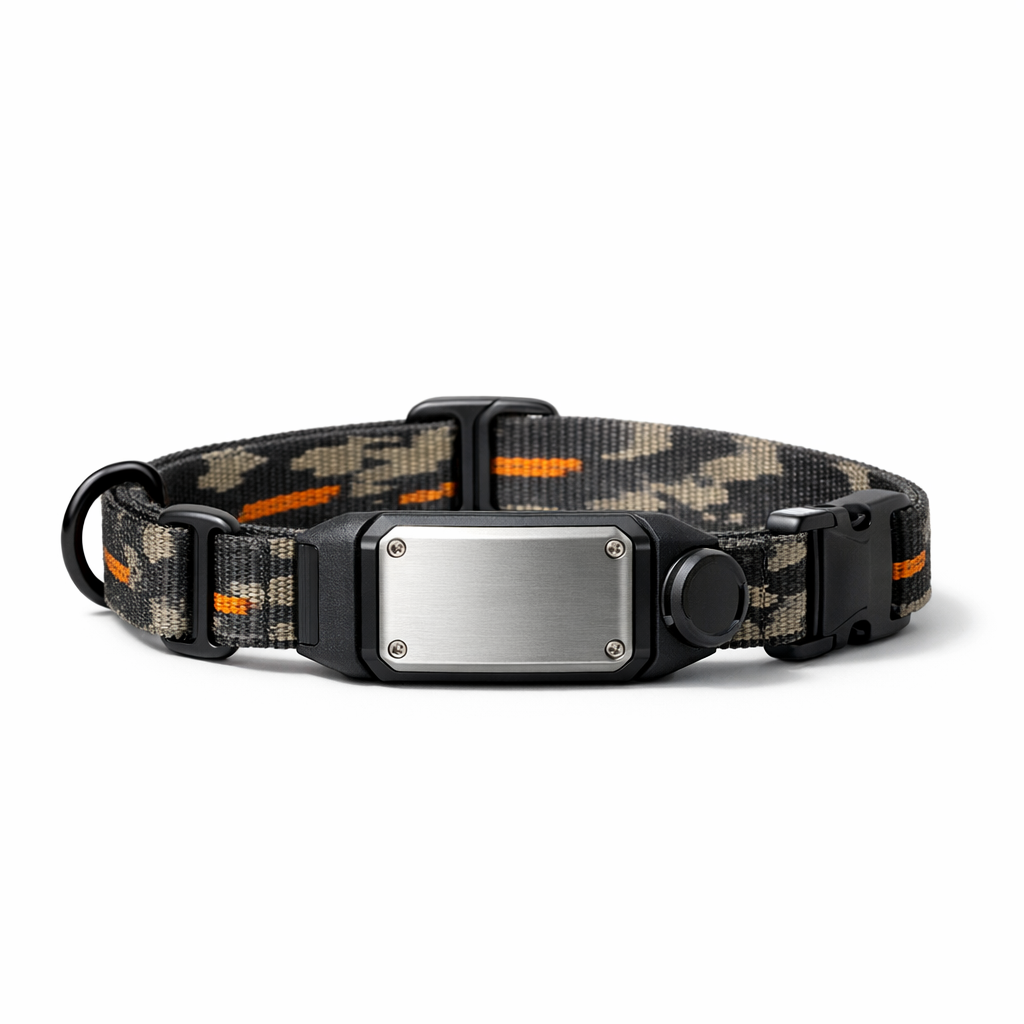
Fi Ultra Dog Tracker
A strong fit for remote travel and rural escapes when satellite-capable tracking matters more than long charging gaps
In brief
The Fi Ultra Dog Tracker is a current US dog tracker from Fi, launched on July 8, 2026, and positioned as the latest model in the brand’s lineup. Its standout confirmed feature is a connectivity mix that includes T-Mobile T-Satellite with Starlink, LTE, Wi-Fi, and Bluetooth. That makes it more interesting for remote-area owners than a tracker that depends only on cellular coverage.
The trade-off is just as important: Fi lists battery life as several days, and the official evidence notes that satellite connectivity contributes to that limitation. Satellite connectivity also requires a $189 annual subscription. For the right dog and the right environment, that can be a reasonable exchange. For a dog who mostly slips through a suburban gate and stays within strong cellular coverage, it is probably more tracker than you need.
Product overview
The Fi Ultra Dog Tracker is a dog tracking device from Fi for the US market. It is currently available for purchase in the United States, and Fi identifies it as the newest model in its lineup as of its July 8, 2026 launch.
Its role is clearest when you picture the moments that make ordinary trackers feel fragile: a dog bolts from a mountain trailhead, wanders behind a rural property, or vanishes during a road trip stop where your phone shows one bar and then no service at all. In those situations, the Fi Ultra Dog Tracker’s combination of satellite, LTE, Wi-Fi, and Bluetooth connectivity is the main reason to look at it.
Confirmed product details
- Product name: Fi Ultra Dog Tracker.
- Brand: Fi.
- Product type: Dog tracker.
- US market status: Current and available for purchase in the United States.
- Launch context: Launched on July 8, 2026, and identified as the latest model in Fi’s lineup.
- Connectivity: T-Mobile T-Satellite with Starlink, LTE, Wi-Fi, and Bluetooth.
- Battery life: Several days.
- Waterproof rating: IP68.
- Satellite subscription: Satellite connectivity requires a $189 annual subscription.
Pros, trade-offs and limitations
What stands out
- Remote-area connectivity is the headline feature. The inclusion of T-Mobile T-Satellite with Starlink alongside LTE, Wi-Fi, and Bluetooth gives the Fi Ultra Dog Tracker a broader connectivity profile than a tracker built only around everyday cellular use.
- It fits a real recovery problem. Rural dog owners, hikers, campers, and frequent road-trippers are often the people most frustrated by trackers that depend heavily on cellular coverage.
- IP68 waterproofing is confirmed. For dogs who splash through creeks, work through wet grass, or get caught in rough weather, the official IP68 rating is a meaningful durability detail.
- It is a current US product. This matters for support expectations, market relevance, and subscription availability in the United States.
The trade-offs
- Battery life is shorter than some owners expect from non-satellite routines. Fi lists battery life as several days, and the evidence notes that satellite connectivity limits battery life.
- The satellite subscription adds a real recurring cost. The $189 annual subscription for satellite connectivity should be part of the purchase decision, not an afterthought.
- It is not a magic recovery button. Satellite-capable connectivity helps address one major failure point, but it does not replace ID tags, prevention habits, fast search action, and a calm recovery plan.
If your dog has already gone missing once, a tracker decision should sit inside a broader response system. Pairing any device with a clear lost dog recovery plan for the first 72 hours gives you a better chance of acting quickly instead of improvising under stress.
Performance and buying implications
The Fi Ultra Dog Tracker is most compelling on connectivity. For many dog owners, tracker frustration starts when the dog is in exactly the kind of place where coverage gets unreliable: wooded hills, rural roads, campground edges, large acreage, or remote trail systems. A device that combines T-Mobile T-Satellite with Starlink, LTE, Wi-Fi, and Bluetooth is clearly built for a wider range of connection conditions than a simple short-range tag.
The buying implication is straightforward: choose it for the coverage problem, not just because it is the newest Fi model. If your dog’s highest-risk escape scenarios happen where cellular coverage is thin or absent, the satellite-capable approach is the reason this product belongs on your shortlist. If your dog’s world is mostly neighborhood sidewalks, dog daycare, fenced suburban yards, and areas with steady cell service, the Fi Ultra Dog Tracker’s strongest advantage becomes less essential.
Battery life is the second major decision point. “Several days” is useful, but it is not the same as a device you can ignore for long stretches. For remote travel, that means charging discipline becomes part of the routine. Before a camping weekend, cabin trip, or multi-day drive, the tracker should be treated like your phone, leash, ID tag, and water kit: packed deliberately, charged deliberately, and checked before the dog gets out of the vehicle.
Waterproofing is the easiest confirmed strength to interpret. IP68 does not mean the tracker is indestructible, but it does tell you Fi has assigned a recognized waterproof rating. That matters for dogs who do not politely avoid puddles when they are scared, excited, or following scent. In real lost-dog situations, wet brush, storm runoff, and creek crossings are common enough that water resistance should not be a bonus feature for active dogs.
The subscription cost also changes the value calculation. A $189 annual satellite subscription makes sense when remote coverage is central to your risk profile. It is harder to justify when your dog is rarely outside strong connected areas. The cleanest way to think about it is this: you are paying for a specific layer of recovery resilience, not just for a fancier version of an everyday tracker.
Who it’s best for / who should skip it
Best for
- Rural dog owners whose property, roads, or nearby woods sit beyond dependable cellular coverage.
- Hikers and campers who regularly bring a dog into places where phone service drops in and out.
- Road-trip families who stop in unfamiliar rural areas and want more than a standard cellular tracker for high-risk moments.
- Owners of escape-prone dogs whose patterns include chasing wildlife, crossing acreage, or disappearing into low-coverage terrain.
Better to skip if
- Your dog stays in strong cellular areas. A mainstream cellular tracker can be a more proportionate fit when remote coverage is not the main concern.
- You do not want the satellite subscription. The $189 annual cost is central to the Fi Ultra Dog Tracker’s remote-area value.
- You need longer charging gaps above all else. The confirmed battery life is several days, and satellite connectivity limits battery life.
- You are buying for a tiny dog without fit details in hand. The official evidence here does not provide weight, dimensions, or recommended pet size, so the review cannot responsibly assess comfort for very small breeds.
Small-dog owners often have a different set of trade-offs, because a tracker that looks manageable on a medium dog can feel bulky on a toy breed. For that decision path, our guide to top GPS dog trackers for small breeds is a more size-focused next step.
Alternatives
For everyday app-based tracking in areas with normal cellular coverage, the Tractive GPS Tracker is a more conventional option to compare. It does not serve the same remote-area purpose as the Fi Ultra Dog Tracker, but it can make more sense for owners whose main risk is a neighborhood escape rather than a no-service trail or rural acreage search.
For field-oriented dog handling, Garmin systems such as the Garmin Alpha 100 sit in a different category again, built around a handheld field workflow rather than the same mainstream tracker experience. That kind of system is usually a better comparison for hunting, training, or structured outdoor work than for a family dog who needs day-to-day location backup.
Helpful questions
Is the Fi Ultra Dog Tracker worth it for city dogs?
It is hardest to justify for city-only dogs because its strongest confirmed advantage is remote-area connectivity. Urban owners with reliable cellular coverage usually have less need for the satellite layer.
Does the Fi Ultra Dog Tracker eliminate the need for an ID tag?
No. A visible ID tag is still important because a neighbor, hiker, park employee, or shelter can act on it immediately without needing access to your tracker account.
How should owners think about the several-days battery life?
Treat it as a routine responsibility. Charge before rural trips, hikes, camping weekends, and travel days rather than waiting until the tracker is already low.
Is IP68 enough for wet outdoor use?
IP68 is a strong confirmed waterproof rating, but it should be understood as water resistance within the product’s rated design, not permission to ignore wear, damage, or charging care.
Verdict + score
The Fi Ultra Dog Tracker is a very strong niche fit for US dog owners whose real fear is losing a dog where cellular coverage fails. Its connectivity mix is the reason to buy it: T-Mobile T-Satellite with Starlink, LTE, Wi-Fi, and Bluetooth gives it a more remote-ready profile than ordinary app-first trackers. The limitations are clear enough to keep the recommendation grounded. Battery life is several days, satellite use carries a $189 annual subscription. For rural homes, remote travel, hiking routes, and dogs with a habit of pushing beyond the easy search zone, it earns an 8.8 out of 10.
Final thoughts
Overall, Fi Ultra Dog Tracker earns a score of 8.8/10. It is a strong option for readers who want the benefits discussed above, while still being worth comparing against the alternatives before buying.
Fi Ultra Dog Tracker
A strong fit for remote travel and rural escapes when satellite-capable tracking matters more than long charging gaps
You might also like: How to Use Trail Cameras to Find a Lost Dog.