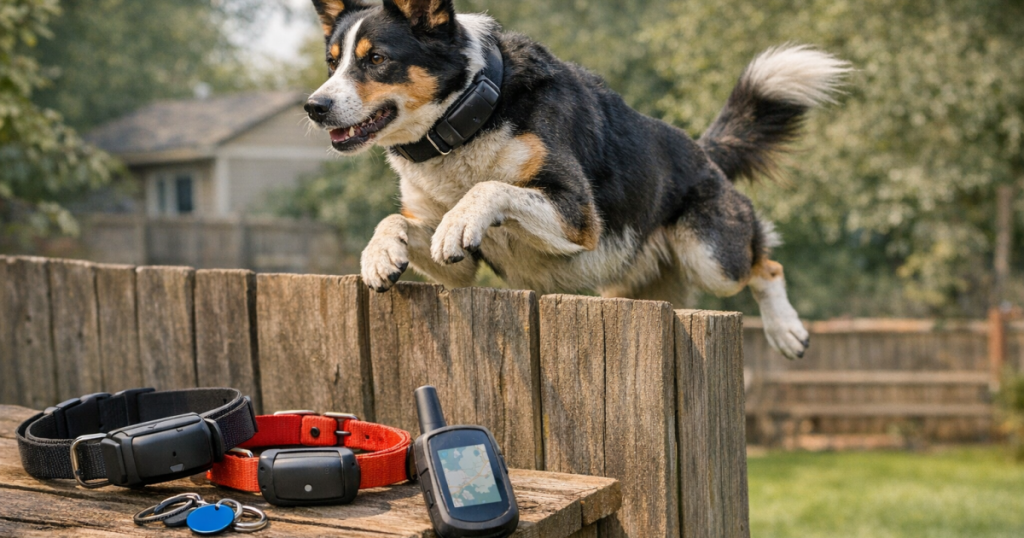
A dog who clears a fence rarely runs in a straight line. They may loop behind garages, cut through yards, or freeze under a porch once the adrenaline fades. Choosing a GPS collar for fence-jumping dogs is less about chasing the flashiest tracker and more about getting reliable location updates, secure collar fit, and a recovery routine you can actually follow when your stomach drops.
The right choice depends on your dog’s escape pattern, your local coverage, collar comfort, and how quickly you need to act after an alert. No tracker makes a fence jumper safe by itself, but a well-chosen setup can shorten the time between “Where did they go?” and “I know where to start.”
The short version
- Pick live location over simple proximity tracking. A fence-jumping dog can leave Bluetooth range fast, so a true GPS tracker is usually the more useful primary tool.
- Prioritize escape alerts you will notice. The best tracker is the one that warns you quickly enough for your household to respond.
- Check coverage where the dog actually runs. Backyards, wooded lots, cul-de-sacs, barns, and trailheads can all behave differently for signal.
- Fit matters as much as features. A loose, heavy, or poorly mounted device can twist, rub, snag, or be shed during the jump.
- Keep backup ID on the collar. A GPS device helps you search; an engraved tag helps a neighbor get your dog home.
Step 1: Identify the kind of fence jumper you have
Start with the behavior, not the product page. A dog who jumps only when a delivery truck arrives needs a different alert routine than a dog who quietly scales the back fence whenever squirrels cross the alley.
Look for patterns over a week or two if your dog is currently safe and supervised. Note the time of day, trigger, direction of travel, and how far they usually get. A few common profiles stand out:
- The doorbell-to-fence sprinter: needs fast alerts and a household response plan because the escape happens suddenly.
- The bored backyard climber: benefits from location alerts, but also needs enrichment, supervision, and fence changes.
- The rural wanderer: may need a tracker chosen around coverage gaps, long driveways, woods, fields, and fewer nearby finders.
- The visiting-dog escape artist: needs a travel-ready setup because unfamiliar yards often reveal weak spots.
If your dog has already gone missing, prioritize search actions before shopping. A tracker helps most when it is already on the dog; after an escape, use a calm plan like this lost dog recovery plan for the first 72 hours to organize sightings, search zones, and next steps.
Step 2: Choose tracking that matches the risk
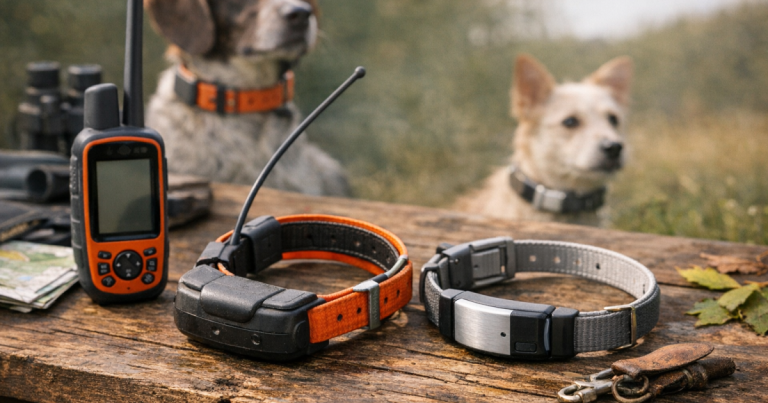
For fence jumpers, the main decision is usually between a cellular GPS tracker, a field-style tracking system, and a Bluetooth tag used only as backup. Each has trade-offs.
Cellular GPS trackers
cellular GPS trackers are common for everyday escape prevention because they typically pair with a phone app and can support home-area alerts. They depend on compatible network coverage, app settings, battery charge, and a secure attachment. For suburban neighborhoods and many towns, this is often the first category to compare.
The Tractive GPS Tracker is one recognizable example of an everyday app-based tracker to study when you are comparing size, attachment style, subscription requirements, and coverage dependency. Treat it as one option to evaluate, not a guarantee that your specific yard or route will perform perfectly.
Field and handheld systems
Some owners with hunting dogs, large rural properties, or repeated off-grid escapes consider field-style systems. These can make sense when phone coverage is weak or when the dog may run through woods, open land, or areas without many people nearby. The trade-off is that these systems can be bulkier, more expensive, and less casual for everyday backyard use.
Bluetooth tags
Bluetooth tags can be helpful as a secondary layer, especially if your dog ends up near people using a compatible network. They are not the same as live GPS tracking. For a dog that jumps a fence and keeps moving, a Bluetooth-only tag should not be your primary recovery tool.
Step 3: Put alerts ahead of extra features
For this specific problem, alerts are not a convenience feature; they are the trigger for action. Look for a setup that lets you define a home area, receive escape notifications, and check the most recent location without fumbling through confusing menus.
Before trusting any collar, test it while your dog is safely leashed. Walk outside the safe zone and see what happens. Ask:
- How quickly does the alert reach your phone in your actual yard?
- Does every responsible adult in the home know what the alert sounds like?
- Can you read the map clearly while stressed or standing outside at night?
- Does the tracker update often enough for the way your dog moves?
- What happens in the weak-signal corner of the yard?
Do not assume the factory settings are right for your property. A safe zone drawn too tightly may create nuisance alerts; one drawn too broadly may delay your response until the dog is already across the street.
Step 4: Check collar fit like you expect a rough escape
A fence jump is physical. The dog may launch, twist, scrape the fence, squeeze under a gate afterward, or crash through brush. That means the attachment and collar setup deserve as much attention as the app.
Use a collar that stays snug without restricting breathing or normal movement. You should be able to fit two fingers under many everyday flat collars, but the correct fit depends on collar style, coat, neck shape, and your dog’s tendency to back out of gear. Dogs with narrow heads, thick ruffs, loose skin, or very small frames need extra care.
Watch for these problems during supervised test wear:
- The device slides under the throat and bounces while running.
- The tracker sits where it could strike the fence during a jump.
- The mount pulls hair, rubs skin, or catches on the collar hardware.
- The collar loosens after play, scratching, or rolling.
- The total weight looks awkward on a small dog.
For small breeds that climb, squeeze, or hop fences, size and comfort are especially important. A tracker that looks minor on a Labrador may be irritating on a 12-pound terrier, so compare compact options carefully before committing.
Step 5: Build a backup layer around the tracker
A GPS collar helps you search, but it should not be the only way home. Batteries run down, collars can come off, phones can be missed, and network coverage varies. A fence jumper should also wear simple, low-tech identification.
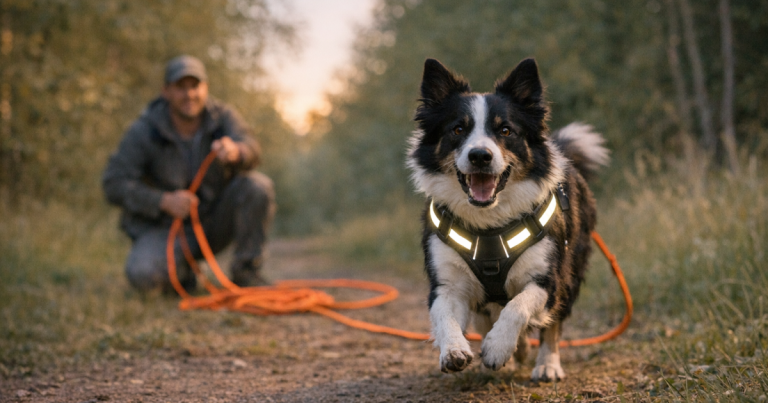
A personalized tag such as the GoTags Bone Dog Tag in Stainless Steel gives a neighbor, mail carrier, or passerby a direct way to contact you. Visibility gear can also help if escapes happen at dusk; a rechargeable option like the Nite Ize NiteHowl Rechargeable LED Safety Necklace is worth comparing for nighttime routines, though it does not replace ID or tracking.
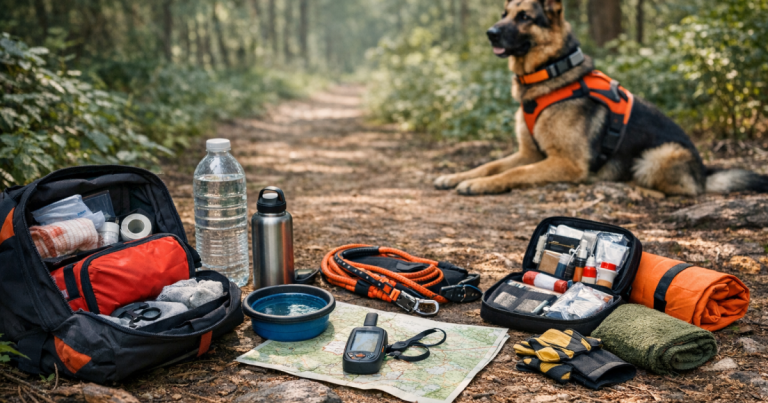
For a broader checklist of collars, harnesses, tags, lights, and other escape-focused gear, use this dog safety gear buying guide for escape-prone dogs alongside your tracker decision.
Step 6: Test the first 48 hours before you relax
Do not wait for a real escape to learn the weak points. Once the collar arrives, treat the first two days as a controlled trial.
- Charge and update first. Start with the device ready, the app installed, and notifications enabled.
- Walk the boundary on leash. Test alerts at the fence line, driveway, side gate, and the route your dog usually takes.
- Try a second phone. If one person is at work or driving, another household member may need the alert.
- Check indoor-to-outdoor behavior. Some trackers behave differently inside the house, under a covered patio, or near dense tree cover.
- Inspect the collar after play. Look for twisting, loosening, rubbing, or bite marks from another dog.
- Write the recovery routine down. Decide who grabs the leash, who checks the map, who calls neighbors, and who stays near home in case the dog circles back.
A GPS collar for fence-jumping dogs works best when it is part of a rehearsed response. The technology gives you a starting point; the plan turns that information into action.
Common questions
Is a GPS collar enough to stop a dog from jumping the fence?
No. A tracker can help you locate a dog after an escape, but it does not fix the behavior or the fence. Pair it with supervision, training support, enrichment, and physical fence improvements.
Should I use an AirTag instead of a GPS tracker?
An AirTag can be a useful backup for some households, but it is not a live GPS tracker. For a dog that clears a fence and keeps moving, GPS is usually the stronger primary choice.
How tight should the tracker collar be?
It should be secure enough that the device does not spin or slip off, while still allowing comfortable breathing and movement. Check fit during running, rolling, and scratching, not just while your dog stands still.
What if my yard has poor cellular coverage?
Test before relying on the device. If coverage is weak where your dog escapes, compare field-style tracking options, improve backup ID, and strengthen the physical fence rather than depending on app alerts alone.
Do I still need a printed recovery plan if I have live tracking?
Yes. Recent pings can be confusing under stress, and dogs may move, hide, or double back. A simple written plan helps your household respond faster and more calmly.
Main lessons
For a fence-jumping dog, choose the tracker around the escape, not the marketing. Fast alerts, dependable local coverage, secure fit, and clear recovery steps matter more than a long feature list.
The safest setup is layered: a suitable GPS collar, visible and engraved backup ID, tested notifications, and a household plan everyone understands. When those pieces work together, you are not relying on luck the next time your dog decides the fence is only a suggestion.