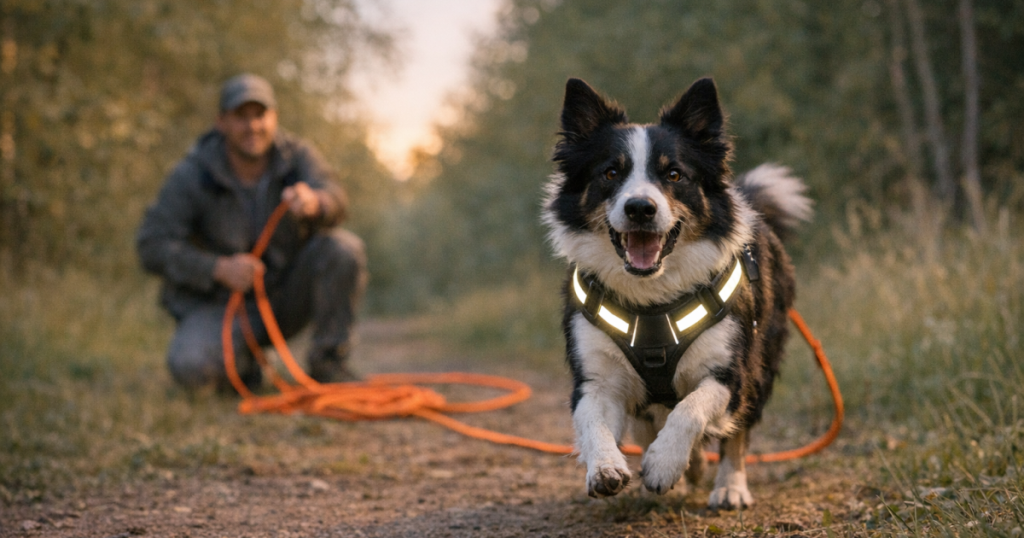
A reflective dog harness and a long-line leash work best as a team: the harness makes your dog easier to spot, while the long line gives controlled freedom for recall practice before you trust an off-leash situation. This setup is not a magic safety system, but it can lower the odds of a runaway moment turning into a lost-dog search.
Think of it as a bridge between a short neighborhood leash and true off-leash reliability. Your dog gets room to sniff, turn, explore, and respond at a distance. You keep a physical connection while you learn what actually distracts them: squirrels, kids on bikes, deer scent, open car doors, other dogs, or the sudden joy of a wide field.
In brief
- Use the harness for visibility and body-safe leash attachment, not as a substitute for training or ID.
- Use the long line in open, low-traffic areas where it will not wrap around people, dogs, trees, bikes, or playground equipment.
- Practice recall before you need it, starting close and adding distance only when your dog is calm and successful.
- Keep backup identification on your dog, and consider a GPS tracker for dogs with a real escape history.
- Do not rely on a training collar, Bluetooth tag, or any single tool as your entire lost-pet prevention plan.
Why the harness-and-long-line combination helps
A long line gives your dog enough distance to make real choices. That matters because a dog who recalls beautifully from six feet away in the kitchen may not respond the same way from 25 feet away in a park with squirrels, food wrappers, and another dog walking past.
The harness changes the equation by spreading leash pressure across the body instead of concentrating it at the neck. That can be more forgiving when a dog reaches the end of the line unexpectedly. Fit still matters, though. A loose harness can twist, rub, or allow a narrow-chested dog to back out. A bulky harness can bother a small dog or make hot-weather practice less comfortable.
The reflective part matters most in ordinary, imperfect moments: evening potty breaks, early-morning campground walks, roadside rest stops, foggy trailheads, and neighborhood practice after work. Visibility will not recall your dog for you, but it can buy you and nearby people a few extra seconds to see where your dog is moving.
Choose the right practice location first
Start somewhere boring on purpose. A fenced yard, quiet athletic field when empty, open meadow, or low-traffic park edge is more useful than a busy dog park. You want enough space for distance work, but not so much stimulation that your dog fails before the lesson begins.
Avoid practicing with a long line near roads, parking lots, crowded sidewalks, playgrounds, bike paths, steep drop-offs, or dense brush. The line can snag, trip someone, or tighten quickly if your dog bolts. Wet leaves, ice, and loose gravel also matter because you may need to plant your feet while your dog is moving.
Good first-session locations
- A quiet fenced yard with minimal distractions.
- An empty baseball outfield or school field where dogs are allowed.
- A wide grassy area away from roads and parking lots.
- A calm trailhead area before the main hike begins.
- A rural property lane or pasture only if you have permission and safe boundaries.
Fit the harness before you add distance
Before clipping on a long line, check whether your dog can move naturally in the harness. Watch the shoulders, armpits, chest, and belly strap area. Your dog should be able to trot, turn, sniff, sit, and lie down without the harness riding into soft tissue or sliding sideways.
A good fit is snug without pinching. You should not see the harness rotating dramatically when the leash angle changes. For deep-chested dogs, pay close attention to whether the girth strap stays behind the front legs. For small dogs, look for low bulk and hardware that does not overwhelm their body. For escape-prone dogs, do a calm backward-pressure test in a safe enclosed area before using the setup outside.
If you are comparing lightweight reflective options, the Ruffwear Hi & Light harness review is useful for thinking through low-bulk comfort and the trade-offs that come with a slimmer design.
Pick a long line that matches the session
Long lines are not all used the same way. A shorter long line can help in suburban fields and beginner sessions. A longer one may suit open rural spaces once your dog has better impulse control. Wider lines can be easier to grip, while very thin lines may be harder to manage with a fast or strong dog. Material matters too: some lines drag smoothly over grass, while others collect mud or burn your hands if they slide quickly.
One recognizable option to compare is the Ruffwear Rogue Long Line, but the right choice depends less on brand and more on how safely you can hold, gather, clean, and control the line with your actual dog.
Long-line checks before the first session
- Clip: Confirm the clip closes fully and attaches cleanly to the harness point you plan to use.
- Grip: Hold the line with both dry and slightly damp hands to see whether it slips too easily.
- Length: Start shorter than your ideal distance so your dog learns the pattern before getting more freedom.
- Visibility: A bright or high-contrast line is easier to see in grass and can help other people avoid stepping over it.
- Condition: Retire a line that is frayed, chewed, stiff, or unreliable at the clip.
Set up the first recall practice session
Begin with your dog on the harness and long line, but do not immediately give the full length. Hold extra line in loose loops, not wrapped around your hand. Wrapping a line around your wrist or fingers can cause injury if your dog suddenly runs.
Let your dog settle and sniff for a minute. Then call once in a cheerful, familiar cue. When your dog turns toward you, praise immediately and move backward a few steps to make returning feel rewarding. When they reach you, reward close to your body so they learn that coming all the way in matters.
If your dog ignores the cue, avoid repeating it five times. Instead, reduce the distance, make a light kissy noise or movement, and help them succeed. The goal is not to test whether your dog will fail; it is to build a habit of hearing the cue and choosing you.
A simple step-by-step pattern
- Start at 6 to 10 feet in a calm area.
- Call once when your dog is mildly interested in something, not fully locked onto a major distraction.
- Reward when they turn, then reward again when they arrive.
- Release them back to sniff so recall does not always mean fun is over.
- Add distance only after several easy wins.
- End before your dog is tired, frantic, or overstimulated.
Use the line to prevent rehearsal of running away
Dogs get better at what they practice. If a dog learns that bolting across a field leads to an amazing chase, the behavior can become more tempting. A long line helps interrupt that rehearsal while still allowing exploration.
When your dog hits the end of the line, avoid yanking them back unless there is an immediate safety issue. Instead, plant your feet, stop forward movement, and wait for a small check-in: a glance, a turn, or slack in the line. Mark that moment with praise and invite them back. Over time, you are teaching that distance has boundaries and that checking in keeps the adventure going.
This is also where expectations matter. A long line is a training support tool, not remote control. For dogs with intense prey drive, fear-based flight, or a history of escaping fences and doors, recall practice should be paired with management: gates, leashes, secure car routines, ID tags, and tracking backup.
Do not confuse training tools with recovery tools
A reflective harness helps people see your dog. A long line helps you practice recall with a physical safety margin. Neither one tells you where your dog is if they slip out of the yard later that night.
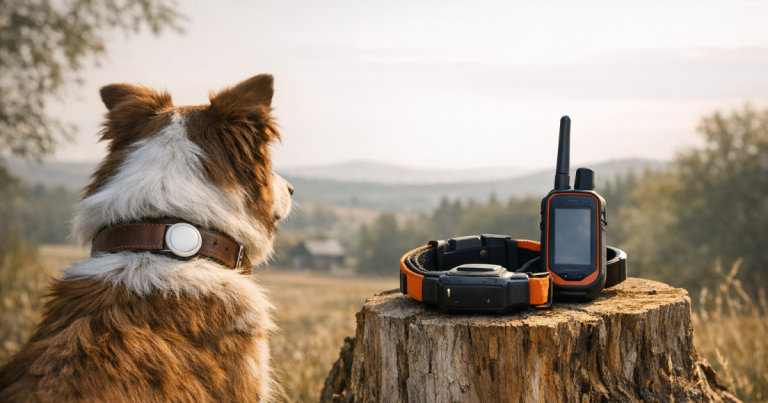
The same distinction applies to remote training collars. They can be part of some training programs, but they are not location devices. If you are sorting out that difference, read why remote dog training collars are not GPS dog trackers before assuming one tool can do every job.
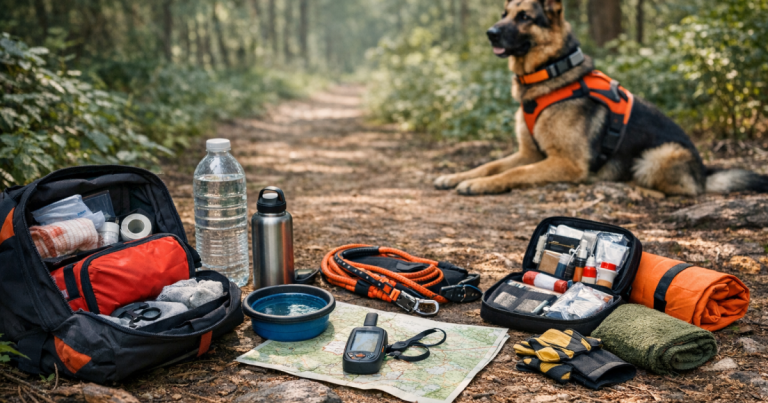
For lost-pet prevention, think in layers. The first layer is behavior: recall, wait at doors, check-ins, and calm leash habits. The second is physical control: harnesses, leashes, gates, crates, and car restraints. The third is recovery support: visible ID, microchip registration, current photos, and for many escape-risk dogs, a GPS tracker with coverage that fits where you live and travel.
Add visibility and identification backups
Reflective gear is most helpful when light hits it. At dusk, in rain, or on wooded trails, you may still want a bright collar, safety light, or high-contrast leash. The point is not to make your dog look over-equipped; it is to make them easier to notice before a driver, cyclist, hiker, or neighbor is surprised.
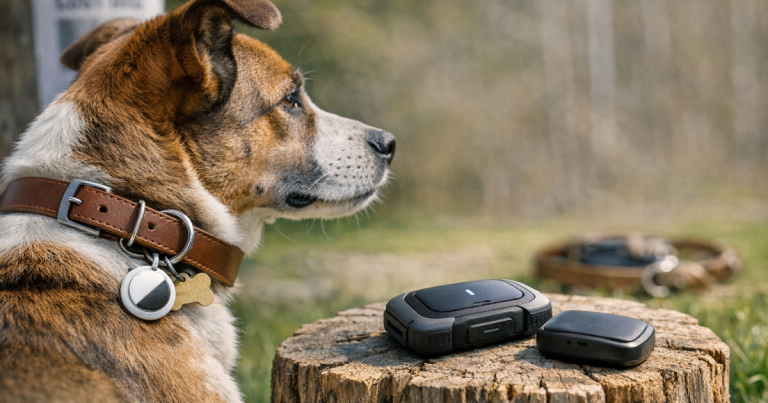
Identification should be just as redundant. A personalized tag such as the GoTags Bone Dog Tag in Stainless Steel is a simple backup if someone finds your dog before you do. Keep the phone number current, and make sure the tag is readable after mud, swimming, and normal wear.
If your dog has slipped collars, jumped fences, or disappeared into woods even once, a GPS tracker may be worth comparing alongside your training setup. Cellular coverage, subscription structure, device size, and attachment style all affect whether a tracker fits your real routine. For mainstream tracker trade-offs, the comparison of Tractive DOG 6 vs Fi Series 3+ is a useful next step.
Practice scenarios that reduce lost-dog risk
Recall is not one behavior in one place. It is a collection of habits that need to work in the situations where dogs actually get loose. Build short practice sessions around the moments that worry you most.
Door-dasher practice
Clip the long line before opening a door to a fenced yard or quiet porch area. Practice calling your dog away from the threshold, rewarding, and releasing. Add real-life distractions slowly, such as a family member walking by or a delivery sound from inside the house.
Trailhead practice
Many dogs are most excited before the hike even starts. Practice check-ins near the car while your dog is still on the long line. Reward eye contact, calm turns toward you, and coming back before you move deeper onto the trail.
Fence-line practice
If your dog patrols or charges the fence, use the long line in the yard while you practice calling away from the boundary. Start when the trigger is mild. Waiting until a dog is already barking at full intensity makes success less likely.
Travel-stop practice
At rest areas or vacation rentals, use the reflective harness before your dog exits the car. Keep the long line organized and short at first. New places can scramble even reliable routines because the smells, sounds, and escape routes are unfamiliar.
Common mistakes to avoid
- Starting in a place that is too exciting. Make the first sessions easy enough for your dog to win.
- Letting the line drag near other dogs or people. It can tangle quickly and create stress.
- Calling only when fun is ending. Sometimes call, reward, and release your dog back to sniff.
- Using too much distance too soon. A longer line does not automatically mean better training.
- Forgetting fit checks. Harnesses can loosen during movement, especially on narrow or wiggly dogs.
- Depending on visibility alone. Reflective gear helps others see your dog, but it does not replace leash handling, ID, or tracking.
What to remember
The safest recall setup is not the flashiest one. It is the one you can use consistently, in the places your dog actually practices, with gear that fits comfortably and keeps your dog visible. A reflective dog harness gives you a better chance of being seen; a long-line leash gives you a safer way to build distance; regular practice teaches your dog that coming back is worth it.
For dogs with a serious escape history, add recovery layers instead of hoping training alone will cover every scenario. Good prevention is rarely one product. It is a routine: visible gear, a secure leash connection, calm recall practice, current ID, and a realistic plan for finding your dog if something still goes wrong.