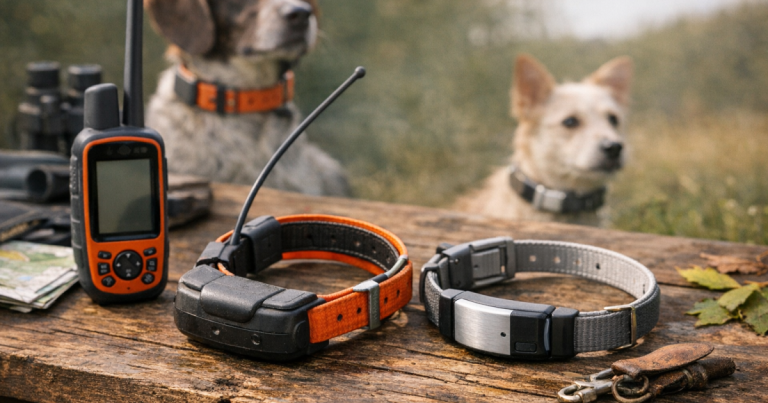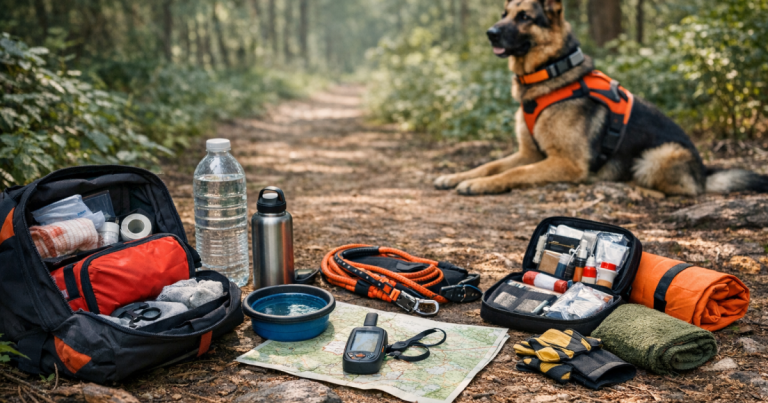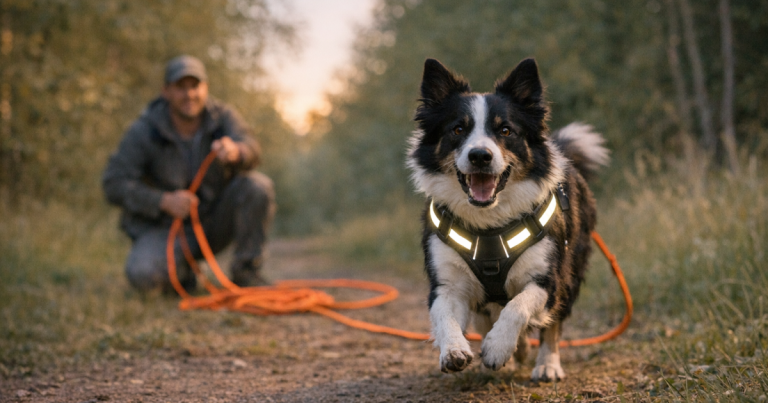
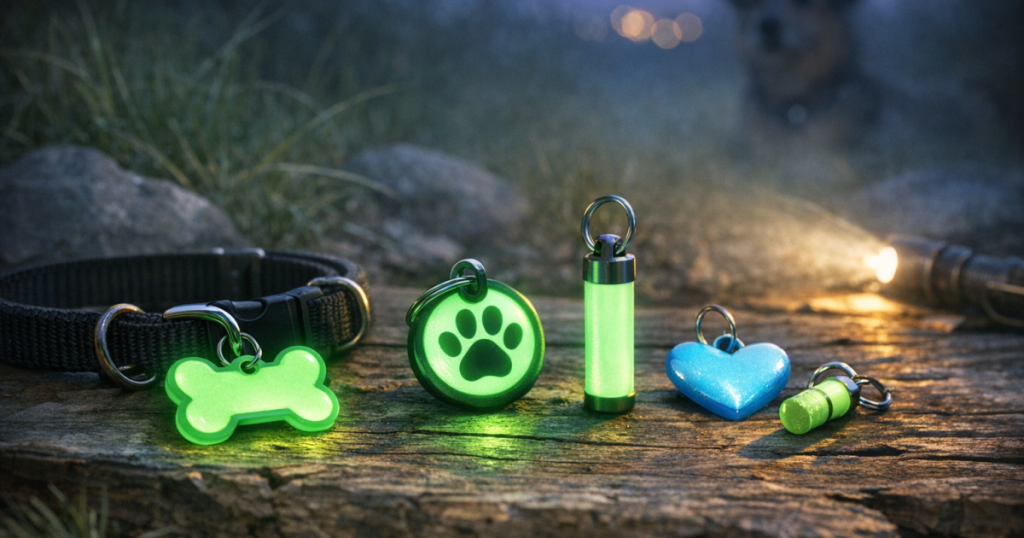
A dog that slips out after dark is harder for neighbors to identify, even when the dog is friendly and wearing a collar. For many nighttime escapes, glow-in-the-dark pet ID tags can make an ID plate easier to notice in headlights, porch light, or a flashlight beam, while still giving the finder your phone number without needing an app. They are not a substitute for a GPS tracker, microchip, or recovery plan, but they can be a smart low-tech backup when someone is close enough to help.
At a glance
- Use a glowing tag to make your dog’s ID easier to spot at night, not as your only recovery tool.
- Prioritize readable engraving, secure attachment, and comfort over novelty shapes or cute designs.
- For nervous, small, or tag-sensitive dogs, silicone or slide-on styles may be quieter than dangling metal tags.
- pair the tag with a microchip, a current phone number, and, for higher-risk dogs, a true GPS tracker.
- Test the tag at home in real nighttime conditions before trusting it during travel, camping, or late walks.
What a glowing ID tag actually helps with
A glowing tag helps in a very specific window: your dog is physically nearby, someone can see the collar area, and that person is willing to approach or call. That might be a neighbor spotting your dog near a driveway, a delivery driver seeing movement near the porch, or a hiker catching a collar flash with a headlamp.
What it does not do is transmit location, update your phone, or guide you toward your dog from miles away. Passive glow materials also need light exposure first, and their brightness can fade over time in the dark. That does not make them useless; it simply means they belong in the “make my dog easier to identify” layer of your safety setup, not the “find my dog from a distance” layer.
Think of nighttime ID as a chain. A glowing tag can attract attention. Engraving gives the finder a phone number. A microchip helps if your dog reaches a shelter or vet. A GPS tracker can help you search actively when the dog is still moving. Each piece covers a different failure point.
Step 1: Match the tag style to your dog’s most likely escape scenario
Start with the situation you are trying to solve, not the tag color. A yard explorer, a door dasher, and a trail dog need different backup ID priorities.
For fence-jumpers and backyard escape artists
If your dog tends to leave from the yard at dusk, choose a tag that is easy to see from a sidewalk, driveway, or porch. A larger readable surface can matter more than an intricate design. For repeat escape behavior, ID should sit alongside prevention work; dogs that climb, squeeze, or launch over fencing need a setup that addresses the behavior as well as the recovery plan. The checklist in choosing a GPS collar for a fence-jumping dog is a helpful next step if your dog has already left the yard more than once.
For door dashers
Door dashers may end up close to home but move fast and unpredictably. A lightweight dangling tag can work if it does not catch on gear, but a slide-on collar tag may stay flatter and quieter. The key is making the phone number readable without requiring a stranger to rotate a tiny tag in low light.
For camping, cabins, and road trips
Travel adds confusion. A finder may not recognize your dog, your car, or your campsite. Use a tag with your cell number rather than only a home address. If you travel often, consider a second travel tag with a brief line such as “Call owner” or “Needs meds” only if accurate and truly important. Do not crowd the tag so much that the phone number becomes difficult to read.
Step 2: Choose the glow method: passive glow, reflective, or LED add-on
Not every “visible at night” product works the same way. The difference matters when you are choosing backup ID.
- Passive glow tags: These absorb light and glow afterward. They are simple, quiet, and do not require charging, but they usually need prior light exposure and may fade as the night goes on.
- Reflective tags or collars: These shine back when hit by headlights or a flashlight. They can be very useful near roads or during search walks, but they need an external light source.
- LED collar lights: These are visibility accessories rather than ID tags. They can help a person notice your dog from farther away, but they still need a separate readable ID tag.
For many dogs, the strongest low-tech setup is not one product. It is a readable ID tag, a collar or harness with reflective material, and a separate visibility light for nighttime walks or campsites.
Step 3: Put readability ahead of novelty
The tag’s job is to get your dog home. A fun shape or glow color is fine, but only after the basics are covered.
- Use a large, current phone number. If space is tight, your cell number matters more than decorative text.
- Avoid overloading the tag. Too many lines can make engraving tiny, especially on small round tags.
- Choose contrast carefully. A glowing background is helpful only if the engraved text remains legible in normal light and low light.
- Check both sides. If the tag allows front and back engraving, use the cleanest side for the phone number.
- Inspect wear. Glow coatings, printed surfaces, and engraving can all become harder to read after months of scratches, mud, or saltwater exposure.
A simple test is to hand the tag to someone across the room and ask them to read the phone number quickly. If they have to squint in your kitchen, a stranger will struggle in a driveway at 10 p.m.
Step 4: Choose an attachment style your dog will tolerate
The best tag is the one your dog will actually wear every day. Some dogs ignore dangling tags. Others chew them, paw at them, or freeze at the sound. Fit and comfort matter even more for toy breeds, seniors, and dogs with narrow collars.
- D-ring dangling tags: Easy to move between collars, but they can jingle or snag.
- Split-ring tags: Common and simple, though cheap rings can bend or loosen.
- Slide-on collar tags: Quieter and flatter, but they must match the collar width and style.
- Silicone tags: Often quieter than metal and useful for sound-sensitive dogs, but still need durable, readable identification.
Small dogs need special care because a bulky tag can hit the chest, food bowl, or front legs. If you are balancing tracker size, collar width, and ID space, the fit advice in GPS trackers for small breeds also applies to choosing tag weight and collar real estate.
Real-world tag and visibility options to compare
Availability, colors, and engraving options can change, so check the current product listing before buying. These examples are useful comparison points because they represent different approaches to nighttime ID and visibility.
- SiliDog Glow in the Dark Dog Tag: A silicone-style option to compare if collar noise bothers your dog. Confirm the current glow color, size, and engraving format before ordering.
- GoTags Glow in the Dark Dog Tag: A more traditional ID-tag style to consider if you want a simple engraved tag with a glow feature. Check the available shapes and how much readable text each size supports.
- Dog Tag Art Glow in the Dark Pet ID Tag: Worth comparing if you want a more design-forward tag, as long as the final layout keeps the phone number clear.
- Nite Ize SpotLit LED Collar Light: Not an ID tag, but a useful visibility add-on for walks, campsites, and dark yards when paired with a separate engraved tag.
When comparing any glowing tag, look beyond the product photo. Ask whether the engraving is easy to read in daylight, whether the tag size fits your dog’s collar, how the tag attaches, and whether your dog is likely to tolerate the material and movement.
Step 5: Pair the tag with backup identification
A glowing tag helps a person make contact quickly, but it can fall off, become unreadable, or be hidden by long fur. That is why your dog should still have a registered microchip with up-to-date contact details. If your dog wears a tracker, the physical tag remains important because a finder may not know what the device is or how to contact you through it.
Bluetooth item trackers and holders can also be part of a layered setup, but they are not the same as GPS. An AirTag-style accessory depends on nearby network devices and is better treated as a proximity or backup tool, not a primary lost-dog tracker. If you use one, fit and retention matter; this guide to choosing an AirTag holder for a dog collar explains the practical collar-mount decisions.
Step 6: Test the tag before you need it
Do a simple evening test at home. Charge the glow material under normal household light or sunlight according to the product instructions, then check it in your yard, driveway, hallway, and under a flashlight. You are not trying to create a lab result. You are checking whether the tag is noticeable in the places your dog might actually be seen.
- Stand 10 to 20 feet away and see whether the tag catches your eye.
- Use a flashlight and car headlights from a safe parked position to test reflective visibility.
- Ask another person to read the phone number without telling them what it says.
- Check whether long fur covers the tag when your dog lowers their head.
- Watch for chewing, scratching, jingling, or signs that the tag annoys your dog.
- Recheck the tag after rain, mud, beach trips, and rough play.
If the tag fails any of these checks, it may still be cute, but it is not doing the recovery job well enough. Replace it, simplify the engraving, or move to a different attachment style.
Common questions
Are glowing ID tags enough for dogs that run away?
No. They are useful only when someone is close enough to see and read the tag. For dogs with a history of escaping, use a layered plan that includes secure containment, training support, current ID, a microchip, and a tracking method that fits your environment.
Should the tag include my dog’s name?
It can, but the phone number is more important. If space is limited, use your phone number, a backup number if possible, and a short prompt such as “Call owner.” The goal is to make the next action obvious for the finder.
Do glow tags work for long-haired dogs?
Sometimes, but long fur can hide any tag. For thick-coated dogs, check visibility while your dog is standing, sniffing, sitting, and moving. A reflective collar, harness, or LED light may help the tag area draw attention.
How often should I replace a pet ID tag?
Replace it whenever the phone number changes, the engraving becomes hard to read, the attachment ring weakens, or the glow surface is too worn to be useful. For active dogs, inspect ID gear as part of your normal collar and harness checks.
What to remember
Glow-in-the-dark pet ID tags work best as part of a calm, layered lost-dog strategy. They can make your dog easier to notice after dark, but recovery still depends on readable contact details, secure attachment, up-to-date microchip records, and realistic expectations about what each tool can do.
If your dog is already missing, focus on immediate search steps rather than shopping for gear. Start with a clear action sequence like the lost dog recovery plan for the first 72 hours, then update your dog’s ID setup once they are safely home.