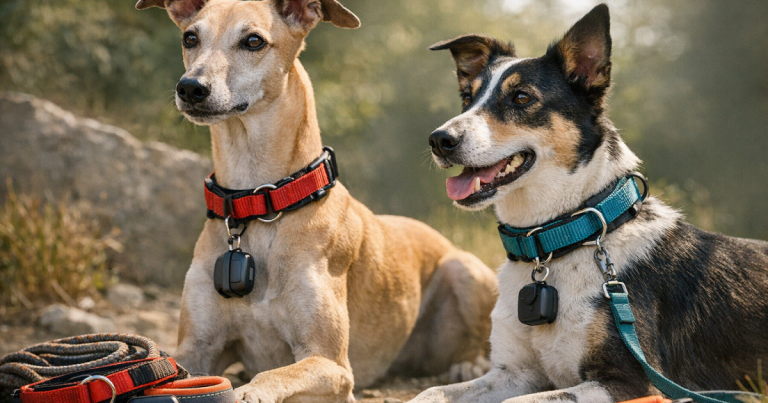
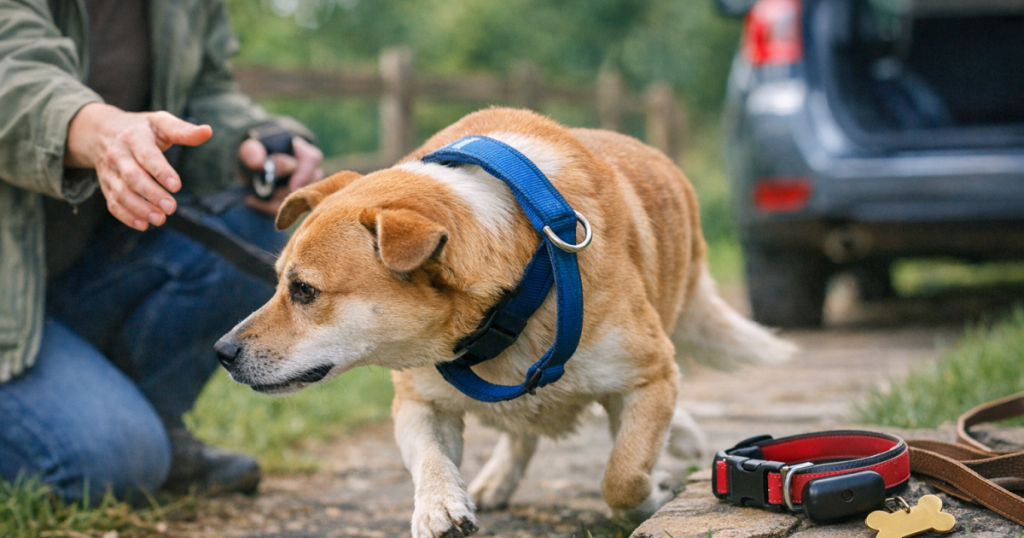
A collar that slides over your dog’s ears is not just annoying; it can turn a routine sidewalk pause into a lost-dog scare. The fastest way to fix a dog collar slipping off is to check the fit at the neck, match the collar style to your dog’s head shape, and use backup handling for moments when your dog is excited, startled, or trying to reverse out of pressure.
The goal is not to make the collar tight. It is to create a setup that stays secure during real life: backing away from a barking dog, leaning out of a car door, wriggling at the vet, or turning sharply on a leash.
The short version
- Start with the two-finger check: you should usually be able to slide two fingers under the collar, but it should not rotate loosely or slip toward the ears.
- Check the head-to-neck shape: dogs with narrow heads, thick fur, or loose skin may need a different collar style, not just a tighter buckle.
- Test movement, not just standing fit: have your dog sniff, turn, sit, back up, and lower their head while you watch for slipping.
- Use a backup for risky moments: escape-prone dogs are safer with a second leash point, secure harness, or ID backup during training and travel.
- Recheck fit often: weight changes, grooming, puppy growth, and seasonal coat changes can all make yesterday’s fit unsafe today.
Step 1: Check whether the collar is actually the right size
Put the collar on while your dog is calm and standing naturally. The collar should sit around the mid-neck area rather than hanging low like a necklace. Slide two fingers under the collar. If your fingers barely fit and the collar presses into the skin, it is too tight. If you can stack fingers, twist the collar easily, or pull it up toward the ears with little resistance, it is too loose.
Now check the hardware position. Buckles, sliders, and ID rings should not gather in a heavy cluster under the chin. On small dogs, even a small amount of hardware weight can make a collar rotate and loosen during movement. On large dogs, bulky tags can swing and encourage the collar to shift forward when the dog lowers their head.
If the collar has an adjustable slide, look closely at whether the slide creeps looser after a walk. Some collars hold their setting well; others shift when wet, dirty, or repeatedly pulled. Marking the correct adjustment point with a tiny stitch, fabric-safe marker, or regular visual check can help you notice movement before it becomes an escape risk.
Step 2: Look at your dog’s shape, not just the collar
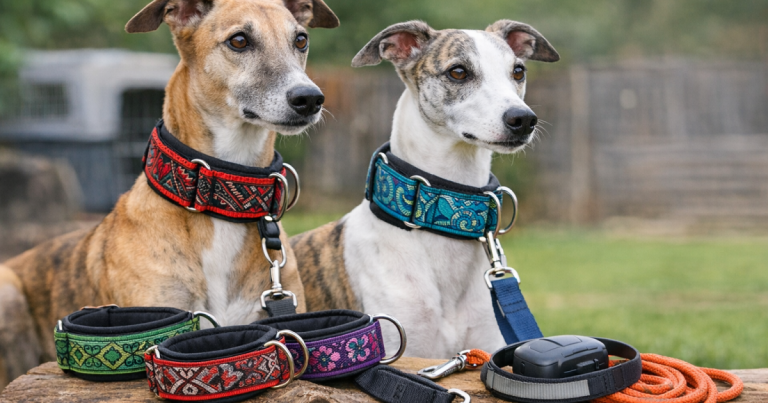
Some dogs are built to slip collars. A Greyhound-type neck, a narrow head, a thick double coat, or a puppy’s changing proportions can make a standard flat collar unreliable even when it looks correct indoors. The key question is simple: is your dog’s head wider than the fitted collar opening when the collar is gently pulled forward?
If the answer is no, the collar can come off when your dog backs up. This often happens when a dog plants their feet, drops their head, and reverses against leash pressure. Owners may think the dog “somehow wriggled out,” but the mechanics are straightforward: the collar slides up the neck, passes over the ears, and falls away.
For these dogs, the fix is usually a better style and safer handling, not excessive tightness. A collar that is tightened enough to compensate for a narrow head can become uncomfortable, rub the skin, or put pressure on the throat. Fit should solve the problem without making normal breathing, swallowing, or resting uncomfortable.
Step 3: Use a movement test before trusting the fit outside
A collar can pass the two-finger check and still fail during real movement. Before relying on it for walks or travel, test it in a quiet room or fenced area.
- Lowered head test: let your dog sniff the floor or take a treat from the ground. Watch whether the collar slides toward the ears.
- Turnaround test: have your dog turn left and right while the leash is attached. Check whether the leash angle pulls the collar forward.
- Gentle reverse test: with very light pressure only, see what happens when your dog takes a step backward. Stop immediately if the collar starts to rise.
- Sit and shake test: some collars loosen or rotate when a dog scratches, shakes off, or sits with loose neck skin bunching under the collar.
- Tag weight test: attach the normal ID tags and tracker holder, then repeat the checks. Accessories change how a collar behaves.
Do not yank the leash or stress your dog during these checks. You are watching how the equipment behaves, not testing your dog’s strength. If the collar shifts toward the ears during gentle movement, it is not secure enough for a busy sidewalk, trailhead, parking lot, or open front door.
Step 4: Choose the safer collar style for the behavior
A flat buckle or quick-release collar is fine for many dogs when properly fitted. It works best when the dog’s head is wider than the neck and the dog is not prone to reversing out of leash pressure. For daily ID, it is simple and comfortable, but it is not automatically escape-proof.
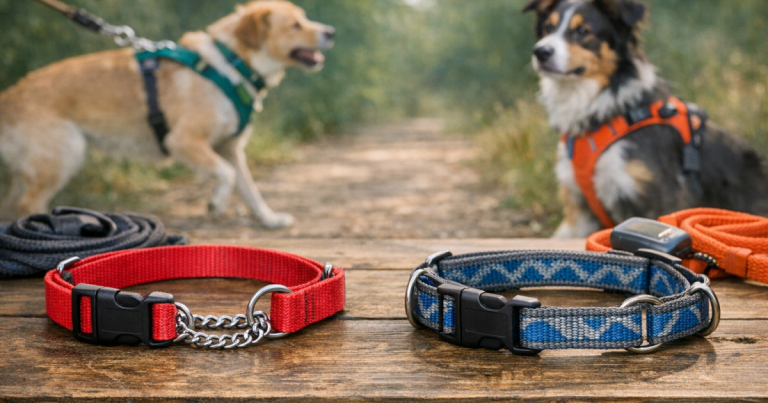
A limited-slip or martingale-style collar can be useful for dogs whose heads are narrower than their necks, because it tightens only to a set point when tension is applied. The important phrase is “set point.” It should never continue tightening without a limit, and it still needs careful adjustment so it cannot choke or rub.
Harnesses can reduce pressure on the neck, but they are not a universal fix. Some dogs back out of loose harnesses just as easily as loose collars. If you use a harness for walking, keep a properly fitted ID collar on as backup, and test the harness fit around the chest, shoulders, and belly. A front-clip or back-clip setup may change how your dog moves, so test in low-distraction places before trusting it near roads or open spaces.
Step 5: Fix the common reasons collars loosen over time
Many collar escapes happen because a setup that was safe last month quietly changed. Build a quick fit check into your normal routine so you catch problems early.
- After grooming: a dog with a fresh haircut may suddenly have an extra half inch or more of space under the collar.
- After winter coat changes: thick fur can hide a collar that is too loose against the actual neck.
- During puppy growth: puppies can outgrow a collar quickly, then need a larger size that must be adjusted carefully from scratch.
- After weight changes: even modest weight loss can make a collar sit differently.
- After swimming or rain: wet webbing, leather, or fur can change the way a collar rests and slides.
- After adding gear: tracker mounts, lights, and tags can add weight or create a new pull angle.
It helps to keep one “home fit” and one “walk fit” in mind. At home, a collar may primarily carry ID. Outdoors, the collar must also handle movement, leash angles, distractions, and sudden starts. If one collar cannot do both comfortably, separate the jobs with an ID collar plus a secure walking harness or limited-slip walking collar.
Step 6: Add backup identification even when the fit is good
No collar setup is foolproof. Buckles can fail, gates can open, dogs can panic, and a normally reliable dog can bolt after fireworks, wildlife, or a car backfire. That is why the safest plan pairs good fit with recovery layers.
A clearly readable ID tag is still one of the simplest backups because it helps a neighbor, driver, or animal control officer contact you quickly without needing special equipment. If your dog’s current tag is worn or hard to read, our GoTags Bone Dog Tag in Stainless Steel review explains why a basic engraved tag can be a useful backup during lost-dog scares.
If your dog wears a GPS tracker, make sure the tracker mount does not make the collar sag, rotate, or slip forward. A tracking device can help with recovery, but it cannot help much if the whole collar comes off and is left behind in the grass. After attaching any tracker, repeat the movement tests and check for rubbing after the first few walks.
Step 7: Use a two-point setup for known escape artists
Some dogs need more than a better collar. Newly adopted dogs, fearful dogs, road-trip dogs, and dogs with a history of backing out deserve a temporary or permanent backup leash strategy. A common approach is one leash attached to a secure harness and a second safety connection to a collar, or a leash plus a short backup strap between harness and collar.
The point is not to overcomplicate every walk. It is to protect the moments when escapes are most likely: leaving the house, stepping out of the car, passing a loud truck, entering the vet clinic, or walking near an unfenced trailhead. For a step-by-step handling routine, see our guide to using a two-leash setup for escape-prone dogs.
Practice the setup indoors first. Clip and unclip calmly, reward your dog for standing still, and make sure leashes do not tangle around legs. A backup system only helps if you can use it smoothly when your dog is excited.
Step 8: Change the routine that causes the slipping
Sometimes the collar is only part of the problem. If your dog surges through the door, spins at the sight of the leash, or panics near traffic, the equipment is being asked to solve a behavior problem by itself. Better routines reduce the pressure on the collar.
- Before walks: ask for a sit or pause before opening the door. Clip the leash before excitement peaks.
- At thresholds: open doors slowly and block the opening with your body until your dog is calm.
- Near cars: hold the leash before any door, crate, or hatch opens.
- On walks: avoid dragging a dog forward if they freeze. Turn sideways, soften the leash, and encourage them back toward you.
- During scares: create distance from the trigger instead of pulling straight back against the collar.
Training a reliable emergency cue also gives you another layer of control if equipment slips, a leash drops, or a gate opens. If you have not built one yet, start with our guide on teaching an emergency recall before off-leash walks.
Fit checks for different dogs
Small dogs
Small dogs often need lighter collars with smaller hardware. A collar can be technically adjustable to the right size but still too bulky for the dog’s neck. Watch for rotating tags, buckles pressing into the throat, and collars that slide over large ears when the dog backs up.
Large dogs
Large dogs may need wider webbing for comfort, but width alone does not guarantee security. Check whether the collar sits flat and whether the adjustment hardware holds when the dog pulls. A big dog that reverses suddenly can slip a poorly fitted collar in seconds.
Long-coated dogs
Part the fur with your fingers and check against the actual neck, not the coat. A fluffy dog can look snug while the collar is floating loosely in the fur. Recheck after brushing, bathing, and seasonal shedding.
New rescues and nervous dogs
For dogs you do not know well yet, assume escape risk is higher. Use secure indoor clipping routines, backup leash points, and quiet test walks before relying on a single collar in a busy area.
Helpful questions
How tight should a dog collar be to stop slipping?
It should be snug enough that it cannot easily move over the ears, but loose enough for normal comfort. The two-finger check is a starting point, not the only test. Watch how it behaves when your dog lowers their head, turns, and backs up.
Why does my dog slip the collar only on walks?
Walks create leash angles, distractions, and backward pressure that do not happen while your dog is standing indoors. If your dog plants their feet and reverses, a standard flat collar may slide forward and come off.
Is a martingale collar safer than a regular collar?
It can be safer for some narrow-headed or collar-slipping dogs when fitted correctly, because it tightens only to a limited point under tension. It should not be left loose, over-tightened, or used as a substitute for calm leash handling.
Should my dog wear a collar if they use a harness?
Usually, yes, at least for ID. Many owners use a harness for leash attachment and a comfortable collar for identification. Just make sure the collar still fits correctly and does not interfere with the harness or tracker mount.
What should I do if the collar slipped off once already?
Treat it as useful warning, not a one-time fluke. Recheck the fit, test movement, consider a limited-slip collar or secure harness, add backup ID, and use a two-point leash setup in risky places until you trust the new routine.
Main lessons
Stopping collar escapes is usually a combination of fit, shape, behavior, and backup planning. Start with a careful neck fit, then test the collar the way your dog actually moves. If your dog has a narrow head, thick coat, nervous temperament, or history of reversing out of gear, do not solve the problem by simply tightening the collar. Choose a safer setup and build calmer routines around doors, cars, and walks.
The best collar is the one that stays comfortable on an ordinary day and stays with your dog on a bad one. Pair it with readable ID, thoughtful leash handling, and regular fit checks, and you reduce the chance that a small equipment problem becomes a lost-pet emergency.