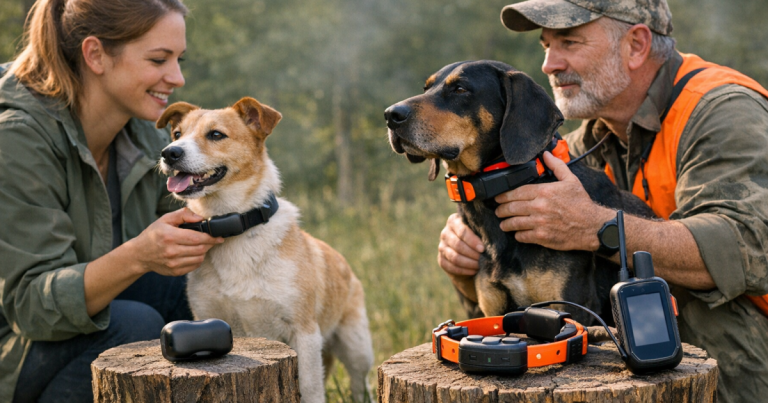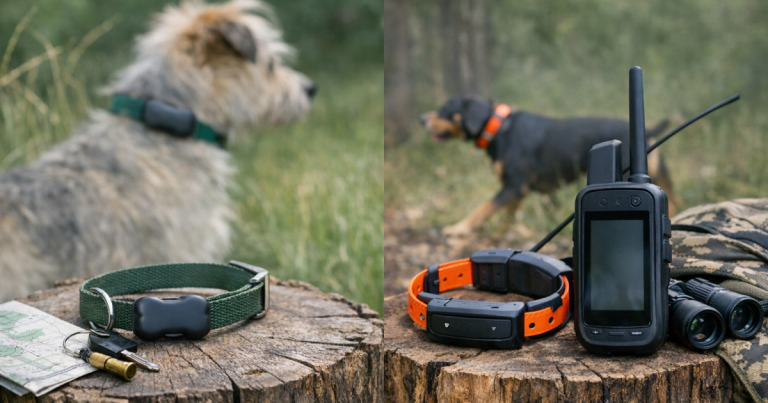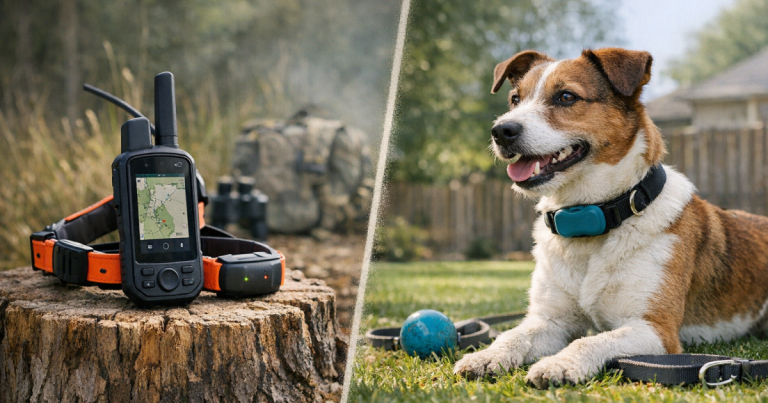
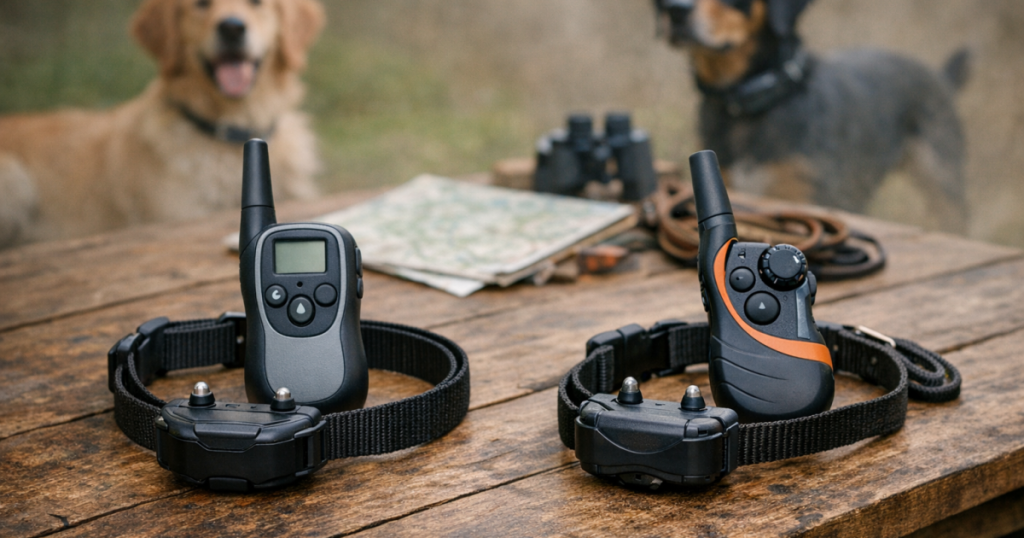
For many owners, PetSafe Remote Trainer vs SportDOG 425X is not a question of which collar is “stronger.” It is a question of which system better matches the dog in front of you: the fence-dasher who needs better recall around the yard, the close-working field dog, or the two-dog household trying to keep training consistent without juggling too many remotes.
Quick Buying Links
PetSafe Remote Trainer
For many owners, PetSafe Remote Trainer vs SportDOG 425X is not a question of which collar is “stronger.” It is a question of which system better matches the dog in front of you: the fence-dasher who needs better recall…
SportDOG Brand SportDOG 425X Remote Trainer
Worth considering if its strengths better match your needs
Training plans that use static stimulation can affect a dog’s welfare; behavior assessment and any corrective-training program should be carried out with a qualified dog trainer or veterinary behavior professional in line with local animal-welfare requirements.
Neither of these products is a GPS dog tracker, and neither should be treated as a lost-pet recovery collar. They are manufacturer-described electronic remote dog training collar systems that send tone, vibration, and static signals from a handheld remote to a receiver collar. That distinction matters: a remote trainer can support a practiced cue, but it does not show where your dog is after a gate swings open or a trail bend blocks your view.
In brief
The PetSafe Act Fast Remote Trainer is the more configurable choice on paper because PetSafe lists 100, 300, 600, and 900 yd range variants, plus Big Dog Standard and Sensitive Dog Lite fit versions. It suits owners who want to choose a range and collar version around a specific dog and training space.
The SportDOG Brand FieldTrainer 425X is the more fixed, field-oriented option in this comparison. SportDOG lists a 500 yd range, 21 static stimulation levels, 50-70 hours per charge after a 2 hour quick charge, and waterproof submersion to 25 feet using DryTek.
The practical takeaway: PetSafe gives you more range and fit configuration before purchase, while SportDOG gives you more published static levels, longer manufacturer-stated runtime, a more specific water-resistance rating, and expansion to more dogs.
The side-by-side facts that matter
Both systems cover the same basic training-signal categories: tone, vibration, and static. The differences are in how far the remote is designed to work, how finely static levels are divided, how the collars fit, how long the batteries are stated to run, and how each system handles multi-dog setups.
- Product category: both are electronic remote dog training collar systems, not GPS trackers.
- Remote range: PetSafe is sold in selectable 100, 300, 600, and 900 yd variants; SportDOG FieldTrainer 425X is listed as a fixed 500 yd model.
- Training signals: PetSafe lists audible tone, vibration, and static; SportDOG lists tone, vibration, and static.
- Static levels: PetSafe lists 15 levels; SportDOG lists 21 levels.
- Recharge and runtime: PetSafe states the remote and collar charge within 2 hours and last up to 40 hours. SportDOG states rechargeable lithium-ion batteries, a 2 hour quick charge, and expected 50-70 hours per charge.
- Dog fit: both list dogs 8 lb and up. PetSafe also states it is not for puppies under 6 months, with Big Dog Standard fitting 6-27 inch necks and Sensitive Dog Lite fitting 6-23 inch necks. SportDOG lists 5-22 inch neck sizes.
- Water resistance: PetSafe states the remote and collar are waterproof. SportDOG states the remote and collar are waterproof and submersible to 25 feet using DryTek.
- Multi-dog use: PetSafe can train 2 dogs with 1 remote using an additional Add-A-Dog collar, except the 100 yd series. SportDOG is expandable to 3 dogs with Add-A-Dog collars.
Range: yard work, field work, and the gap between them
Remote range is one of the clearest differences. PetSafe’s lineup gives you four selectable distance variants: 100, 300, 600, or 900 yd. That makes the PetSafe system easier to match to a training environment where too much range is unnecessary or where a longer listed range is part of the plan.
SportDOG takes a different route with the FieldTrainer 425X: a fixed 500 yd range. That is simpler to compare because there is one SD-425X range figure, but it also means the decision is narrower. If 500 yd is the range bracket you want, the SportDOG number is straightforward. If your training space calls for a shorter or longer listed option, PetSafe gives you more range selection.
For everyday escape prevention, range should not be confused with recovery reliability. A dog that blasts through a gate can leave the effective training picture quickly, especially if the handler is startled or the dog is already highly aroused. Gate manners, leash habits, visible ID, and a recovery plan still matter. If the risky moment is an open fence gate rather than a formal training session, pair equipment choices with a routine like teaching your dog to wait at open gates.
Signals and static levels: both cover the basics, SportDOG divides static more finely
Both manufacturers list three signal types: tone, vibration, and static. That shared signal set means the choice is not about one collar having a completely different communication category. Instead, the meaningful difference is how many static stimulation levels are listed.
PetSafe lists 15 static stimulation levels. SportDOG lists 21 static stimulation levels. Editorially, more levels give a handler more gradation to work through, while fewer levels keep the control structure simpler. The right interpretation depends on the training plan, the dog’s temperament, and the handler’s consistency, not just the highest number on a spec sheet.
This is where scenario matters. A calm dog that already understands a recall cue has different training needs from a dog that bolts toward deer, trucks, or neighborhood dogs. The collar should support a known behavior, not replace teaching the behavior in the first place. Many owners get better early results by practicing recall on a long line before relying on any remote system; the Ruffwear Rogue Long Line review is a useful next step if you want cleaner, lower-pressure recall practice before adding electronics.
Fit and dog size: look closely at neck measurements
Both systems list a minimum dog weight of 8 lb, but their neck-size ranges are different. PetSafe’s Big Dog Standard version fits 6-27 inch necks, while the Sensitive Dog Lite version fits 6-23 inch necks. PetSafe also states the product is not for puppies under 6 months.
SportDOG lists the FieldTrainer 425X for dogs 8 lb or larger with 5-22 inch neck sizes. That gives SportDOG a lower stated neck-size starting point than PetSafe, while PetSafe’s Standard version reaches a larger upper neck-size limit than SportDOG.
For a small dog near the lower end of the range, collar bulk and fit deserve as much attention as the listed minimum weight. For a broad-necked large dog, the upper neck-size limit becomes the more important number. The manufacturer-stated ranges make the practical split clear: SportDOG covers 5-22 inches, while PetSafe’s Standard version extends to 27 inches and its Lite version extends to 23 inches.
Battery and water: SportDOG publishes stronger field details
Battery claims are another meaningful divide. PetSafe states that the remote and collar charge within 2 hours and last up to 40 hours. SportDOG states rechargeable lithium-ion batteries, a 2 hour quick charge, and expected 50-70 hours per charge.
That gives SportDOG the longer manufacturer-stated runtime in this comparison. For owners who train in short, planned sessions close to home, either stated runtime can be workable within a routine that includes charging. For longer field days or repeated sessions between charges, SportDOG’s stated 50-70 hours is the stronger published battery claim.
Waterproofing is not described with the same level of detail. PetSafe states that the remote and collar are waterproof. SportDOG states that the remote and collar are waterproof and submersible to 25 feet using DryTek. The fairest reading is that SportDOG gives a more specific published water-resistance claim, while PetSafe’s product page does not state a submersion depth.
Multi-dog households: SportDOG scales farther
If you train more than one dog, the expansion limit is not a small detail. PetSafe can train 2 dogs with 1 remote using an additional Add-A-Dog collar, but this is not available for the 100 yd series. SportDOG is expandable to 3 dogs with Add-A-Dog collars.
For a two-dog household, both systems have a path, with PetSafe’s 100 yd exception kept in mind. For a three-dog setup, SportDOG is the clearer match because its stated expansion limit reaches 3 dogs.
That said, multi-dog remote training adds handling complexity. The issue is not only whether the system can connect to more collars; it is whether the handler can deliver the right cue to the right dog at the right moment. In a busy yard, car unloading area, or trailhead, prevention routines often do more to reduce panic than any remote button. For road trips in particular, equipment should sit alongside habits that prevent escapes at the source, such as car-door escape prevention on dog road trips.
What each system includes
PetSafe lists a rechargeable remote and collar with adjustable strap, USB charging cord, test light tool, and quick start guide. SportDOG lists the remote transmitter, receiver on a black 3/4 inch collar strap, adaptor, standard and long contact points, test light tool, lanyard, replacement mud plugs, operation manual, and basic training manual.
The overlap is useful: both include the core remote-and-collar setup and a test light tool. SportDOG’s official included-items list is longer, with standard and long contact points, a lanyard, replacement mud plugs, and both operation and basic training manuals listed. PetSafe’s official list is simpler and centers on the rechargeable system, charging cord, test tool, and quick start guide.
Where a remote trainer fits in a lost-dog prevention plan
Because this site focuses on dog tracking and lost-pet recovery, it is worth being blunt about the boundary: a remote trainer is not a location tool. It does not provide a map, does not create a safe zone, and does not help you locate a dog after the dog is out of sight. Its role is training support within the remote’s effective use case.
For a fence jumper, door dasher, or trail dog, the stronger plan layers tools rather than expecting one collar to do everything. A remote trainer can support recall training. A long line can create safer practice reps. A properly fitted everyday collar with ID can help a finder call you. A GPS tracker can support recovery planning when service and battery conditions cooperate. For remote trips, it is smart to understand what happens when coverage drops; start with preparing your dog tracker for no-service hikes before assuming any electronic tool has the whole situation covered.
Helpful questions
Are these dog GPS trackers?
No. PetSafe and SportDOG describe these as electronic remote dog training collar systems. They send training signals; they do not provide location tracking.
Which one has the longer manufacturer-stated battery runtime?
SportDOG lists the longer runtime claim: expected 50-70 hours per charge after a 2 hour quick charge. PetSafe lists up to 40 hours after charging within 2 hours.
Which collar fits larger neck sizes?
PetSafe’s Big Dog Standard version lists the larger upper neck limit at 27 inches. SportDOG lists 5-22 inch neck sizes.
Which option is better for three dogs?
SportDOG is the clearer choice for three dogs because the FieldTrainer 425X is expandable to 3 dogs with Add-A-Dog collars.
Does PetSafe offer more range choice?
Yes. PetSafe lists 100, 300, 600, and 900 yd variants, while SportDOG FieldTrainer 425X is listed as a fixed 500 yd model.
The practical choice for most scenarios
Choose PetSafe if the biggest decision is matching the system to a specific range and fit version. Its selectable 100, 300, 600, and 900 yd variants give more range choice than the fixed 500 yd SportDOG model, and its Big Dog Standard collar reaches a larger listed neck size than SportDOG. PetSafe also gives a path for 2 dogs with an added collar, except on the 100 yd series.
Choose SportDOG FieldTrainer 425X if the fixed 500 yd range suits your dog work and you want the stronger published field specs in this comparison. SportDOG lists 21 static levels compared with PetSafe’s 15, expected 50-70 hours per charge compared with PetSafe’s up to 40 hours, waterproof submersion to 25 feet using DryTek, and expansion to 3 dogs.
The calmer verdict is this: PetSafe is the more configurable family, while SportDOG is the more clearly specified field-style system on the shared criteria. Neither replaces recall training, secure routines, ID, or GPS-based recovery planning, but either can fit into a thoughtful training setup when its stated range, fit, and expansion limits match your dog.
Quick Buying Links
PetSafe Remote Trainer
For many owners, PetSafe Remote Trainer vs SportDOG 425X is not a question of which collar is “stronger.” It is a question of which system better matches the dog in front of you: the fence-dasher who needs better recall…
SportDOG Brand SportDOG 425X Remote Trainer
Worth considering if its strengths better match your needs