When an anxious dog freezes, spins, or suddenly backs away from pressure, ordinary walking gear can become a weak point. The best escape-proof dog harnesses are not magic restraints; they are secure, well-fitted setups that reduce the chance of a dog slipping free while you build calmer leash skills.
Behavior plans for severe panic, bite risk, or repeated escapes should be handled by a qualified veterinarian or credentialed trainer, alongside compliance with local leash laws and public-safety requirements.
At a glance
For anxious leash training, the most dependable setup is usually a body-coverage harness with stable adjustment, a backup leash connection, visible ID, and short test walks before you trust it in busier places. No harness is truly escape-proof if it fits poorly, is used on a panicking dog without a backup, or is clipped only to one vulnerable point.
- For dogs who back out: look for more body coverage and a rear strap or longer harness shape that sits behind the deepest part of the rib cage.
- For dogs who pull forward: a front-clip or dual-clip setup can help redirect movement while training stays calm and reward-based.
- For small or narrow dogs: prioritize adjustability and a snug chest fit without rubbing the armpits.
- For lost-dog prevention: use the harness as one layer, not the whole plan. ID, leash handling, and tracker attachment still matter.
Start with the escape pattern, not the product name
Anxious dogs do not all escape the same way. One dog may plant their feet and reverse out of a loose chest strap. Another may alligator-roll after a truck passes. A third may lunge forward at a squirrel, then panic when the leash tightens. The right harness style depends on that pattern.
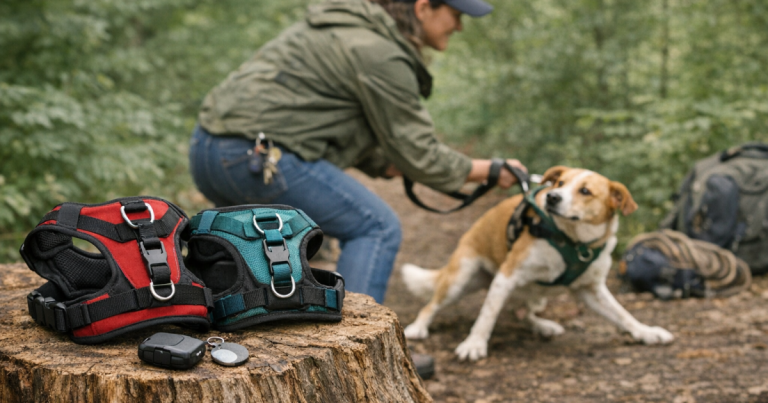
If your dog pulls backward, a basic step-in or simple H-style harness may slide toward the head when the leash angle changes. A longer body harness can help because the rear section gives you more coverage behind the rib cage. If your dog surges forward, a front attachment can reduce straight-line pulling, but it should be paired with gentle training rather than used as a steering wheel.
Dogs who pull backward need extra caution because the escape often happens in seconds. For a deeper look at handling that specific movement, see our guide to front-clip harnesses for dogs who pull backward.
Secure harness styles that tend to work better for anxious dogs
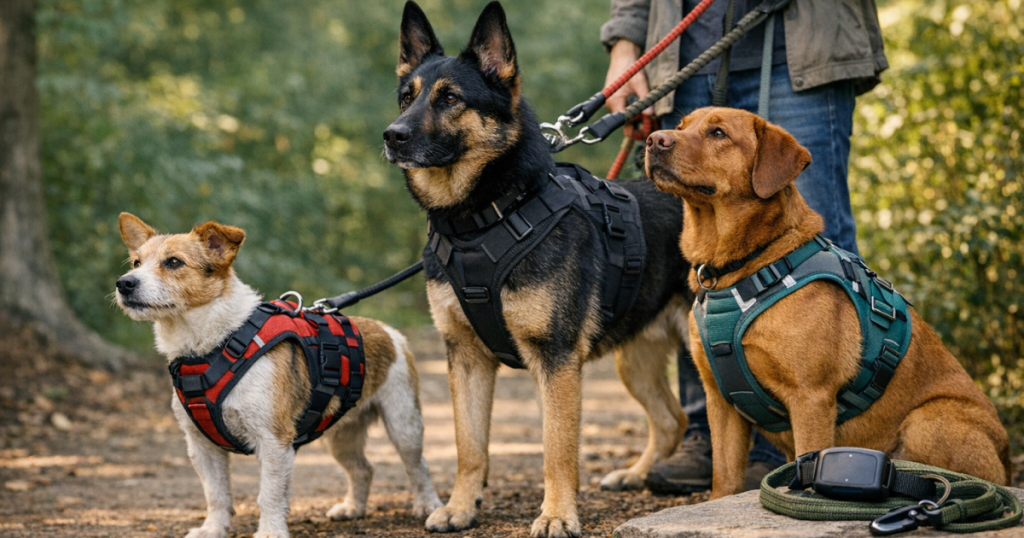
Instead of ranking one universal winner, it is more useful to match the harness type to the dog’s body shape, fear response, and training environment. These examples are recognizable starting points, but the fit on your actual dog matters more than the label.
Body-coverage harnesses for backing out
A body-coverage harness extends farther along the torso than a minimal walking harness. This style is often a better match for dogs who reverse out of gear because it gives the handler more secure contact points across the chest and body.
- Ruffwear Web Master Harness: a common choice for dogs needing more coverage than a basic walking harness. It is often considered for escape-prone dogs, hiking dogs, and dogs with narrow chests, but it still needs careful adjustment.
- Ruffwear Flagline Harness: another body-coverage option that many owners consider when they want a secure walking setup without relying on a collar alone.
Adjustable everyday harnesses for fit-sensitive dogs
Some anxious dogs do not need the most coverage possible; they need a harness that can be adjusted precisely enough to avoid twisting, gapping, and armpit rubbing. This is especially true for deep-chested dogs, growing adolescents, and mixed breeds that do not fit neatly into size charts.
- Blue-9 Balance Harness: useful to consider when fit tuning is the main challenge and you want a walking harness that can be adjusted in multiple places.
- PetSafe 3 in 1 Harness: a familiar training-style harness with front and back leash attachment options, better suited to structured leash practice than to extreme escape risk on its own.
How to fit a secure harness before the first real walk
Do the first fit check indoors or in a fenced area, not at the trailhead or curb. An anxious dog needs time to learn that the harness predicts calm movement, treats, and predictable handling.
- Check the neck opening: it should not pull over the head when the leash angle changes, but it should not press into the throat.
- Check the chest strap: it should sit behind the front legs without cutting into the armpits. Watch for rubbing after short walks.
- Check the rear section: on longer harnesses, the rear strap should sit securely around the body without restricting breathing or movement.
- Use the two-finger test carefully: you should be able to slide two fingers under most straps, but a very fluffy coat or very narrow dog may need closer visual inspection.
- Test the backward pull: with your dog calm and on a short leash, apply gentle backward pressure and watch whether the harness shifts toward the ears. Stop if your dog becomes worried.
A good fit should look boring: no twisting, no loose loops, no slipping over the shoulders, and no dramatic change when the dog turns around.
Use a backup connection while training confidence
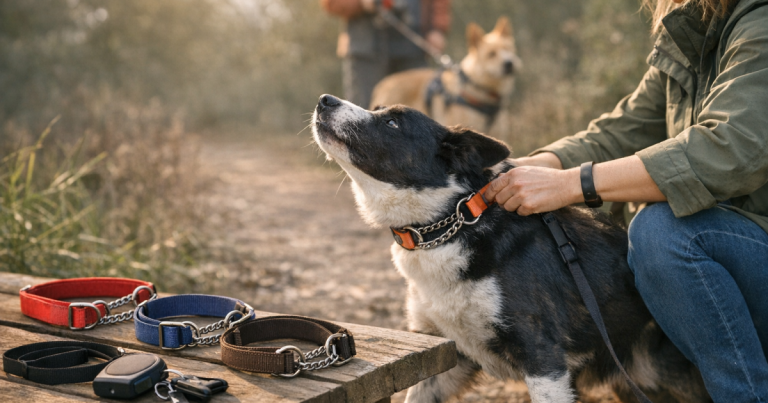
During early anxious leash training, use a secondary attachment so one equipment failure or sudden movement does not become a lost-dog emergency. Many handlers use a double-ended leash connected to both the harness and a properly fitted flat collar or martingale-style collar. Others use a short safety strap between the harness and collar.
The backup is not there so you can drag or restrain harder. It is there to buy time while you step behind the dog, soften the leash angle, create distance from the trigger, and reward calm movement. If your dog wears a GPS tracker or ID collar separately from the harness, make sure that collar is secure enough to stay on during a scare. Our guide to dog collars for secure GPS tracker attachment explains what to consider when the collar is part of your recovery plan.
Practice in low-risk places before busy sidewalks
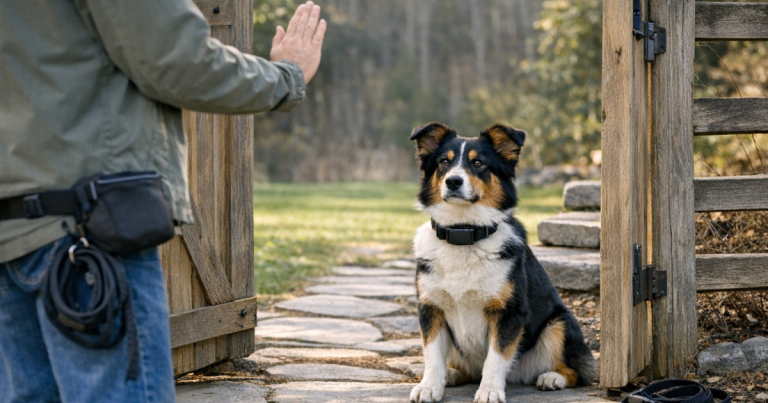
Start where your dog can succeed: a quiet driveway, empty school parking lot after hours, calm neighborhood loop, or fenced yard. Keep sessions short. Let the dog sniff, reward check-ins, and avoid tightening the leash every time they hesitate. A constant tight leash can teach an anxious dog that pressure means trouble.
A simple progression works well for many dogs:
- Day one: wear the harness indoors for treats and calm praise.
- Day two: clip the leash on in a fenced area and practice turning toward you.
- Day three: walk a short familiar route at a quiet time of day.
- Later sessions: add mild distractions one at a time, such as a parked delivery truck, distant dog, or busier corner.
If your dog panics, make the next session easier. Secure gear helps prevent escape, but training improves the dog’s ability to recover from the moment.
Add recovery layers without overloading the dog
A harness is a control point; it is not a complete recovery plan. An anxious dog should also have visible ID, current microchip information, and a tracker routine that has been tested before it matters. A tracker can help after a slip, but coverage, attachment, and real-world accuracy vary by device and location.
Before off-leash time, travel, or hiking with an anxious dog, run a controlled check using our walkthrough on testing your dog tracker’s accuracy before off-leash time. That test belongs in the same safety routine as harness fit: confirm it calmly before you are frightened and searching.
Things readers ask
Are escape-proof dog harnesses really escape-proof?
No. A secure harness can reduce escape risk, but no design can guarantee containment during panic, poor fit, leash mishandling, or hardware failure. Treat it as one safety layer.
Should an anxious dog wear both a collar and a harness?
Often, yes. The harness should handle walking pressure, while the collar can carry ID and serve as a backup connection when properly fitted.
Is a front-clip harness enough for a dog that backs out?
Not always. Front clips can help with pulling direction, but dogs that reverse hard may need more body coverage and a secondary leash connection.
How tight should a secure harness be?
It should be snug enough not to rotate or slip over the shoulders, but loose enough to avoid rubbing, pinching, or restricting normal movement.
Can I use the same harness for hiking and neighborhood training?
Sometimes, if it fits well and stays comfortable during longer wear. For hiking, add ID, visibility, water, and a tested recovery plan.
Key takeaways
The best secure harness for anxious leash training is the one your dog cannot easily back out of, can move comfortably in, and can learn to wear calmly. Choose more body coverage for backward escape artists, more adjustability for hard-to-fit dogs, and a backup connection for early training. Then test everything in quiet places before you trust it near traffic, trailheads, or open spaces.