A dog who pulls backward can turn an ordinary sidewalk moment into a heart-in-throat escape scare. The best front-clip harnesses for this problem do two jobs: they reduce forward pulling leverage and help you keep the leash connection on the dog while you calmly reset the walk. They are not magic, and they are not a substitute for recall, desensitization, or secure identification. But the right harness, fitted carefully and paired with a backup attachment, can make daily training walks much less risky.
What to know first
If someone asks for the best training collars for dogs who back out, the safer practical answer is usually not a harsher collar. For many dogs, it is a secure, well-fitted front-attachment harness paired with a backup limited-slip or martingale collar while the dog learns to move forward calmly instead of reversing under pressure.
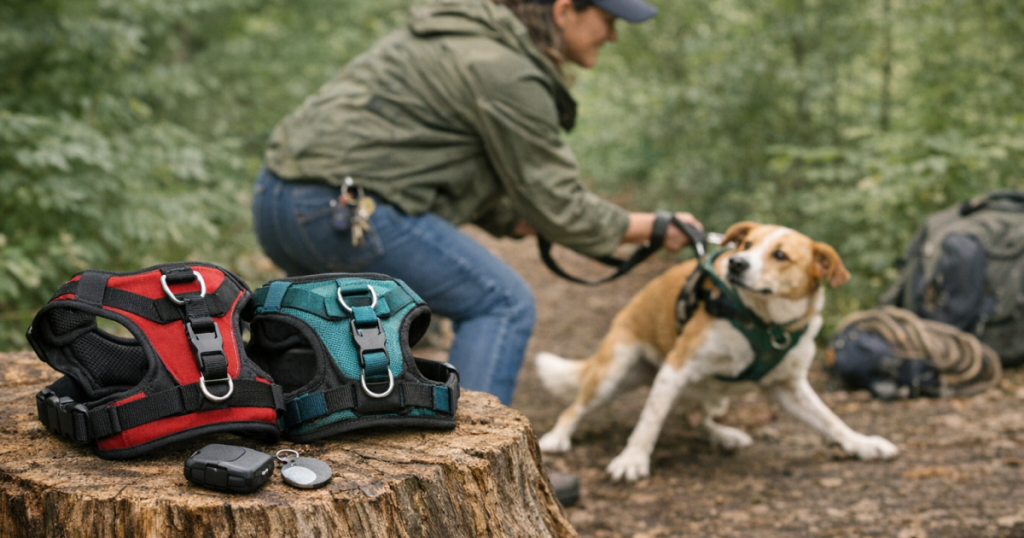
A backward pull is different from ordinary leash pulling. The dog may be startled, frustrated, over-threshold, or trying to avoid something ahead. When that happens, a loose neck collar can slide over the ears, and a poorly fitted harness can shift, gape, or rotate. Your goal is not to overpower the dog. It is to reduce leverage, keep the leash connection secure, and create enough calm space to reward forward movement again.
How a front-clip harness helps when a dog backs up
A front leash attachment changes the direction of pressure. When the dog surges forward, the leash tends to turn the chest rather than letting the dog drive straight ahead with the shoulders. When the dog pulls backward, the front connection can help you keep the dog facing you instead of creating a straight-line tug-of-war.
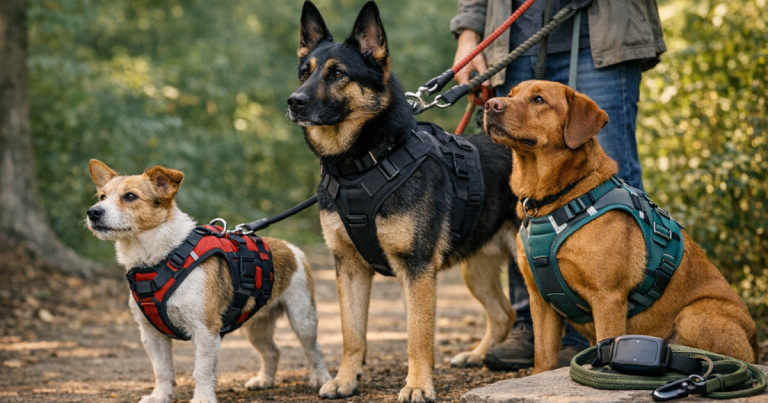
That said, a front clip does not make a harness escape-proof. Dogs with narrow heads, deep chests, flexible shoulders, or a practiced “shrug and reverse” move can still slip gear if the fit is wrong or the leash angle is too high. For true escape artists, treat the harness as one layer in a walking system: harness, backup collar connection, ID tag, and, for dogs with a history of bolting, a GPS tracker that has already been tested before the walk.
Front-clip harnesses worth considering
The right choice depends less on brand hype and more on your dog’s shape, panic triggers, and walking routine. These are recognizable harnesses dog owners often consider for no-pull training and safer leash handling.
PetSafe Easy Walk Harness
The PetSafe Easy Walk Harness is a familiar choice for dogs who lunge forward, because it puts the leash connection at the chest rather than the back. It can be a sensible starting point for dogs who need clear redirection on neighborhood walks. The key limitation is fit: if the chest strap sits too low, rubs, or loosens during movement, it may not feel stable enough for a dog who suddenly backs up.
Blue-9 Balance Harness
The Blue-9 Balance Harness is useful for dogs that are hard to fit because it offers a more adjustable structure than many basic step-in styles. That adjustability can matter for slim dogs, deep-chested dogs, and adolescents whose bodies are still changing. For backward pullers, take extra time to check the neck opening and chest section after the dog has walked, turned, sniffed, and sat.
2 Hounds Design Freedom No-Pull Harness
The 2 Hounds Design Freedom No-Pull Harness is often used in dual-connection walking setups, where the handler can manage both front and back points. That can help with dogs who swing sideways, plant themselves, or alternate between lunging and reversing. It is not a shortcut around training, but it can give you more communication than a single rear-clip harness when your dog is aroused or uncertain.
Ruffwear Front Range Dog Harness
The Ruffwear Front Range Dog Harness is a padded everyday option with front and back leash attachment points. It can work well for dogs who need comfort on longer walks, car-to-trail transitions, or low-key training outings. For serious backing-out behavior, do not assume padding equals security; check whether the neck and girth fit closely enough for your dog’s body type.
Fit checks before you trust it outside
Do the first fitting indoors, then in a fenced yard or quiet driveway before you depend on the harness near traffic. A harness that looks fine while the dog stands still can behave very differently when the dog crouches, twists, or reverses.
- Check the neck opening. It should not slide easily over the shoulders when the dog lowers the head and backs away.
- Check the chest strap position. It should sit where it controls movement without digging into the armpits or restricting a natural stride.
- Check the girth after motion. Walk for five minutes, then recheck. Some straps settle once the dog starts moving.
- Use the two-finger test thoughtfully. You want room for comfort, not enough looseness for the dog to fold backward out of the harness.
- Practice gentle reverse pressure. With the dog calm, apply light backward leash tension and see whether the harness shifts toward the head.
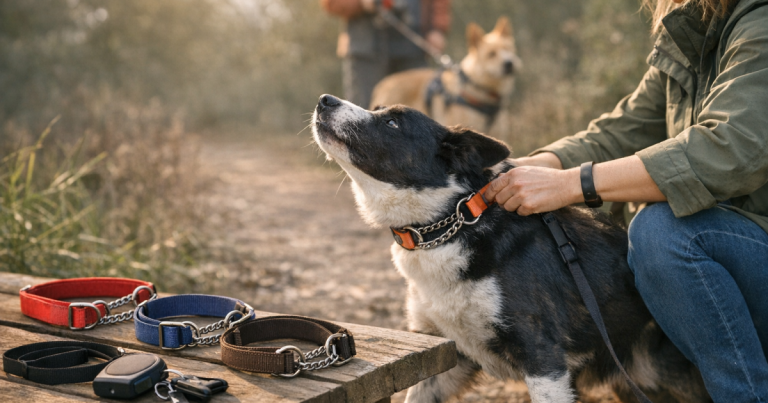
If your dog has already slipped a flat collar, consider pairing the harness with a properly fitted martingale as a backup connection. A martingale is not meant to drag a dog or correct panic, but it can reduce the chance of a collar sliding off when fitted correctly. For more detail, see our guide to martingale collars for escape-prone dogs.
Use a backup connection for high-risk walks
For a dog who pulls backward near traffic, wildlife, busy trailheads, or parking lots, a single attachment point may not be enough. A short safety connector from the harness to a martingale collar can provide redundancy if one piece of gear shifts. Some handlers also use a double-ended leash with one end on the front harness ring and the other on the back ring or collar, depending on the dog and the equipment.
Keep the leash low and calm. Pulling upward can make some dogs feel trapped and can increase their urge to reverse. Instead, step slightly sideways, soften your body position, and encourage the dog toward an easier direction. If the dog is scared, the immediate win is not a perfect heel; it is keeping the dog connected and helping them recover without a struggle.
A simple training routine for dogs who reverse
Gear helps most when the dog also learns what to do when pressure appears on the leash. Practice before you need it on a chaotic sidewalk.
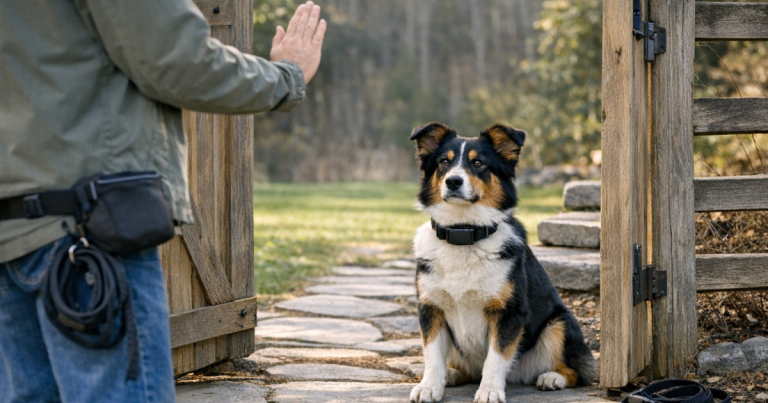
- Start in a low-distraction area. Reward your dog for walking toward you, checking in, and turning with you.
- Add a cue for moving forward. Use a cheerful phrase such as “let’s go,” then reward the first step in your direction.
- Teach pressure release gently. Apply very light leash tension, then reward when the dog steps toward the pressure instead of bracing away from it.
- Avoid dragging. Dragging can confirm the dog’s fear and make future backing-up worse.
- Change the picture. If the dog freezes at a trash truck, barking dog, or busy crossing, turn away and rebuild confidence at a distance.
For dogs who bolt when startled, the harness is only one part of the recovery plan. A GPS collar or tracker can help you act faster if a leash or gate failure happens, but placement matters. If your dog wears both a harness and tracking collar, check that the tracker is not blocked, rotated under the neck, or crowded by other gear; our guide on positioning a dog GPS collar for better signal explains the practical setup checks.
When a front clip is not enough
A front-attachment harness may not solve the problem if the dog is panicking, noise-sensitive, newly adopted, injured, or rehearsing escapes every day. Watch for repeated freezing, frantic spinning, screaming, biting at the leash, or attempts to flee from normal neighborhood triggers. In those cases, the safest next step is often reducing exposure and working with a qualified positive-reinforcement trainer or veterinary behavior professional.
Also think about the environment. Night walks near traffic leave less room for mistakes. If your dog reverses when headlights, cyclists, or loud vehicles appear, increase visibility and create wider passing distances. Reflective gear will not prevent an escape by itself, but it can help drivers and cyclists see you sooner; we cover options in our guide to reflective dog vests for night walks near traffic.
FAQ
Is a front-clip harness escape-proof?
No. A front-clip harness can improve control, but no walking harness is foolproof. Fit, leash angle, backup attachment, and the dog’s behavior all affect escape risk.
Should I use a martingale collar instead of a harness?
For many backward pullers, the safer setup is both: a front-attachment harness for leash handling and a properly fitted martingale as a backup connection. The collar should not be used to drag or punish the dog.
What if my dog backs out only when scared?
Choose a quieter route, increase distance from the trigger, and reward calm forward movement. If the fear response is intense or frequent, training support from a qualified professional can help prevent the behavior from escalating.
Can small dogs use front-clip harnesses?
Yes, but fit is more critical. Small dogs can slip through oversized neck openings or stiff harnesses that do not contour well. Check the harness during real movement, not just while your dog stands still.
Does a GPS tracker replace secure walking gear?
No. A GPS tracker is a recovery tool, not a leash or containment system. Use secure gear first, then treat the tracker as backup protection if something still goes wrong.
Final thoughts
For dogs who pull backward, the best harness is the one that fits the dog’s body, supports calm redirection, and stays secure during real-life movement. Start with a front leash attachment, add a backup connection for escape-prone dogs, and practice easy reversals before you walk into busy places. The goal is not to win a pulling contest. It is to keep your dog connected, lower the chance of a lost-pet scare, and build a calmer pattern one walk at a time.