Road trips create more escape moments than most owners expect: gas station doors, hotel parking lots, campground noise, rest-area squirrels, and unfamiliar backyards. A lost-dog emergency kit gives you the paperwork, gear, and calm next steps to act fast before panic takes over.
Think of it as a recovery station you can grab from the car, not a random bag of dog supplies. The goal is simple: confirm who your dog is, keep searches organized, make your dog visible and catchable, and avoid wasting precious time hunting through luggage.
Medical treatment for an injured, overheated, or severely stressed dog should be handled by a licensed veterinarian, following state animal-care requirements and local safety rules. A travel first-aid kit is for short-term stabilization and transport, not diagnosis or replacement care.
The short version
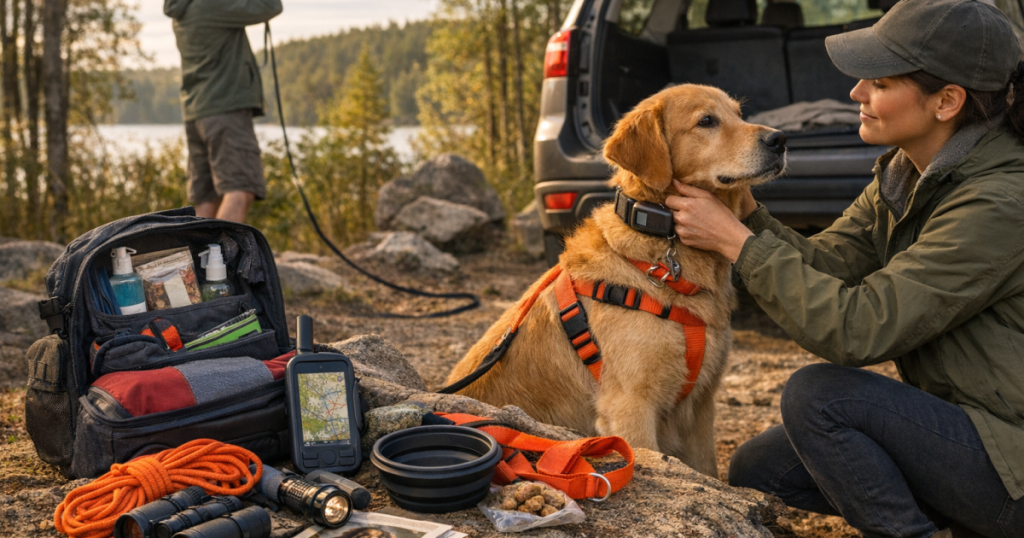
For a road trip, pack one dedicated kit that stays reachable from the front or rear cargo area, not buried under suitcases. It should include backup identification, printed recovery information, a charged tracking setup, photos, handling gear, visibility items, water, basic first-aid supplies, and a short written action plan for the first 15 minutes after an escape.
The most useful kit is boring on purpose. Every item should help you do one of four things: prove ownership, share accurate information quickly, keep your dog from getting farther away, or search safely in an unfamiliar place.
Step 1: Build the identification layer first
If your dog slips out at a highway rest stop, the person who finds them may not have your phone number saved, your vet records, or your microchip account. Put the important details in more than one place.
- Collar ID: Use a legible tag with at least one current phone number. If you are traveling far from home, consider a temporary travel tag with your cell number and a note such as “traveling, call anytime.”
- Microchip details: Keep the chip number, registry name, and login information in a printed note and on your phone. Confirm before the trip that your phone number is current.
- Recent photos: Save clear photos from the front, side, and standing profile. Include close-ups of unusual markings, scars, ear shape, or coat patterns.
- Proof of ownership: Keep a digital folder with vaccination records, adoption paperwork, or vet records. Printed copies help if cell service drops.
- Contact card: Add your name, cell number, alternate contact, home city, vehicle description, and destination address if you know it.
Do not rely on one tag or one phone. Road trips add dead batteries, bad reception, and distracted humans to the equation.
Step 2: Add a recovery command center
When a dog bolts, clear information travels faster than emotion. Pack a small envelope or zip pouch with materials you can hand to a campground host, hotel desk, park ranger, neighbor, or local shelter.
- Printed lost-dog flyers: Bring several preprinted sheets with your dog’s photo, name, your phone number, and a blank space for the location last seen.
- Permanent marker and pen: You may need to write the rest area name, mile marker, campsite loop, hotel address, or time of escape.
- Index cards: Use these for door-to-door notes, vehicle windshield messages, or sharing a short description with search helpers.
- Tape and clips: Painter’s tape, binder clips, or rubber bands help attach notices without damaging surfaces.
- Local contact list: Before leaving, note animal control, nearby emergency vets, shelters, and park offices for each overnight stop or destination area.
A good first message is short: dog’s name, appearance, last seen location, direction of travel, temperament, and your phone number. If your dog is shy or skittish, tell people not to chase. Chasing can push a frightened dog across roads or deeper into cover.
Step 3: Pack gear for safe containment
Many road-trip escapes happen during ordinary transitions: opening a crate, switching leashes, unloading the car, or walking from a motel room to a relief area. Your kit should include backup equipment for those awkward moments.
- Spare leash: Pack a standard 4- to 6-foot leash for controlled handling near traffic, parking lots, and hotel lobbies.
- Slip lead: This can help secure a loose dog quickly when a collar is missing or hard to reach. Use calmly and avoid tightening it unnecessarily.
- Backup collar or harness: Bring a properly fitted spare in case one breaks, gets wet, or is left in the room.
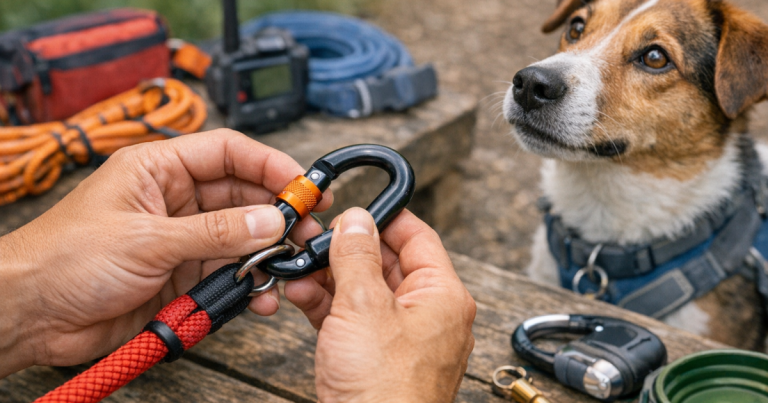
- Carabiner or leash coupler: A simple backup connector can add security while loading or unloading, as long as it is appropriately sized and attached to secure points.
- High-value treats: Soft, smelly treats can help lure a nervous dog closer without grabbing.
If your dog has a history of backing out of gear, road trips are the wrong time to test a loose fit. Review escape-resistant harnesses for skittish dogs before you leave, then practice the full travel routine at home: car door opens, leash attaches, dog exits, door closes, reward.
Step 4: Prepare your tracker without overtrusting it
A GPS tracker can shorten the gap between “Where did they go?” and “They were last near that road,” but it is not magic. Trackers depend on factors such as battery charge, device attachment, coverage, signal conditions, and whether the collar stays on the dog.
Before the trip, do a real check in your driveway or neighborhood. Confirm the device is attached securely, the account or app access works for the person who will search, and any safe-zone or alert settings make sense for travel. If you are heading into remote terrain, read up on how a device such as Fi Ultra is positioned for more remote use cases, then compare that with your actual route and coverage realities.
- Charging cable and power bank: Store them in the kit, not in a suitcase.
- Backup attachment method: Bring the tracker’s spare clip, mount, or collar attachment if you have one.
- Login access: Make sure another adult on the trip can open the tracking information if your phone is lost, locked, or dead.
- Last-known-location habit: If your dog vanishes, screenshot the map and time before driving away from the spot.
Use the tracker as one signal, not the whole recovery plan. Printed information, human sightings, ID tags, and calm containment work alongside it.
Step 5: Add visibility and roadside search items
Searching at dusk, in rain, or near traffic requires gear for humans as much as dogs. Your kit should help searchers stay seen and communicate clearly.
- Flashlight or headlamp: A headlamp keeps your hands free for a leash, treats, or phone.
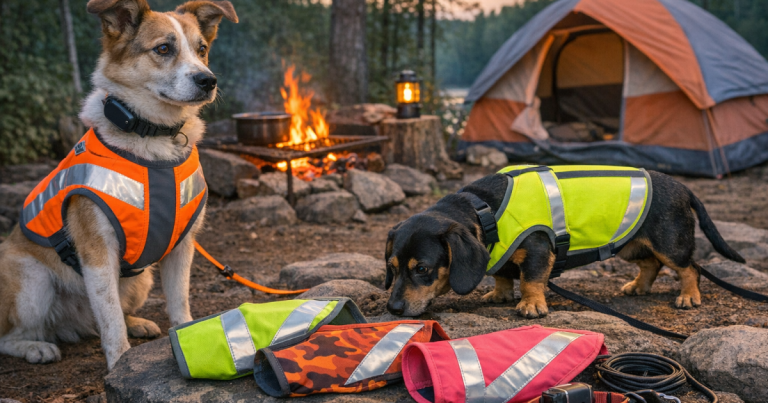
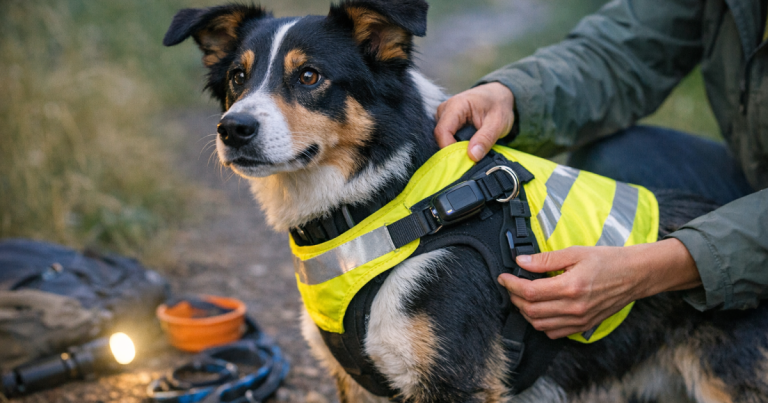
- Reflective vest: Useful for roadside searches, campground loops, and dark hotel lots.
- Small safety light: Clip-on lights can help mark a leash, crate, or search bag.
- Whistle: Use only if your dog is conditioned to respond to it; otherwise, shouting less and moving slowly often works better for a scared dog.
- Gloves: Helpful for brush, fences, cold weather, or handling a muddy leash.
Do not send searchers sprinting in every direction. Assign simple roles: one person stays at the last-seen point, one checks safe nearby cover, one calls shelters or park staff, and one watches the tracker or phone.
Step 6: Include water, food, and first-aid basics
A loose dog may hide for hours, return exhausted, or be found with sore paws. Keep care supplies practical and compact.
- Water and a collapsible bowl: A bottle-and-bowl setup such as Kurgo Gourd Water Bottle and Bowl can be easier to use at rest stops than loose bowls rolling around the car.
- Meal portion: Pack one small serving of your dog’s usual food in a sealed bag. Familiar food can be useful for luring and for delays.
- Canine first-aid kit: A prepacked kit such as Adventure Medical Kits Adventure Dog Medical Kit – Trail Dog can keep basic supplies together, but check contents before every trip.
- Towel: Use it for drying, shade, gentle restraint, or protecting car seats after a muddy recovery.
- Medication list: If your dog takes medication, pack the medication name, dosage instructions from your vet, and clinic phone number.
Skip anything you would not know how to use under stress. The best travel kit is not the biggest; it is the one you can open and use without guessing.
Step 7: Write the first-15-minutes plan
Keep a one-page plan at the top of the kit. When adrenaline spikes, even experienced owners forget obvious steps. Your plan should be simple enough for a friend, spouse, teenager, or pet sitter to follow.
- Stop moving the car unless staying put creates danger.
- Mark the exact last-seen location with a map pin, photo, or written landmark.
- Call your dog in a normal voice; avoid frantic chasing.
- Place familiar scent items near the last-seen point if it is safe and allowed.
- Alert nearby staff: hotel desk, campground host, park office, gas station attendant, or local animal control.
- Share the photo and description with one clear instruction: “Please call with sightings; do not chase.”
- Check the tracker, but keep one person watching the physical area.
For shy dogs, quiet patience can beat a noisy search party. Sit low, turn your body sideways, avoid direct staring, and use familiar words. If your dog approaches, resist lunging. Let the leash or slip lead do the work only when the dog is close enough for a calm, controlled catch.
Where the kit should live in the car
Keep the lost-dog emergency kit in one labeled bag or hard-sided container that everyone in the car can identify. A bright pouch, clear bin, or seat-back organizer works better than loose supplies spread across the glove box, cooler, and luggage.
Place it where you can reach it before opening a crate or tailgate. For many families, that means the rear cargo corner, behind the front passenger seat, or inside a door pocket for the most urgent items: leash, treats, ID card, flashlight, and phone charger.
Road-trip scenarios to plan for
The gas station door dash
Before anyone opens a car door, clip the leash to the dog and confirm the handler has the grip. If your dog is crated, leash before the crate door opens. Keep treats in the kit pocket, not sealed in the trunk.
The hotel hallway surprise
Use two barriers: leash attached before the room door opens, and a person blocking the doorway if housekeeping, luggage carts, or other dogs are nearby. Put the kit near the room exit overnight.
The campground noise spook
Fireworks, generators, kids on bikes, and wildlife can change a confident dog fast. At camp, keep the recovery pouch near your sleeping area and store printed flyers in the car where they stay dry.
The rented-yard escape
Do not assume a vacation rental fence matches your dog’s habits. Walk the perimeter on leash before off-leash time. If digging is part of your dog’s escape style, refresh your prevention plan with this guide on stopping a dog from digging under the fence before the trip.
Fast answers
Should every dog have a road-trip recovery kit?
Yes, even calm dogs benefit from one. Travel puts dogs in unfamiliar places where a single open door, loud truck, or broken leash can turn into a search.
Is a GPS tracker enough?
No. A tracker can help show movement or last-known location, but it depends on power, attachment, coverage, and access. Use it with ID tags, microchip registration, printed photos, and a handling plan.
How often should I update the kit?
Check it before every long drive. Update photos, phone numbers, medication details, flyer copies, tracker charging gear, and any destination-specific contacts.
Why it matters
A road trip should be remembered for the trail, the lake, the family visit, or the dog happily sleeping in the back seat after a big day out. A packed kit cannot prevent every escape, and no device can promise a perfect recovery. But it can give you structure when the moment feels chaotic, and structure is one of the kindest things you can bring to a lost-dog scare.