The fastest way to prevent dogs from escaping backyard fence lines is to treat digging as both a barrier problem and a behavior problem. A determined dog can turn one soft corner, loose gate gap, or shaded dirt patch into a tunnel surprisingly quickly. The fix is a layered routine: block the exit, remove the reward, supervise the risky times, and keep recovery tools ready in case prevention fails.
Excavation that reaches near fence posts, buried utilities, irrigation lines, or property boundaries should be planned by a qualified fencing or landscaping professional and completed in compliance with utility-marking rules, local codes, and HOA requirements. In the US, call 811 before any digging project that could contact underground utilities.
Main points
- Start with the exact digging spot, not the whole yard. Most fence diggers have favorite routes: corners, gates, soft soil, gaps under panels, or spots where wildlife passes.
- Use a physical barrier the dog cannot push, chew, or widen. Buried wire, an L-footer, pavers, gravel, or a professionally installed footer can all work when matched to the fence and soil.
- Change the dog’s reason for digging. Boredom, prey interest, heat, anxiety, and access to neighbors or passing dogs need different fixes.
- Do not rely on a GPS tracker as the fence. Tracking is a recovery layer, not containment.
- Recheck the fence after rain, storms, lawn work, new landscaping, and any day your dog seems unusually fixated on one boundary.
Step 1: Find the reason your dog is digging there
Before adding hardware, watch the pattern. A dog digging under one back corner may be following rabbits, chipmunks, or neighborhood cats. A dog digging along the gate may have learned that the latch area has the easiest soil and the most foot traffic. A dog digging in multiple places may be bored, underexercised, hot, or anxious when left outside alone.
Look for clues during normal yard time. Does your dog sprint to the same fence section? Sniff intensely before digging? Dig only when the neighbor’s dog is out? Start after a delivery truck, thunder, fireworks, or lawn crew noise? The best fix is often obvious once the trigger is clear: block wildlife trails, reduce fence-line excitement, create shade, or stop leaving the dog outside unsupervised during stressful windows.
Step 2: Close the gap under the fence
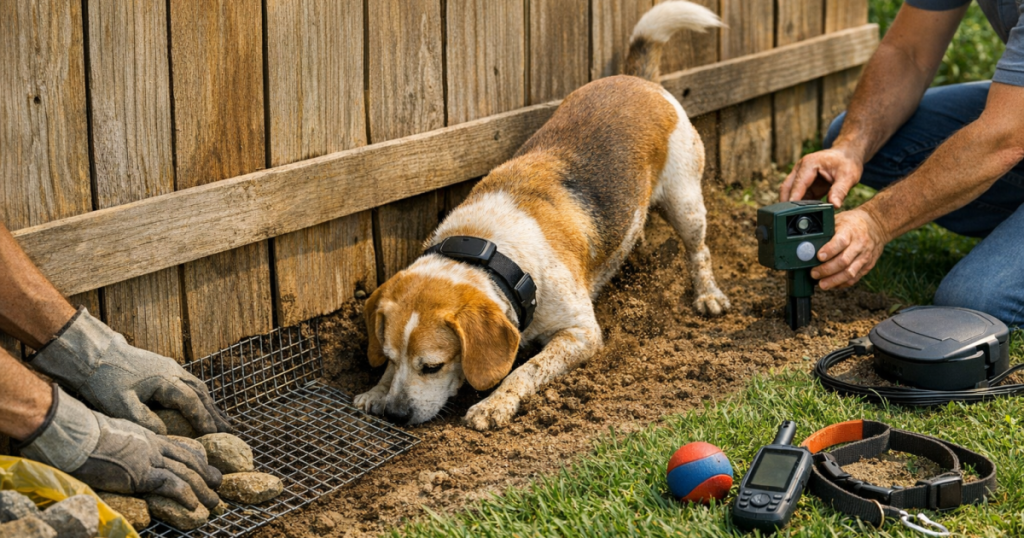
If your dog has already made a tunnel, fill and reinforce it rather than just packing dirt back in. Loose soil is easy to reopen, and many dogs treat the repaired spot like a half-finished project.
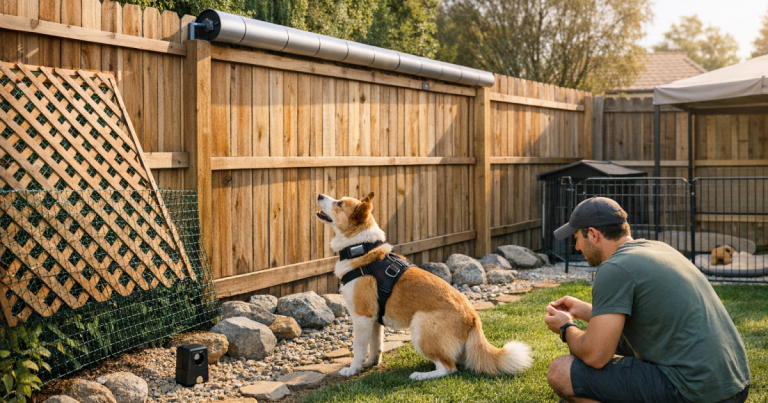
For small gaps, a line of heavy pavers, landscape blocks, or large rocks along the inside of the fence can remove the paw-friendly edge. For persistent diggers, consider an L-footer: welded wire or hardware cloth attached to the bottom of the fence and laid flat inward along the ground, then covered with soil, mulch, or gravel. When the dog digs, paws hit the horizontal barrier instead of open earth.
Another approach is a buried vertical barrier, such as galvanized wire mesh extending below the fence line. This can work well, but it requires careful installation and utility awareness. Avoid flimsy chicken wire for strong diggers; it can bend, rust, or create sharp edges if damaged. Whatever material you use, check that cut ends are secured away from paws and noses.
Step 3: Reinforce the high-risk fence zones
Fence corners deserve extra attention. Dogs often dig there because two fence lines create a sheltered pocket, and the soil is commonly softer from drainage patterns. Gates are another weak point because they may sit higher than fixed panels and shift over time.
Walk the inside of the fence and inspect:
- Gate bottoms with daylight showing underneath.
- Loose boards, bent chain link, or lifted panels.
- Soil washed away by sprinklers or heavy rain.
- Raised beds, wood piles, or patio furniture that help a dog reach or pressure the fence.
- Areas where wildlife trails run along the outside of the fence.
If the fence is chain link, make sure the bottom tension wire is tight and close to the ground. If it is wood, look for warped pickets and rot near the base. Vinyl and metal panels can also leave enough clearance for a motivated dog if the yard slopes.
Step 4: Make the yard less rewarding to escape from
Dogs do not usually dig under a fence because the fence is interesting. They dig because the other side offers something: movement, scent, attention, freedom, or relief from stress. Reducing that reward can calm the whole pattern.
If your dog digs toward wildlife, block visual gaps and remove attractants such as fallen fruit, unsecured trash, or birdseed spills. If the target is a neighbor’s dog, use privacy screening or adjust yard time so both dogs are not rehearsing fence-line excitement every afternoon. If your dog digs during heat, add shade, water, and shorter outdoor sessions; many dogs excavate cool soil simply because it feels better.
For boredom diggers, add a legal place to dig. A sandbox-style digging pit can work when you make it more exciting than the fence line. Bury toys or treats in the designated area, praise the dog for using it, and calmly interrupt fence digging before redirecting. The goal is not to convince a digger that digging is bad; it is to make the safe place the obvious choice.
Step 5: Supervise the times when escape is most likely
Many backyard escapes happen during predictable moments: right after a new dog moves in next door, during holiday fireworks, after rain softens the soil, or when a dog has had a low-exercise day. A fence that works on Tuesday may not be enough on a noisy Saturday night.
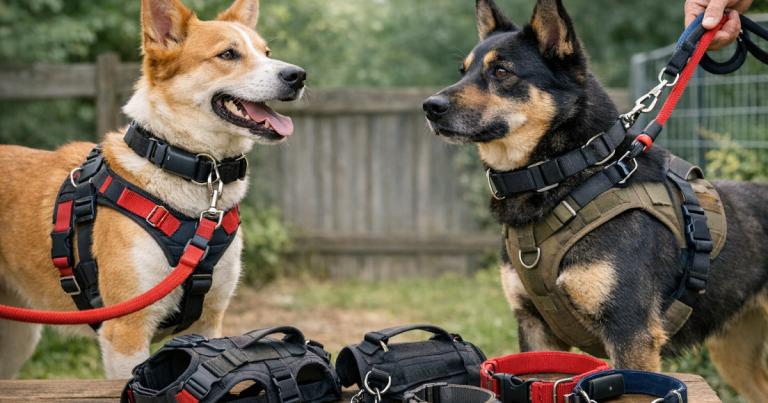
Use a long line, leash, or supervised potty break during high-risk periods. If your dog is an escape artist on walks as well as in the yard, an escape-resistant dog harness for hiking and road trips can also be useful for controlled yard practice, travel days, and transitions from house to car. The same idea applies at home: prevent the rehearsal before the dog learns that pushing harder eventually works.
Step 6: Build a better collar-and-ID backup
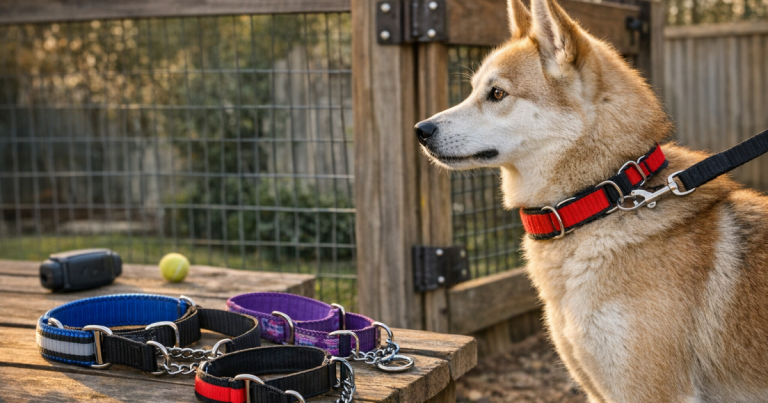
Physical prevention comes first, but every escape-prone dog needs identification that stays on. A flat collar with an engraved ID tag is still one of the simplest recovery tools because a neighbor, mail carrier, or Good Samaritan does not need an app or scanner to call you.
For dogs who slip collars when startled, fit matters. A properly adjusted martingale can reduce collar backing-out risk, and tracker owners may want to read about martingale collars for GPS trackers on escape-prone dogs before attaching any device to a collar. Keep comfort in mind, especially for small dogs, short-coated dogs, and dogs who spend long periods resting in their collar.
A GPS tracker can help you respond faster after a breach, but it should never be treated as a magic shield. Cellular coverage, device attachment, battery status, and whether the tracker is actually on the dog all matter. A lightweight tracker such as the FitBark GPS 2nd Gen Pet Location + Health Tracker is one example owners may research as a recovery layer, but the fence still has to do the containment job.
Step 7: Recheck after weather and yard changes
Rain is a digger’s accomplice. It softens soil, exposes gaps, and can wash away the packed dirt under fence panels. After heavy weather, walk the perimeter before letting your dog out alone. Press gently on low boards and panels, look for paw marks, and inspect any previous dig sites.
Yard projects can create new escape routes too. Mulch beds, freshly turned soil, irrigation work, tree removal, and new landscaping all change how the boundary smells and feels underfoot. If contractors, landscapers, or delivery crews have accessed the yard, check every gate latch before assuming the yard is secure.
Common mistakes that keep the digging going
- Only filling the hole with dirt: This resets the tunnel but does not strengthen the weak point.
- Leaving the dog outside to “burn off energy” alone: For many diggers, unsupervised yard time is when the escape habit gets stronger.
- Using punishment after the fact: A dog scolded after returning to the yard may connect the correction with coming back, not with digging earlier.
- Ignoring the outside of the fence: Wildlife, gaps, loose soil, and neighbor-dog traffic may be driving the behavior from the other side.
- Trusting technology instead of maintenance: Trackers and lights support recovery and visibility, but they do not repair a fence gap.
Quick answers
Will burying chicken wire stop fence digging?
It may slow a mild digger, but stronger or persistent dogs can bend or damage light wire. Hardware cloth, welded wire, pavers, gravel, or a properly installed footer are usually more dependable choices. Always secure sharp edges so they cannot injure paws.
Does vinegar, pepper, or another scent deterrent work?
Scent deterrents are unpredictable and can irritate some dogs. They also wash away and do not solve the physical escape route. A barrier plus supervision is a safer starting point than relying on smells around the fence line.
Should I leave my dog outside less?
If the digging happens when your dog is alone, yes. Shorter supervised sessions, more exercise before yard time, and indoor rest during high-trigger periods can reduce escape attempts while you reinforce the fence.
Can training stop a dog from digging under a fence?
Training can help, especially with recall, redirection, and teaching a safe digging area. But training should sit alongside a secure boundary. A motivated dog should not have repeated chances to practice tunneling while the fence remains easy to breach.
What stands out
The safest plan is not one dramatic fix. It is a perimeter routine: reinforce the weak spot, make the outside world less tempting, supervise the risky moments, and keep ID and recovery tools on your dog. Once you know where and why your dog digs, the problem becomes much more manageable. You are not trying to out-stubborn your dog; you are changing the setup so escape stops being the easiest, most rewarding option.