A dog who backs out of a collar usually is not being stubborn; they have learned that reversing, ducking their head, or planting their feet can make pressure disappear. For training collars for dogs who slip out, the real question is not which collar looks strongest. It is which features help you keep control without frightening the dog or turning every leash moment into a wrestling match.
Training plans that use aversive pressure, electronic stimulation, or restraint for a dog that panics, bolts, or fights the leash should be designed with a qualified veterinarian or certified professional dog trainer to meet local animal-welfare rules and humane handling standards.
What to know first
The most useful training collar for a back-out dog has three jobs: it should stay fitted when the dog reverses, release pressure when the dog moves forward, and allow you to practice calm leash skills without relying on force. A limited-slip martingale collar is often the starting point because it tightens only to a preset point instead of continuing to close. It is not a magic anti-escape device, though. Fit, leash handling, backup gear, and the dog’s emotional state still matter.
The safest setup is usually layered: a well-fitted training collar for communication, a separate harness or backup attachment for security, visible ID, and a GPS tracker when the dog is at meaningful escape risk. The collar helps with teaching; the recovery gear helps if the teaching moment goes wrong.
If you are unsure which collar category fits your dog’s behavior, start with this deeper look at safer training-collar choices for collar-slipping dogs. It explains why some collars are better for calm guidance while others can make escape behavior worse.
The features that matter most
A limited-slip design with a real stopping point
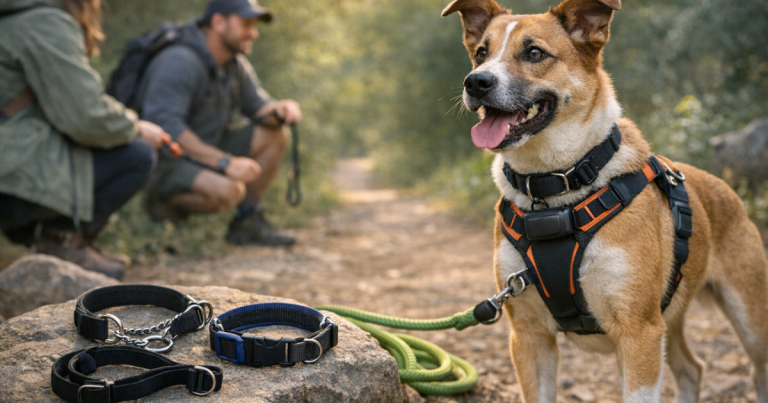
For a dog who backs out, a standard flat collar can loosen at exactly the wrong moment: the head drops, the shoulders pull back, and the collar slides forward over the ears. A limited-slip collar closes partway when the leash tightens, then stops. That stopping point is the feature that separates a humane training collar from an uncontrolled choke-style setup.
The collar should be adjusted so it cannot slide over the dog’s head when engaged, but it should not clamp tightly at rest. This is a fit check, not a strength contest. A collar that is too loose escapes; a collar that is too tight can create stress, rubbing, coughing, or avoidance.
Enough width to distribute pressure
Width matters because backing out concentrates pressure on the front of the neck. A wider collar spreads that pressure over more surface area, which is especially helpful for long-necked dogs, narrow-headed dogs, and dogs with delicate builds. Greyhounds, whippets, and similar shapes are classic examples because the head may be smaller than the neck and the neck may be longer than average.
For sighthounds and sighthound mixes, wide martingales are common because they combine a broader contact area with a limited-slip action. If that sounds like your dog, the fit details in wide martingale collars for greyhounds and whippets are worth reading before you choose a shape.
Adjustment that stays put
A training collar for an escape-prone dog should not drift larger during a walk. Look for a design that allows fine adjustment and holds its setting after repeated movement. If you check the collar before leaving the house and it has relaxed by the end of the block, it is not doing its job.
Do a quick home test before using it outdoors. Fit the collar, clip the leash, and gently apply backward pressure with your hand while your dog stands calmly. The collar should engage and stop without riding over the jaw or ears. This is not a pull test against the dog; it is a quiet fit check with treats nearby and no panic involved.
Hardware that matches the leash job
The leash ring should be easy to find, secure, and positioned so the collar tightens evenly when the dog reverses. If the ring twists under the chin or the collar rotates every few steps, the pressure becomes confusing. Dogs learn faster when the sensation is predictable: pressure appears, the dog moves forward, pressure releases.
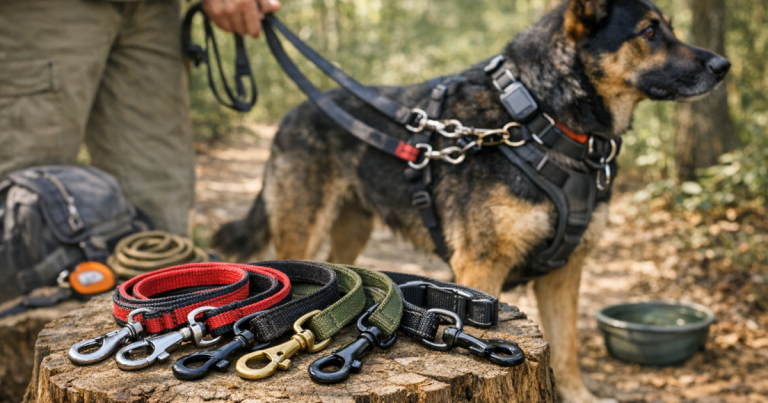
For dogs who spin, duck, or suddenly reverse at doorways, a backup connector can add a margin of safety. Many owners clip one end to the leash and the other to a harness or second collar. The training collar remains the communication point, while the backup prevents a total gear failure if the dog slips one item.
Match the feature to the backing-out scenario
The doorway reverser
This dog freezes on the threshold, then pulls backward as soon as the leash tightens. The collar feature that matters most is smooth, limited closure. Pair it with a short, predictable routine: open the door, reward eye contact, step forward together, reward again. Do not drag the dog through the door. Dragging teaches them that backing up makes the scene louder and more unpleasant.
For this dog, practice with the door closed first, then cracked open, then fully open. The collar should be part of a quiet communication loop, not the main event.
The parking-lot panicker
Some dogs back out when traffic, carts, car doors, or unfamiliar people crowd their space. In this scenario, retention matters, but the training plan matters more. A limited-slip collar with a backup harness attachment is sensible because the environment leaves little room for error.
Keep the leash short enough to avoid tangles but not so tight that the dog feels trapped. Stand sideways, invite movement with your voice and body, and reward even one step toward you. If the dog is already scrambling, focus on getting distance from the trigger rather than correcting the behavior in place.
The trailhead escape artist
Trailheads create the perfect storm: open car doors, excited dogs, wildlife scent, and owners juggling packs. A dog who backs out here may disappear into brush before anyone has a clean grip. A secure collar feature helps, but you also need a layered routine.
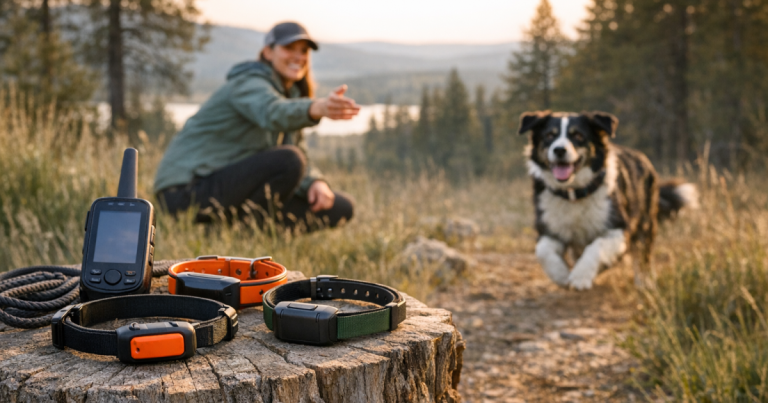
Before the car door opens, leash first, then collar check, then GPS check if your dog wears a tracker, then release. A GPS collar should not be treated as a leash anchor unless the manufacturer specifically designs it for that use. Trackers are recovery tools, not substitutes for secure walking equipment.
Fit checks before the first real walk
Set aside five calm minutes at home. This tiny rehearsal prevents a lot of bad surprises outside.
- Check the resting fit: The collar should sit high enough that it does not sag toward the shoulders, but it should not press into the throat.
- Check the engaged fit: When the limited-slip loop closes, the collar should stop before it becomes tight enough to choke or pinch.
- Check the escape angle: Gently guide the leash backward at the angle your dog uses when backing out. The collar should stay behind the ears.
- Check movement: Have your dog turn, sniff, sit, and take a few steps. The collar should not twist constantly or slide into an awkward position.
- Check skin and coat: After a short session, look for rubbing, hair breakage, redness, or signs your dog is avoiding the collar.
Repeat the check after grooming, weight change, seasonal coat changes, or switching collar brands. A dog with a thick winter coat may wear the same collar very differently after a haircut or summer shed.
Training habits that make the collar work better
The best collar feature cannot overcome rough leash handling. Back-out dogs need a simple lesson repeated many times: moving toward the handler makes pressure go away and good things happen.
- Reward forward motion: The instant your dog steps toward you after feeling light leash pressure, praise and reward. That release is the lesson.
- Avoid steady pulling: Continuous tension gives the dog something to brace against. Pulse softly, invite movement, and release quickly.
- Practice U-turns: Teach a cheerful turn cue in low-distraction areas so you have an alternative before your dog plants their feet.
- Use the right leash length: A standard leash gives clearer feedback than a retractable leash for this kind of work.
- Do not practice near hazards first: Start indoors, then in the yard, then on a quiet sidewalk before testing busier spaces.
If your dog is also practicing off-leash recall, keep the goals separate. Recall training is about coming when called; collar work is about staying connected and relaxed on leash. Blurring those jobs can create confusion, especially for dogs who are already sensitive to pressure.
Backup gear is not optional for repeat escape attempts
A dog who has slipped a collar once has rehearsed the move. That does not mean they will do it every time, but it does mean your margin for error is smaller. Use a backup attachment in higher-risk places: vet offices, parking lots, campgrounds, hotel entrances, dog-friendly patios, and trailheads.
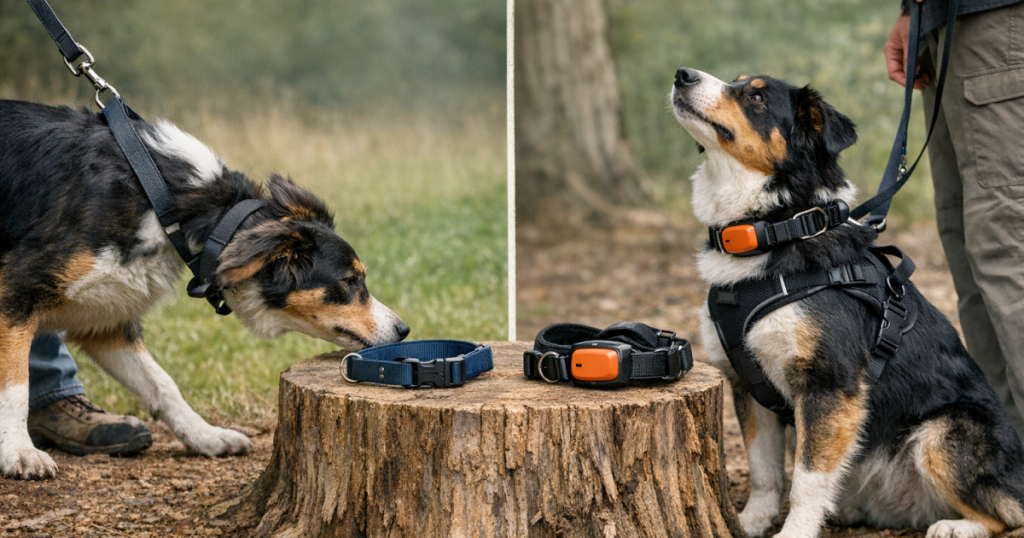
A backup ID collar is also smart because training collars and GPS collars can be removed, lost, or damaged. For a clean setup that avoids crowding the neck, see how to fit a backup ID collar alongside a GPS tracker. Physical ID gives a finder immediate contact information, while GPS can help you narrow the search area when coverage and battery conditions cooperate.
For small dogs, watch bulk. A collar, tracker, tag, and backup connector can become too much weight or noise on a little neck. For large, powerful dogs, focus on hardware strength and whether the collar stays adjusted under movement. Different dogs fail gear in different ways.
Features to be cautious with
Not every collar marketed for training is a good choice for a dog who backs out. Be especially careful with tools that add discomfort when the dog is already scared or trying to escape.
- Unlimited-slip collars: Choke-style collars can continue tightening under panic. That can increase fear and does not give a clear stopping point.
- Prong collars for panic behavior: These require skilled handling and can escalate a dog who is backing out from fear rather than testing boundaries.
- Loose flat collars: Comfortable for ID, but easy for many back-out dogs to escape when used as the only leash attachment.
- Overloaded GPS collars: A tracker is useful, but it should not make the collar sag, rotate, or interfere with the limited-slip action.
- Retractable leashes during retraining: Variable tension can make it harder for the dog to understand what leash pressure means.
Things readers ask
Is a martingale collar always the answer?
No. A martingale is often useful for dogs who back out because it has a limited-slip action, but it still has to be fitted correctly and used calmly. Some dogs do better with a harness plus a backup collar, especially if neck pressure makes them panic.
Can a GPS collar stop my dog from slipping out?
No. A GPS collar can help with recovery after an escape, but it does not physically prevent slipping out unless it is also a properly fitted collar designed for leash use. Treat tracking as a recovery layer, not the primary restraint.
How tight should the collar be?
At rest, it should be comfortable and stable. When engaged, it should tighten only to the preset stop and should not choke, pinch, or ride over the ears. If you cannot achieve both comfort and retention, the collar size or style is wrong for that dog.
Practical takeaway
For dogs who back out, the most important collar features are limited closure, stable adjustment, enough width, reliable hardware, and compatibility with backup safety gear. The collar should help your dog understand leash pressure, not punish them for being worried.
Start in a quiet place, check the fit under the same angle your dog uses to escape, and add a harness, ID, or GPS layer when the environment raises the stakes. A calm, redundant setup may not look dramatic, but it is exactly what keeps a tense doorway or busy trailhead from becoming a lost-dog search.