A collar escape usually happens in one ugly second: the dog plants their paws, backs up, and the collar slides over the ears. Well-fitted buckle martingale collars reduce that risk by tightening only when pressure hits the leash or collar ring, then relaxing again when the pressure stops. The buckle adds convenience, but the escape resistance comes from the limited-slip loop, the fit, and the way the collar sits behind the ears—not from cinching the neck as tightly as possible.
The short answer: the most useful features are a properly sized limited-slip loop, a secure side-release or quick-snap buckle, firm adjustment hardware, enough collar width to distribute pressure, and a smooth leash ring that pulls the loop evenly. A martingale is not escape-proof, and it should not replace training, ID, or a recovery plan, but it can make backing out of a collar much harder for many dogs.
How a buckle martingale prevents the classic backward slip
A flat collar depends mostly on neck circumference. That is fine for many dogs, but it can fail when the head is narrower than the neck, the dog has a thick ruff that compresses, or the dog reverses suddenly on leash. Greyhound-shaped heads are the obvious example, but plenty of mixed breeds, adolescents, nervous rescues, and heavy-coated dogs learn the same trick.
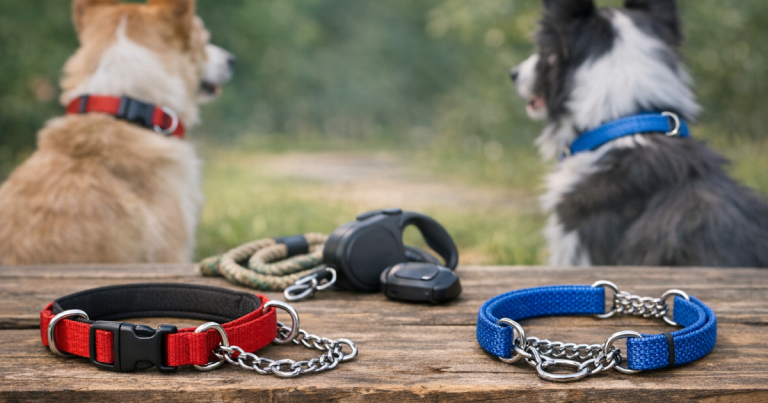
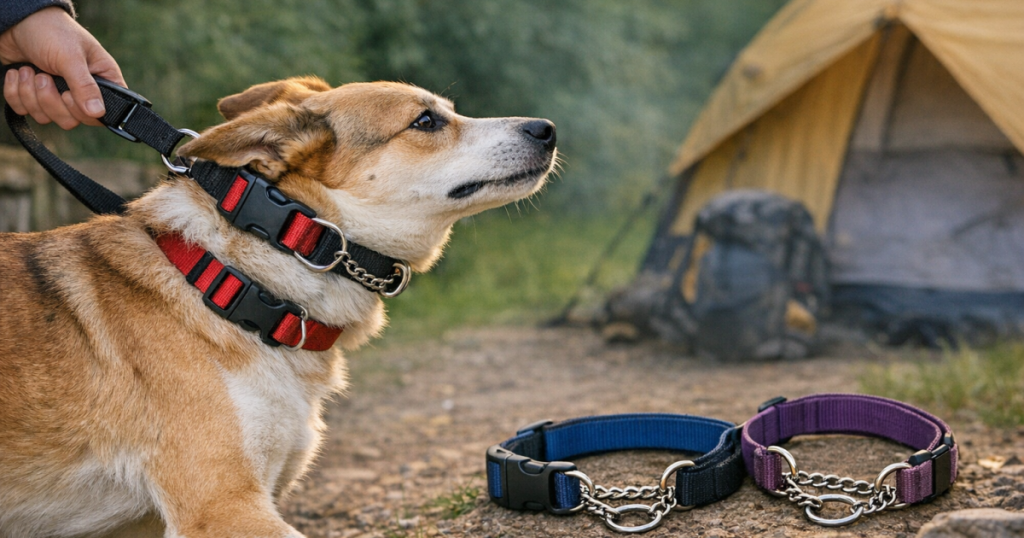
A martingale uses two loops. The larger loop sits around the dog’s neck. The smaller control loop tightens when tension is applied. When fitted correctly, that control loop reduces the collar opening just enough to stop it from passing over the ears. The buckle simply lets you open and close the collar instead of sliding it over the dog’s head every time, which is helpful for dogs who dislike head handling or have big ears, thick coats, or GPS gear already on the collar stack.
The features that do the real work
A limited-slip loop that stops before choking
The control loop should have a hard limit. When you pull both leash rings together, the two metal slides or sewn stops should meet before the collar becomes dangerously tight. If the loop can keep closing without a clear stopping point, it is not doing the job most owners expect from a martingale.
For an escape-prone dog, the snug setting should be checked at the narrowest practical part of the neck, usually high behind the ears. You should not be guessing while the dog is already twisting at the end of the leash. Fit it indoors first, then recheck after a few calm walks.
A buckle that stays closed under awkward leash pressure
The buckle is there for handling convenience, but it still has to hold when the leash angle gets messy. Dogs rarely escape in a showroom pose. They spin, crouch, shake, and pull backward while the leash rubs against a jacket, backpack, gate, or car door.
Look for a buckle that closes with a clear click and does not sit directly where the control loop bunches or rubs. Side-release buckles are common, while quick-snap styles can be easier for owners with cold hands or limited dexterity. Either way, the buckle should not be the loosest or flimsiest part of the collar. A tiny plastic closure on a strong, determined dog is a weak link with excellent marketing.
Adjustment hardware that does not creep
A martingale that slowly loosens during normal use becomes a flat collar with better branding. The slider should grip the webbing firmly enough that the neck loop does not grow larger over the course of a walk. This is especially important for dogs who lunge, roll, or shake their head when excited.
After the first few outings, check whether the fit has changed. Marking the correct setting with a small stitch, fabric-safe marker, or photo can help you spot movement. If the collar keeps drifting larger, retire it from escape-prevention duty.
Enough width for comfort and control
Width affects both comfort and security. Very narrow webbing can concentrate pressure, while very wide webbing may overwhelm a small dog or interfere with shoulder movement if it sits too low. The best width is the one that lets the collar sit high and stable without digging in, flopping, or covering too much of the neck.
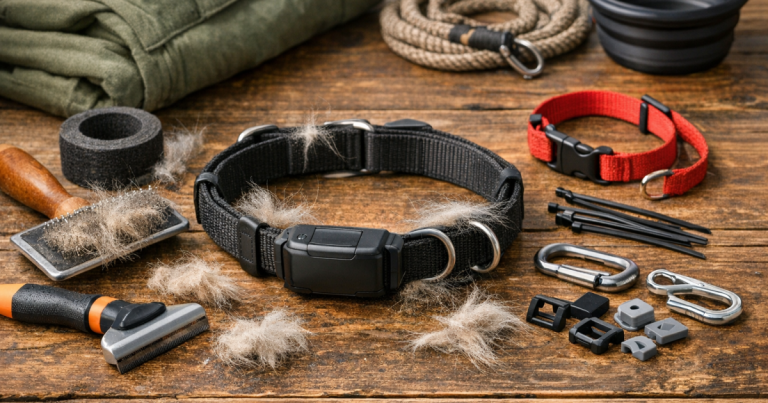
Long-necked breeds often do well with wider martingales, while small dogs may need a lighter collar with smaller hardware. Coat type also changes the answer. If your dog’s collar fit changes when the undercoat sheds, the same checking routine used for tracker placement can help; see our guide to keeping a GPS collar secure during coat blowouts for a useful fit mindset.
A 2026 reference list for escape-prone dogs
The best buckle martingale collars for escape-prone dogs in 2026 are not defined by one brand name. They share the same practical traits: a limited-slip design, reliable buckle, stable adjusters, appropriate width, smooth seams, and sizing that can be verified on the dog before high-stress walks. Three commonly available examples worth comparing are:
- PetSafe Martingale Collar with Quick Snap Buckle, a familiar entry point for owners who want a buckle-style martingale rather than an over-the-head design.
- Blueberry Pet Classic Martingale Collar with Buckle, a webbing-style option to compare for dogs who need a simple limited-slip collar with a buckle closure.
- Max and Neo Nylon Martingale Collar with Chain Loop, a chain-loop martingale style some owners prefer for clear tightening feedback, provided the weight and sound suit the dog.
Those are examples to inspect, not guarantees. Before relying on any collar for a dog with a history of slipping gear, verify the current size chart, hardware style, return policy, and fit on your individual dog. A collar can be well made and still be wrong for a short neck, sensitive skin, tiny frame, or heavy coat.
Step-by-step fit check before you trust it outside
1. Fit high, then test low
Start with the collar high on the neck, just behind the ears, where escape prevention matters most. Pull the leash ring gently until the control loop closes. The collar should become snug enough that it cannot slide over the ears, but it should not keep tightening without limit.
Then let the collar settle lower on the neck and check comfort. Dogs do not walk like mannequins. If the collar only works in one perfect position, you need either a better size or a backup strategy.
2. Try the backward step test indoors
Clip on the leash in a quiet room or fenced area. With no drama, let your dog step backward while you keep light leash tension. Do not yank. You are looking for collar movement, not trying to scare the dog into proving a point. If the collar rides over the jawline or ears, adjust it smaller or choose a different size.
3. Check the buckle and slider after movement
Have the dog sit, stand, turn, sniff, and shake. Then look at the buckle and adjuster positions. If the buckle has rotated into the throat area, if the control loop twists, or if the neck loop has loosened, the collar may not stay predictable during a real escape attempt.
4. Add ID without overloading the ring
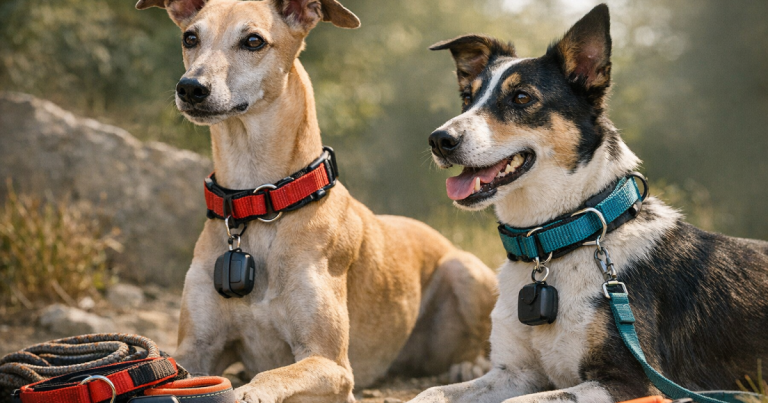
An ID tag belongs on the dog, but avoid loading the martingale control ring with extra weight that changes how the loop moves. If your dog wears a GPS tracker, a separate flat collar or harness attachment may be cleaner. A martingale should stay focused on leash control and slip resistance, not become a crowded keychain.
When a buckle martingale is not enough
Some dogs need more than one layer of prevention. A panic-prone dog at a trailhead, a newly adopted dog on transport day, or a fence-jumper being moved between cars may need a harness plus a martingale, connected with a safety strap or double-ended leash. The collar helps with backing out; the harness helps distribute force and gives you another attachment point.
If your dog repeatedly slips ordinary collars because of head shape or learned behavior, a head halter may be part of the conversation too. It is not a magic steering wheel, and it requires patient conditioning, but our guide to head halters for dogs who slip regular collars explains when that route is worth considering.
For hikes, parking lots, vet visits, and travel stops, also think about leash handling. Many escapes happen during transitions: unclipping from the car, swapping leashes, opening a gate, or shifting gear from one hand to the other. If outdoor trips are where your dog gets slippery, the leash-transfer habits in our guide to preventing dog escapes during hiking trips pair well with a secure collar setup.
Small details owners often miss
- Wet webbing can behave differently. Recheck fit after rain, swimming, or a bath.
- Coat compression changes security. A fluffy neck can make a collar look snug until the dog pulls backward and the coat flattens.
- Growing dogs need frequent checks. Adolescents can change shape quickly, and a once-perfect collar can become too tight or too loose.
- Tags should still be readable. A martingale reduces escape risk, but visible ID remains essential if the dog gets loose without the leash attached.
- No collar should be left to tighten unattended. Use martingales for supervised leash time unless the manufacturer’s instructions clearly support another use.
Main lessons
A good buckle martingale prevents many collar escapes by limiting how wide the collar can open when a dog backs up. The most important features are not flashy: a safe stopping point, a buckle that stays shut, hardware that holds adjustment, and a size that matches the dog’s neck, coat, and head shape.
Use the collar as one part of a recovery-minded setup. Pair it with readable ID, calm leash handling, and, for higher-risk dogs, a tracker or backup attachment point. The goal is not to buy the toughest-looking collar on the wall. The goal is to give your dog fewer chances to turn one startled backward step into a missing-dog search.