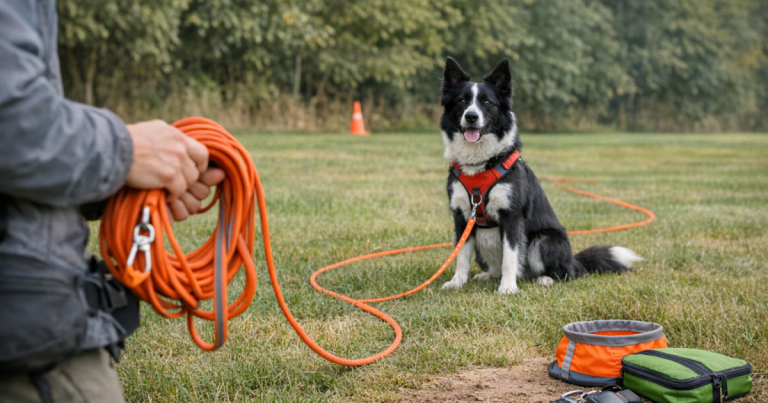
An escape-prone dog does not need much: one backward plant of the paws, a lowered head, and a loose collar can become an empty leash. The goal is to fit a martingale collar so it tightens only enough to stop that backward slip, then relaxes the moment pressure comes off. That balance matters more than the label on the collar.
A martingale is not a magic anti-escape device. It is a limited-slip collar for supervised leash use, and it works best when paired with good handling, current ID, and a recovery plan in case your dog still gets loose.
The short version
A correctly adjusted martingale collar sits snugly around the dog’s neck when relaxed, without sagging toward the shoulders. When leash tension closes the control loop, the two side rings should move closer together but should not touch. If the rings meet, the collar has run out of tightening range and may still slide over the dog’s head. If the collar stays tight after pressure is released, it is too tight, twisted, or poorly positioned.
- Use the collar only when you are supervising your dog.
- Check fit with the dog standing, not curled up or sitting awkwardly.
- Leave enough room for comfort at rest, but not so much that the collar drifts over the jawline.
- Test backward pressure gently in a fenced or indoor area before trusting it near traffic.
- Recheck the fit after grooming, weight changes, coat shed, or collar washing.
How a martingale stops the classic backward slip
A flat collar can slide over a dog’s ears when the dog backs out of it, especially if the dog has a narrow head, thick neck, nervous leash behavior, or a habit of reversing when startled. A martingale adds a smaller control loop to the main collar loop. The leash clips to that control loop. When the dog pulls backward, the loop tightens the main collar by a limited amount.
The word “limited” is the important part. A martingale should not keep tightening indefinitely. It should close only far enough to reduce the opening around the neck so the collar cannot pass over the skull and ears. Once the leash relaxes, the collar should loosen again. If it does not release cleanly, stop and fix the adjustment before walking.
For dogs with a history of slipping gear, a buckle-style martingale is usually easier to live with than a traditional slip-on style because you can open it rather than forcing it over the head each time. If you are choosing between designs, the guide to buckle martingale features that help prevent collar escapes explains the hardware details that matter without turning the choice into a fashion show for nylon.
Step 1: Start with the dog standing calmly
Fit the collar when your dog is standing on all four paws. A sitting dog can bunch skin and fur around the neck, which makes the collar seem tighter than it will be on a walk. A wiggly dog may also make you over-loosen the collar just to get the job done, and that is how escape-prone dogs win.
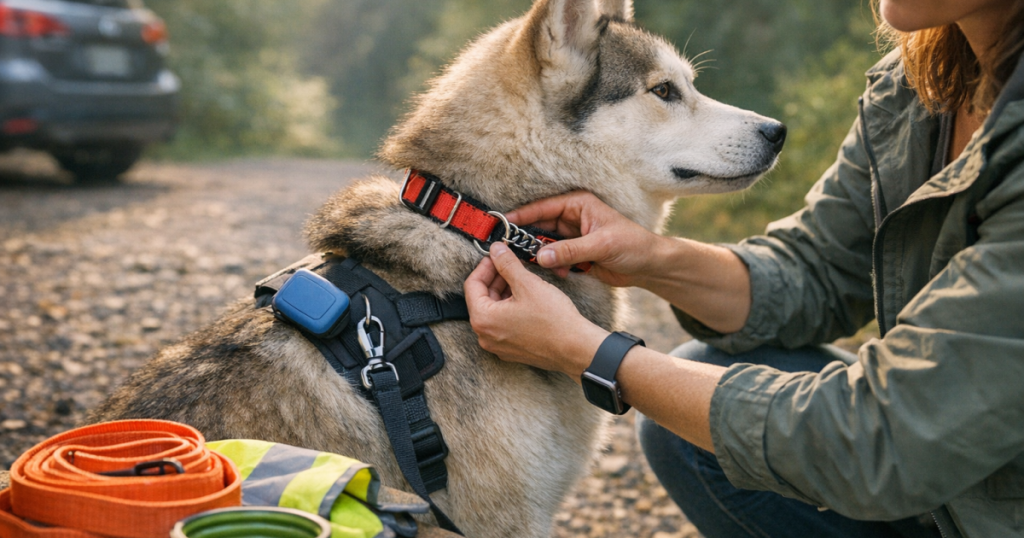
Place the main loop around the neck with the control loop and leash ring accessible. The collar should lie flat. No twists, folded edges, or trapped tags. If the collar has a buckle, fasten it and then adjust. If it is a slip-on martingale, it must pass over the head to go on, but the working fit still needs to be judged around the neck.
Step 2: Set the resting fit
With no leash pressure, the collar should be comfortable but not floppy. A common starting check is whether you can slide two fingers under the main loop while the collar sits flat against the neck. For very small dogs, large hands can make the “two finger” rule misleading, so focus on the result: the collar should not press into the neck at rest, and it should not hang like a necklace.
Move the collar gently with your fingers. It should rotate a little, but it should not travel easily over the jaw, up over the ears, or down to the widest part of the shoulders. If it can drift that far without leash tension, the dog may be able to turn a small scare into a full escape.
Step 3: Check the tension limit
Clip on the leash and apply steady, gentle backward tension with your hand. Do not jerk the leash. You are testing the hardware and fit, not trying to prove a point to the dog.
Watch the two side rings on the main collar loop. They should move toward each other as the control loop tightens, but they should stop short of touching. A visible gap means the collar still has a controlled tightening range. If the rings touch, shorten the main loop slightly and test again. If the collar looks uncomfortably tight before the rings get close, loosen it and reassess the size or style.
Now release the leash pressure. The collar should open back up immediately. A martingale that stays cinched after pressure comes off is not fitted safely for daily walking. Check for twists, rough hardware movement, wet or dirty webbing, or an adjustment that is simply too tight.
Step 4: Test the escape move in a safe place
The most useful test is the one your dog is likely to attempt: backing up. Do this indoors, in a fenced yard, or in another secure area. Hold the leash with gentle, steady tension and encourage your dog to move slightly backward. Do not frighten the dog, drag the dog, or create a wrestling match.
If the collar begins to climb toward the ears, stop and adjust. A properly fitted martingale should close before it can pass over the head. If your dog has a narrow skull, a heavy ruff, or a very slick coat, tiny changes matter. A quarter inch of slack can be the difference between “secure” and “gone.”
If your dog panics, freezes, coughs, or repeatedly fights the collar, the issue may be more than fit. You may need a harness backup, calmer leash handling, desensitization work, or a different setup for stressful places like vet offices and busy sidewalks.
Step 5: Use a backup for higher-risk moments
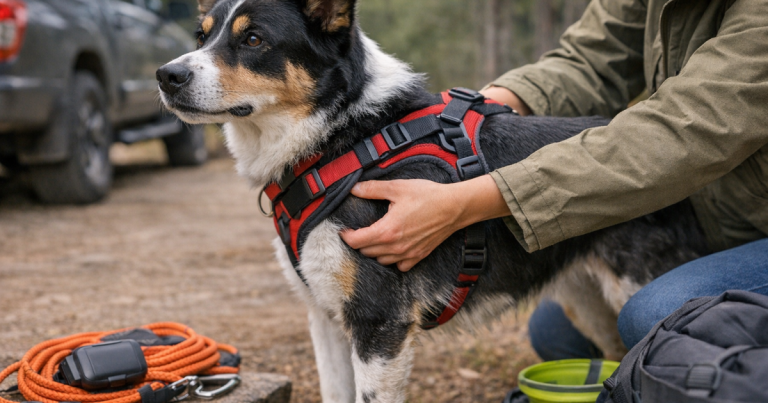
For a dog with a real escape history, a martingale should be one layer, not the whole plan. Many owners use a leash attached to the martingale and a second connection to a well-fitted harness during transitions: getting out of the car, walking through a parking lot, entering a boarding facility, or passing a noisy construction crew.
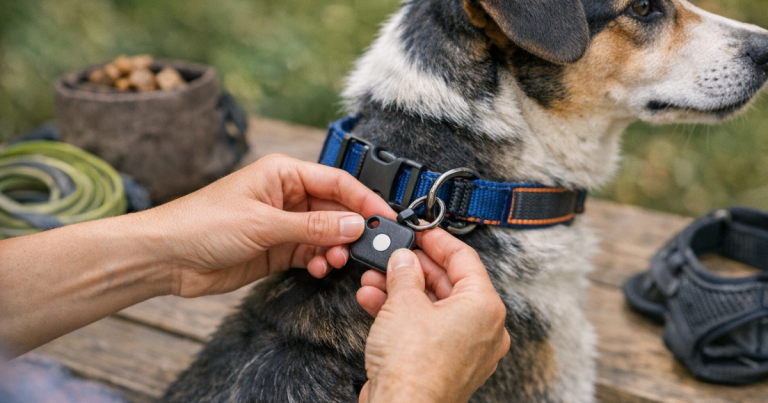
Keep ID on your dog even when using a tracker. A GPS tracker can help you follow movement, but an engraved ID tag can help a neighbor act immediately. Neither replaces the other. If your dog has already slipped out of a yard or bolted from a gate, the recovery steps in how to track a dog after a backyard gate escape are worth reviewing before the next scare, not during it.
Common fit mistakes that create escapes
- Leaving the collar loose because the dog has thick fur. Fur compresses under tension. Fit to the dog’s neck, not the outer puff.
- Letting the rings touch when tightened. That usually means the collar cannot tighten any farther when the dog backs up.
- Using a martingale for unsupervised wear. The control loop can catch on crates, fences, furniture, or another dog’s mouth during play.
- Attaching too many bulky tags to the control loop. Extra weight can affect how smoothly the loop releases.
- Testing only forward pulling. Escape-prone dogs usually defeat collars by backing out, not by charging ahead.
- Ignoring seasonal coat changes. A collar that fit in winter may sit loosely after a major shed.
Coat, body shape, and behavior change the fit
Greyhound-type dogs, mixed breeds with narrow heads, and dogs whose necks are wider than their skulls are classic martingale candidates. But body shape is only one piece. A dog that startles at trucks, resists entering the vet clinic, or spins at the sight of another dog may put sudden backward pressure on the leash. The collar has to be adjusted for that behavior, not just for a calm lap around the block.
Thick-coated dogs add another wrinkle. Their collars can feel snug when the coat is full, then become loose after grooming or seasonal shedding. That matters for trackers as well as collars. If your dog wears tracking gear, the same fit logic applies: recheck after coat changes and make sure the device still sits securely. The guide on how to keep a GPS collar secure during coat blowouts covers that seasonal problem in more detail.
When to adjust again
Do not treat collar fit as a one-time setup. Recheck it after washing the collar, switching leash hardware, grooming, weight gain or loss, puppy growth, heavy shedding, or any escape attempt. Also check it after a muddy walk, because grit and moisture can make some hardware move less smoothly.
A quick routine works well: relaxed fit first, tension gap second, release check third. If all three pass, you can walk with more confidence. If one fails, fix it before you leave the house. Dogs have an unfair talent for finding the one weak link in a system.
Key questions answered
Should a dog wear a martingale collar all day?
No. A martingale is best used for supervised leash time. Remove it for crate time, rough play, and unsupervised lounging so the control loop cannot snag.
How tight should the collar be when relaxed?
It should sit flat and comfortable, with enough room for normal breathing and swallowing, but not so loose that it slides toward the jaw or shoulders. The real test is what happens under gentle backward tension.
What if my dog still backs out of it?
Stop using that setup in unsecured places. Recheck the size, ring gap, and resting slack. For repeat escape attempts, use a harness backup and work on the trigger that causes the dog to reverse or panic.
Can a martingale replace training?
No. It can reduce one type of collar escape, but it does not teach leash confidence, recall, or calm handling around triggers. The safest setup combines fit, handling, ID, and a plan for what happens if the leash goes slack at the worst possible moment.
What to remember
To fit a martingale collar for an escape-prone dog, adjust for both comfort and containment: snug at rest, limited tightening under leash tension, rings close but not touching, and an immediate release when pressure stops. Then test the exact escape pattern your dog uses, in a secure place, before trusting the collar near roads, trailheads, parking lots, or open gates.
The best fit is boring. It does not pinch, hang, twist, or make a dramatic point. It simply stays where it should when your dog tries the old backward shuffle—and that quiet reliability is exactly what you want.