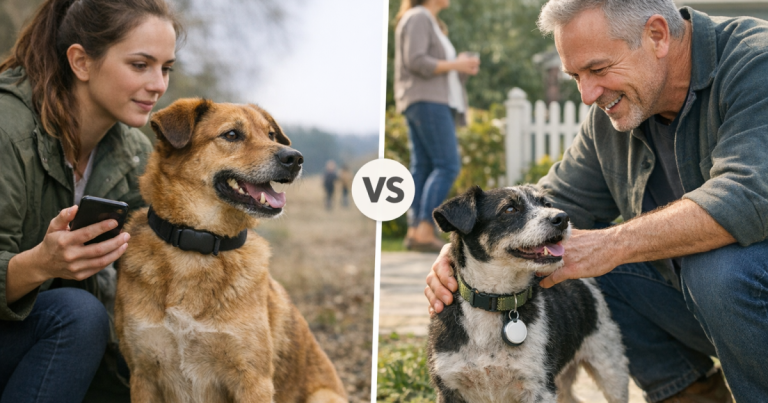
The fastest way to catch a scared lost dog is usually to stop acting like a rescuer and start acting like a safe place. A loose, frightened dog may recognize you and still bolt if your body language feels direct, loud, or urgent. Your job is to lower pressure, control the scene, and let the dog choose the final few feet.
Physical capture of an injured, aggressive, or traffic-endangered dog should be handled by animal control, law enforcement, or a qualified humane trapper in line with local ordinances and safety requirements.
The short version
If your dog runs away, do not chase, shout, or form a crowd around them. Stop moving toward the dog, turn your body sideways, lower your posture, avoid direct eye contact, and use familiar scent, high-value food, and calm containment to bring them closer. Ask neighbors to report sightings without pursuing, keep one person coordinating updates, and only attempt a leash or barrier when the dog is relaxed enough to approach on their own.
- Freeze first. Running after a loose dog can push them farther away or into traffic.
- Make yourself smaller and quieter. Sit, crouch, or turn sideways instead of facing them head-on.
- Use scent before commands. Place familiar bedding, your worn shirt, or the dog’s food near a safe return point.
- Create a soft trap. Use a fenced yard, garage, porch, car, or room rather than trying to grab the collar.
- Coordinate helpers. More people can help, but only if they know not to chase.
Why chasing makes a frightened dog harder to recover
A scared dog is not making polite obedience choices. They may be in flight mode, reacting to movement, noise, unfamiliar people, headlights, dogs barking behind fences, or the feeling of being cornered. Even a dog with solid recall can ignore their name when panic has taken over.
Chasing changes the situation from “my person is nearby” to “something is coming at me.” That is why owners often see the dog pause, look back, and then sprint as soon as someone moves forward. The dog is not being stubborn. They are trying to keep distance from pressure.
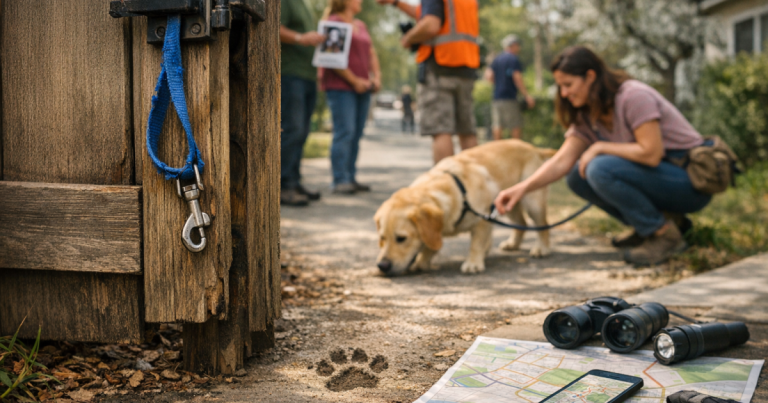
Think in terms of reducing the dog’s decision load. Fewer voices, slower movement, one calm handler, and a predictable safe place are more useful than ten people fanning out with leashes. If the dog escaped from home, start with the immediate route and property edges; this step-by-step guide to tracking after a backyard gate escape can help you read the first minutes more clearly.
Set up the scene before you try to close distance
Before anyone reaches for a leash, make the area less exciting. Turn off loud calls. Ask helpers to stop walking toward the dog. Move cars slowly and carefully if the dog is near a road, and keep doors, gates, and garage openings ready before you lure them in.
Choose one calm lead person
The dog should see one familiar, quiet person taking the lead. That person should avoid walking straight at the dog. Move in arcs, sit down if safe, or kneel sideways. Speak softly only if the dog is already oriented toward you and seems comforted by your voice. If calling their name makes them move away, stop calling.
Use food without making it a test
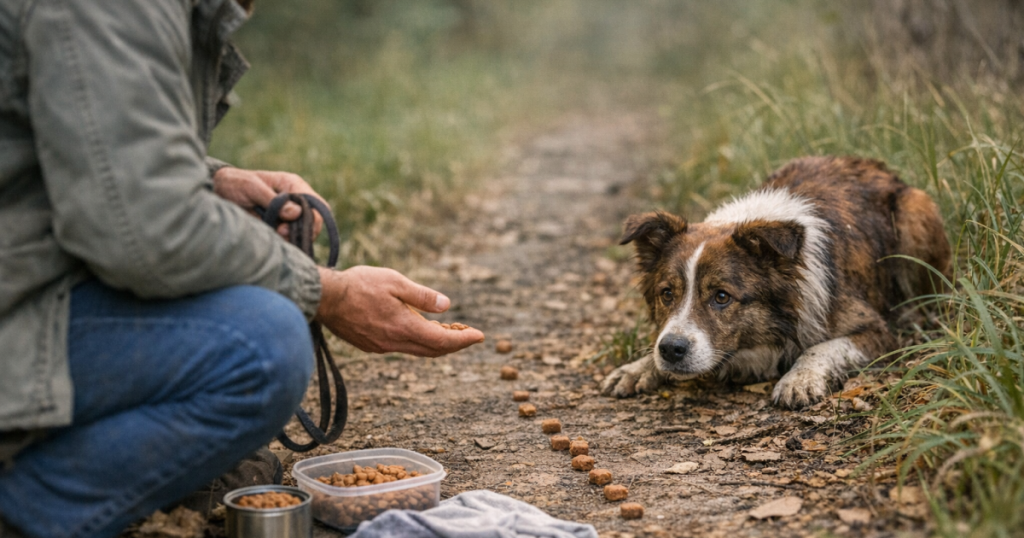
Do not hold food out like a command exercise. Toss small pieces gently away from your body at first, then gradually toss them closer to you. This creates a trail without demanding immediate contact. Smelly, soft food often works better than dry kibble because the scent carries, but the key is patience. Let the dog eat and reset. Rushing the last step is where many recoveries fall apart.
Bring familiar scent to a safe spot
Place a worn shirt, the dog’s bed, a blanket from your car, or a familiar crate near a doorway, yard, porch, or other controlled area. If the dog has been circling the neighborhood, the goal is to make one location feel more recognizable than the street, woods, or parking lot.
How to approach without triggering another bolt
Approach is the wrong word for many scared dogs. Instead, invite. Sit on the ground with your shoulder angled away. Keep your hands low. Avoid leaning over the dog. Do not stare. Yawning, turning your head slightly, and calmly looking at the ground can feel less threatening than excited praise.
If the dog steps closer, resist the urge to celebrate. Keep your voice low and your movements boring. Let the dog sniff, eat, retreat, and return. A frightened dog often needs several tiny choices before they can commit to contact.
- If the dog is pacing: stop all movement and let them settle into a pattern.
- If the dog is hiding: do not crawl in after them unless they are in immediate danger. Block unsafe exits and lure toward the safer opening.
- If the dog is near traffic: prioritize traffic control and professional help over grabbing.
- If the dog approaches another person: have that person sit still and avoid reaching.
- If the dog is wearing a harness or trailing a leash: step on the leash only when they are calm and close enough that it will not jerk them into panic.
Safe ways to contain the dog
Containment is more reliable than a sudden collar grab. If you can guide the dog into a fenced yard, open garage, mudroom, car, or entryway, do that before trying to attach a leash. Close the space calmly once the dog is inside. Move slowly and give them a minute to decompress.
For a dog who will enter a vehicle, open one door, place food on the floor or seat, and step back. Many dogs who will not walk to a person will still jump into a familiar car. For a dog near home, propping open a gate to a secured yard with food placed well inside can work, as long as someone can close it quietly from a distance.
A slip lead can help once the dog is close, but it should not become a lasso. Reaching over the head may spook a dog who is already uncertain. If the dog wears a harness, clipping underneath or from the side may be calmer than grabbing the collar, depending on the dog and gear.
Use your community without creating a chase
Neighbors can be the difference between guessing and knowing, but they need clear instructions. Ask them to report time, location, direction of travel, and behavior. Ask them not to call, chase, whistle, follow closely, or feed the dog unless you have coordinated it. Well-meaning pursuit can move a dog out of a searchable area.
One person should manage texts, calls, doorbell camera clips, and map notes. If the dog keeps appearing in one zone, shift from searching everywhere to building a calm feeding and containment plan there. For larger escapes, use a structured approach to organizing a neighborhood search so volunteers help without accidentally scattering the dog.
When the dog has a tracker, use it quietly
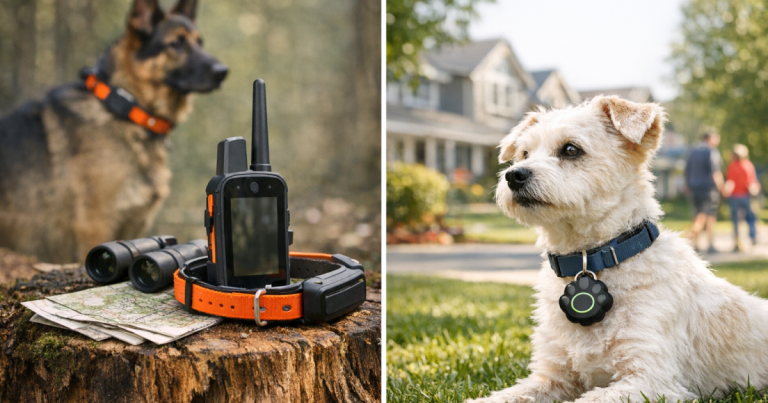
A GPS tracker or collar alert can narrow your search area, but it does not replace calm capture technique. Location updates may lag, batteries can run down, and cellular coverage varies by area. Use the map to get close, then switch your attention to wind, hiding places, traffic, noise, and the dog’s body language.
If the tracker shows repeated stops, avoid sending multiple people directly to the point. A scared dog may be resting, hiding, or circling back. Approach from a distance, reduce noise, and let the person the dog trusts most handle the final contact. If fast alerts are part of your future prevention plan, compare real-use scenarios in the guide to GPS dog trackers with fast escape alerts, while remembering that recovery still depends on the plan around the device.
Common mistakes that delay recovery
- Calling the dog repeatedly while walking toward them. This can turn your voice into part of the pressure.
- Posting “please catch him” without instructions. Strangers may chase, corner, or grab.
- Changing the lure spot too often. A frightened dog benefits from one predictable safe location.
- Using too many helpers at the sighting point. Keep searchers wider out and one calm person close.
- Grabbing too soon. Many dogs are lost again in the final 3 feet.
Key questions answered
Should I call my dog’s name?
Only if it helps. If your dog softens, looks relieved, or moves toward you, keep your voice low and familiar. If they look away, stiffen, or move off, stop calling and switch to quiet body language and food.
What if my dog runs from me even though we are bonded?
That is common after an escape. Panic, exhaustion, unfamiliar surroundings, and previous chase attempts can override normal attachment. Stay predictable, avoid direct pursuit, and work on containment instead of proof that the dog recognizes you.
When should I call animal control?
Call animal control when the dog is injured, aggressive, trapped in an unsafe place, near heavy traffic, or repeatedly entering dangerous property. Give precise sighting details and explain that people should not chase the dog.
Practical takeaway
The safest recovery plan is usually slower than your adrenaline wants it to be. Stop the chase, shrink the crowd, use scent and food, collect sightings, and create a place where the dog can enter safety without feeling cornered. The moment the dog is contained, keep the area quiet, offer water, check for injuries, and update everyone helping so the search does not continue unnecessarily.