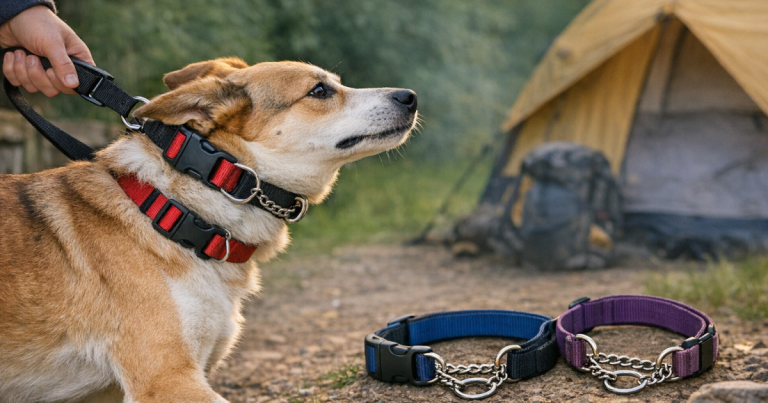
When a dog has already backed out of one collar, every sidewalk squirrel and open car door feels a little more dramatic. For many escape-prone dogs, buckle martingale collars offer the most forgiving mix of secure fit and easy handling, but they are not automatically safer than slip-on versions unless they are fitted and used correctly.
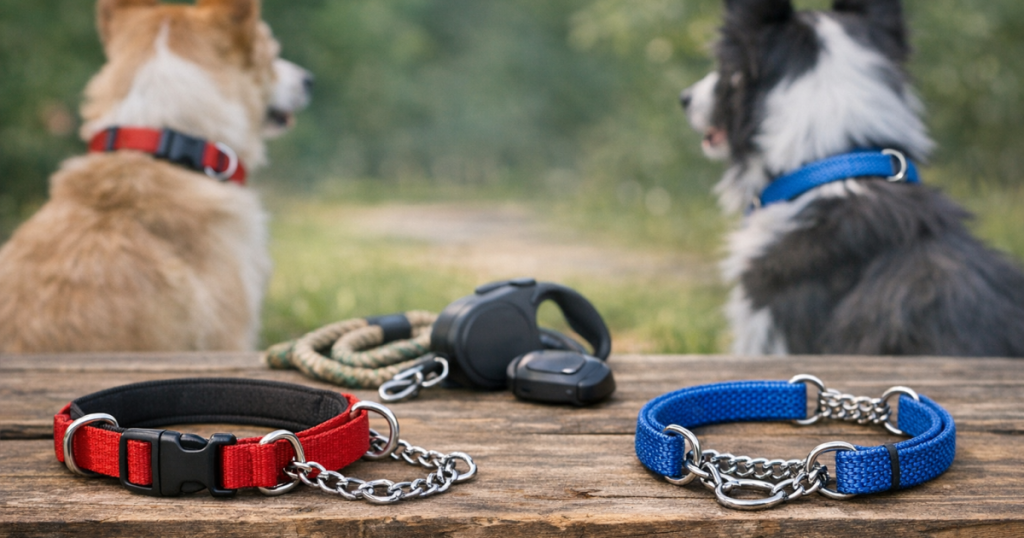
A martingale collar is a limited-slip collar. It tightens only to a set point when leash tension increases, which can help prevent a dog from reversing out of the collar. The key decision is whether that collar opens with a buckle or slides over the dog’s head as one continuous loop.
The practical answer for escape-prone dogs
For most dogs with a history of slipping collars, a buckle-style martingale is the better everyday choice. It lets you fit the collar around the narrower part of the neck without making it large enough to pass over the dog’s head, and it is easier to remove calmly if your dog freezes, spins, or becomes tangled.
A slip-on martingale can still be a good tool for the right dog. It has fewer parts, sits simply on the neck, and works well when the dog’s head shape allows a secure over-the-head fit. The problem is that many escape artists are also experts at timing: they plant their feet, lower their head, and pull backward at the exact moment the collar is at its loosest. If the collar had to be enlarged to get over the ears, that extra space can matter.
Neither style should be treated as a complete lost-dog prevention plan. A collar is one layer. For a nervous dog or a newly adopted flight risk, pair the collar decision with leash handling, backup identification, and a body harness that cannot be backed out of easily. If your dog panics in open spaces, this guide to choosing an escape-resistant harness for a nervous dog is the safer next read before you rely on neck gear alone.
Step 1: Match the collar style to the way your dog escapes
Start with the behavior, not the product photo. Dogs slip collars for different reasons, and the right martingale style depends on the pattern you are trying to interrupt.
- Backs up suddenly on leash: A buckle martingale usually gives you a more precise fit because it does not need to pass over the head first.
- Hates gear going over the ears: Choose a buckle version. Forcing a slip-on collar over a worried dog’s head can make the next walk harder before it starts.
- Has a narrow head and thick coat: Check fit with the coat both fluffed and flattened. A collar that feels snug over fur may loosen when the dog pulls backward.
- Walks calmly but has slipped a flat collar before: A slip-on martingale may be enough if it is adjusted carefully and checked often.
- Bolts at doorways, trailheads, or parking lots: Do not rely on any martingale alone. Use a second leash connection, harness, or long-line routine during transitions.
Step 2: Fit the martingale so it tightens, not chokes
The collar should tighten only until it prevents escape. It should not keep closing under pressure. A good fit feels almost uneventful: the dog can walk, sniff, and turn normally, but the collar does not slide over the skull when tension appears.
- Place it high enough on the neck to test control: Martingales usually work best when they sit closer to the narrower upper neck during fitting, not dangling like a loose necklace.
- Check the closed position: Pull the leash ring until the control loop tightens. The two side rings should not touch. If they meet, the collar can keep tightening and needs adjustment.
- Use the two-finger check as a comfort check, not the only test: You should be able to fit two fingers under the collar when relaxed, but you must also test whether it can pass over the head when tightened.
- Watch the first few walks: Coat compression, excitement, and repeated pulling can reveal looseness you did not see indoors.
- Remove it when unsupervised: Martingales can snag on crates, fences, furniture, or another dog’s jaw during play. They are walking tools, not unattended collars.
If you use ID tags, consider whether they belong on a separate flat collar that stays on at home, while the martingale is reserved for leash time. A tag can still be vital if a dog slips a gate or leash, so the goal is not collar minimalism; it is smart layering. For the backup layer, here is how to choose dog ID tags for faster lost-pet recovery.
Step 3: Choose buckle hardware when handling matters
The biggest advantage of a buckle martingale is not just security. It is composure. You can open the collar, wrap it around the dog’s neck, and close it without pulling anything over the face. That small detail matters with rescue dogs, sound-sensitive dogs, and dogs who have learned that walks begin with wrestling.
Buckles also help when you need a consistent adjustment. With a slip-on collar, owners sometimes loosen the fit to make it easier to put on. That convenience can work against you later. With a buckle, the collar can stay adjusted to the walking fit, assuming the buckle is secure and inspected regularly.
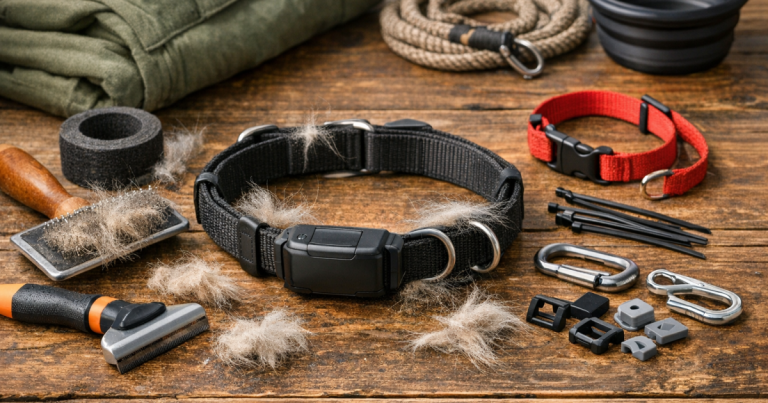
The trade-off is that a buckle adds a part that can wear, crack, gum up with dirt, or be clipped incompletely. Before each walk, give it a small tug after fastening. Also check stitching, D-rings, sliders, and the control loop. Escape-prone dogs tend to discover weak points faster than their people do.
Examples of buckle martingale collars worth evaluating
The best buckle-style martingale for an escape-prone dog in 2026 is the one that fits the dog’s neck and head correctly, has a secure closure, allows the control loop to stop before over-tightening, and is comfortable enough for calm leash walking. The following recognizable options are useful starting points, but verify current sizing, materials, and closure details before choosing one for your dog.
- PetSafe Martingale Collar with Quick Snap Buckle: a familiar option for owners who want a martingale that opens instead of slipping over the head.
- Country Brook Petz Martingale Dog Collar with Buckle: often considered by owners who want many size and color choices, though fit matters more than appearance.
- Blueberry Pet Essentials Martingale Dog Collar with Buckle: another easy-to-find buckle martingale style to compare if your priority is simple daily walking control.
Do not choose by brand name alone. A collar that is excellent on a narrow-headed sighthound may be wrong for a thick-necked bulldog mix. A soft webbing loop may suit a noise-sensitive dog better than a chain loop, while a stronger-feeling collar still has to tighten smoothly and release immediately when leash tension relaxes.
Step 4: Know when a slip-on martingale still makes sense
A slip-on martingale is not the inferior design; it is just less forgiving when the fit is off. It can work well for dogs who are comfortable with over-the-head handling and whose head shape lets the collar pass on, then sit securely once adjusted.
Use a slip-on martingale only after you test the escape motion. With the collar adjusted, apply gentle backward leash tension in a controlled indoor space. The collar should narrow enough to stop at the skull without the dog coughing, gagging, or showing distress. Then release the pressure and confirm that the collar loosens right away.
Slip-on designs are less ideal for dogs whose neck and head are nearly the same size, puppies whose bodies are changing quickly, dogs with heavy seasonal coats, and dogs who panic when gear brushes their ears. If you find yourself loosening it every time you put it on, that is a sign the design is working against your routine.
Step 5: Build a two-layer walking routine
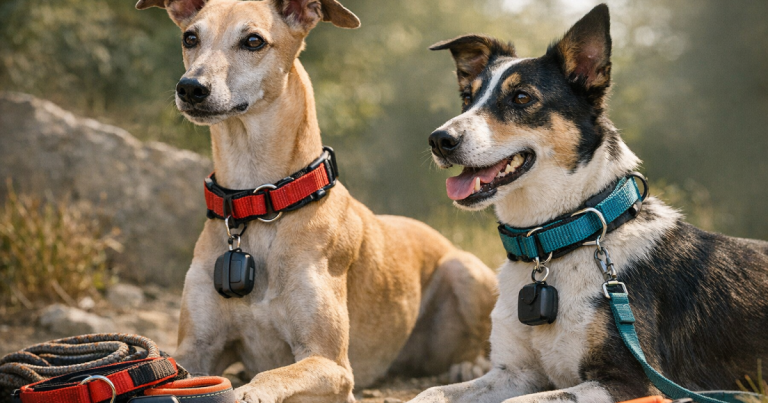
For a dog with a real escape history, think in layers. The martingale helps with leash control at the neck. A harness can add body security. A GPS tracker or smart collar may help you act faster if the dog gets loose, but it depends on coverage, charge, fit, and how quickly you notice the alert. No tracker makes a loose dog safe by itself.
- Use the martingale for supervised leash walks: Clip the leash to the martingale ring and keep tension light unless the dog tries to reverse out.
- Add a harness for high-risk places: Parking lots, trailheads, campgrounds, vet offices, and adoption-day walks deserve more than one attachment point.
- Keep identification readable: A phone number that can be read quickly may matter before anyone has time to scan a microchip.
- Practice calm exits: Clip gear before the door opens, pause at thresholds, and avoid letting the dog rehearse lunging through gaps.
- Plan for the first minutes after an escape: If your dog is loose and frightened, chasing can push them farther away. Slow, quiet recovery tactics are often safer.
If your dog has a pattern of fence-jumping, door-dashing, or vanishing into brush, collar choice should sit beside a faster alert plan. This roundup of GPS dog trackers with fast escape alerts explains where tracking gear can help and where it still has limits.
What stands out
Choose a buckle martingale if your dog is nervous, head-shy, newly adopted, hard to fit, or known for backing out of collars. Choose a slip-on martingale only when your dog tolerates over-the-head handling and the collar can be adjusted tightly enough to block escape without causing discomfort.
The safest setup is rarely one perfect collar. It is a calm routine: correct martingale fit, supervised use, readable ID, a secure harness for risky transitions, and a recovery plan that assumes dogs can be clever at the worst possible moment. That is not paranoia; that is living with a dog who has opinions and excellent timing.