The trail does not have to be remote to make a dog hard to see. A black dog crossing a shaded campground road, a tan dog blending into dry grass at dusk, or a nervous dog circling behind the car can disappear faster than feels fair. The right dog visibility gear gives other people more time to notice your dog and gives you a better chance of keeping eyes on them before a small wobble turns into a lost-dog scare.
What to know first
The safest low-light hiking setup for most dogs is layered: one active light on the dog, one reflective surface visible from the side, one visible leash or handler marker, and backup identification in case the dog gets separated. No light, collar, tracker, or tag is foolproof on its own. Visibility helps prevent incidents; ID and tracking help if prevention is not enough.
- Use active light when it is truly dim. LED collars, clip lights, and lighted necklaces are easier to spot than reflectors when there is no nearby headlight or flashlight beam.
- Add reflectivity for roads and campgrounds. Reflective collars, harness trim, leash strips, and vests shine back when headlights hit them.
- Keep restraint gear separate from decoration. A light-up accessory should not be the only thing controlling an excited or startled dog unless it is designed and fitted as the dog’s actual collar.
- Test the setup before the hike. A light that looks bright in the kitchen can vanish behind shoulder fur, a pack strap, or a curled tail once the dog starts moving.
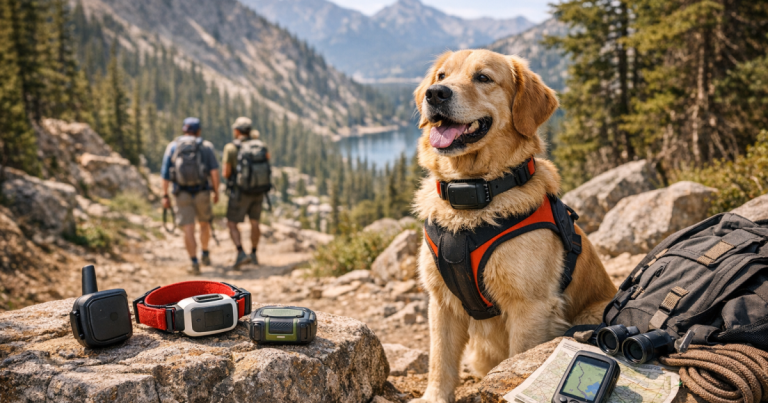
If your dog wears a tracker on a harness for hiking, visibility checks should happen alongside placement checks. A light that blocks a tracker mount or makes the harness sit crooked can create a new problem. After changing harness gear, use a short yard or driveway test like the process in testing a dog GPS tracker on a harness before depending on it at a trailhead.
Step 1: Put active light where people can actually see it
For low-light hikes and campgrounds, active lighting is the first layer to set up. It is useful on wooded trails, at dawn, around tent loops, near boat ramps, and anywhere a dog might be seen by a driver, cyclist, or another hiker before you can call them close.
The best placement depends on your dog’s body shape and gear. A deep-chested dog in a harness may show a clip light well from the front but not from behind. A long-coated dog may hide a small collar light completely. A tiny dog can be overwhelmed by bulky add-ons, while a large dog may need a light that is visible above brush or behind a wagging tail.
Three visibility pieces worth knowing
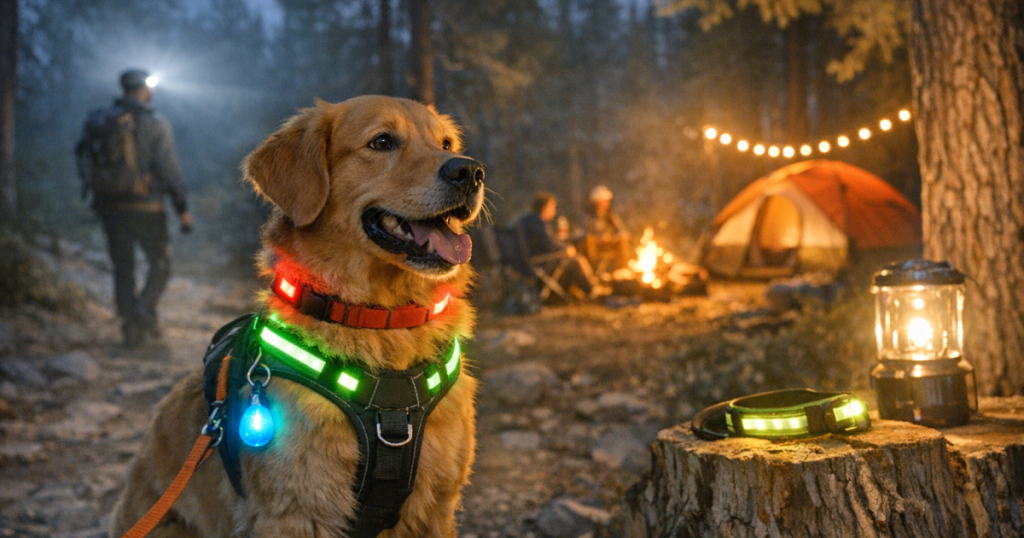
- Nite Ize NiteHowl Rechargeable LED Safety Necklace: A lighted necklace can create an easy-to-spot glow around the dog’s neck area. It works best when it sits outside the coat and does not replace the dog’s fitted collar, ID tag, harness, or leash attachment.
- Ruffwear The Beacon Safety Light: A clip-on safety light is useful for dogs already wearing a harness or pack because it can attach to existing gear. The practical test is whether it stays visible when the dog lowers their head, turns sideways, or trots ahead.
- Illumiseen LED Dog Collar: A lighted collar can be simple for campground walks when the collar position is the easiest part of the dog to see. For escape-prone dogs, use it only as part of a secure overall setup, not as a shortcut around proper collar fit.
Color choice is less important than placement, reliability, and contrast against your dog’s coat and surroundings. A bright collar buried under thick neck fur is less helpful than a modest light placed high on a harness where it can be seen from multiple angles.
Step 2: Add reflective surfaces for headlights and flashlights
Reflective gear is quiet, low-maintenance, and valuable near roads, parking areas, campground loops, and trailheads. It does not shine by itself, so it should not be your only layer in deep woods or on moonless trails. Its strength is response: when a car, bike, headlamp, or flashlight hits it, it can make your dog stand out quickly.
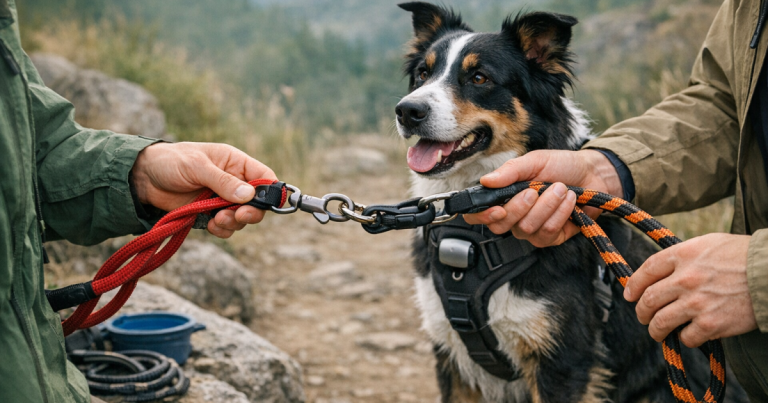
Look for reflectivity on the parts of the dog that remain visible while moving. Side panels on a harness are often easier for drivers and cyclists to catch than a narrow strip hidden under the chin. A reflective leash also matters because it shows the line between you and the dog, which helps other people understand that a dog is attached and moving with a handler.
- For harness dogs: prioritize side reflectivity and a clear top point where a small light can sit without twisting the harness.
- For collar-only walks: make sure the collar still fits correctly under the lighted or reflective layer, especially if your dog pulls backward when startled.
- For long-coated dogs: choose gear that sits outside the coat instead of disappearing under ruff, feathers, or seasonal shedding.
- For small dogs: avoid oversized lights that bang against the chest, pull the collar down, or change how the harness rides.
Step 3: Keep identification separate from visibility
Visibility helps people see your dog; identification helps them help your dog. Those are different jobs. A light-up collar may make your dog easier to spot across a campsite, but it does not give a finder your phone number if your dog slips away near a rest stop or trail parking lot.
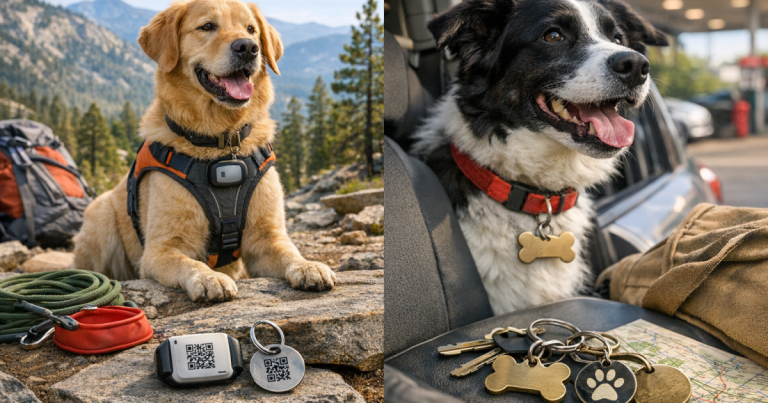
For hiking and travel, a readable ID tag should stay on the dog even when a GPS tracker is also in use. Phones die, cellular coverage drops, batteries run down, and a stranger may find your dog without knowing what device is attached. If your tag setup needs a refresh before a trip, the guide to dog ID tags for hiking and road trips covers the backup information that matters when someone has only a few seconds to act.
A good system is boring in the best way: visible dog, secure leash, readable tag, working tracker, and a handler who has already tested the setup after dark. The dog gets to enjoy the adventure; you get fewer moments of scanning shadows and hoping.
Step 4: Match the setup to the place you are walking
Wooded trail before sunrise
Use an active light high on the dog and a reflective leash or harness. Woods can swallow side visibility, so watch what happens when your dog moves behind brush or lowers their head to sniff. If you hike off paved paths, avoid dangling lights that can catch on branches.
Campground loop after dinner
Campgrounds create mixed hazards: slow cars, kids on bikes, loose food smells, open RV doors, and dogs you may not see until they bark. A lighted collar or necklace plus a reflective leash makes your dog easier for neighbors to notice without relying only on your flashlight beam.
Road shoulder near a trailhead
Use both active and reflective visibility. Keep the dog on the side away from traffic whenever practical, shorten the leash before crossing driveways or parking entrances, and make your own body visible too. A dog light is not a substitute for handler awareness near vehicles.
Dark-coated or heavy-coated dogs
Black, brown, brindle, and gray dogs can blend into brush and asphalt quickly. Heavy coats add another challenge because lights and reflective strips can vanish under fur. During shedding season or coat blowouts, check both the visibility layer and the tracker fit; the same collar that seemed secure last month may sit differently now. For more fit detail, see keeping a GPS collar secure during coat blowouts.
Step 5: Run a five-minute dark test before you rely on it
The most useful visibility test is simple: put the full setup on your dog after sunset, step back, and watch from the angles that matter. Do it in a fenced yard, driveway, hallway, or campsite before the real walk begins.
- Check from 20 to 30 yards away. Can you identify where your dog is facing, or do you only see a floating dot?
- Watch from the side and rear. Many lights look strong from the front and nearly disappear from behind.
- Have the dog sniff, trot, sit, and turn. Movement reveals blocked lights, swinging clips, and reflective patches hidden by posture.
- Look for irritation or distraction. If the dog keeps pawing at the gear or shaking, adjust before heading out.
- Confirm leash handling. The leash should not cover the light, tangle with a clip, or make the collar rotate.
- Check your own visibility. A reflective leash helps, but a visible handler is part of the safety system.
What not to depend on alone
Small novelty charms, dim decorative lights, and reflective-only accessories can be fine extras, but they should not carry the whole safety plan for low-light hiking. The same goes for GPS trackers and Bluetooth tags: they are recovery tools, not visibility tools. A tracker may help you locate a dog after separation, but it does not make a dog obvious to a driver rounding a campground curve.
Be cautious with anything that changes how your dog’s restraint gear fits. If an accessory makes the collar looser, pushes the harness into the armpits, or creates a tempting chew point, it has moved from helpful to risky. Comfort matters because an annoyed dog is more likely to rub, roll, or pull against the gear at exactly the wrong moment.
Helpful questions
Is a reflective harness enough for night hiking?
Usually not by itself. A reflective harness needs a light source shining toward it. For true darkness, pair reflectivity with an active LED light so your dog remains visible even before a headlamp or vehicle beam hits them.
Should the light go on the collar or harness?
Use the position that stays visible and does not interfere with restraint. Collar lights are easy to notice on short-coated dogs, while harness-mounted lights can work better for dogs with thick neck fur or for dogs whose collars sit low under the coat.
Does visibility gear replace a GPS tracker?
No. Visibility gear helps prevent separation and makes your dog easier to see. A GPS tracker is for location support if the dog gets away. The safest travel and hiking setup treats visibility, identification, restraint, and tracking as separate layers.
Main lessons
For low-light hikes and campgrounds, the strongest setup is not the flashiest single product. It is a calm, layered routine: light the dog, add reflectivity, keep ID readable, protect tracker placement, and test everything in motion before you step onto the trail. That little pre-walk check can turn dusk from stressful to beautifully manageable, which is exactly the kind of adventure most dogs were hoping for anyway.