Two trackers can both promise location help and still suit very different dogs. Fi Ultra vs Garmin Alpha LTE is less about which name sounds more rugged and more about the recovery workflow you want when your dog is moving away from you: a consumer app tracker with cellular plus satellite connectivity, or a Garmin LTE device built around the Alpha sporting-dog ecosystem. Neither one is a magic homing beacon. The better choice depends on where your dog runs, how you use collars or harnesses, how often you charge gear, and whether you already live in Garmin’s tracking world.
Quick Buying Links
Fi Ultra
US dog owners wanting app-based escape recovery with cellular tracking plus satellite connectivity for limited-service areas
Garmin Alpha LTE
Better for sporting-dog owners already using Garmin Alpha gear who want LTE tracking alongside compatible VHF systems
The short version: Fi Ultra is the more natural fit for everyday US dog owners who want app-based escape recovery, Live Tracking/Lost Mode, sound and vibration cues, and satellite connectivity as part of the device’s stated tracking approach. Garmin Alpha LTE makes more sense for sporting-dog and hunting users, especially those already using compatible Garmin VHF dog tracking systems.
What to know first
- Fi Ultra is a satellite-connected GPS/LTE dog tracker using live GPS tracking with cellular and T-Satellite with Starlink satellite connectivity. Fi Membership is required for remote tracking capabilities and Live Tracking/Lost Mode.
- Garmin Alpha LTE is an LTE dog tracking device with multi-GNSS positioning and real-time dog tracking in the Alpha app. An active LTE subscription is required for tracking features.
- Fi Ultra’s published support estimate is 2 to 3 days typical battery life, with up to 5 days in Power Saving Mode.
- Garmin Alpha LTE’s published battery life is 11 to 45 hours when used only as Alpha LTE, depending on update rate. It can reach up to 75 hours at a 2-minute update rate when paired to a compatible VHF dog collar device.
- Fi Ultra is designed for use within the United States, and Fi states its satellite connectivity does not extend coverage internationally.
- Garmin’s US/Canada part number for Alpha LTE is available for the United States and Canada, but Garmin states an LTE subscription does not guarantee coverage where the device is used.
If you want the deeper single-product notes before choosing, the site’s Fi Ultra tracker profile is the cleaner next stop for device-specific basics.
Tracking method: satellite-backed consumer recovery versus Garmin LTE
The biggest split is the recovery model. Fi Ultra combines GPS, cellular, and T-Satellite with Starlink satellite connectivity. That does not make it a true off-grid handheld hunting system; Fi’s own support language says Ultra is designed for off-leash use, not off-grid use, and the app may not communicate with the tracker in real time where there is no cell service. Still, as a consumer lost-dog tool, its stated blend of cellular and satellite connectivity is the headline difference.
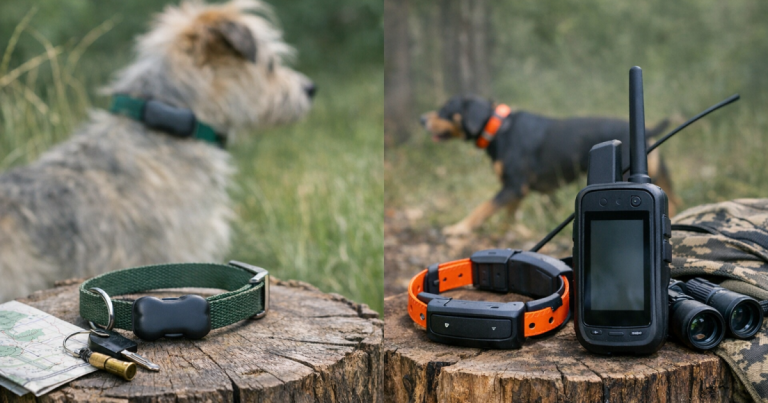
Garmin Alpha LTE is not a satellite dog tracker. Garmin’s verified description is LTE connectivity for real-time dog tracking in the Alpha app, with multi-GNSS used for satellite positioning. That means satellites help determine position, while LTE is the communication path for the standalone device. The Garmin advantage comes from ecosystem depth: Alpha LTE can pair with compatible Garmin VHF dog tracking systems for simultaneous LTE and traditional VHF tracking.
That distinction matters most in rural, hunting, and big-property situations. A family dog who slips a gate in a suburban neighborhood needs a fast app workflow and practical recovery cues. A sporting dog working at distance may benefit more from Garmin Alpha compatibility, especially if the handler already uses compatible VHF collars or handhelds. If trail use is your main concern, pair this comparison with our guide to the best dog GPS trackers for remote hikes, because remote tracking is never just one spec line.
Battery life changes the routine
Fi Ultra has the longer published everyday battery window in the evidence here: Fi support states 2 to 3 days typical battery life and up to 5 days in Power Saving Mode. That makes it easier to picture as a regular dog-owner routine: charge it, clip it to the gear your dog already wears, and keep it ready for normal off-leash walks, travel days, and escape-prone afternoons.
Garmin Alpha LTE is more update-rate dependent. Garmin lists 11 hours at a 10-second update rate, 18 hours dynamic, and 45 hours at a 2-minute update rate when using only Alpha LTE. The longer 75-hour figure applies at a 2-minute update rate when paired to a compatible VHF dog collar device. That is a very different mental model. Garmin gives you a performance-style tracking tool, but the battery conversation is tied to how frequently you want updates and whether the LTE device is working alongside Garmin VHF gear.
For everyday escape preparedness, less charging friction usually wins. For a planned outing where the handler is already managing radios, collars, update rates, and route plans, Garmin’s battery structure may feel normal rather than fussy. Dog gear has a way of exposing wishful thinking by Thursday night; the tracker that is actually charged is the one that helps.
Fit, attachment, and what your dog actually wears
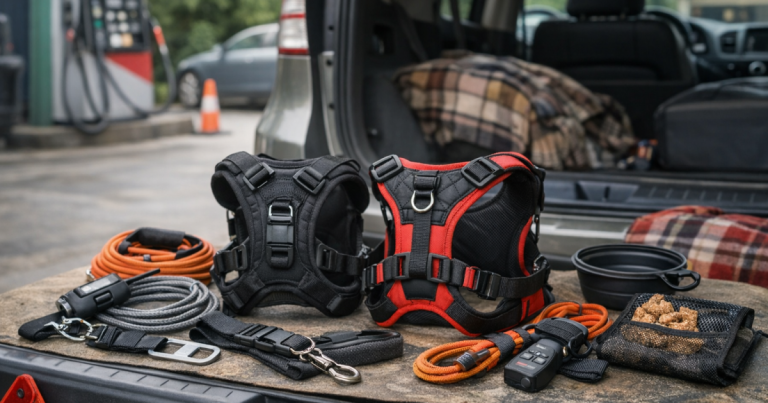
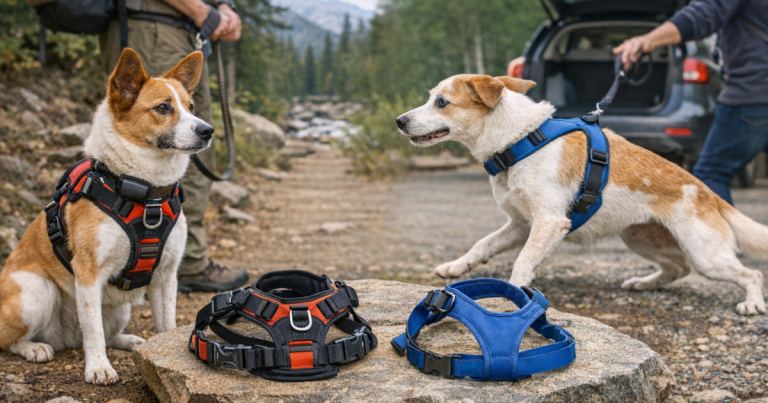
Fi Ultra weighs about 2.4 ounces and measures roughly 2.95 x 1.57 x 0.98 inches. Its universal integrated clip attaches to harnesses, working dog vests, and thick leather collars. That flexibility is useful for dogs who do not wear the same collar every day, dogs who hike in a harness, or working dogs whose gear changes by activity.
Garmin Alpha LTE weighs about 1.8 ounces and measures roughly 2.76 x 1.41 x 1.21 inches. It is lighter than Fi Ultra, but it is also thicker in the published dimensions. Garmin states it attaches to existing dog collars up to 1 inch wide. That narrower attachment promise is simple, but it is less flexible than Fi’s stated harness, vest, and thick-collar compatibility.
Small dogs, short-necked dogs, and dogs who already dislike collar hardware deserve extra attention in this part of the decision. Based on the published numbers, Garmin has the lower weight. Based on the published attachment methods, Fi gives you more placement options. Comfort is not just ounces; it is also where the device sits, whether it bounces, and whether your dog tries to turn every walk into a hardware-removal project.
Recovery aids: sound and vibration versus light
Fi Ultra includes Fi CallBack sound and vibration from the Fi app, and Fi states there is no static shock. That is useful when the dog is nearby but hard to see, or when the owner has trained the sound or vibration as a recall-style cue. It should still be treated as an aid, not a substitute for recall training or a secure leash handoff.
Garmin Alpha LTE’s listed aid is different: multicolor LED beacon lights can be remotely activated from a mobile device. That is more of a visibility tool than a recall cue. For dusk searches, brushy field edges, or a dog moving through a dark yard, a remote light can be genuinely useful. It does not serve the same purpose as Fi’s sound and vibration feature.
This is one of the cleaner everyday trade-offs. If you want a cue you can potentially build into your dog’s routine, Fi has the more directly relevant aid. If visibility is the bigger concern, Garmin’s remote LED beacon is the feature named in the verified evidence.
Water resistance and rough-weather use
Fi Ultra carries an IP68 water-resistance rating. Garmin Alpha LTE is rated 1 ATM, described by Garmin as withstanding pressure equivalent to about 33 feet of depth. Both products have manufacturer-stated water resistance, but the standards are not worded the same way, so it is better to compare them as stated ratings rather than flattening them into a single winner.
For real life, this matters when a dog swims, crashes through wet grass, rolls in snow, or turns a drainage ditch into a personal spa. Water resistance helps, but it does not remove the need to keep charging contacts, clips, collars, and attachment points clean and functional. Recovery reliability is a system: tracker, battery, network, fit, ID tag, and your response plan all matter.
Subscription and coverage limits
Both devices require paid service for the tracking features that matter in a lost-dog moment. Fi requires Fi Membership for remote tracking capabilities and Live Tracking/Lost Mode. Garmin Alpha LTE requires an active LTE subscription for tracking features. The evidence provided here does not include plan prices, so the fair comparison is not about cost; it is about the type of workflow you are buying into.
Fi’s coverage boundary is US-centered. Fi Ultra is designed for use within the United States, satellite connectivity does not extend internationally, and official shop copy states satellite coverage is not available in Alaska. Garmin’s US/Canada Alpha LTE part number is available for the United States and Canada, while Garmin also states that buying an LTE subscription does not guarantee coverage where the device is used.
That makes the decision sharper for travelers. For US-based dog owners who want a consumer escape-recovery tracker, Fi Ultra is more directly aligned. For handlers traveling between the United States and Canada, Garmin’s stated regional availability is broader. For truly remote areas, neither product should be treated as a guaranteed emergency recovery system.
Where Garmin’s ecosystem matters
Garmin Alpha LTE is easiest to understand when you stop comparing it like a normal pet collar and view it as part of Garmin’s sporting-dog setup. It uses the Alpha app, is positioned for sporting dog and hunting users, and can integrate with compatible Garmin VHF dog tracking systems. That is not a minor add-on; it is the reason many buyers would choose it.
If you already use Garmin Alpha equipment, the Alpha LTE device can add LTE tracking to a familiar system. If you do not, the Garmin path is more specialized than a typical pet-owner tracker workflow. The site’s Garmin Alpha LTE profile is a useful companion if you want the device’s Alpha-specific role separated from the broader buying decision.
Questions people ask
Is Fi Ultra the better choice for an escape-prone family dog?
For many US pet owners, yes. That is an editorial judgement based on Fi Ultra’s consumer dog-tracker positioning, Live Tracking/Lost Mode requirement through Fi Membership, GPS/cellular plus satellite connectivity, flexible clip, and sound/vibration cue. It lines up better with the classic gate-left-open or off-leash-run scenario.
Is Garmin Alpha LTE better for hunting dogs?
Garmin Alpha LTE is the stronger fit when the owner is already using, or specifically wants, the Garmin Alpha sporting-dog ecosystem. Its verified advantage is LTE tracking in the Alpha app plus the ability to pair with compatible Garmin VHF dog tracking systems.
Which one has better battery life?
Fi Ultra has the longer typical published standalone window in this evidence: 2 to 3 days typical and up to 5 days in Power Saving Mode. Garmin Alpha LTE ranges from 11 to 45 hours as a standalone LTE device depending on update rate, with up to 75 hours only when paired to a compatible VHF dog collar device at a 2-minute update rate.
Does either tracker work everywhere?
No. Fi Ultra has US-only satellite limits and is not positioned as an off-grid system. Garmin Alpha LTE requires compatible LTE coverage, and Garmin states an LTE subscription does not guarantee coverage where the device is used.
The practical pick
Choose Fi Ultra if your main fear is the ordinary, stomach-dropping escape: a dog bolts from a yard, disappears at a park, or runs ahead on an off-leash outing in the United States. Its verified strengths are the consumer recovery workflow, GPS plus cellular and T-Satellite with Starlink satellite connectivity, Fi CallBack sound and vibration, broader attachment options, and longer typical published battery window.
Choose Garmin Alpha LTE if your dog tracking life already revolves around Garmin Alpha gear, sporting-dog work, or a hunting-style workflow where compatible VHF integration changes the whole setup. It is lighter, uses LTE tracking in the Alpha app, has remotely activated multicolor LED beacon lights, and can pair with compatible Garmin VHF dog tracking systems for simultaneous LTE and traditional VHF tracking.
The clean verdict: Fi Ultra is the better match for most everyday US lost-dog recovery plans, while Garmin Alpha LTE is the more logical choice for Garmin Alpha users and sporting-dog handlers. The right answer is not the toughest-sounding device; it is the one that matches the way your dog actually gets loose and the way you will actually respond.
Quick Buying Links
Fi Ultra
US dog owners wanting app-based escape recovery with cellular tracking plus satellite connectivity for limited-service areas
Garmin Alpha LTE
Better for sporting-dog owners already using Garmin Alpha gear who want LTE tracking alongside compatible VHF systems