A Garmin Alpha LTE comparison only makes sense when you start with the kind of escape you are trying to prevent: a hound ranging out of sight, a suburban fence-jumper, a road-trip door-dasher, or a dog who bolts during hikes. The right tracking device is not the one with the most impressive label. It is the one that fits your dog’s behavior, your local coverage, and the way you would actually search under pressure.
Alpha LTE sits in a different lane from many everyday pet trackers because it is aimed at dog owners who care about field tracking, outdoor movement, and location awareness beyond the usual neighborhood walk. That does not automatically make it the best answer for every home. A compact GPS tag, a smart collar, a satellite-supported option, or even a training-focused Garmin device may be a better fit depending on the risk you are solving.
What to know first
The short answer: Alpha LTE is worth considering when your dog’s highest-risk moments happen outdoors, at distance, or in rural-style routines where ordinary “find my pet” habits may not be enough. For an apartment dog who slips through a lobby door, a smaller mainstream GPS tracker may be easier to live with. For a hunting dog, working dog, or off-leash trail dog, the Garmin approach may feel more natural if it matches your existing gear and search workflow.
No tracker should be treated as a guarantee. GPS, LTE, Bluetooth, and satellite-connected tools all have limits. Terrain, tree cover, buildings, carrier coverage, battery condition, collar fit, and user setup can all affect what happens during a real scare. The best recovery plan usually combines a tracker with visible ID, a secure collar or harness, practiced recall, recent photos, and a plan for who starts searching while someone else checks alerts and maps.
How Alpha LTE differs from everyday pet GPS trackers
Garmin Alpha LTE is an LTE dog tracking device, so it belongs in the cellular-dependent GPS category rather than the Bluetooth tag category. That matters because Bluetooth-style finders are best for close-range locating near compatible phones, while GPS trackers are designed to report broader location information through a network connection. For lost-dog recovery, that distinction is huge.
Compared with lifestyle smart collars, Alpha LTE is likely to appeal more to people who already think in terms of field visibility: where the dog is moving, whether the dog is out of sight, and how quickly a handler can respond. Lifestyle GPS collars may emphasize daily routines, home safe zones, activity features, and pet-owner convenience. Neither approach is automatically superior; they solve different versions of the same fear.
The practical question is not “Which device is most advanced?” It is “Where does my dog disappear, and what information would help me act faster?” A dog who slips a gate in a dense suburb creates a different search problem than a bird dog moving through mixed cover a mile from the truck. Before buying, check coverage where your dog actually runs, not just where you live.
Where Fi Ultra, Fi Series 3+, and Tractive fit beside Alpha LTE
If your concern is remote travel or areas where ordinary cellular coverage may be inconsistent, it is worth reading more about the Fi Ultra Dog Tracker, which is positioned as a GPS tracker with cellular and satellite connectivity. That does not mean it removes all coverage limits, but it does give owners another category to compare when their dog spends time beyond predictable neighborhood networks.
For many US households, Fi Series 3+ and Tractive DOG 6 are more direct everyday comparisons because they are mainstream tracking options built around pet routines. Fi Series 3+ is a smart dog collar with GPS and health tracking, while Tractive DOG 6 is a GPS and health dog tracker. Those labels matter because they point toward daily wear, app-based pet monitoring, and routine escape alerts rather than a field-first Garmin workflow.
If you are torn between those two mainstream options before deciding whether Garmin is even the right category, the site’s Tractive DOG 6 vs Fi Series 3+ comparison is a better next step than trying to judge every tracker from a spec sheet. The real decision is usually about your dog’s escape pattern: frequent short-range door dashes, backyard testing, trail roaming, or rural off-leash work.
Scenario-by-scenario: which type of tracker makes more sense?
For rural acreage and off-leash field time
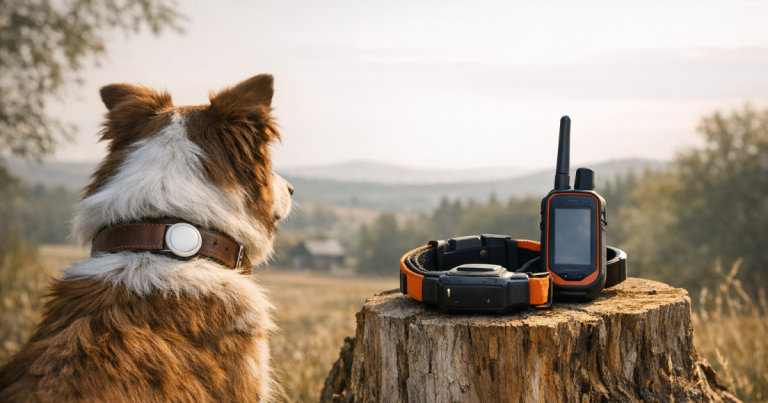
Alpha LTE belongs on the shortlist when your dog is often out of direct sight and you need a tracking setup that fits a more active outdoor routine. This may include hunting, large rural properties, farm visits, cabin trips, or big open spaces where “he usually comes back” is not a recovery strategy. Compare it with Garmin handheld-style systems such as Garmin Alpha 100 if you already use or understand field tracking gear, but verify what each device does on its own and what accessories, handhelds, plans, or apps are required.
For suburban fence-jumpers
A smart collar or compact GPS tracker may be more practical than a field-focused device if your dog’s biggest risk is a loose gate, a low fence, or a delivery-driver door dash. In that scenario, comfort, daily wear, alert settings, and reliable charging habits matter as much as raw tracking style. The device must be on the dog when the escape happens, and that favors gear your dog can wear comfortably every day.
For road trips and hotel stays
Travel changes the equation. A tracker that works well at home still needs coverage and setup in a new town. Before a trip, confirm the device is attached securely, contact information is current, and everyone traveling knows what alert or map to check. A backup engraved ID tag is still useful because a person who finds your dog may look at the collar before they think about scanning or technology.
For small dogs and comfort-sensitive dogs
Small dogs can be harder to fit with tracking gear. Bulk, attachment style, collar width, and coat type can decide whether a tracker stays centered or becomes annoying. A smaller device such as FitBark GPS 2nd Gen may be worth comparing for dogs where comfort is the first obstacle, but owners should still check coverage requirements, attachment security, and whether the device’s approach fits the dog’s actual escape risk.
Key checks before choosing any dog tracking device
- Map the escape pattern first. Write down where your dog has actually gotten loose: front door, unfenced yard, trailhead, campsite, farm field, dog sitter’s house, or hunting cover. Buy for that pattern, not for a perfect marketing scenario.
- Check network dependence. LTE and cellular GPS trackers depend on compatible service conditions. Satellite-supported devices may help in some remote contexts, but they still have setup, environmental, and device limitations. Bluetooth tags are useful backups, not full GPS recovery tools.
- Verify subscription or service requirements. Do not assume the purchase price is the full cost. Many connected trackers involve an ongoing plan or service structure. Confirm current terms before buying.
- Prioritize fit over features. A tracker that rubs, rotates, or sits awkwardly may get removed from the collar before it is needed. Check fit during normal movement, not just while your dog stands still.
- Test at home before trusting it away from home. Walk the property edge, check alert timing, confirm map behavior, and make sure every caregiver knows how to respond. A calm test is easier than learning the app while your dog is gone.
- Keep backup identification simple. A readable tag with current phone numbers can shorten a recovery even when the tracker works perfectly. Technology should add layers, not replace basics.
One of the most useful early steps is a controlled location test. The site’s guide to a backyard dog GPS tracker accuracy check walks through the kind of low-stress trial that can reveal weak spots before a real escape.
Common mistakes when comparing Alpha LTE with other devices
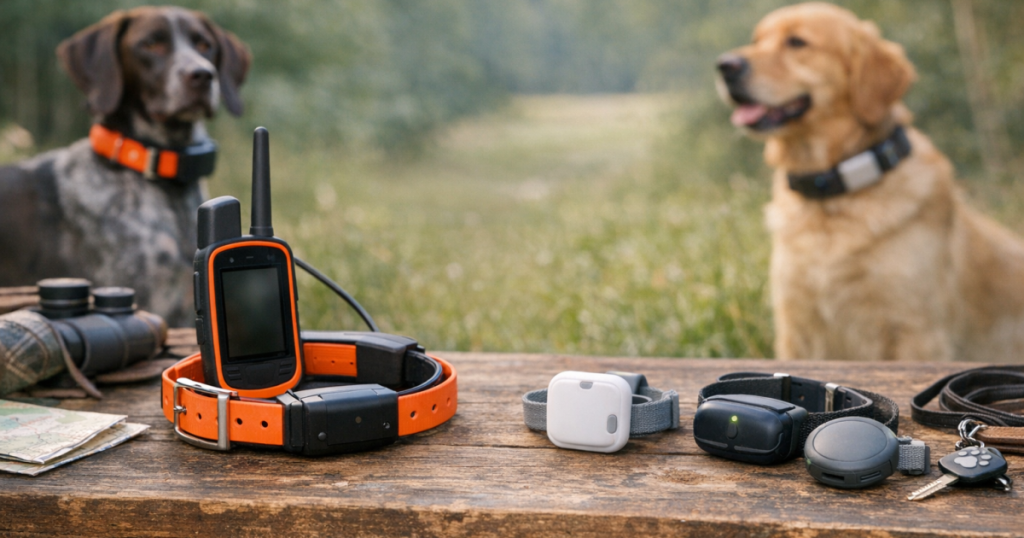
The first mistake is comparing every tracker as if it serves the same dog. Alpha LTE, Fi Ultra, Fi Series 3+, Tractive DOG 6, FitBark GPS 2nd Gen, Bluetooth tags, and Garmin training devices all sit in different parts of the safety toolbox. A device that is excellent for one owner’s weekend field dog may be overbuilt or inconvenient for another owner’s small city dog.
The second mistake is treating manufacturer battery claims as real-world recovery certainty. Battery life can vary with settings, signal conditions, update frequency, temperature, and how often the device is asked to report. Instead of relying only on a claim, build a charging routine you can maintain. If the tracker is dead on the charger when the gate pops open, its technical strengths do not matter.
The third mistake is ignoring the human workflow. During a lost-dog scare, someone needs to read the map, someone may need to drive, someone should stay near the escape point, and someone may need to contact neighbors or local groups. The best device is one your household can use quickly without arguing over logins, alerts, or what the map means.
Key questions answered
Is Garmin Alpha LTE better than a regular pet GPS tracker?
It can be better for outdoor, rural, or field-oriented use cases, but not automatically for everyday pet owners. A regular GPS collar may be easier for daily wear, neighborhood alerts, and family use. Match the tool to where your dog is most likely to get loose.
Do I still need an ID tag if my dog wears a tracker?
Yes. A tracker helps you search, but an ID tag helps a stranger contact you immediately. The fastest recovery often happens when technology and simple visible identification work together.
Should I choose a tracker based on the strongest feature list?
No. Choose based on coverage, comfort, attachment security, service requirements, and your dog’s escape behavior. A long feature list is less useful than a tracker you keep charged, fitted correctly, and tested in your real environment.
What stands out
Alpha LTE is most compelling when the dog’s risk profile is bigger than a quick neighborhood wander: rural acreage, field work, off-leash outdoor time, or situations where a handler needs location awareness while the dog is moving out of sight. Mainstream GPS collars and compact trackers remain strong choices for household escape prevention, travel routines, and dogs who need comfortable daily wear.
The safest decision is not to crown one device as universally best. Build a layered recovery system around the dog in front of you: the right tracker type, a secure collar or harness, current ID, tested alerts, and a family plan for what happens in the first five minutes after an escape.