A standard dog GPS collar is not always the right fit. Maybe your dog is too small for a bulky device, your hiking routes run beyond reliable cell coverage, or you want a simple backup tag for hotel stays and road trips. That is where alternative GPS pet trackers can make sense: not as magic lost-dog insurance, but as part of a layered recovery plan.
The useful question is not “Which tracker is best?” It is “Which device gives me the most actionable help in the exact moment my dog is loose?” A city door-dasher, a rural fence-jumper, and a dog who slips a collar on trail all need different tools.
Main points
- Cellular GPS trackers are often the most familiar choice, but they depend on compatible network coverage and battery management.
- Bluetooth and community-network tags can be good ID backups, but they are not the same as live GPS tracking.
- Handheld or field-style systems may suit rural, hunting, or off-grid routines better than app-only trackers.
- Fit matters as much as features. A device that twists, rubs, or overweights a small collar may not stay useful during an escape.
- Testing is part of ownership. Try the device on ordinary walks before trusting it during travel, hiking, or a real lost-dog scare.
Step 1: Start with the escape scenario, not the gadget
Before comparing devices, write down the three most realistic ways your dog could get loose. This keeps the decision grounded and prevents you from buying a feature set that looks impressive but does not fit your life.
For door-dashers
Dogs who bolt through front doors, garage doors, or apartment lobbies usually need fast notice and a location method that works in neighborhoods. A cellular GPS tracker can be useful here if coverage is strong where you live. A Bluetooth-style tag can still help as a backup if a neighbor or passerby finds your dog, but it should not be your only plan for a dog who can travel several blocks quickly.
For fence-jumpers and yard escape artists
For dogs who leave a yard, focus on alerts, secure collar fit, and whether the device still sits correctly when the dog runs, rolls, or squeezes under fencing. The tracker is only one layer. Reinforced gates, updated ID tags, and a practiced recall routine matter just as much.
For hiking and rural dogs
Trail and rural escapes change the decision. Cell coverage can be patchy, landmarks may be harder to describe, and a dog may move through brush or across private land. If your main risk happens away from neighborhoods, prioritize the tracking method and coverage dependency over app polish.
Step 2: Know the main alternatives
Most pet tracking devices fall into a few practical categories. The names can sound similar, but the recovery value is very different once a dog is actually missing.
Cellular GPS trackers
These devices use GPS for location and a cellular connection to send updates to your phone. They are a common fit for suburban and urban owners because they can show a moving location when coverage is available. The trade-off is that performance depends on network access, charging habits, and how well the device stays attached to the collar or harness.
For many families, this is the everyday default: school pickup, backyard breaks, walks around the block, and weekend errands. It is still worth checking how the device behaves in your own neighborhood, because two streets with different tree cover, building density, or carrier strength can feel very different in practice.
Bluetooth and community-network tags
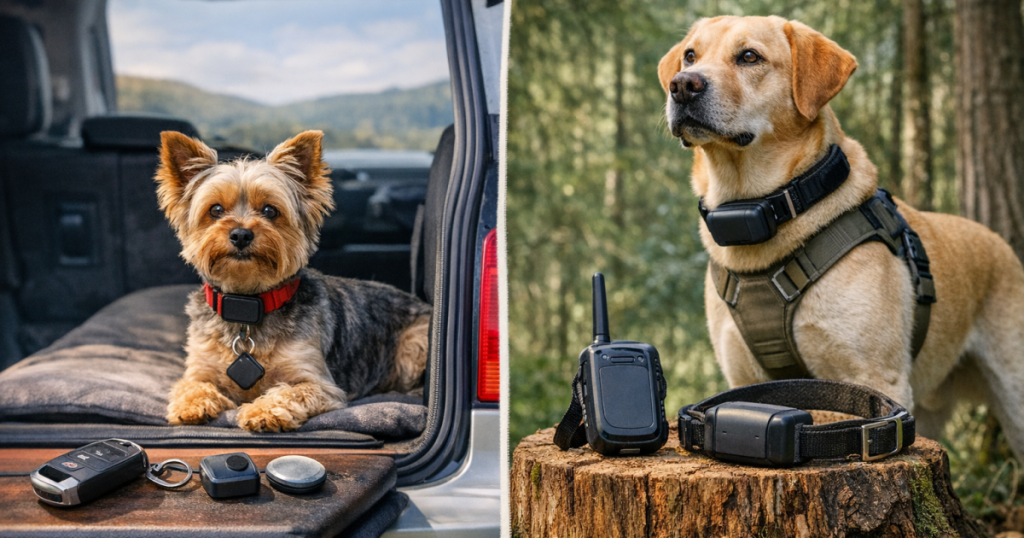
Bluetooth tags are small, familiar, and often easy to add to a collar. They can help with close-range finding or with recovery if someone nearby comes within network range, depending on the product and ecosystem. They are not true live GPS dog trackers, so they should be treated as backup ID technology rather than a primary solution for a fast-moving dog.
Examples in this category include Apple AirTag (2nd generation), Tile Pro, and pet-focused smart tags such as the Pawscout Smart Pet Tag. The practical test is simple: would this still help if your dog crossed a field, entered a wooded area, or ran beyond nearby phones? If the answer is no, use it as a backup layer.
Handheld and field-oriented systems
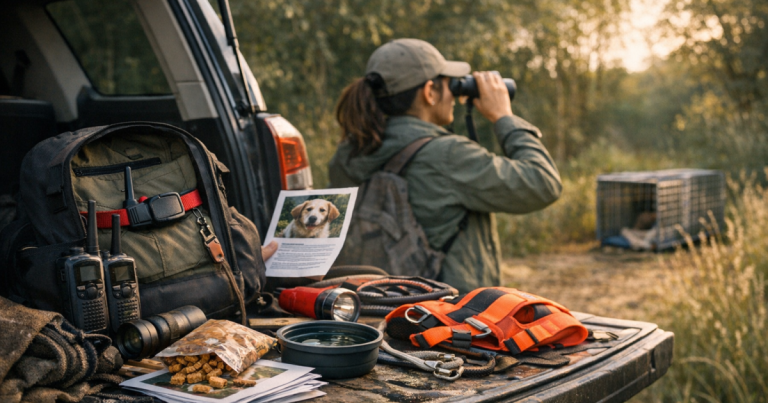
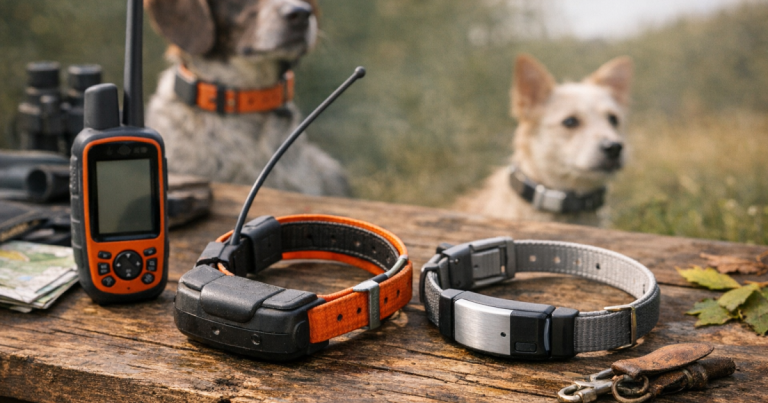
Some dog owners need a setup designed around field use rather than a phone-only experience. These systems can make sense for hunting dogs, rural properties, and handlers who regularly work outside dependable cellular coverage. They may be more involved to set up and carry, so they are not always the easiest choice for a casual neighborhood walk.
If your dog’s highest-risk moments happen on acreage, in hunting areas, or along remote roads, compare this category carefully. A product profile such as the Garmin Alpha LTE can help you separate the device format, intended use case, and coverage assumptions before you commit.
Smart collars with built-in tracking
A smart collar combines the tracking hardware and collar into one system. The advantage is a tidy fit with fewer dangling parts. The downside is that sizing, comfort, and replacement flexibility become more important. If your dog has a narrow neck, thick coat, sensitive skin, or a habit of wrestling with other dogs, collar design deserves as much attention as tracking features.
Step 3: Match the device to your dog’s size and behavior
A tracker that works beautifully on a 70-pound Labrador may be awkward on a 12-pound terrier. Weight, collar width, attachment style, and where the device sits on the neck all affect comfort and reliability. If a device slides under the throat, catches on brush, or makes the collar rotate, it may fail at the exact moment you need it.
- Small dogs: Look for a compact form factor, low-profile attachment, and a collar that does not pull downward at the front of the neck.
- Long-coated dogs: Check that the device is visible enough to inspect and does not disappear into fur where rubbing goes unnoticed.
- Strong pullers: Avoid relying on a tracker mount that shifts every time the leash tightens.
- Collar-slippers: Consider whether the tracker belongs on a harness, backup collar, or separate ID setup rather than the same collar your dog can escape.
- Water-loving dogs: Verify the manufacturer’s water-resistance language and care instructions before assuming it can handle swimming, mud, or repeated rinsing.
Step 4: Build a layered recovery setup
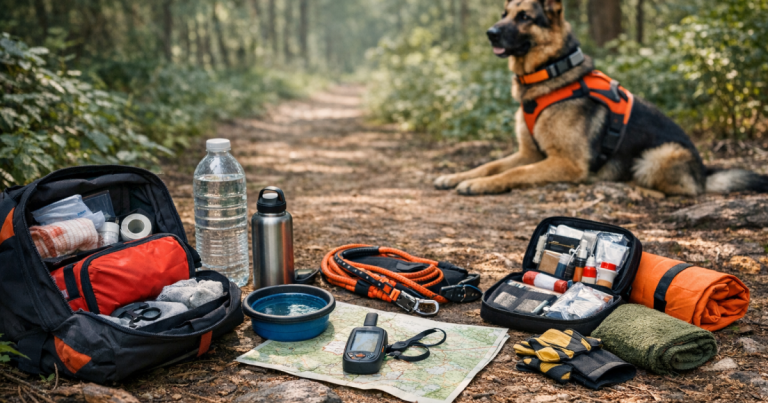
No tracker should be the only thing standing between a loose dog and a long search. The strongest recovery plans combine location technology with low-tech identification and handling routines.
- Use a readable ID tag with current phone numbers, even if your dog wears a tracker.
- Keep the microchip registration current so a shelter or veterinary clinic can reach you.
- Photograph your dog regularly from the side and front, including distinctive markings.
- Save local emergency contacts such as animal control, nearby shelters, and your veterinarian.
- Practice calm recall and leash handoffs before travel or trail days, not during a crisis.
This layered approach is especially important when traveling. A tracker may help you narrow the search area, but an ID tag helps the person who finds your dog know exactly who to call.
Step 5: Test before you rely on it
The first test should happen on a boring day, close to home, with your dog safely leashed. Walk a familiar loop and watch how the tracker reports movement, how quickly it catches up after pauses, and whether the device shifts on the collar. Do not wait for a campground gate, a hotel lobby, or a thunderstorm panic to learn its habits.
For a simple field check, use a familiar route with fixed landmarks such as a mailbox, corner store, park entrance, or trail sign. Our guide to how to check GPS drift on a leashed walk gives you a structured way to compare what the app shows with where you and your dog actually are.
- Check alert timing: Notice whether notifications arrive quickly enough to change your response.
- Check map usefulness: See whether the location is precise enough to choose a direction, not just a general neighborhood.
- Check attachment security: Look for twisting, loosening, rubbing, or bouncing after 15 to 20 minutes of normal movement.
- Check your own routine: Make charging, inspection, and app checks part of the same habit as filling the water bowl or grabbing waste bags.
Fast answers
Are Bluetooth tags good alternatives to GPS dog trackers?
Bluetooth tags can be useful backups, especially for identification and close-range finding, but they are not equivalent to GPS tracking. They generally depend on proximity to phones or a compatible network, so they are weakest when a dog runs into open, rural, or low-traffic areas.
Should I use more than one tracking device?
Some owners do use a GPS tracker plus a separate ID tag or Bluetooth tag. That can be sensible if the devices serve different jobs: one for active location, one for backup identification. Avoid stacking so much hardware that the collar becomes uncomfortable or unsafe.
What matters most for rural dogs?
Coverage dependency matters most. A device that works well in town may be less helpful where cellular service is inconsistent. Rural owners should compare tracking method, device attachment, visibility, and how they would physically reach the dog once a location appears.
Practical takeaway
The best choice is the device you understand before your dog is missing. For everyday neighborhoods, a cellular tracker may be the most practical starting point. For remote work, hiking, or hunting routines, field-oriented options deserve closer attention. For backup identification, Bluetooth-style tags can help, but they should not be mistaken for full tracking.
Treat alternative GPS pet trackers as recovery tools, not guarantees. Choose the tracking method around your dog’s real escape pattern, make the fit comfortable, keep old-fashioned ID in place, and test the setup while everything is calm. That preparation is what turns a device from a hopeful purchase into a useful part of your lost-dog plan.