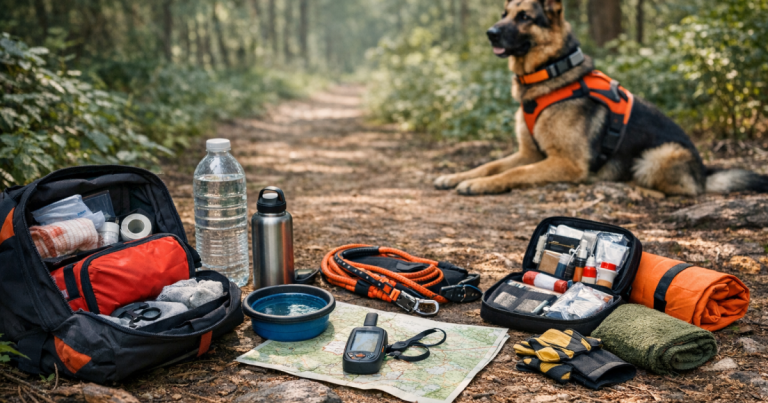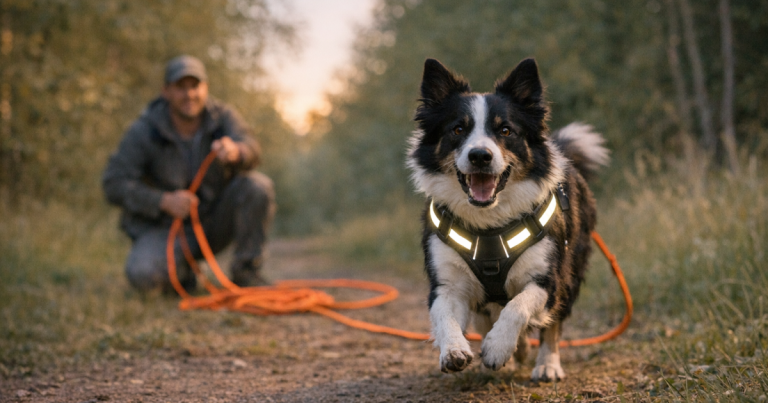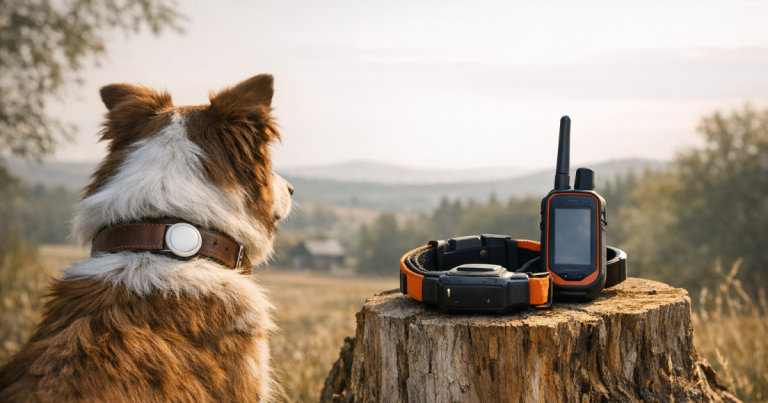
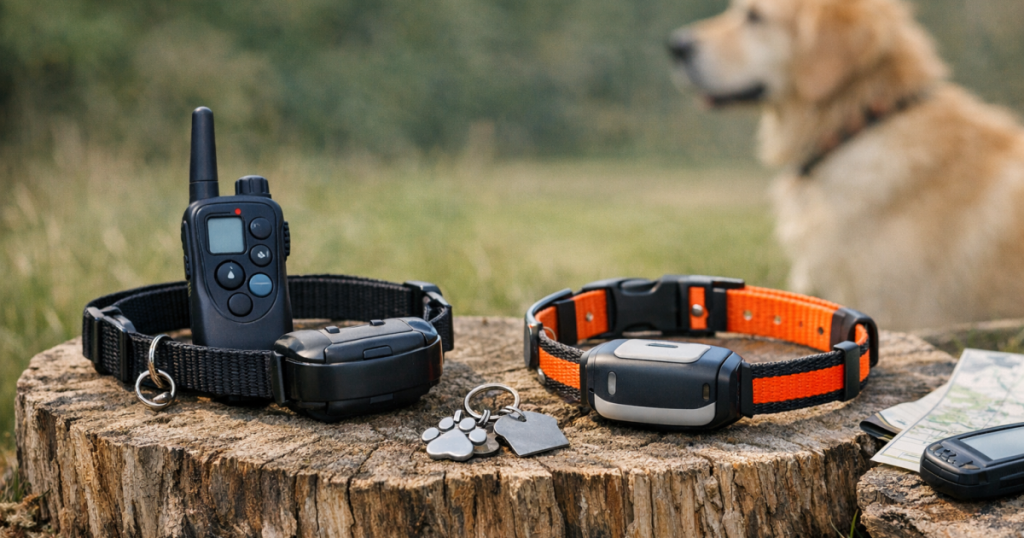
A dog can obey beautifully in the yard and still vanish when a gate swings open, a deer crosses the trail, or fireworks hit at the wrong moment. That is why remote dog training collars should be treated as training tools, not location tools. They may help reinforce cues when used responsibly, but they do not tell you where your dog is, who may have spotted them, or which direction to search first.
Behavior modification that uses electronic correction or aversive pressure should be carried out under the guidance of a qualified professional trainer or veterinary behavior professional to comply with local animal-welfare rules and safety requirements.
The short version: different tools solve different problems
A remote training collar is designed to influence behavior while you still have a working connection with your dog: you can see them, call them, time the cue correctly, and reward the right response. A GPS dog tracker is designed to help you locate a dog when distance, terrain, panic, or distraction has already broken that normal connection.
Those two jobs overlap only in the owner’s mind, not in real recovery conditions. A collar used for recall practice may reduce the chance of a bolt in some situations, but it cannot map your dog’s movement through a neighborhood, show a last known location, trigger a missing-dog plan, or help other people identify and contact you.
The safest setup is layered: training for prevention, tracking for location, and visible identification for the human part of recovery. Remote dog training collars can belong in that stack for some dogs and handlers, but they should not be the only thing standing between a scary escape and a long search.
What a remote training collar can actually do
A remote collar is a communication tool. Depending on the model and how it is used, it may offer cues such as tone, vibration, or stimulation to support commands at a distance. The important phrase is “support commands.” The dog still needs prior training, fair timing, clear expectations, and a handler who understands the dog’s stress level.
For example, a hiker might use a remote collar as part of a long-term recall program with a dog who already knows “come” on leash and long line. A rural owner might use one to interrupt fence-line fixation before a dog builds enough momentum to climb or dig. In those cases, the collar is part of a training plan, not an emergency beacon.
Training collars also have hard limits. Dense brush, panic, prey drive, traffic noise, poor timing, or a dog already out of sight can all reduce their practical usefulness. If your dog slips out after a car accident, bolts from a pet sitter, or breaks away in an unfamiliar campground, a training cue may not be available or appropriate. Location data becomes the more urgent need.
If you are comparing a dedicated training device such as the Garmin Delta XC, evaluate it as training support rather than as a lost-pet recovery collar. It may have a place in behavior work, but it is not the same category as a GPS tracker built to help you find a missing dog.
What GPS trackers and recovery collars are built to solve
A GPS dog tracker has one central job: help you understand where your dog is or where they were recently. Most consumer trackers depend on a mix of satellite location, wireless networks, cellular service, Bluetooth, or app-based systems. That means they are not magic, and they are not equally reliable everywhere. But their purpose is fundamentally different from a training collar.
When a dog is missing, location clues change the search. Instead of wandering the neighborhood shouting a name, you may be able to check a last known direction, prioritize nearby roads, ask neighbors in the right area, or move toward a live or recently updated location. Even imperfect location information can be more useful than no location information when minutes matter.
Lost-pet recovery collars and smart collars may add other layers, such as app alerts, shared access, activity context, or visible identification depending on the product. Traditional ID tags remain important because a person who finds your dog may not know how to scan a chip or interact with a tracker. A simple engraved tag, such as the GoTags Bone Dog Tag in Stainless Steel, can still be the fastest route from “found dog” to phone call.
Why the substitution mistake is risky
The mistake usually starts with a hopeful thought: “My dog wears a remote collar, so I can call them back if they run.” That may be true during a controlled training session. It is much less dependable during a real escape.
1. A training cue is not a location signal
If your dog is out of sight, you may not know whether they are across the street, behind a shed, in the woods, or already two blocks away. Pressing a button does not show direction of travel. It does not create a searchable map. It does not tell a neighbor that the loose dog on their porch is yours.
2. Panic changes behavior
Dogs do not always behave like their trained selves when they are scared. Thunder, fireworks, a loose dog chase, a slammed car door, or an unfamiliar vacation rental can produce flight behavior. A dog who normally recalls in a field may ignore everything while trying to get away from the trigger.
3. Distance and environment matter
Remote training systems are still bound by real-world conditions. Hills, buildings, woods, handler position, and line of sight can affect practical use. GPS trackers have limitations too, especially around cellular coverage, battery charge, and update frequency, but they are at least attempting to answer the emergency question: “Where is my dog?”
4. Recovery often depends on other people
Lost-dog recovery is rarely just a private conversation between you and your dog. It can involve neighbors, animal shelters, campground staff, delivery drivers, hikers, and local social networks. A training collar does not help those people identify your dog or contact you. A recovery plan does.
A better way to layer the tools
Think of dog safety in three layers: prevention, location, and return. Each layer has different gear and habits.
- Prevention: secure fences, leash routines, door manners, recall training, long-line practice, and behavior support for known escape triggers.
- Location: a GPS tracker or smart tracking collar chosen for your dog’s size, your coverage area, and your real escape scenarios.
- Return: readable ID tags, updated microchip details, clear photos, local contact plans, and visibility gear for low-light situations.
A lightweight harness can also reduce escape risk for dogs who back out of collars or get startled near traffic. Gear such as the Ruffwear Hi & Light Harness is worth comparing when low bulk and secure fit matter, but fit should always be checked on your individual dog before relying on it outside.
For evening walks or campground potty breaks, visibility can buy time. A lighted accessory such as the Nite Ize NiteHowl Rechargeable LED Safety Necklace will not track your dog, but it can make a loose dog easier to spot in a yard, parking area, or roadside shoulder.
How to decide what your dog actually needs
Start with the escape scenario, not the product category. The right safety stack for a city apartment dog is different from the right setup for a hound on rural acreage.
If your dog is a door dasher
Prioritize habits and alerts. Practice threshold manners, use baby gates or interior barriers, keep ID visible, and consider a tracker that can alert you quickly when your dog leaves a defined safe area. A remote collar does not help much if the escape happens while you are carrying groceries or a guest opens the front door.
If your dog chases wildlife
Training matters, but location backup matters too. Prey drive can override familiar cues, especially when the dog gains speed and distance. Use long-line practice before off-leash freedom, and do not treat any collar button as a guaranteed interrupt. A GPS tracker gives you a recovery tool if prevention fails.
If your dog hikes, camps, or travels
Assume unfamiliar terrain changes the rules. A dog may not know the way back to a vacation rental, trailhead, or campsite. Check cellular coverage realities before relying on a tracker, keep battery charging in your travel routine, and use visible ID that includes a reachable phone number.
If your dog slips collars or harnesses
Fit and attachment style become just as important as electronics. A tracker is not useful if it is attached to gear your dog can shed. Check collar tightness, harness adjustment, tag noise, and whether the tracker placement irritates the neck or chest during normal movement.
Run these checks before you trust any setup
Do not wait for an emergency to learn what your gear can and cannot do. A calm test at home is far kinder than discovering limitations while your dog is missing.
- Check the fit: make sure the collar or harness stays secure during running, sniffing, shaking, and lying down.
- Test normal routines: confirm the gear works during walks, car rides, backyard time, and crate or rest periods if your dog wears it then.
- Practice your response: decide who opens the app, who grabs the leash, who checks the street, and who contacts neighbors.
- Update identification: keep tags and microchip contact details current after moves, phone changes, or travel.
- Check tracker behavior at home: walk the property line and nearby streets so you understand how location updates look in familiar surroundings.
A simple backyard accuracy check can reveal how your tracker behaves around your house, fence, trees, garage, and street. That does not guarantee performance everywhere, but it gives you a baseline before a stressful moment.
Questions people ask
Can a remote collar help prevent a lost dog?
It can be part of prevention for some trained dogs, but it should not be your only plan. Prevention depends on training quality, timing, environment, dog temperament, and whether the handler is present and able to respond. Tracking and identification are still needed if the dog gets away.
Is a GPS tracker enough by itself?
No. A GPS tracker can help with location, but it depends on power, coverage, attachment security, and the owner’s response. Dogs should still wear visible ID, and owners should have a practical recovery routine.
Should my dog wear both?
Some dogs may wear both a training collar and a tracker, but comfort and fit matter. Avoid overcrowding the neck with heavy gear, check for rubbing, and make sure each device has a clear purpose. Small dogs and short-necked breeds may need a more selective setup.
The big picture
Training reduces risk. Tracking improves your search. Identification helps other people return your dog. Those jobs are connected, but they are not interchangeable.
The most reliable lost-dog plan is not built around one device. It is built around realistic layers: a dog who has practiced recall and restraint, gear that stays on, a tracker suited to your environment, visible ID, and a household that knows what to do in the first few minutes.
If your dog does go missing, widen the plan beyond the collar quickly. Tools that help neighbors and local communities respond can matter, and resources like Ring Search Party for a lost dog can be one more way to organize sightings and local awareness. The goal is not to buy more gear for its own sake. The goal is to make sure each tool covers a different failure point before your dog ever tests it.