City dogs can vanish into alleys, elevators, parking garages, and crowds faster than most owners expect. The best urban dog trackers are not always the longest-range devices; they are the setups that stay attached, work with city signal conditions, and leave you with useful next steps when a dog slips a collar or bolts through a lobby door.
Urban tracking is less about buying one magic device and more about layering tools. Tall buildings, underground parking, thick apartment walls, cellular dead spots, and crowds of well-meaning strangers can all change what a tracker can do in the first ten minutes of a scare.
In brief
For most city dogs, a practical tracking setup combines one primary location tool, one visible identification backup, and one physical escape-prevention layer. A cellular GPS tracker or smart collar can help when a dog is moving through neighborhoods, while a Bluetooth tag can be useful at close range or as a secondary finder. Neither should replace an engraved ID tag, a secure collar-and-harness routine, or a plan for fast local outreach.
No tracker is foolproof. City environments create signal bounce, delayed updates, and confusing location points. The right choice is the one that fits your dog’s size, escape pattern, walking route, and the places where a lost dog would realistically go.
Step 1: Start with the city escape scenario
Before comparing devices, picture how your dog is most likely to get loose. A door-dashing terrier in an apartment hallway has different needs than a large dog who backs out of a collar near a traffic-heavy intersection. A dog who visits dog-friendly patios, rides elevators, or travels in rideshares may need a setup that is secure, compact, and easy to check quickly.
- Apartment door dashers: Prioritize fast alerts, visible ID, and a collar or harness that cannot slide off during panic.
- Sidewalk pullers: Focus on attachment security and a backup leash point, because the tracker only helps if it stays on the dog.
- Dog park roamers: Choose a tracker that is comfortable during rough play and check whether the attachment can be snagged or twisted.
- Transit and travel dogs: Add simple, readable ID in case the tracker loses power, loses connection, or is removed.
If your dog has a history of backing out of gear, start with the physical setup before shopping for electronics. The guide to collar-and-harness setups for dogs who back out is a better first step than upgrading the tracker alone.
Step 2: Know the main tracker alternatives
Cellular GPS trackers
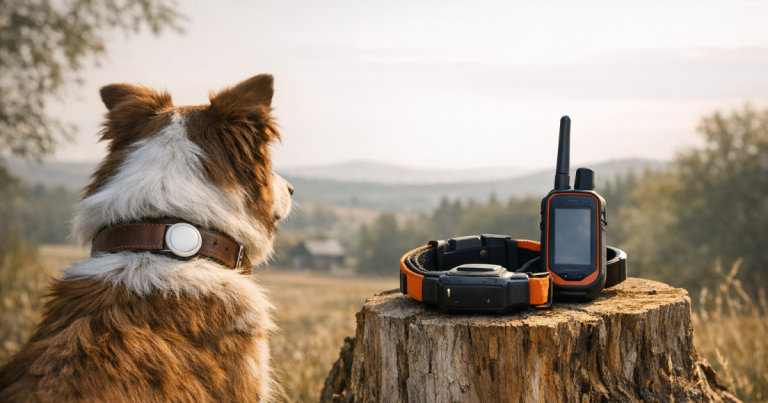
Cellular GPS trackers are usually the most relevant option for city recovery because they can report a dog’s location beyond short Bluetooth range when network conditions cooperate. They are a sensible fit for dogs who walk through dense neighborhoods, visit parks, or could cross several blocks quickly.
The trade-off is dependence on coverage, charging habits, subscription terms, and app behavior. In a city, you may also see location estimates jump around near tall buildings. That does not mean the tracker is useless; it means you should treat the location as a search clue, not an exact dot on the sidewalk.
Smart collars with built-in tracking
A smart collar can be a cleaner everyday option for owners who do not want a separate device hanging from the collar. This can matter in crowds, elevators, and dog parks where dangling accessories may catch on gear or get chewed by another dog.
The main question is fit. A tracking collar that looks sleek on a medium dog may feel bulky on a small dog or sit poorly on a thick-coated dog. For a real-world example of this category, the Fi Series 3 Smart Collar page is useful for comparing how an integrated collar-style tracker differs from clip-on alternatives.
Bluetooth tags as close-range backups
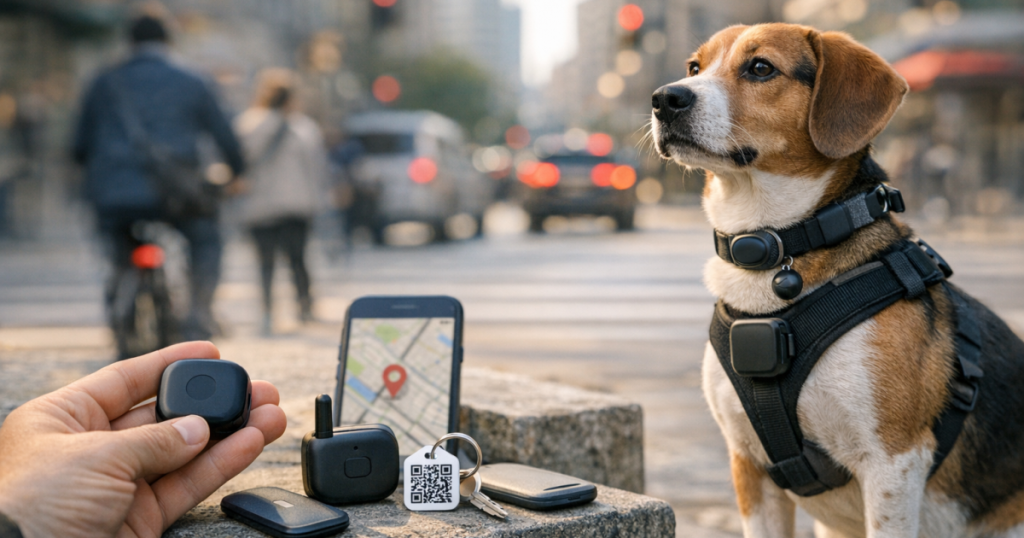
Bluetooth item trackers are not GPS dog trackers. Devices such as Apple AirTag and Tile Pro rely on nearby compatible devices or Bluetooth proximity rather than live GPS tracking. In a dense city, that can sometimes make them useful as a secondary tool, especially if a dog is hiding nearby, picked up by a neighbor, or moving through an area with many phones.
The limitation is important: a Bluetooth tag should not be your only recovery tool for a dog who may run across busy streets or cover miles. Think of it as a backup layer, not the core plan.
Engraved ID and visible recovery tools
The lowest-tech layer is still one of the most important. A clear engraved tag can turn a stressful sighting into a phone call within minutes. A stainless steel tag such as the GoTags Bone Dog Tag in Stainless Steel is one example of the type of physical backup worth considering, as long as the engraving is easy to read and the attachment ring is secure.
In city recoveries, strangers may see your dog before your tracker gives a useful update. Make it easy for them to help without needing to scan an app, identify a device, or understand your tracker brand.
Step 3: Match the tool to the neighborhood
A tracker that works well in a suburban yard may behave differently downtown. Buildings can interfere with satellite signals, underground garages can block communication, and high-rise apartments can make the first location point look oddly imprecise. That is why the best city setup is tested in the places your dog actually goes.
- High-rise living: Check how the tracker behaves in the lobby, elevator area, stairwell, and nearby sidewalk.
- Dense downtown blocks: Expect occasional location drift and use cross streets, direction of travel, and recent updates together.
- Neighborhood parks: Test whether the tracker stays attached during play, rolling, and leash changes.
- Parking garages: Do not rely on a perfect live location underground; use the last reliable point as a starting clue.
- Waterfronts and busy roads: Prioritize fast physical control and visibility, because tracking cannot prevent a dangerous crossing.
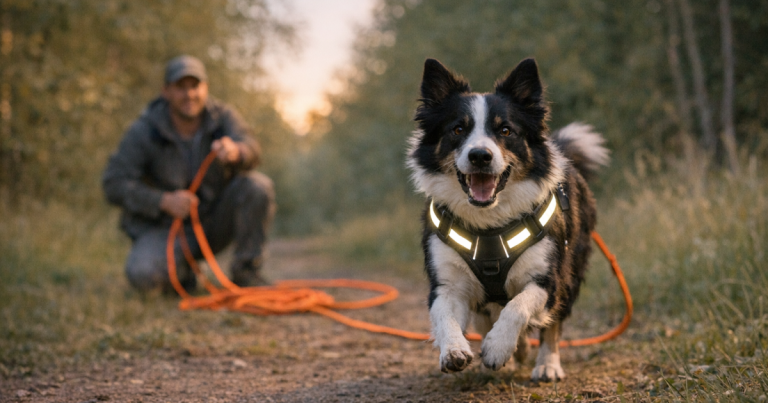
If your city walks include crowded night routes, pair tracking with reflective or lighted gear. Visibility does not track your dog, but it can help drivers, cyclists, and neighbors spot them sooner.
Step 4: Run a city-style test before you need it
Do not wait for a real escape to learn how your tracker behaves. A short test around your block can reveal whether the app updates are understandable, whether the collar fit shifts, and whether the device location makes sense near buildings.
Start with a controlled walk. Have one person hold the dog while another watches the tracker from home or from a nearby safe location. Move through the routes your dog actually uses: front door, sidewalk, alley entrance, parking area, and local park. Look for delays, odd jumps, and places where the signal seems weaker.
For a structured process, adapt the steps in this backyard GPS tracker accuracy check to your apartment courtyard, sidewalk loop, or small neighborhood route. The goal is not laboratory precision. The goal is to know how much confidence to place in the device when your adrenaline is high.
Step 5: Build a backup plan for the first hour
The first hour after an urban escape is chaotic. Your tracker may give you a recent location, but you still need decisions: who searches, who stays by the exit point, who calls shelters, and who watches for app updates.
- Keep one person near the escape point: Many dogs circle back to familiar doors, cars, or building entrances.
- Use the tracker as a direction tool: Move calmly toward the most recent reliable area rather than chasing every small dot change.
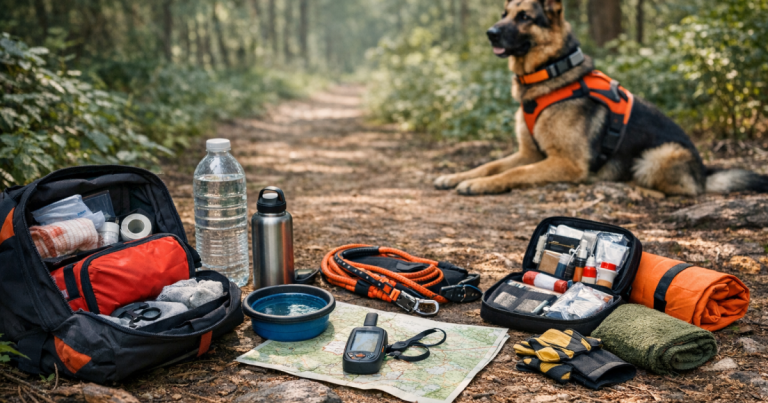
- Bring high-value food and a slip lead: A scared dog may avoid grabbing hands but follow scent or familiar voices.
- Share a clear photo quickly: Use one standing side-view photo and one face photo if you have them.
- Call nearby vets and shelters: In cities, a found dog may be transported quickly by a good Samaritan.
If your dog is not recovered quickly, switch from chasing to organized visibility. The guide to lost dog flyers that generate useful sightings explains how to make flyers that produce actionable calls instead of vague reports.
What people usually ask
Are Bluetooth tags enough for city dogs?
Bluetooth tags can be helpful in dense neighborhoods, but they are not a direct substitute for a GPS tracker. They work best as close-range or network-assisted backups, especially when a dog may be hiding nearby or has been taken indoors by someone trying to help.
Is a smart collar better than a clip-on tracker in an urban area?
It depends on the dog. A smart collar can reduce dangling hardware, which is useful in crowds and dog parks. A clip-on tracker may be easier to move between collars or attach to a harness. Fit, comfort, and attachment security matter more than the format alone.
What if the tracker location looks wrong downtown?
Use it as a clue, not a verdict. Tall buildings and garages can affect location accuracy. Look at the last several updates, direction of travel, nearby exits, and places a scared dog might hide, such as loading docks, fenced lots, stairwells, and quiet courtyards.
Should my dog wear both a tracker and an ID tag?
Yes. A tracker helps you search; an ID tag helps someone else contact you. In a city, your dog may be found by a neighbor, doorman, delivery driver, cyclist, or police officer before you reach the latest tracker point.
What to remember
An urban dog tracking setup should be redundant, comfortable, and tested. Choose the primary tracker based on your dog’s likely escape route, not just the device category. Add a readable ID tag, secure the collar or harness, and rehearse what you will do in the first ten minutes of a scare.
The most reliable city plan is not the flashiest device. It is the combination of a tracker you understand, gear your dog cannot easily shed, and a recovery routine that turns confusing city sightings into calm, useful action.