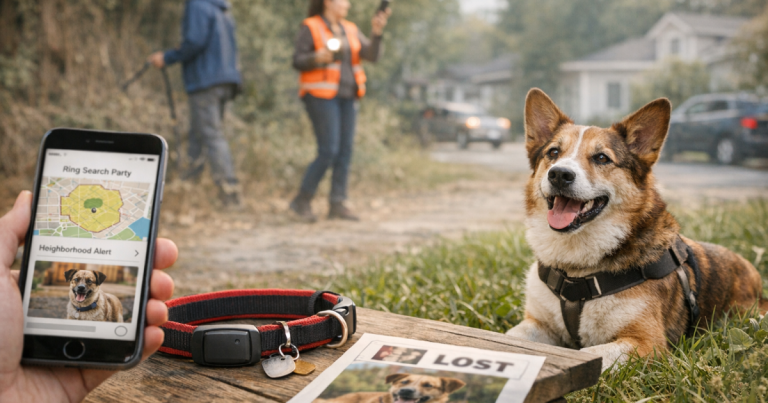
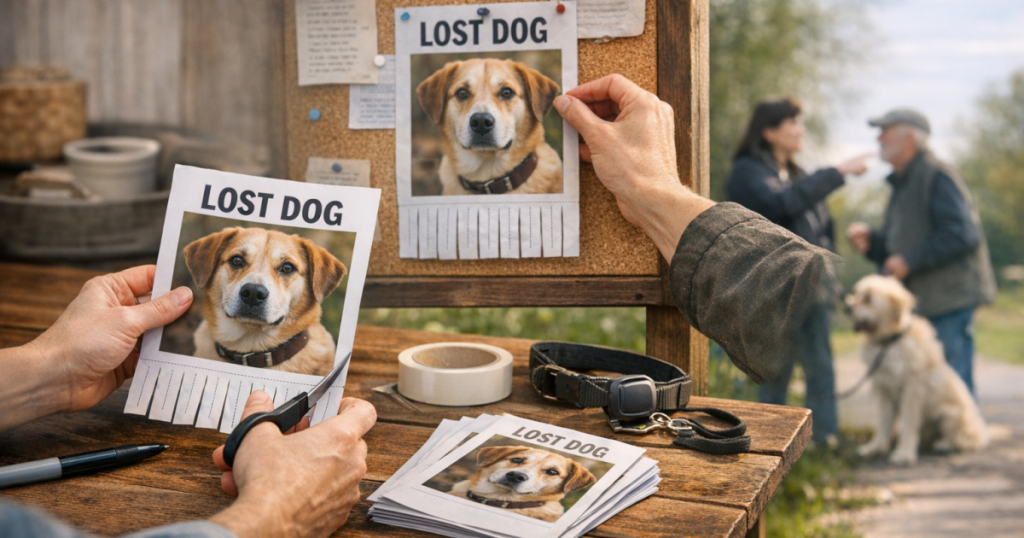
When your dog is missing, the first flyer you tape to a pole should not be a scrapbook page; it should be a sighting tool. The best lost dog flyers make a stranger notice your dog in three seconds, understand exactly what to do, and report a location without trying to grab a frightened animal. Keep the message simple, visible, and easy to act on while you keep searching.
At a glance
- Use one large, clear photo that shows your dog’s face, body shape, and most visible markings.
- Put the most useful action in big text: call or text sightings with the location, time, and direction of travel.
- Avoid wording that encourages strangers to chase, corner, or call an anxious dog.
- Print in high contrast, protect copies from weather, and post where drivers and dog walkers naturally pause.
- Track every report on a simple map so you can separate repeated patterns from one-off mistakes.
Start with the job the flyer needs to do
A missing-dog flyer has one main purpose: to turn passing attention into a usable sighting. A usable sighting is not just someone saying they saw a similar dog. It includes where the dog was seen, when the sighting happened, which direction the dog was moving, and whether the dog seemed scared, injured, loose, or accompanied by another person.
That is why the flyer should not try to tell your dog’s whole story. People reading from a car window, a trailhead board, a coffee shop door, or a neighborhood mailbox area have seconds to understand the message. Give them a photo, the dog’s name if it helps identification, the area missing from, and the exact reporting instructions.
If your dog was wearing a tracker, collar, harness, or ID tag, mention only the detail that helps someone identify the dog from a distance. For example, a red harness or blue collar can be useful. A long explanation of the device is not. If you are also working from GPS history or last known pings, it can help to review how to test your dog tracker’s accuracy so you understand how precise, delayed, or coverage-dependent that location information may be.
Step 1: Choose the right photo
The photo is the part most people notice first, so pick for recognition, not cuteness. A funny couch photo may feel comforting, but a standing side-view or bright outdoor image usually helps strangers compare what they see in real life.
Use a photo that shows field-visible traits
- Choose a sharp image with your dog filling most of the frame.
- Show coat color, tail carriage, ear shape, size, and body outline.
- Use a second small image only if your dog looks very different from the front and side.
- Avoid photos with costumes, heavy shadows, other dogs, or distracting backgrounds.
If your dog is small, dark-coated, elderly, recently groomed, or easy to confuse with a common breed mix, say that plainly. For example: “Small black terrier mix, gray muzzle, curled tail” is more useful than “very sweet family dog.”
Step 2: Write a headline people can read fast
The top line should be large enough to read from several feet away. Keep it short and direct. Good options include “Missing Dog,” “Seen This Dog?” or “Please Report Sightings.” If your dog is likely hiding and avoiding people, “Do Not Chase” can be just as important as “Missing Dog.”
For lost dog flyers in busy neighborhoods, the headline should match the behavior you need from strangers. If the dog is friendly and may approach, “Call if found” might work. If the dog is fearful, newly adopted, injured, or running in traffic, the flyer should emphasize calm sighting reports instead of capture attempts.
Step 3: Include only the details that help recovery
A strong flyer gives enough information to identify your dog without overwhelming the reader. Use plain language and short lines. Big blocks of text are easy to skip, especially on roadside poles and community boards.
Include these details
- Dog’s name, if the dog responds reliably to it.
- Breed or closest description, such as “tan shepherd mix” or “white senior poodle.”
- Size in everyday terms, such as “about knee-high” or “small, 15 lb dog.”
- Distinctive markings, coat length, scars, limp, ear shape, or tail type.
- Collar, harness, vest, or leash color if worn when last seen.
- Last known area, using cross streets, park names, trail names, or neighborhood landmarks.
- Date and approximate time missing.
- Best phone number for calls and texts.
Leave these details off
- Your full home address.
- Microchip number or any account number.
- Long emotional explanations that push key information down the page.
- Multiple phone numbers unless someone is actively monitoring both.
- Claims that someone has stolen the dog unless you have clear, reportable information.
Emotional wording is understandable, but too much of it can reduce clarity. “Beloved family dog, please help” is fine. Three paragraphs about how much your dog is missed will not help a driver remember the direction the dog was traveling.
Step 4: Tell people exactly what to do
The most useful instruction is simple: “Call or text sightings immediately with location, time, and direction of travel.” Add “Do not chase” when a dog is anxious, newly rescued, noise-sensitive, or already running from people.
Helpful flyer wording can look like this:
- “Please do not chase, call, or whistle. Text sighting, time, and direction of travel.”
- “If seen, take a photo from a safe distance and call immediately.”
- “Last seen near Maple Street and 7th Avenue, moving toward the creek trail.”
- “May be hiding under decks, sheds, porches, or parked vehicles.”
For a very social dog, you can soften the instruction: “May come for food, but please call first if seen.” For a skittish dog, keep the direction firm. A well-meaning stranger sprinting toward your dog can push the dog across a road, deeper into woods, or out of the search zone you were starting to understand.
Step 5: Make it readable from a sidewalk or car
Use a clean layout with high contrast. Black text on white or bright yellow paper is easier to read than decorative fonts or pale backgrounds. Keep the dog photo large, the phone number large, and the instructions separated into short lines.
- Use a large headline at the top.
- Place the photo in the upper half of the flyer.
- Put the phone number near the top and bottom.
- Use bold, plain wording for “Do not chase” if needed.
- Add tear-off tabs only where they will not block the main message.
- Laminate or use plastic sleeves in rain, snow, or heavy dew.
A QR code can help if it leads to an updated post, map, or contact form, but it should never replace the phone number. Many sightings happen while someone is walking a dog, driving, or standing in poor service areas. The flyer still needs to work without a scan.
Step 6: Post where sightings are likely, not just where people gather
Start with the last known location, then work outward along natural travel paths: sidewalks, creek corridors, school edges, greenbelts, alleys, trail entrances, bus stops, dog-walking routes, gas stations, convenience stores, laundromats, and veterinary clinics. In rural areas, think like a loose dog: fence lines, barns, feed stores, mailboxes, drainage ditches, wooded edges, and quiet roads may matter more than the busiest intersection.
Ask permission before posting on private property or inside businesses. Many local animal shelters, veterinary offices, groomers, and pet supply stores have community boards, but they may have rules about flyer size or placement. Keep a roll of tape, zip ties where allowed, and a marker in your search kit so you can replace damaged flyers quickly.
If your dog went missing near a park, hiking area, or trailhead, pair flyers with on-the-ground prevention lessons for the future. Dogs often bolt during unloading, leash clipping, or greetings in crowded parking lots, which is why routines like the ones in keeping your dog from bolting at busy trailheads matter before the next outing.
Step 7: Use different flyer versions for different places
One design rarely fits every location. A roadside flyer needs a huge photo, a short headline, and a phone number. A bulletin-board flyer can carry more detail. A handout for mail carriers, delivery drivers, joggers, and dog walkers can include a small map and your preferred reporting instructions.
Roadside version
- Large photo.
- Huge “Missing Dog” or “Report Sightings” headline.
- Phone number in thick, dark print.
- Last seen cross streets.
- “Do not chase” if relevant.
Community-board version
- Clear photo plus one smaller alternate angle.
- Description and last known area.
- Behavior notes, such as shy, food-motivated, or avoids men.
- Instructions for calls, texts, and safe photos.
- Update line, such as “Still missing as of Friday morning.”
Door-to-door handout
- Brief request to check cameras, sheds, garages, crawl spaces, and fenced yards.
- Time window when the dog may have passed through.
- Your phone number in large type.
- A reminder not to leave gates open while checking.
Step 8: Turn reports into a search pattern
As sightings come in, record them immediately. Use a notebook, shared map, spreadsheet, or printed neighborhood map. Write down the caller’s name, phone number, exact location, time seen, dog description, direction of travel, and confidence level. Mark confirmed sightings differently from possible sightings.
Patterns matter more than single reports. Three sightings near the same drainage ditch, apartment complex, golf course, or wooded edge can show where your dog is circling or bedding down. A cluster of reports at dawn and dusk may change when you search. A report from several miles away may be real, but it should be weighed against timing, terrain, traffic, and your dog’s stamina.
If you use a recovery kit, printed materials, scent items, or organized search tools, keep expectations realistic. Recovery aids can help you stay organized, but they are not magic. Our <a href='https://gpsdogtrackers.com/petfinder-recovery-kit-review/’>PetFinder Recovery Kit review explains why tools are most useful when they support a calm plan rather than replace active follow-up.
Common flyer mistakes that reduce good sightings
- Using a tiny photo surrounded by decorative graphics.
- Listing too many details so the contact number is hard to find.
- Writing “reward” larger than the sighting instructions, which can encourage risky chasing.
- Forgetting to update or remove old flyers as the search area changes.
- Posting only online and not in the physical places where the dog may actually pass.
- Using “friendly” when the dog is currently scared and unlikely to act friendly.
One of the hardest parts of a search is accepting that your dog may behave differently while lost. A confident dog can become silent and avoidant. A food-loving dog may ignore treats. A dog that normally comes when called may freeze, hide, or run from familiar people. Your flyer should be written for the dog you are trying to recover now, not only the dog you know at home.
Fast answers
Should I offer a reward on the flyer?
A reward can motivate attention, but it can also encourage people to chase or grab a fearful dog. If you include one, keep it smaller than the sighting instructions and avoid listing an amount. The safest wording is often “Reward for information leading to safe recovery.”
Should I include my dog’s microchip number?
No. Say “microchipped” if you want, but do not print the microchip number. Shelters and veterinary clinics can scan a found dog and contact the registered information through the chip database.
How many flyers should I print?
Print enough to cover the last known area, likely travel corridors, and nearby community boards, then keep extra copies for updates. Quality placement matters more than covering every pole in town with unreadable copies.
When should I update the flyer?
Update it when you have a credible new sighting, a changed search zone, a better photo, or a clearer behavior instruction. Add a current date so neighbors know the search is active.
Key takeaways
Good lost dog flyers are clear, calm, and action-focused. They do not ask strangers to solve the whole recovery; they ask them to notice the right dog, avoid pushing the dog farther away, and report the kind of sighting that helps you make the next smart move.
Use one strong photo, a readable headline, a large contact number, and instructions that match your dog’s likely behavior. Then treat every flyer as part of a larger recovery system: posted signs, online alerts, shelter checks, camera reviews, tracker data if available, and careful follow-up on every credible report.
You might also like: Garmin Alpha 200i GPS Dog Tracker Review: Serious Field Tracking With Real Trade-Offs.