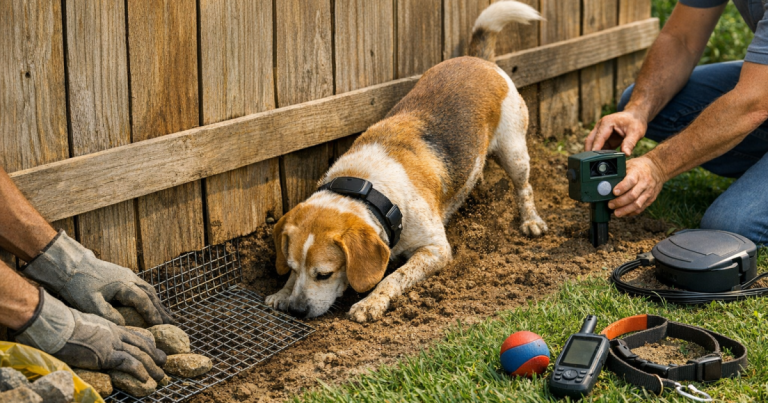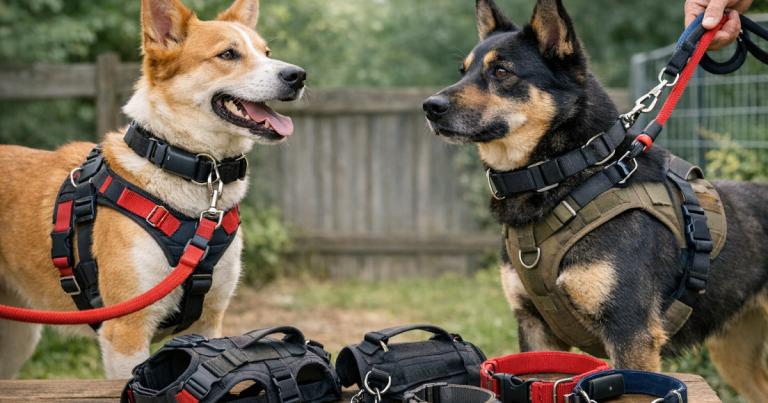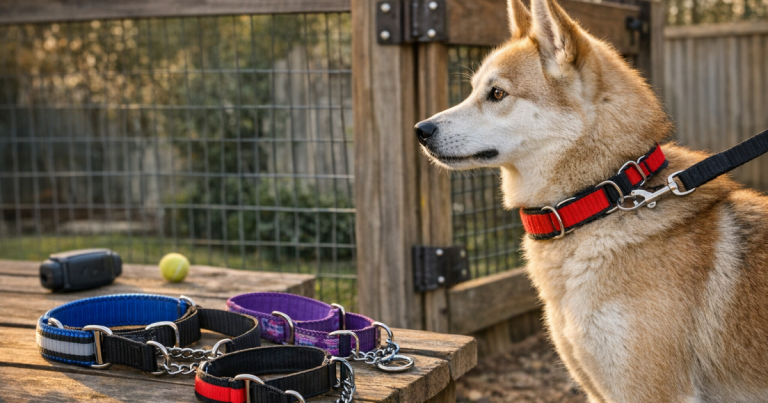
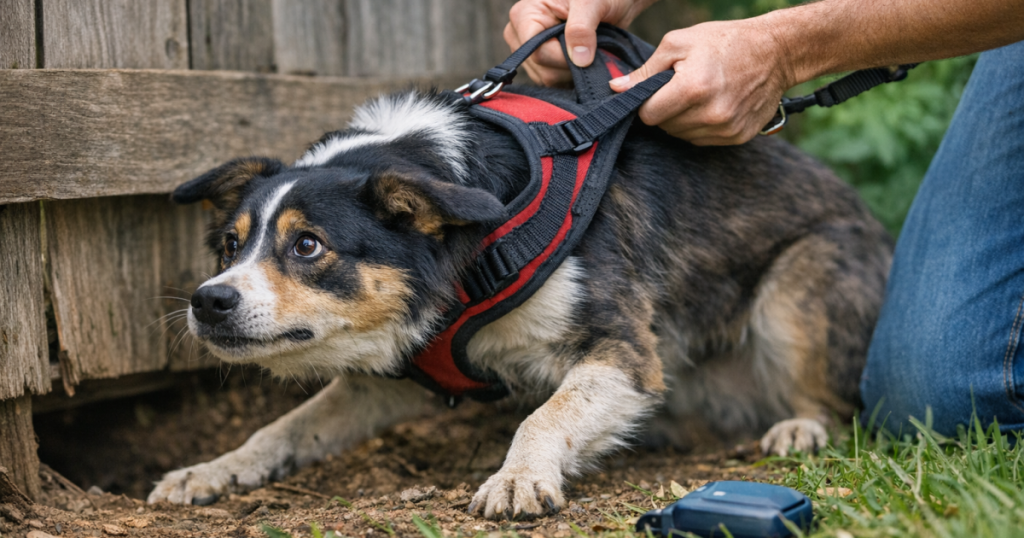
A skittish dog rarely slips a harness politely. They freeze, twist, backpedal, and suddenly the leash is attached to an empty shape. The best escape-resistant dog harnesses use secure body coverage, careful adjustment, and sometimes a backup collar connection to make that panic move much harder, not impossible.
No walking setup is foolproof. The goal is to reduce the odds of a slip, slow the dog down if panic hits, and give you a calmer recovery window before a nervous moment becomes a lost-dog emergency.
The short version
For most skittish dogs, start with a harness that has a longer body shape, a secure chest fit, and a rear belly strap that sits behind the deepest part of the rib cage. That rear strap is the feature that most often separates a panic-aware walking harness from an ordinary everyday harness.
Three harnesses worth considering are the Ruffwear Flagline Dog Harness for lightweight full-body coverage, the Ruffwear Web Master Dog Harness for dogs that need a more structured fit, and the Gooby Escape Free Easy Fit Harness for many small dogs that back out of standard step-in styles. A fourth situational option, the Harness Lead No Pull Dog Harness, can suit some dogs when fitted carefully, but it is not the right feel for every nervous walker.
Step 1: Match the harness to the way your dog escapes
Before picking a harness, watch the escape pattern. A dog that backs straight out needs different help than a dog that spins, drops a shoulder, or lunges sideways at traffic noise. Harness shopping gets much less mysterious when you name the move you are trying to interrupt.
- Back-out artists: Look for a longer harness with a rear belly strap. This makes it harder for the dog to reverse out when the leash tightens.
- Shoulder slippers: Prioritize a snug chest and neck opening. A loose front end gives the dog room to fold an elbow through and twist free.
- Sudden bolters: Use a harness with leash control that keeps pressure centered rather than pulling the harness sideways.
- Tiny or narrow-bodied dogs: Be extra cautious with bulky hardware. A harness can be secure on paper and still awkward on a small frame.
If your dog also wears a tracker, fit becomes even more important because collars, tags, and harness straps can compete for space. The guide to GPS collars for hard-to-fit dogs is useful when neck shape, coat thickness, or small size makes every strap choice feel like a compromise.
Step 2: Choose from the designs that actually help
Ruffwear Flagline Dog Harness: a strong starting point for many nervous walkers
The Ruffwear Flagline Dog Harness is the one many owners should look at first when a standard walking harness is no longer enough. Its appeal is the longer body coverage and rear strap arrangement, which can help reduce the classic backward slip. It is not magic, and sizing still matters, but the overall shape makes sense for dogs that panic in reverse.
It is usually the better choice when you want security without a very heavy feel. That matters for trail walks, neighborhood routes, and dogs that already find gear suspicious. If your dog shuts down when dressed like they are joining a search-and-rescue unit, lower bulk can help.
Ruffwear Web Master Dog Harness: for awkward shapes and stronger control
The Ruffwear Web Master Dog Harness is a more structured option for dogs that are hard to fit or need more body support. It is often considered for deep-chested, narrow, flexible, or determined dogs because the coverage is more substantial than a typical front-clip walking harness.
The trade-off is feel. Some dogs accept the extra structure calmly; others need a slow introduction indoors before it belongs on a real walk. For a skittish dog, the best harness is the one they will wear without turning the doorway into a courtroom drama.
Gooby Escape Free Easy Fit Harness: worth a look for small dogs
The Gooby Escape Free Easy Fit Harness is aimed at small dogs, which is useful because small escape artists have their own problems. Their bodies can be narrow, their necks can be delicate, and oversized hardware can shift faster than owners expect.
This style is designed around reducing back-out escapes, but you still need to verify the size range and fit against your dog’s actual body. For a small dog that slips ordinary vest or step-in harnesses, it may be a more sensible starting point than trying to shrink a larger-dog design down to toy size.
Harness Lead No Pull Dog Harness: a situational tool, not a universal answer
The Harness Lead No Pull Dog Harness is a different kind of option because it combines leash and harness in a simple rope-style setup. Some owners like the adjustability and the way it avoids a rigid vest shape. For skittish dogs, however, pressure-sensitive designs need calm handling and careful fitting.
Consider it only if you are confident you can introduce it gently and keep walks controlled. A dog that panics against pressure may need a more conventional body harness plus a backup connection instead.
Step 3: Fit it like your dog plans to test it
A harness that looks fine in the kitchen can fail the moment a delivery truck rattles by. Do the fitting when your dog is standing naturally, then recheck after a few minutes of movement.
- Check the neck opening: It should not slide forward over the shoulders or gape when the leash angle changes.
- Check the chest strap: It should sit securely without cutting into the armpits.
- Check the rear strap: On longer designs, this strap should sit behind the rib cage’s widest point without pressing into soft belly tissue.
- Check coat compression: Thick-coated dogs can seem snug at first, then loosen as fur flattens under the straps.
- Check movement: Have your dog walk, turn, sniff, and step over a curb before trusting the fit outside.
After fitting, apply gentle backward leash pressure while your dog is calm. You are not trying to scare them or test to failure. You are looking for obvious gaping, twisting, or a path the elbows could use to escape.
Step 4: Add a backup for the first few weeks
A secure harness is only one layer. For a dog with a known flight response, use a backup connection during the adjustment period. A common setup is one leash attached to the harness and a second safety line clipped to a properly fitted collar or martingale-style collar. The backup should not be tight during normal walking; it is there if the harness shifts or the dog reverses hard.
If you use a tracker on an escape-prone dog, think of it as recovery support rather than permission to take more risk. A GPS device can help after separation, but it cannot stop the first bolt. For collar-based backup ideas, the site’s notes on martingale collars for GPS trackers on escape-prone dogs explain why collar security and tracker placement need to be considered together.
For dogs with a history of slipping gear, a compact tracker can also be part of a layered plan. The FitBark GPS 2nd Gen Pet Location + Health Tracker is one example readers often compare when they want tracking as a backup to better walking habits and secure physical gear.
Step 5: Rehearse calm exits before you need them
Many escapes happen in the first five minutes: front porch, parking lot, vet entrance, trailhead, hotel lobby. Those are not walking problems as much as transition problems.
- Clip the leash before opening the door, not while the dog is halfway through it.
- Keep the dog close when stepping out of the car; parking lots produce sudden noises and odd leash angles.
- Use treats or a familiar cue to turn your dog toward you before crossing busy thresholds.
- Pause after any scare instead of pulling forward. A frightened dog pulled from behind is more likely to reverse and fight the harness.
- Recheck straps weekly, and sooner after grooming, weight change, seasonal coat changes, or a bath.
The small routine details are boring until the day they are not. Most good escape prevention is like that.
Questions people ask
Can a skittish dog ever wear a normal harness?
Yes, some can, especially after confidence-building and careful training. But if a dog has already backed out once, a standard short-body harness is a weak choice for high-stress walks. Upgrade the physical setup while you work on the behavior.
Is a tighter harness safer?
Not automatically. Too tight can restrict movement, rub skin, or make a nervous dog more frantic. Secure means stable, correctly positioned, and checked under movement, not simply cinched down.
Should the leash attach to the front or back?
For escape prevention, attachment point matters less than overall fit and leash handling. Front clips can help redirect some pullers, while back clips may feel steadier for others. Avoid sharp sideways tension that twists the harness out of position.
What stands out
The best escape-resistant setup is layered: a harness shape that matches your dog’s escape move, a careful fit check, a backup leash connection during risky outings, and a realistic recovery plan if something still goes wrong. Escape-resistant dog harnesses can make walks much safer for skittish dogs, but they work best when treated as one part of a calm, repeatable routine.