A backyard gate escape often starts quietly: a curious nose under the latch, a shoulder against a loose panel, then one clean push into the driveway. The good news is that most gate-nudging escapes are fixable with a patient inspection, better closure habits, and one or two simple hardware changes.
The goal is not to outsmart your dog once. It is to remove the little opportunities that let the gate become a puzzle they get better at solving.
Pool enclosure gates, automated gates, and code-regulated fence modifications should be handled by a qualified fence professional to comply with local safety requirements and building standards.
Start with the gate, not the dog
To prevent a dog from nudging open a yard gate, make the gate self-closing, use a latch your dog cannot lift or bump, remove gaps that allow nose leverage, and add a secondary barrier or clip during high-risk moments. Then test the gate from your dog’s height, because a latch that feels secure to a standing adult may be easy for a dog to push from below.
Before buying anything, watch the escape attempt if you can do so safely. Many owners only see the final moment: the gate swinging open. The important clue is what happened just before that. Did the dog hook a nose under the gate? Push at the latch side? Jump and paw at the handle? Lean their body weight into a loose frame? Each version needs a slightly different fix.
Step 1: Check whether the gate actually latches every time
A gate that looks closed is not always latched. Wind, worn hinges, ground heave, loose posts, and sagging hardware can leave the latch sitting just outside its catch. Dogs notice this faster than people do, usually because they try the same spot every day.
Close the gate the way your family normally does, without giving it an extra tug. Then run these checks:
- Pull the gate gently toward the yard to see whether the latch slips free.
- Push from the bottom rail, where a dog’s nose or shoulder would make contact.
- Watch the latch while the gate moves. If it rattles, skips, or barely catches, it needs adjustment.
- Open and close the gate several times in a row. A reliable gate should latch without a perfect, careful swing.
- Check after rain, freezing weather, or lawn work, since ground movement and debris can change alignment.
If the latch only catches when you lift the gate, shove it hard, or pull it into place, your dog is not really defeating a secure gate. The gate is already half-open from a safety standpoint.
Step 2: Remove the nose-and-shoulder leverage points
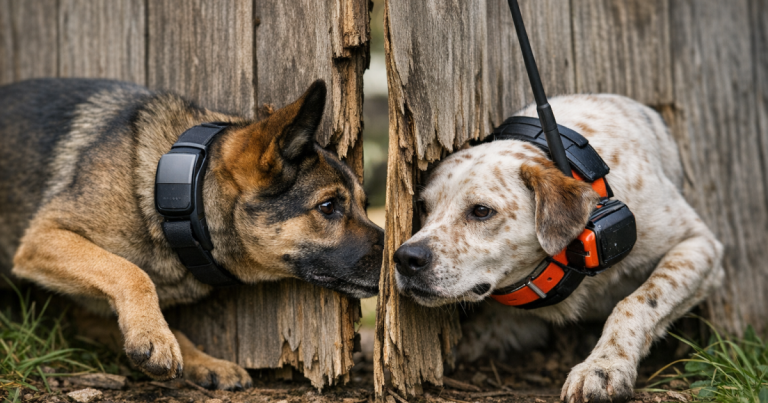
Dogs rarely need hands to open a weak gate. They need leverage. A two-inch gap near the latch, a flexible chain-link corner, or a bottom edge they can wedge their muzzle under can give them enough control to keep testing until the gate moves.
Walk the inside of the gate at dog height. Kneel if you need to. Look for:
- A gap between the gate and post near the latch.
- Loose boards or mesh that flex when pushed.
- A bottom gap large enough for a muzzle, paw, or digging attempt.
- A latch handle or thumb lever within jumping or pawing reach.
- A gate that swings outward toward the street, making one successful nudge more risky.
For many wooden gates, a properly attached stop strip on the latch side can reduce inward movement. For chain-link gates, the latch and hinge alignment may need tightening so the frame cannot twist enough for the latch to release. For bottom gaps, a secure threshold, buried barrier, or correctly fitted gate sweep can reduce the chance of a dog getting purchase from underneath. Avoid flimsy temporary patches that create sharp edges or snag points.
Step 3: Upgrade the closure routine before changing everything
Some gate escapes are not hardware failures. They are routine failures. The meter reader leaves the gate almost shut. A child runs through and assumes it clicked. A visitor props it open for one trip to the car and forgets the dog is outside.
Build a routine that does not rely on memory alone:
- Make “latched, then tugged” the household rule every time the gate is used.
- Place a simple reminder sign on the yard side and street side of the gate.
- Keep the dog indoors, leashed, or behind a second barrier when contractors, guests, or delivery workers are using the gate.
- Do not leave the dog loose in the yard during parties, moving days, landscaping visits, or trash pickup if the gate will be opened repeatedly.
- Assign one adult to check the gate after lawn mowing or service visits.
This is the unglamorous part, but it is often the part that works. A clever dog only needs one person to forget once.
Step 4: Add a latch your dog cannot operate by accident
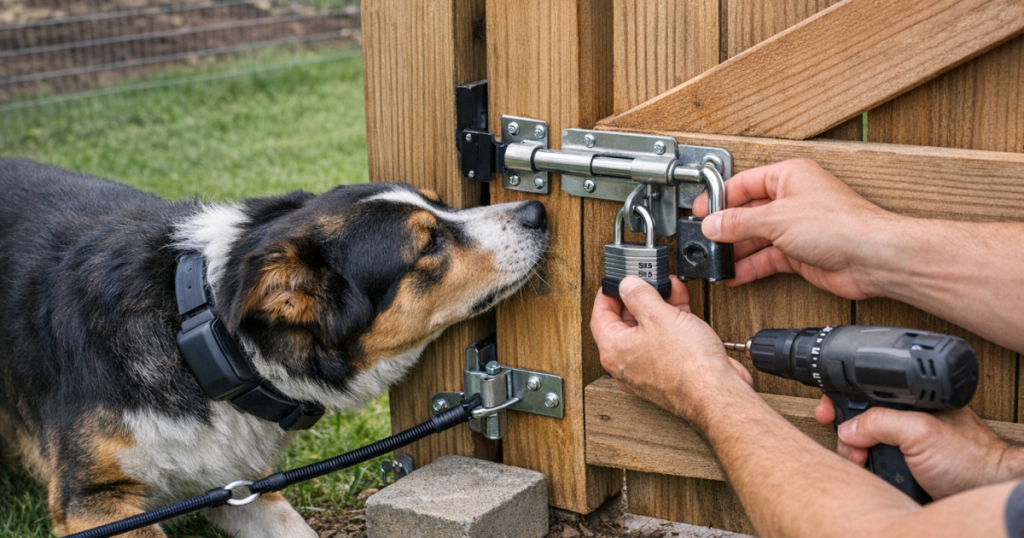
If your dog has learned to nose, paw, or body-check the gate, a more secure latch can help. The right style depends on your gate material, swing direction, and local rules, but the principle is simple: the latch should require a deliberate human motion, not just upward pressure or vibration.
Look for a setup that closes consistently, sits out of easy paw range, and cannot be released by pushing against the gate from the yard side. A self-closing hinge can be useful when people often forget to pull the gate fully shut, but it still needs to be paired with a latch that catches reliably. Self-closing alone is not enough if the latch misses its receiver.
A secondary carabiner or gate clip can be useful as a backup during supervised yard time, but it should not become the only thing keeping the gate closed. Clips get forgotten, left hanging, or removed by other people. Treat them as a belt-and-suspenders layer, not the foundation of the system.
Step 5: Create a pause zone at the gate
A gate that opens directly into the yard gives an excited dog a straight shot at the outside world. If your dog crowds the gate, rushes visitors, or waits for the latch sound, add distance.
Useful pause zones include:
- A small interior fence panel that creates an airlock-style entry.
- A leash station near the back door so the dog is clipped before the gate is opened.
- A portable exercise pen used temporarily during yard work.
- A trained “go to mat” or “wait” cue practiced away from the gate first.
The airlock approach is one of the safest physical changes for determined dogs because it assumes a person will eventually make a mistake. If the first gate opens, there is still another boundary between your dog and the street.
Step 6: Reduce the reasons your dog keeps testing the gate
Hardware solves access. It does not always solve motivation. Dogs nudge gates because they have learned the gate moves, but they may keep trying because something on the other side is rewarding: squirrels, neighborhood dogs, passing kids, food smells, or the thrill of a self-guided walk.
Try to identify the trigger. If your dog only tests the gate when the neighbor’s dog is out, use privacy screening on the fence line and bring your dog inside during peak barking sessions. If they push the gate when bored, shorten unsupervised yard time and add more sniff walks, training games, or structured play. If they rush the gate when people arrive, practice calm leash greetings away from the gate rather than rehearsing the same explosive pattern at the boundary.
For dogs who are also collar escape artists once caught, review buckle martingale collar features that help reduce collar slips. A secure yard and a secure handling setup work together; one weak link can undo the other.
Step 7: Test the fix like your dog would
After you adjust the latch or add a barrier, do not assume the problem is solved. Test the gate from the inside with controlled pressure. Push at the lower corner. Nudge the latch-side gap with your hand. Shake the gate gently. Open and close it with the casual motion a distracted guest might use.
Then supervise your dog in the yard for several sessions. You are looking for renewed interest in the gate: sniffing the latch, pawing the bottom, staring through the gap, or body-blocking the opening when someone approaches. If your dog returns to the same spot, the gate may still be offering feedback, even if it no longer opens.
A safe test is boring. The latch clicks, the gate stays still, the dog loses interest, and everyone gets on with the afternoon.
Step 8: Prepare for the one day a gate still gets opened
Even a well-secured gate can be defeated by a storm, a visitor, a broken latch, or a delivery left against the fence. Escape prevention lowers risk; it does not erase it. That is why a recovery plan belongs beside every gate fix.
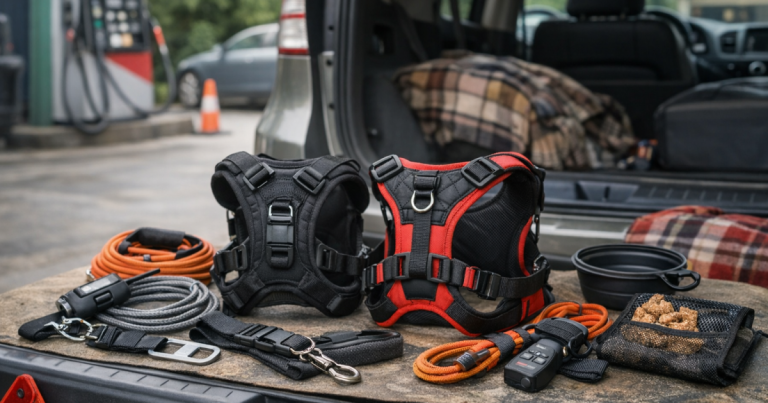
Keep current ID on your dog, store recent photos, and make sure everyone in the household knows who to call and where to search first. A printed checklist saves time when panic makes simple decisions feel huge. If you do not already have one, use a lost dog recovery kit as a starting point for the items and information to keep ready.
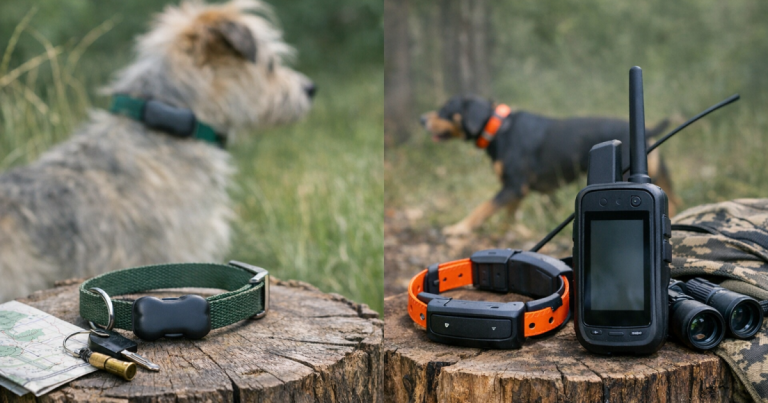
A tracker can also support recovery, but it should not be treated as permission to leave a weak gate unfixed. Cellular coverage, battery status, fit, terrain, and your dog’s movement all affect how useful a tracker can be in the moment. If you are deciding whether a GPS tracker, Bluetooth tag, or another backup fits your situation, this guide to alternative GPS pet tracking devices explains the trade-offs without pretending any device is magic.
Things readers ask
Will a bungee cord stop my dog from opening the gate?
A bungee cord is not a dependable gate-security fix. It can stretch, slip, snap back, or be left off by someone using the gate. Use proper latch adjustment, gate alignment, and a secure secondary clip instead.
Should the gate swing inward or outward?
For many yards, an inward-swinging gate can reduce the chance that one push sends the dog toward the street, but the safest answer depends on the fence layout, local requirements, and the gate’s purpose. Pool and code-regulated gates need compliant hardware and swing behavior, not improvised changes.
What if my dog only nudges the gate when I am outside with them?
That often means the dog has linked your presence with the gate opening. Practice calm distance from the gate, leash the dog before opening it, and reward waiting away from the latch. Do not let the dog rehearse crowding the opening.
Can training replace gate repairs?
Training helps, but it should not be the only layer. A dog may behave beautifully most days and still bolt when startled, overexcited, or chasing wildlife. Secure hardware gives training a fair chance to hold up.
Main points
- Most gate-nudging escapes come from poor latch alignment, reachable hardware, flexible gaps, or inconsistent closing habits.
- Test the gate from your dog’s height, not just from an adult’s standing position.
- Use a reliable latch, a consistent tug-check routine, and a secondary barrier for high-risk dogs.
- Watch what motivates the escape attempt, because boredom, triggers, and gate excitement can keep the behavior alive.
- Pair prevention with ID, photos, and a recovery plan so one open gate does not become a longer lost-dog emergency.
A yard gate should be boring, predictable, and hard for a dog to influence. Once the latch clicks every time, the gaps stop offering leverage, and the household routine is clear, your dog has fewer chances to turn curiosity into a street-side sprint.