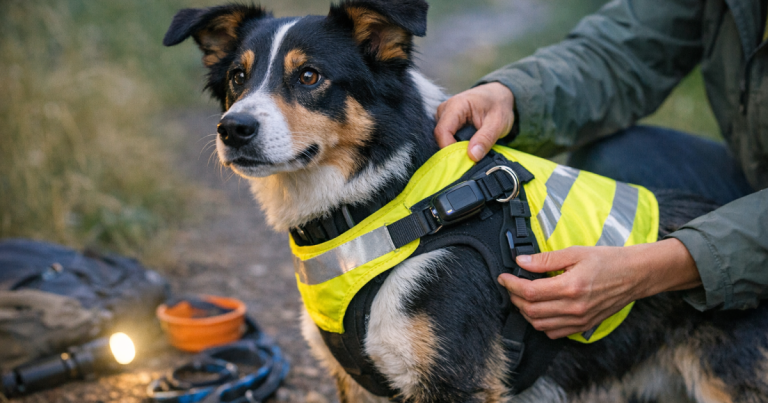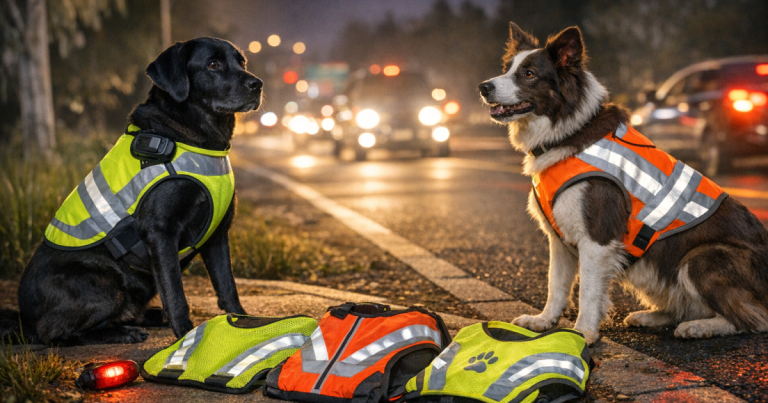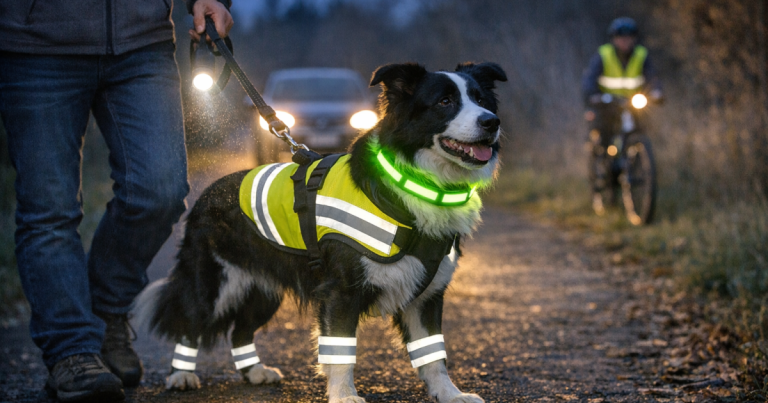
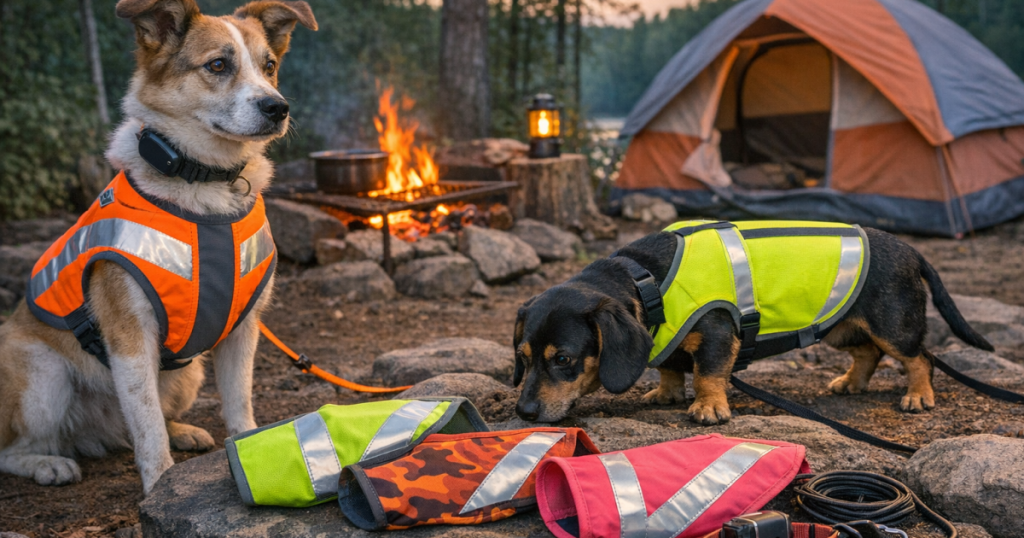
Camping with a dog who has slipped a harness, ducked under a picnic table, or vanished behind a tent wall changes what visibility gear needs to do. For escape-prone dogs, the best reflective vests for dogs are not just bright; they stay visible from several angles, fit over secure walking gear, and do not create new snag points around camp.
A reflective vest will not stop a determined escape by itself. Think of it as the visible outer layer in a larger camp safety system: secure harness, correctly fitted collar, ID tags, tracker if you use one, leash discipline, and a plan for what happens if your dog gets loose after dark.
The campground answer
The strongest reflective dog vest for an escape-prone camper is usually a high-visibility orange, yellow, or lime vest with reflective panels or strips on both sides, an adjustable belly area, and a shape that can sit cleanly over a harness without covering leash attachment points. It should be bright in daylight, reflective in headlamp or vehicle light, and comfortable enough that your dog does not spend the evening trying to rub it off on a picnic bench.
That last detail matters. A vest that twists, flaps, scratches, or blocks shoulder movement can make a nervous dog more restless. Around camp, restlessness turns into pawing, backing up, rolling, and sudden leash tension. For a dog with an escape history, visibility gear should calm the routine, not add another fight.
Where reflective vests actually help at camp
Reflective vests are most useful in the awkward middle ground between “my dog is right beside me” and “my dog is missing.” They help you spot body movement through trees, distinguish your dog from shadows near the fire ring, and give other campers or drivers a better chance of seeing your dog near campground roads.
They are especially helpful in these camping scenarios:
- Early morning bathroom walks: The dog is excited, you are half awake, and the campground road may already have trucks, bikes, or RVs moving through.
- Dusk setup time: Tent poles, food bins, kids, and camp chairs create distractions just when visibility drops.
- Wooded campsites: A high-visibility vest can make small movements easier to spot through brush and trunks.
- Group camping: Friends may not know your dog’s escape patterns, so clear visibility buys everyone a little more reaction time.
- Emergency recovery: If your dog gets loose, a bright vest can make sightings more useful, especially when paired with a current photo and description.
For dogs who back out of gear, the vest should never be the restraint point. Use it over a properly fitted harness or collar setup, and if slipping gear is already a pattern, start with collar-and-harness setups for dogs who back out before treating visibility as the main fix.
Standout vest styles worth knowing
There is no single reflective vest that fits every camping dog. A narrow, deep-chested hound, a thick-coated shepherd, and a small terrier all need different adjustments. The examples below are useful reference points because they represent the main styles to compare: simple visibility layers, more structured high-vis jackets, and field-style vests for wooded areas.
Simple over-back visibility vest
SafetyPUP XD Reflective Dog Vest is a recognizable example of the simple safety-vest style: bright fabric, reflective detailing, and an over-body shape intended to make a dog more noticeable. This kind of vest can be a good camping match when you want visibility without replacing your dog’s normal harness.
The key check is whether the vest stays centered when your dog turns, sniffs, crouches, and shakes. If it slides to one side during normal movement at home, it will be more annoying around a campsite where your dog is already stimulated.
High-visibility jacket style
Ruffwear Lumenglow High-Vis Dog Jacket is closer to a jacket than a minimal vest, which can appeal to owners who want more body coverage and clearer visual outline. More coverage can make a dog easier to identify in low light, but it also means fit matters more around the chest, shoulders, and belly.
For escape-prone dogs, check that a jacket-style layer does not interfere with the harness underneath. Before relying on it at camp, practice clipping the leash, adding the vest, removing the vest, and handling your dog in the same order you will use outside the tent. If you plan to layer gear, this walkthrough on fitting a reflective dog vest over a harness is a useful next step.
Field-style high-vis vest
Hurtta Ranger Vest is an example of a field-oriented visibility vest often considered for dogs moving near brush, trails, or wooded campsite edges. This style can be useful when a dog blends into leaves, pine needles, or shadowed understory.
With any field-style vest, look closely at how the straps sit when your dog lowers their head to sniff. Escape-prone dogs often create slack by dropping their shoulders, reversing direction, or twisting sideways. A vest that bunches near the armpits can become both uncomfortable and easier to wriggle against.
Basic reflective vest for occasional trips
Vizpet Reflective Dog Vest represents the straightforward reflective-vest category many owners consider for casual walks, campgrounds, and roadside visibility. A simple design can be enough when your dog is always leashed and the vest’s job is mainly to help people see them.
Do not judge this type by brightness alone. Read owner reviews for comments about sizing, twisting, closure durability, and whether the vest stays put on dogs shaped like yours. Reviews that mention “my dog slipped it,” “it rode sideways,” or “it rubbed behind the legs” are more useful than a star rating when you are preparing for a real campsite.
The fit test before you pack it
Try the vest at home before the camping trip. A backyard or driveway test will tell you more than a product photo ever will.
- Start with your normal restraint gear: Put on the collar, harness, ID tags, and tracker your dog will actually wear at camp.
- Add the reflective vest last: The vest should sit over the safety gear, not replace it.
- Check leash access: Make sure you can clip and unclip the leash without digging under fabric or shifting the vest.
- Watch movement from behind: Have your dog walk away, turn, sniff, sit, and shake. Look for twisting, bunching, or belly straps sliding into sensitive areas.
- Do a calm back-up test: With gentle leash pressure, see whether your dog can reverse out of the whole setup. Do not yank or scare them; the point is to spot gear gaps.
- Use a flashlight test: After dark, shine a flashlight or headlamp from different angles. Side visibility matters as much as rear visibility near campground roads.
If your dog becomes tense or frantic when layered gear goes on, pause and simplify. Some anxious dogs need a better base harness routine before adding a vest, and secure harnesses for anxious leash training may be more important than choosing a brighter outer layer.
Visibility does not replace recovery planning
The best reflective dog vest for camping gives people a better chance of seeing your dog; it does not guarantee your dog will be found. Trees, hills, weather, distance, and panic movement can all reduce visibility fast. That is why escape-prone campers need overlapping safeguards.
Before you leave home, confirm your dog’s ID tag is readable, your contact details are current, and your campsite group knows which leash and door rules matter. If you use a GPS tracker, test it before the trip in conditions that resemble your destination. Cellular-dependent trackers can behave differently in rural areas than they do at home, and even strong tracking gear has limits. A quick pre-trip check using this process to test your dog tracker’s accuracy before off-leash time can reveal coverage gaps before they become urgent.
Camp routine for dogs who try to bolt
A reflective vest works best when the campsite routine is boring and repeatable. Escape-prone dogs often make their move during transitions: unloading the car, opening the tent, passing food, switching leashes, or greeting another dog.
- Vest before doors open: Put the vest and leash setup on before your dog exits the vehicle at the campsite.
- One handler at a time: Avoid casual leash handoffs unless the next person understands the dog’s escape habits.
- No loose tent exits: Clip the leash before unzipping the tent or crate opening.
- Use light earlier than you think: Add the reflective vest before dusk, not after your dog has already disappeared into the shadows.
- Keep photos current: Take one clear photo of your dog wearing the vest at the campsite. If a search starts, that image helps people identify exactly what to look for.
If your dog is a known door dasher, fence jumper, or panic runner, avoid treating campsite freedom as a training test. A vest is for visibility, not permission to relax containment rules.
Things readers ask
Should a reflective vest go over or under a harness?
For most camping setups, the vest should go over the harness as a visibility layer while the harness remains the restraint system. The leash attachment should stay easy to reach, and the vest should not pull against the harness in a way that changes the fit.
Is reflective gear enough if my dog has a GPS tracker?
No. Reflective gear and GPS tracking solve different problems. A reflective vest helps nearby people see your dog; a tracker may help you follow location updates if coverage, battery, fit, and device function cooperate. Neither one is foolproof.
What color is best for wooded campsites?
High-visibility orange, yellow, and lime are commonly used because they stand out against many natural backgrounds. The better choice depends on your dog’s coat, the campsite terrain, and whether the vest also reflects light from the sides.
Can a reflective vest make escape worse?
It can if the vest fits poorly, snags, rubs, or makes the dog more agitated. Test it before travel, trim loose strap ends according to the product’s instructions, and do not use any vest that changes your dog’s movement or restraint fit.
What to remember
For camping with an escape-prone dog, choose a reflective vest that stays visible from multiple angles, layers cleanly over secure gear, and remains comfortable during real camp movement. The safest setup is not the brightest vest by itself. It is the vest, harness, ID, tracker, leash routine, and recovery plan working together before the first tent zipper opens.