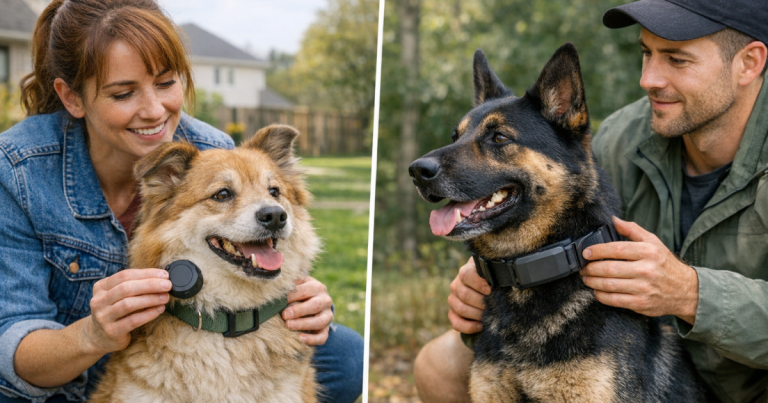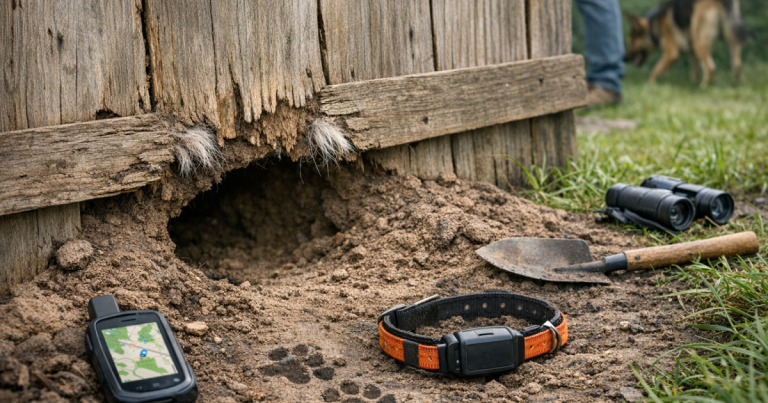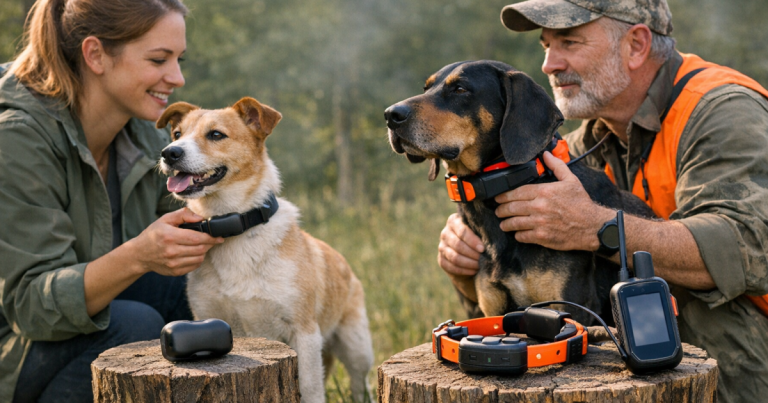
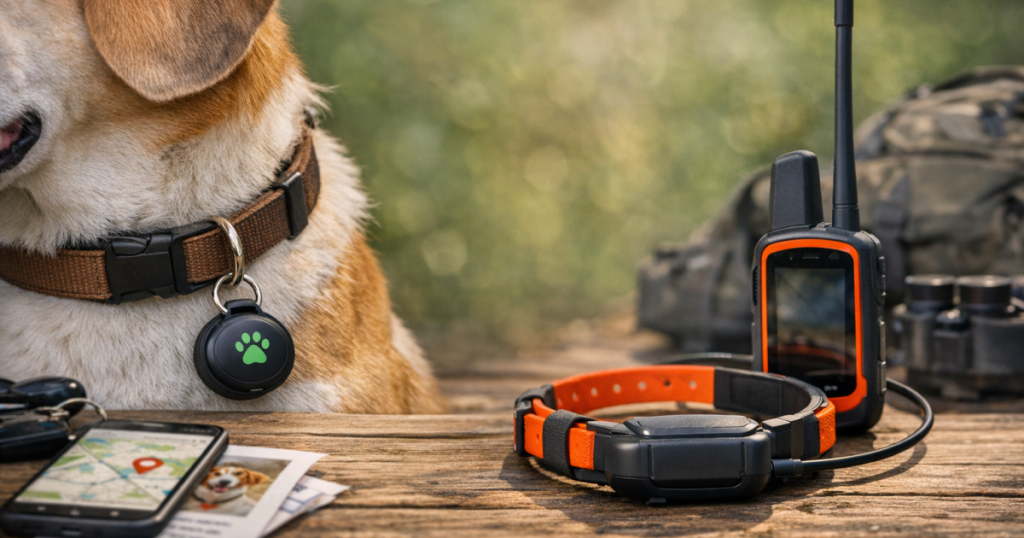
A loose dog creates two different problems: knowing where to look, and getting the right person to act quickly. Pawscout Smarter Pet Tag vs Garmin Alpha LTE is a useful comparison because these products solve that moment in very different ways. Pawscout is a Bluetooth smart tag built around proximity, app-based safety features, lost-pet posts, and community participation. Garmin Alpha LTE is a collar-mounted LTE dog tracking device built around live tracking in the Alpha app and Garmin’s broader sporting-dog ecosystem.
Quick Buying Links
Pawscout Smarter Pet Tag
lower-cost Bluetooth proximity, pet ID-style recovery, and community alerts around neighborhoods or busy local areas
Garmin Alpha LTE
Better for active dog tracking when live movement data, Garmin ecosystem use, and LTE coverage are central
The important distinction is simple: Pawscout is not a GPS or LTE tracker, while Garmin Alpha LTE is not a simple ID tag. That difference affects range, subscription expectations, recovery workflow, and the kind of dog owner each product serves best.
The short version
- Choose Pawscout when you want a lower-cost Bluetooth smart tag for cats or dogs, app-based proximity alerts, lost-pet posts, and nearby Pawscout community/finder workflows.
- Choose Garmin Alpha LTE when you need active dog tracking in the Alpha app, especially for field, hunting, or active outdoor scenarios where live movement data matters and LTE coverage is available.
- Do not treat them as like-for-like trackers. Pawscout’s stated direct Bluetooth range is 300 feet outdoors. Garmin Alpha LTE depends on LTE coverage and an active LTE subscription for certain connected features.
- Both use mobile apps, but for different jobs. Pawscout’s app powers setup, safety features, lost posts, and community functions. Garmin’s Alpha app activates LTE service and provides dog tracking, settings, tracks, and activities.
Side-by-side decision points
- Device type: Pawscout Bluetooth Smarter Pet Tag is a Bluetooth smart pet tag for cats and dogs. Garmin Alpha LTE is an LTE dog tracking device mounted to a dog collar.
- Primary recovery method: Pawscout uses Bluetooth proximity, the Pawscout app, nearby Pawscouters, finder alerts, and lost-pet posts. Garmin uses LTE real-time dog tracking in the Alpha app, with optional use inside compatible Garmin Alpha handheld and VHF systems.
- Coverage dependence: Pawscout depends on Bluetooth range and Pawscout app/community participation. Garmin depends on LTE coverage and an active LTE subscription for connected tracking features.
- Range and movement awareness: Pawscout states a 300-foot outdoor Bluetooth range for direct proximity. Garmin does not work from that short Bluetooth-style model; its connected tracking depends on LTE coverage.
- Subscriptions: Pawscout Pro is described as an optional subscription that adds safety features, while the free Pawscout app remains part of the experience. Garmin requires an active LTE subscription for certain Alpha LTE connected features.
- Water protection: Pawscout is listed as IPX7 water resistant. Garmin Alpha LTE has a 1 ATM water rating.
Where Pawscout fits best
Pawscout makes the most sense for owners who want a smart recovery tag rather than a full dog tracking system. Its strongest role is close-range awareness and community-based recovery: the official Pawscout information describes a Bluetooth-enabled smart pet tag using the Pawscout app and nearby Pawscouters, with lost-pet posts that can be broadcast to nearby Pawscout users within a 5-mile radius.
That can be useful for everyday escape scenarios where the dog is likely to remain in a neighborhood, near a park, around an apartment complex, or within reach of people who can see the pet and respond. It is also a broader pet option because Pawscout is sold for cats and dogs, not just dogs.
Pawscout’s Outdoor Virtual Leash feature is also part of the appeal. The verified Pawscout materials describe alerts when the pet goes in or out of range of the phone or guardians. That is a proximity tool, not a live map of exact location, but for owners managing doors, yards, patios, and off-leash moments close to home, proximity alerts can add a useful layer of awareness.
Cost positioning is another meaningful difference. Pawscout is positioned as a lower-cost smart tag, and the official home page evidence says “Buy starting at $19.95.” Garmin’s exact purchase price is not part of the verified comparison evidence here, so the fair comparison is not a dollar-for-dollar price chart. The reliable takeaway is that Pawscout sits in the smart-tag lane, while Garmin Alpha LTE sits in a more specialized tracking lane.
One naming note matters for accuracy: this comparison is about the Bluetooth Smarter Pet Tag supported by Pawscout.com shop, home page, and support evidence. Current Pawscout.ai pages also emphasize a newer QR-only Pawscout Tag, which is a different emphasis from the Bluetooth product compared here. For a focused product-page view, the site’s Pawscout Smart Pet Tag profile is the better next stop.
Pawscout strengths
- Good fit for owners who want Bluetooth proximity and community recovery rather than dedicated LTE tracking.
- Works for cats and dogs, which broadens its role in multi-pet households.
- Lost-pet posts can be broadcast to nearby Pawscout users within a 5-mile radius.
- Outdoor Virtual Leash alerts support close-range awareness around phones or guardians.
- IPX7 water resistance gives the tag a stated water-protection rating.
Pawscout limitations
- It is not a GPS tracker and is not advertised as showing exact live location.
- Direct proximity depends on its stated 300-foot outdoor Bluetooth range.
- Recovery reach depends on Pawscout app/community participation rather than a dedicated cellular connection.
Where Garmin Alpha LTE fits best
Garmin Alpha LTE is the better match when the owner’s main question is, “Where is my dog moving right now?” Garmin describes it as LTE cellular dog tracking with Alpha app smartphone tracking, and the verified evidence identifies it as a collar-mounted dog tracking device rather than a pet ID tag.
That distinction matters for hunting dogs, field dogs, and dogs who travel through larger outdoor areas where a 300-foot proximity tag would not provide the same kind of movement picture. Garmin Alpha LTE is designed around active tracking in the Alpha app, and it can also be tracked with compatible Alpha handheld devices under Garmin’s stated pairing and coverage conditions.
The trade-off is that Garmin’s connected features depend on LTE. Garmin’s manual states that an active LTE subscription is required for certain features and that a subscription does not guarantee LTE coverage everywhere used. For owners in field or rural settings, that sentence should shape expectations. LTE tracking can be the right tool for active movement data, but coverage still controls what the tool can deliver in a given place.
Battery expectations are also more explicit for Garmin in the verified evidence. Garmin lists standalone battery life as 11 hours at a 10-second update rate, 18 hours in dynamic mode, and 45 hours at a 2-minute update rate. When paired with a compatible VHF dog collar device, Garmin lists 12 hours at a 10-second update rate, 40 hours dynamic, and 75 hours at a 2-minute update rate. Those update-rate choices matter because frequent updates and long outings pull in opposite directions.
There is one practical hardware point to include: Garmin’s owner’s manual says the dog collar strap is sold separately. That does not change the tracking method, but it does affect what arrives in the setup workflow. For more device-specific context inside the site’s comparison resources, see the Garmin Alpha LTE comparison profile.
Garmin Alpha LTE strengths
- Built for LTE dog tracking in the Garmin Alpha app rather than short-range Bluetooth proximity.
- Better suited to active dog tracking when live movement data matters and LTE coverage is available.
- Fits Garmin’s sporting-dog tracking ecosystem, including compatible Alpha handheld and VHF system use under Garmin’s stated conditions.
- Provides manufacturer-stated battery life across update-rate modes.
- Has a stated 1 ATM water rating.
Garmin Alpha LTE limitations
- Requires LTE coverage and an active LTE subscription for key connected tracking features.
- Garmin states that a subscription does not guarantee LTE coverage everywhere used.
- The dog collar strap is sold separately according to the owner’s manual.
- It is a dog tracking device in Garmin’s sporting-dog ecosystem, not a simple ID tag for general pet identification.
Recovery workflow: neighborhood alert or active tracking?
The clearest way to compare these two products is to picture the first ten minutes after a dog gets loose.
With Pawscout, the response is built around proximity and people. The tag works through the Pawscout app, the phone or guardians, nearby Pawscouters, and lost-pet posts. A neighbor, passerby, or community user becomes part of the recovery path. That is why Pawscout’s value rises in places where people are nearby and community response has a realistic chance of helping.
With Garmin Alpha LTE, the response is built around tracking the dog’s movement through the Alpha app while connected features are available. The owner is not waiting only for a finder contact; the device is intended to provide real-time dog tracking data. That is a very different workflow, and it is the reason Garmin makes more sense for larger search areas, field work, and situations where the dog may keep moving.
Neither model removes the need for a recovery plan. A tag or tracker is only one layer beside visible ID, recent photos, leash-transfer discipline, and a household plan for who calls, who searches, and who stays by the last-seen point. For building that non-digital layer, the lost dog recovery kit buying guide is a useful companion to this comparison.
Subscriptions and ongoing effort
Pawscout and Garmin also differ in how much ongoing tracking infrastructure they ask you to maintain. Pawscout’s free app remains part of the product experience, and Pawscout Pro is described as optional. That fits the product’s role as a smart tag with added safety features available through a subscription path.
Garmin Alpha LTE is different because an active LTE subscription is required for certain connected features. That requirement follows directly from the device’s job: LTE dog tracking in the Alpha app needs a connected service layer. For owners who want real-time movement data, the subscription is not a side detail; it is part of the operating model.
There is no universal winner in the subscription category. Pawscout is easier to justify when you want a low-cost smart tag and community recovery functions. Garmin is easier to justify when tracking data is central to the reason you are buying the device.
Water ratings and outdoor use
Both products have stated water protection, but the ratings are not the same language. Pawscout is listed as IPX7 water resistant. Garmin Alpha LTE is listed with a 1 ATM water rating. The useful editorial takeaway is not that one rating makes either product indestructible. It is that both manufacturers publish a water-protection rating, while the bigger buying difference remains tracking method and coverage dependence.
For everyday dogs, water protection matters because escapes rarely happen in perfect weather. Gates get left open during rain, dogs cut through wet grass, and a creek can turn a calm walk into a search. Still, water rating should not outrank the core question: do you need nearby-finder recovery or active tracking?
Common questions
Is Pawscout a GPS tracker?
No. The verified Pawscout evidence describes the Bluetooth Smarter Pet Tag as a Bluetooth-enabled smart pet tag using the Pawscout app and nearby Pawscouters. It is not advertised as showing exact live location.
Does Garmin Alpha LTE need a subscription?
Yes, Garmin states that an active LTE subscription is required for certain Alpha LTE connected features. Garmin also states that a subscription does not guarantee LTE coverage everywhere used.
Which is better for a dog that bolts on hikes or during field work?
Garmin Alpha LTE is the stronger fit when live dog movement data matters and LTE coverage is available. Pawscout is better understood as a Bluetooth/community recovery tag, not as a substitute for active LTE tracking.
Which one is better for cats and dogs?
Pawscout is sold for cats and dogs. Garmin Alpha LTE is a dog tracking device in Garmin’s sporting-dog product line.
The grounded recommendation
Pawscout Smarter Pet Tag vs Garmin Alpha LTE comes down to the kind of recovery you expect to need. Choose Pawscout when your priority is a lower-cost smart tag for Bluetooth proximity, app-based safety features, lost-pet posts, and nearby community or finder participation. It is the more natural choice for neighborhood recovery support and pet ID-style workflows.
Choose Garmin Alpha LTE when your priority is active dog tracking in the Alpha app, especially for hunting, field, or larger outdoor scenarios where live movement data matters. Its stronger tracking role comes with stronger operating requirements: LTE coverage, an active LTE subscription for certain connected features, battery management by update-rate mode, and a separate collar strap.
The safest comparison is not “which product is more advanced?” It is “which recovery problem am I actually trying to solve?” Pawscout helps most when people nearby can become part of the recovery chain. Garmin helps most when the owner needs connected tracking data on a moving dog. For many dog owners, that distinction is the difference between buying a reassuring tag and buying a true tracking tool.
Quick Buying Links
Pawscout Smarter Pet Tag
lower-cost Bluetooth proximity, pet ID-style recovery, and community alerts around neighborhoods or busy local areas
Garmin Alpha LTE
Better for active dog tracking when live movement data, Garmin ecosystem use, and LTE coverage are central