If your dog dug under fence boards and vanished, assume the escape route tells you where to search first. A tunneling dog usually leaves with momentum: toward a sidewalk, a neighbor’s yard, a familiar dog, a squirrel line, or the last exciting smell they were investigating. The goal is to move quickly without turning the search into chaos.
Fence repairs that involve trenching, concrete footings, buried wire mesh, or changes along property lines are typically handled by qualified fence contractors to meet local codes, utility-marking rules, and safety requirements.
What to know first
Start at the hole, not at the front door. The direction of loose dirt, paw marks, flattened grass, or disturbed mulch can show whether your dog squeezed straight out, turned along the fence, or ran toward a visible target. If you have a second person, one should stay near home with a leash, treats, and the gate open only under control; many dogs circle back once the first burst of excitement fades.
Do not shout constantly while moving away from the yard. Calling once or twice in a calm, familiar voice is useful. Repeated yelling can make a nervous dog keep moving, especially if they think they are in trouble. Bring the leash your dog recognizes, high-value food, and a phone with a recent photo ready to share.
Step 1: Read the escape route like a map
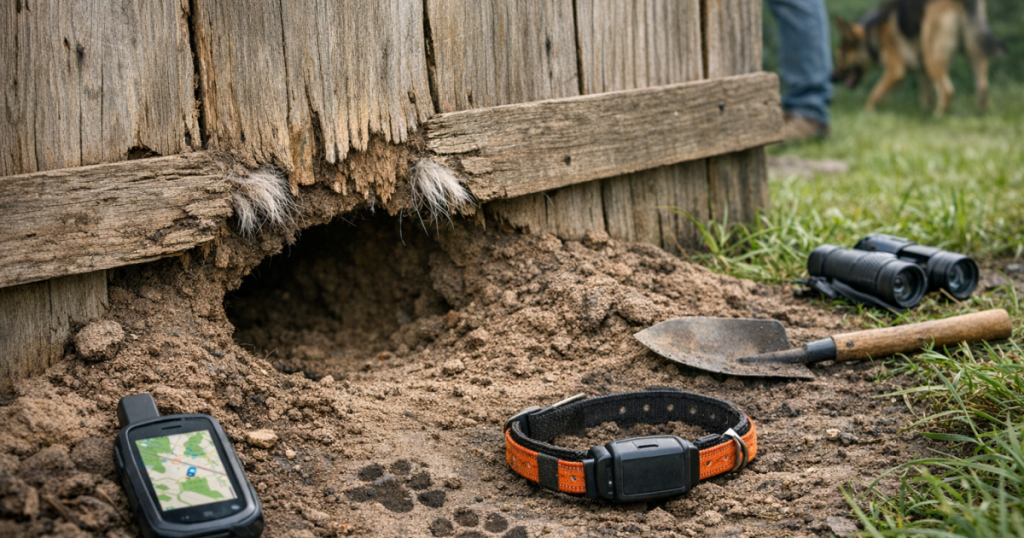
Look at the tunnel before filling it. A dog that exits under a back fence often lands in one of three places: the adjoining yard, an alley or easement, or a street-facing route. Check for fresh paw prints, broken stems, fur caught on the bottom edge, and dirt sprayed to one side. These small clues matter more than the direction you hope they went.
If the hole opens into another yard, knock before entering. Ask the neighbor to check sheds, decks, parked vehicles, under porches, and side gates. Many escaped dogs do not travel far at first; they tuck into the nearest quiet pocket after the adrenaline wears off. A scared dog behind a trash can is easier to miss than a dog sprinting down the block.
Step 2: Search the first 500 feet with structure
For the first pass, search the most likely radius instead of driving miles away. Walk both sides of the nearest street, then the alley or property line behind the fence, then any place your dog has visited before. Dogs often follow familiar scent corridors: the route to the mailbox, the path to a walking trail, the neighbor with outdoor cats, or the corner where rabbits show up at dusk.
- Move slowly enough to listen for tags, barking, rustling, or whining.
- Check low hiding spots: under decks, behind AC units, inside open garages, and beneath parked trucks.
- Ask people to call you, not chase. A well-meaning chase can push a loose dog across a road.
- Leave one person at home if possible, because many dogs return to the escape point.
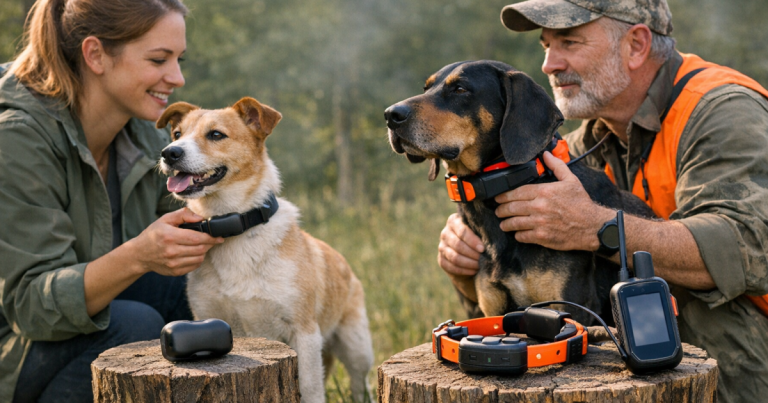
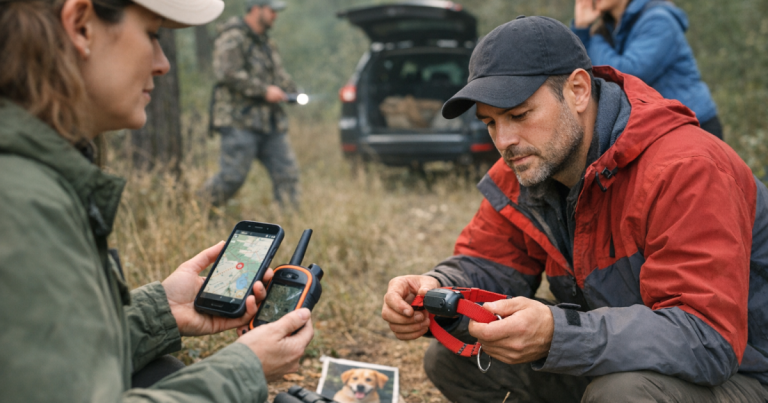
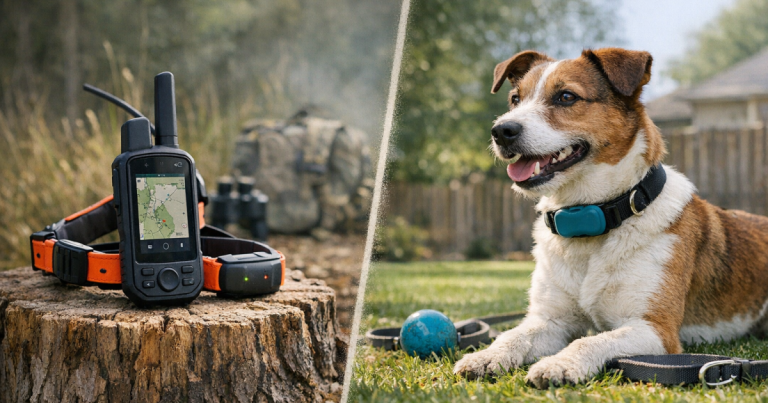
If your dog wears a tracker, open the app or handheld receiver and treat the location as a lead, not a promise. Cellular coverage, buildings, trees, and battery status can all affect what you see. If the location looks stale, search the area around the last update and keep refreshing while someone remains at the house.
Step 3: Make your dog easy to identify
Within the first 10 to 15 minutes, send a clear message to nearby neighbors: your dog’s name, photo, color, size, collar or harness description, and your phone number. Post in neighborhood apps and local lost-pet groups, but do not wait for online replies before searching nearby hiding places. The closest human witness is often someone gardening, walking a dog, or unloading groceries.
Physical ID still matters even when you use GPS. A person who finds a friendly dog may look at the collar before thinking about a scanner or app. If your current setup relies heavily on electronics, use this as the moment to review how to back up a GPS collar with physical ID tags so the next finder has a direct route to you.
Step 4: Use calm capture instead of pursuit
If you see your dog, resist the sprint. Crouch sideways, soften your voice, and make yourself less interesting than the food in your hand. Toss treats on the ground between you and the dog rather than reaching immediately for the collar. A loose dog in flight mode may dodge even a person they love; it is not betrayal, it is adrenaline with legs.
For a food-motivated dog, sit or kneel and let them approach. For a shy or newly adopted dog, avoid direct eye contact and sudden movements. If the dog is moving toward traffic, recruit people to block routes quietly rather than forming a noisy crowd. Once close enough, clip the leash to a secure collar or harness before celebrating.
Step 5: Check likely trigger zones
Many fence dig-outs start with a trigger. Search places that match your dog’s reason for leaving. A social dog may head toward a neighbor’s dog. A prey-driven dog may follow a rabbit trail along shrubs or drainage areas. A noise-sensitive dog may run away from construction, fireworks, lawn equipment, or a delivery truck. A bored dog may simply inspect the world directly outside the fence, because apparently the other side of the yard contains breaking news.
If the trail points toward woods, water, fields, or a park edge, widen the search carefully and bring practical supplies. A lost dog can pick up burrs, paw cuts, or dehydration quickly in rough ground. For longer searches, review what to pack in a dog first-aid kit for lost-pet searches before sending people out for hours.
How to stop the next tunnel
Effective methods to prevent a dog from digging under the fence include blocking the soil line with a physical barrier, reducing the trigger that draws the dog to that spot, and supervising the yard until the habit is broken. Common options include an L-shaped footer of hardware cloth attached to the bottom of the fence and extended inward, pavers placed along the fence line, buried barrier material installed by a fence professional, or a gravel-filled trench where digging has already started. These methods work best when paired with exercise, enrichment, and prompt repair of every soft gap.
For ongoing prevention, dog digging under fence lines should be treated as both a yard problem and a behavior problem. Filling the hole with loose dirt alone is usually a delay, not a fix. Pack the repair firmly, remove visual temptations where possible, and block access to that section while you watch for repeat attempts. If your dog digs only when left alone, shorten unsupervised yard time and add a leash walk, puzzle feeder, or training session before outdoor breaks.
Fence-line checks that actually help
- Walk the full perimeter weekly and press lightly near the bottom rail to find soft soil.
- Look behind shrubs, planters, firewood, and outdoor furniture where digging can stay hidden.
- Check gates, corners, and low spots after heavy rain, when soil is easier to move.
- Use temporary barriers immediately; do not wait until the “small” hole fits a shoulder.
- Watch for repeat digging at the same time of day, which may reveal a trigger next door.
If you use a GPS tracker with safe-zone alerts, test the escape notification under normal conditions rather than assuming it will behave perfectly in a real panic. Safe zones, phone settings, coverage, and update timing can all create friction. The same principle applies before a trip or pet-sitting handoff; this checklist for testing escape alerts before leaving your dog with a sitter is useful whenever someone else may be responsible for the first response.
Common questions after a fence escape
How far will a dog go after digging out?
Some dogs stay within a few houses. Others move quickly if they are chasing wildlife, frightened by noise, or following another animal. Start close, then widen the search based on sightings, tracker updates, and likely routes. The first assumption should be “nearby and hidden,” not “gone for miles.”
Should I leave food outside?
Leaving familiar-smelling food or bedding near a safe entry point can help if your dog circles back, but do not leave gates unsecured or create a situation where another animal can enter the yard. If possible, have someone monitor the area quietly.
What if my dog keeps digging in the same spot?
Repeat digging usually means the location still has a reward: soft soil, a visible animal, shade, scent, or a known exit path. Reinforce the fence line physically and change the dog’s access pattern. Supervision beats wishful thinking, and wishful thinking has never fixed a tunnel.
Main lessons
A dog that escapes under a fence leaves clues. Start at the hole, search the nearest routes first, alert neighbors with a clear photo, and use trackers or ID as recovery aids rather than guarantees. Once your dog is home, repair the weak spot with a real barrier and watch for the trigger that made digging worthwhile. The best recovery plan is the one that makes the next escape harder to start.