A dog who explodes toward the front door is not being “bad”; they are reacting to a powerful pattern. Door darting before walks usually starts with excitement, anticipation, or panic, then turns into a habit because the doorway keeps predicting big things: outside air, visitors, motion, and attention.
The goal is not to scare your dog away from the door. It is to make the doorway boring, predictable, and controlled enough that your dog can pause even when the leash appears or guests arrive.
The short version
- Practice when nothing exciting is happening, not only when someone is actually leaving or arriving.
- Teach one simple doorway behavior, such as “wait on the mat,” before you add distractions.
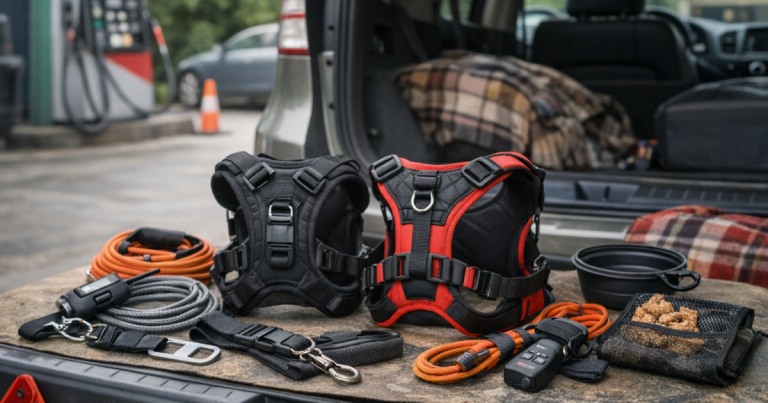
- Keep the leash, collar, treats, and backup ID ready before the door opens.
- Use barriers during guest arrivals so training does not depend on perfect timing.
- If your dog ever gets out, shift immediately from training mode to calm recovery mode.
Why the front door becomes a launch zone
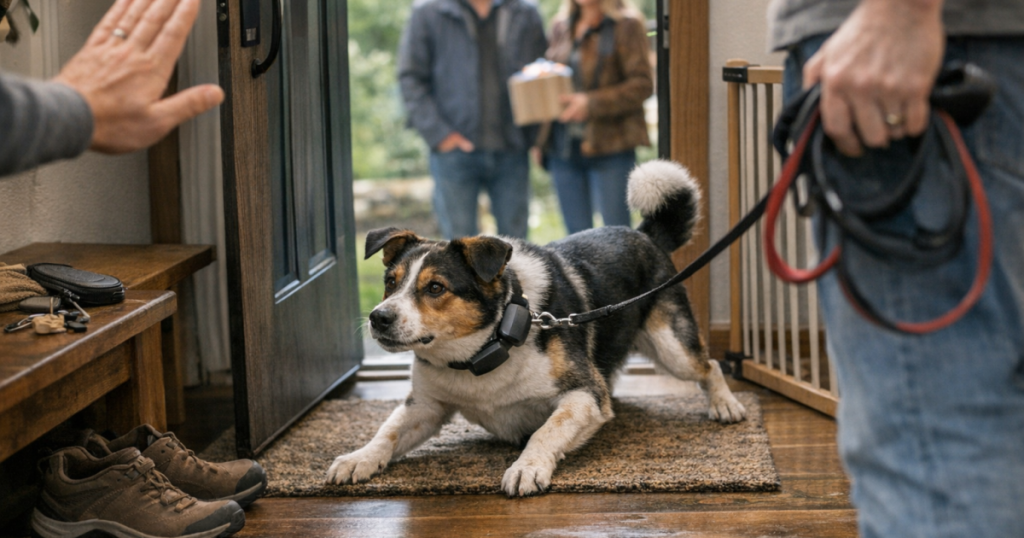
Most doorway rushing is built from repetition. The leash comes out, the dog spins, the door opens, and the walk begins. Or the doorbell rings, voices get louder, a guest steps in, and the dog gets a burst of attention. Even if you scold, block, or grab the collar, the doorway still stays emotionally charged.
Some dogs rush because they want the walk. Others are worried about visitors and try to control the entry. Some small dogs squeeze through gaps before anyone notices; some large dogs shoulder past legs because they have learned people step aside. The fix is similar either way: lower the excitement, create physical backup, and rehearse a safer replacement behavior many times before you need it.
Step 1: Make the pre-walk routine less explosive
Start away from the door. Pick up the leash, then put it down. Touch your shoes, then sit back down. Clip the leash on, feed a treat, unclip it, and go back to normal life. This breaks the old chain where every walk cue means an immediate rush to the exit.
When your dog can see the leash without launching, move closer to the door. Ask for an easy cue your dog already knows, such as “sit,” “down,” or “place.” Reward calm behavior before you touch the knob. If your dog surges forward, do not yank them back and continue. Quietly step away from the door, reset, and make the next attempt easier.
Step 2: Build a doorway pause that is simple enough to repeat
Choose one rule and keep it consistent. Many households do best with a mat, rug, or bed placed several feet from the door. The dog’s job is not to understand every possible arrival situation; the dog’s job is to go to that spot and wait while the human handles the door.
A basic practice sequence
- Send your dog to the mat or ask for a sit several feet from the door.
- Touch the doorknob, reward if your dog stays put, then release them away from the door.
- Open the door one inch, close it, reward calm waiting, and step back.
- Gradually open the door wider only when the previous step feels easy.
- Add the leash later, after your dog understands that an opening door does not automatically mean forward motion.
Use a release word such as “okay” or “let’s go,” but keep it calm. A dramatic release can turn the end of the exercise into another launch. You want the dog thinking, “I wait until invited,” not “I explode when the magic word happens.”
Step 3: Add physical backup so one mistake is not a lost-dog event
Training improves behavior, but management prevents bad rehearsals. Before you open the front door, especially during busy times, create a second layer between your dog and the street.
- Use a baby gate, exercise pen, or closed interior door when guests are expected.
- Keep the leash clipped before the exterior door opens for walks.
- Ask delivery drivers or visitors to wait a moment while you secure the dog.
- Do not rely on grabbing a collar as your main safety plan; many dogs twist away when excited.
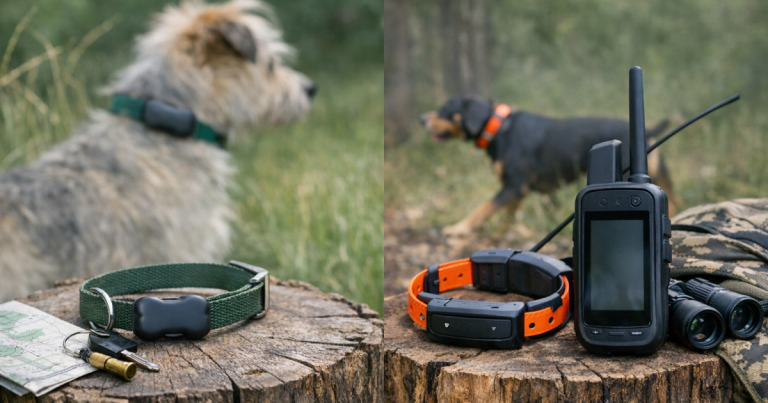
- Check that ID tags are readable and that any tracker collar fits securely without rubbing.
If your dog wears a tracker or backup collar, fit matters more than gadgets. A loose collar can slip over the head during a doorway scramble, while an overly tight one can cause discomfort and make handling harder. For a safety-focused fit check, see how to fit a GPS dog collar safely.
Step 4: Practice guest arrivals before real guests arrive
Guest practice works best when you remove the surprise. Have a family member step outside, knock softly, and wait. Your dog goes to the mat or behind a gate. Reward quiet feet and calm attention. The person enters only after the dog is secured or settled.
At first, do not ask your dog to greet. Let the visitor come in, sit down, and ignore the dog for a minute. For many dogs, the moment of entry is the hardest part; greeting after the room has settled is much easier.
For very social dogs
A friendly dog can still be a serious flight risk. If your dog loves people, the reward for waiting can be a calm greeting after the door closes. Keep the greeting short, low-key, and away from the threshold.
For nervous or territorial dogs
If your dog barks, lunges, hides, or stiffens around visitors, prioritize distance over obedience. Use a separate room, gate, or leash before the guest enters. Do not force greetings at the doorway. The door is already a pressure point; adding social stress there can make rushing, barking, or slipping out more likely.
Step 5: Make walks start only after calm behavior
Once your dog can pause at the closed door, practice the whole walk departure slowly. Clip the leash. Ask for the doorway behavior. Open the door. Step out first if that helps your setup, then invite your dog through calmly. If your dog lunges, close the door if safe to do so, return inside, and try again after a short reset.
Keep early sessions short. You might do three calm exits to the porch or sidewalk before the real walk begins. That may feel repetitive, but it teaches your dog that controlled movement is what opens the world.
What to do if your dog slips out anyway
If your dog gets past you, resist the urge to chase unless there is immediate danger. Many dogs turn pursuit into a game or bolt farther when frightened. Instead, use a cheerful voice, crouch or turn sideways, move away from them if it encourages following, and avoid grabbing until they are close enough to secure safely.
Escaped dogs do not all behave the same way once outside. Some circle close to home, some run familiar routes, and some hide quietly after the first burst of adrenaline. Understanding how lost dogs behave and where to search first can help you make better choices in those first few minutes.
Common mistakes that keep the habit alive
- Practicing only when you are late. Rushed mornings are the hardest time to teach a new rule.
- Opening the door after repeated barking or jumping. This can teach the dog that escalation works.
- Letting guests hype the dog up at the threshold. Ask visitors to ignore the dog until everyone is inside and settled.
- Using too many cues. “Wait, stay, no, back up, stop” can become noise. Pick one clear behavior.
- Skipping backup barriers. Even well-trained dogs can make mistakes when the doorbell, leash, kids, groceries, and traffic all collide.
A simple seven-day reset plan
Days 1 and 2: Remove the trigger power
Handle the leash, shoes, keys, and door area several times a day without leaving. Reward calm behavior and end the session before excitement builds.
Days 3 and 4: Teach the waiting spot
Send your dog to a mat or ask for a sit away from the door. Touch the knob, reward, and release away from the doorway. Keep the door closed for most repetitions.
Days 5 and 6: Add tiny door openings
Open the door a crack, close it, and reward. Gradually increase the opening only while your dog stays calm. Use a leash or barrier so a mistake cannot turn into a dash outside.
Day 7: Rehearse a realistic departure
Clip the leash, ask for the doorway behavior, open the door, and calmly walk out. If your dog surges, reset without drama. The win is not speed; it is a clean pattern you can repeat.
FAQ
Should I use treats at the door?
Yes, treats can help, especially in the early stages. Reward the behavior you want before the door opens, then gradually use praise, calm movement, and the walk itself as part of the reward.
Is it okay to make my dog sit before every walk?
Yes, if sitting is comfortable for your dog and does not increase frustration. A standing wait on a mat is also fine. The key is a predictable pause before the door opens.
What if my dog only bolts when guests arrive?
Use management first: a gate, leash, crate, or separate room before the door opens. Practice with familiar people at low intensity before expecting your dog to handle real visitors.
Can a GPS tracker prevent doorway escapes?
No tracker prevents the escape itself. A tracker or ID backup can support recovery if your dog gets out, but barriers, routines, and training are what reduce the chance of the dash happening.
When should I get help from a trainer?
Get help if your dog shows intense fear, aggression, repeated escapes, or cannot settle around the doorway despite careful practice. Look for a reward-based professional with experience in household management and visitor routines.
Final thoughts
To stop door darting, think less about one perfect command and more about a repeatable household system: calm pre-walk cues, a clear waiting spot, a physical backup, and guest rules everyone follows. The more ordinary the doorway becomes, the safer your dog’s exits and arrivals become.
It also helps to decide ahead of time what you will do if the worst happens. Keep current photos, readable ID, and a short contact list ready. If your dog has already had a close call, a prepared lost dog recovery plan for the first 72 hours can make a frightening moment feel less chaotic.