A road-trip stop can turn chaotic in seconds: one hand on the gas pump, one door cracked open, and a dog who suddenly sees open space. Preventing car-door escapes starts before you park, not after your dog is already leaning into the gap. A simple, repeatable exit routine gives you time to clip, check, and breathe.
The goal is not to make every trip feel tense. It is to build small habits that work when you are tired, the weather is bad, traffic is loud, or your dog is excited by a new place.
What to know first
- Most road-trip escapes happen during transitions: rest stops, fuel stops, hotel arrivals, trailhead parking lots, and driveway unloading.
- Your dog should not be the first thing that comes out of the vehicle. Leash, ID, tracker, and surroundings come first.
- A backup connection point matters. One leash clip can fail, one collar can slip, and one distracted second is enough.
- Train the routine at home before relying on it in a busy parking lot.
- A GPS tracker can support recovery, but it does not replace physical control at the door.
Why vehicle exits become escape moments
Dogs do not read a gas station or motel lot the way we do. They smell food wrappers, other dogs, wildlife, strangers, and stress. A dog who is calm in the back seat may surge forward when the hatch lifts because the doorway suddenly becomes the most interesting place in the world.
Preventing car-door escapes is mostly about removing surprise. If your dog already knows that an open door does not mean immediate freedom, you have a much safer starting point. If every stop follows the same steps, your dog has fewer decisions to make and you have fewer things to remember.
Road trips also create human mistakes. People unload bags before clipping the leash, let kids open doors too early, assume a sleepy dog will stay put, or trust a collar that fits loosely after a long nap. These are normal mistakes, but they are preventable with a routine that does not depend on perfect attention.
Step 1: Set up the car before the first mile
Before leaving the driveway, decide where your dog will ride and how you will control the first exit. A crate, barrier, seat belt tether, or harness setup can reduce movement inside the vehicle, but the key is that your dog should not be able to launch directly from the seat to open air without a pause.
Make an exit kit that stays within reach of the person who will unload the dog. Include the leash you actually use for stops, a spare leash, poop bags, water, a small towel, and any medication or calming item your dog needs. Keep it in the front passenger area or another predictable spot, not buried under luggage.
Check identification before departure. A readable ID tag, current microchip registration, and a charged tracker all support recovery if something goes wrong. If your dog wears a tracker collar, take a minute to fit a GPS dog collar safely so it is secure without rubbing during a long drive.
Step 2: Use a staged exit, not a quick release
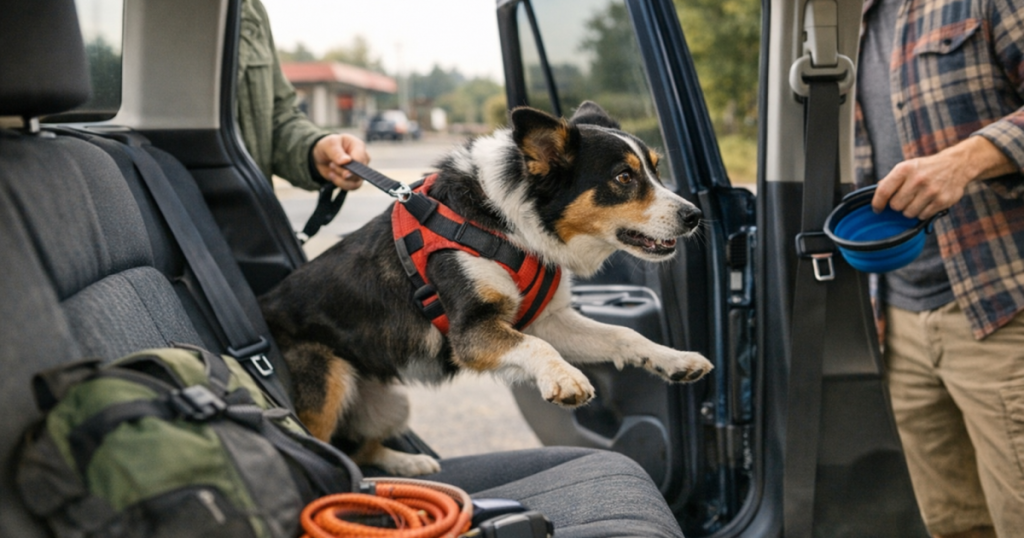
The safest door routine has a pause built into it. Park, set the brake, look around, then decide who handles the dog. Do not open multiple doors at once. If you are traveling with family, say out loud: “Dog stays in until clipped.” A clear phrase prevents well-meaning passengers from opening the wrong door.
Before the dog’s door opens, attach the leash if you can reach the collar or harness from inside the vehicle. If that is not possible, open the door only a few inches, block the gap with your body, and clip before inviting the dog down. Keep the leash short enough that your dog cannot land and immediately swing behind you into traffic or toward another dog.
For escape-prone dogs, use two connection points: one leash to a harness and one to a collar, or a leash plus a backup slip lead used carefully as a temporary safety layer. The same principle is covered in more detail in this two-leash setup for escape-prone dogs, and it translates well to roadside stops where you need redundancy.
Step 3: Teach “wait” around doors at home first
Do not make the first lesson happen at a crowded rest area. Practice in your driveway with the engine off. Ask your dog to wait while the door opens slightly. Reward calm stillness. Close the door, reset, and repeat. Over time, open the door wider, clip the leash, then release your dog with a consistent cue such as “okay” or “with me.”
This is not about holding a perfect obedience position for minutes. It is about teaching that an open vehicle door is a checkpoint, not a starting pistol. Short, successful repetitions work better than one long session that turns frustrating.
If your dog also rushes the front door at home, work on that pattern separately. A dog who practices bolting from the house may carry the same habit into the car. The doorway skills in this door-darting routine can help make all exits feel more predictable.
Step 4: Choose safer places to stop
Not every stop is equally safe. When you can, park away from busy entrances, dumpsters, dog-heavy walking zones, and fast traffic lanes. At highway rest areas, choose a spot where the dog’s door opens toward grass or a quieter edge of the lot rather than directly into vehicle flow.
At gas stations, keep your dog inside while fueling unless a potty break is truly needed. Fuel stops are full of noise, smells, slick pavement, and distracted drivers. If you do unload, finish one task at a time: fuel first, then dog break, or dog break first, then fuel. Splitting your attention is when mistakes happen.
At hotels, unload the dog before rolling luggage carts across the parking lot, or have one person manage the dog while another handles bags. Elevators, lobby doors, and automatic sliding doors can all create new escape gaps. Keep the leash short, avoid greetings with unfamiliar dogs in tight spaces, and go straight to the relief area or room.
Step 5: Build a rest-stop checklist
A checklist sounds formal until you need it. Road fatigue makes people skip steps, so use the same order every time:
- Park in the quietest practical space.
- Confirm which person is responsible for the dog.
- Check that collar, harness, ID tag, and tracker are still on and secure.
- Attach the leash before the dog has room to jump out.
- Use your body to block the doorway while clipping.
- Release the dog only after eye contact, a pause, or your chosen cue.
- Keep the first 10 feet calm and controlled before allowing sniffing.
That first 10 feet matters. Many dogs explode out of the vehicle and then settle once they have sniffed. By controlling the first few seconds, you prevent the highest-risk burst.
Step 6: Plan for the “what if” moment
Even careful owners can have a leash slip through wet hands or a child open a door unexpectedly. Decide now what everyone should do if your dog gets loose. One person should stay where the dog last saw them. Another can calmly follow at a distance if it is safe. Avoid shouting, chasing, or turning the moment into a game.
Use a cheerful recall cue, crouch sideways, and make yourself less threatening. If your dog runs toward traffic, prioritize keeping people safe while using food, familiar sounds, and calm movement to draw the dog away from danger. If your tracker shows movement, let it inform your search pattern, but remember that location updates can be delayed by coverage, terrain, device settings, or battery conditions.
Take a fresh photo of your dog before long trips. A current photo showing coat length, collar color, and any harness or tracker can help if you need to share a lost-dog notice quickly.
Common road-trip scenarios and what to do
The excited trailhead arrival
Your dog knows the hike is coming and starts whining before you park. Wait for a small moment of calm before opening the door. Clip inside the car, step out first, then invite your dog down. Do not let the first movement be a leap toward the trail.
The small dog who squeezes through gaps
Small dogs can slip through a door gap that looks harmless. Use a carrier, crate, or very controlled body block when opening the door. Check harness fit carefully; a loose harness can become useless when a dog backs up suddenly.
The large dog who pushes past people
For strong dogs, positioning matters. Stand close to the doorway, keep the leash gathered, and ask for a pause before paws hit the ground. If your dog tends to launch, practice unloading at home until the movement becomes slower and more thoughtful.
The multi-dog road trip
Unload one dog at a time. Multiple dogs exiting together can tangle leashes, trigger each other’s excitement, and make it harder to respond if one pulls free. Keep the other dog secured until the first is fully under control.
Common questions
Should my dog wear a leash in the car?
Your dog should be secured appropriately for the ride, but do not leave a loose walking leash where it can tangle around legs or gear. Keep the leash ready, then attach it before opening the door fully.
Is a GPS tracker enough for road trips?
No. A tracker is a recovery aid, not a restraint. It can help you respond faster if your dog gets loose, but leash control, ID, training, and careful unloading are still the first line of defense.
What if my dog refuses to wait when the door opens?
Go back to easier practice. Work with the door barely cracked, reward calm behavior, and release only when your dog is not pushing forward. Use a crate or barrier during travel while the skill develops.
Should kids be allowed to open the dog’s door?
Only if an adult has already confirmed the dog is clipped and ready. On road trips, make it a family rule that no one opens the dog’s door without the handler saying it is safe.
Final thoughts
Car safety for dogs is not one big dramatic decision. It is a series of small, repeatable choices: park thoughtfully, clip before opening, block the gap, pause before release, and keep backup ID in place. The routine may feel slow for the first few stops, but it quickly becomes automatic.
The best road-trip system is the one your tired future self can still follow at dusk in a crowded parking lot. Build it at home, practice it calmly, and your dog gets the adventure without the lost-pet scare.